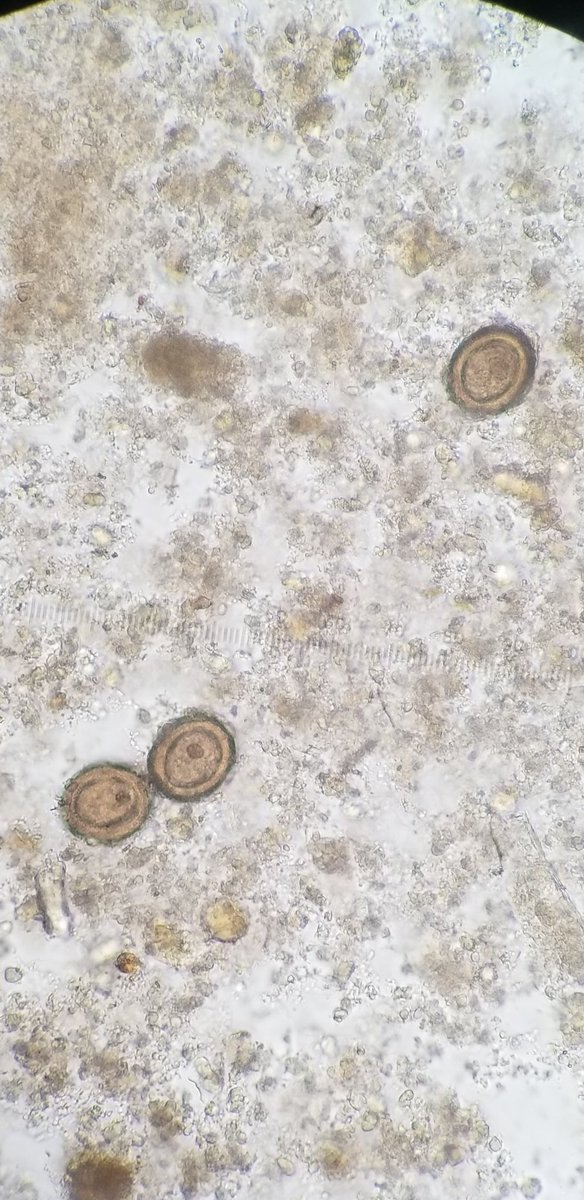
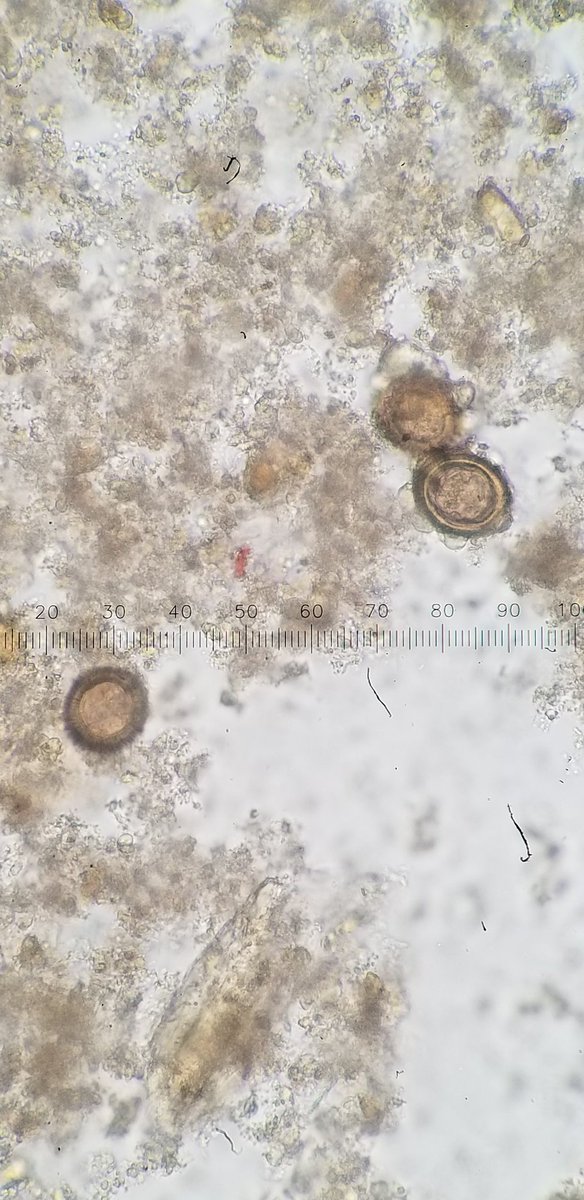
Fun find today.
Iodine obscured these eggs. Prepped w/out iodine made all the features pop. Last two images are actually wet preps from PVA, unconcentrated, just for fun. This was loaded.
Who am I? (Genus-level)
#parasitology@ParasiteGal
Coccidioides is found in the soil in the southwestern part of the United States and parts of Mexico, Central and South America. The Fungal spores are usually inhaled & can cause severe disease & disseminate in multiple areas of the body in immunocompromised individuals.
#MicroRounds (Day 950): "I was rooting for you!"
The answer to yesterday's fungal ID quiz! The mold here is…
Rhizopus! Several features suggest Rhizopus but the BEST identifying feature are the distinctive *rhizoids* the root-like structure of arrow B. #ASMClinMicro#IDTwitter
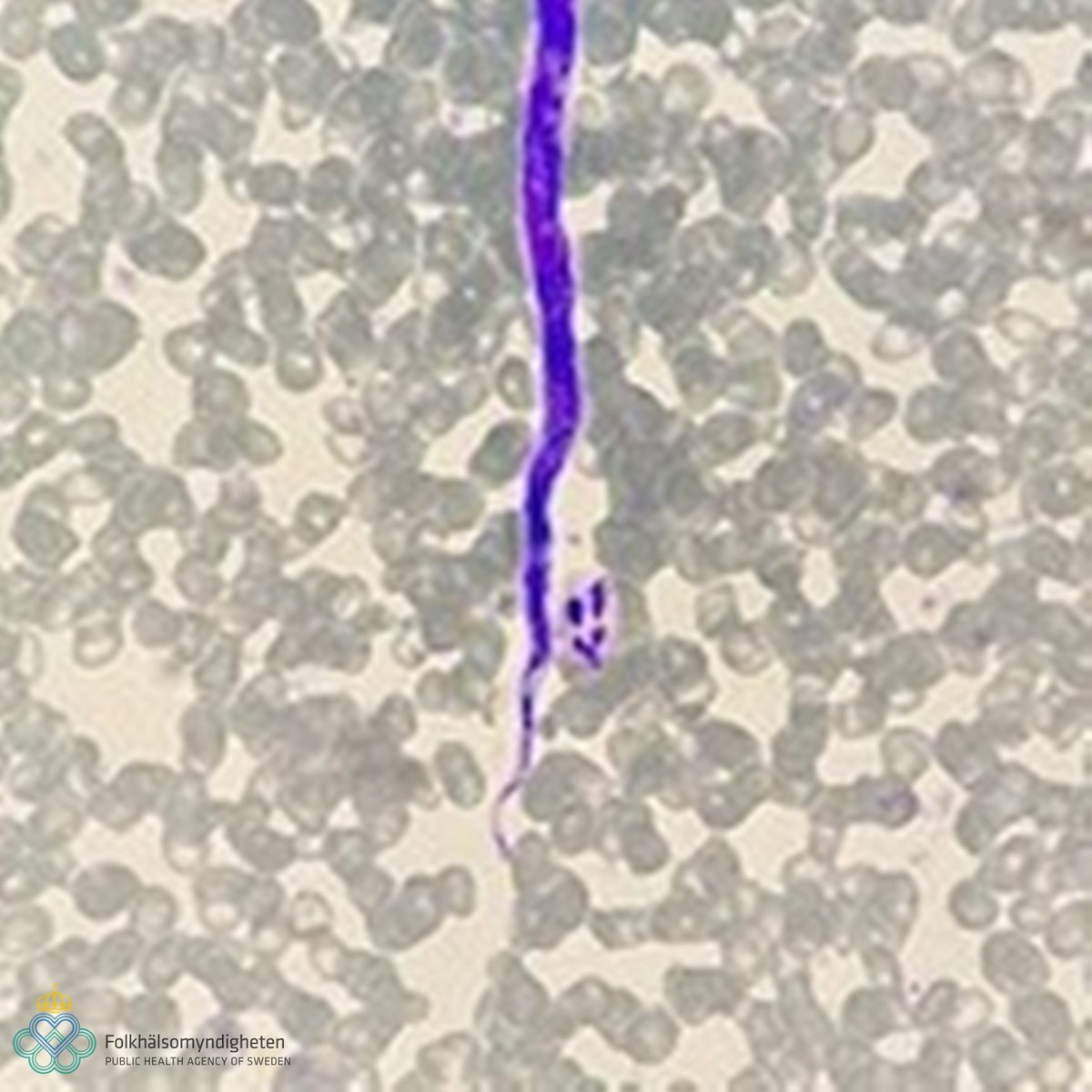
The answer to #Parasite Case 687 is up: Loa loa. You can tell because the nuclei flow-a flow-a to the tip of the tail 😊 https://t.co/UfydHYie7H Thanks to @IoanaBujila for this case, and CHECK OUT THE VIDEOs – they’re amazing.
#mayopath#pathology#path2path#MayoClinMicro
Francisella tularensis is so dangerous because it only takes 10 organisms to cause illness and has the reputation for causing laboratory-acquired infections.
See my Instagram post for more pics and details! 🧫🔬🤓
https://t.co/XrC6Fh2YGL
@richdavisphd Us too. We validated BCID2 so we have MREJ with mecA/C. I have mixed feelings about the panel when it comes to the CoNS though. It's nice to have Staph epi on the panel but I've had many discrepancies where only Staph hom or some other CoNS grew but the panel detected Staph epi.