CEO & Executive Director @Neuraustralia Scientia Professor of Neuroscience @UNSW. Neurologist @SEastSydHealth. President @brainfoundoz Editor Emeritus @JNNP_BMJ
Acute Kidney Injury and Risk of Adverse Neurocognitive Outcomes: A Systematic Review and Meta-Analysis Acute Kidney Injury and Risk of Adverse Neurocognitive Outcomes https://t.co/B5H6jp3Ng2
#Dementia#Stroke
June's NeuRA All-Staff Meeting shone a topical spotlight on Motor Neurone Disease, current research and the experience of people living with it every day, in the lead up to MND Awareness Day on June 21.
Clinical Trials Specialist Eleanor Ramsey, part of the Kiernan Group at NeuRA, shared an update on the team’s work and impact. Additionally we were joined by Michael O’Hehir, who is living with MND and has been involved in the RESCUE-ALS Trial, speaking on his experience and the importance of trials like these.
We also had an in-conversation with Director of Communications Tom Smithies and NeuRA’s new Research Strategy and Quality Manager, Alex Economides, on his journey that led him to NeuRA, as well as CEO Professor Matthew Kiernan AM updating on what is happening in and around NeuRA and the research sphere.
The Autumn issue of NeuRA Magazine is out now!
- Find out the latest work to tackle Parkinson’s Disease
- We introduce our NeuRA Quest Scholars
- Ask a researcher what hair can tell us about stress in autism, and
- Spend five minutes with NeuRA supporter, Malcolm Ginn.
You can read the stories and more here: https://t.co/JwY6bRxeIF
June is migraine awareness month.
Migraine affects an estimated 1.1 billion people worldwide and is one of the leading causes of disability globally.
Its burden is especially pronounced among young adults, with prevalence increasing through puberty, peaking at around 40 years of age, and occurring more frequently in women than men.
Explore more here: https://t.co/kTcCKqTFgx
Minogue & Zouridakis et al. studied the brains of people with dementia and FTLD-PSP or FTLD-CBD. They found that PSP and CBD show distinct patterns of selective vulnerability, with tau pathology predominantly affecting glia in PSP and neurons in CBD. https://t.co/WGAU3ZH4ae
A New Motor Neuron Disease (MND) drug is showing reductions in key disease markers, slowing the progression of the disease in patients with a particular genetic mutation and providing hope to families.
Through monthly injections, the new drug binds to messenger RNA, reducing the number of harmful SOD1 (Superoxide Dismutase 1) proteins that build up in the nerve cells and which cause MND in up to 2% of all cases.
The growing urgency of treating the disease as well as the promising data from the drug, has prompted the Therapeutic Goods Administration to grant provisional approval of the drug, enabling Australian patients’ faster access.
Speaking with Channel 9, NeuRA CEO Professor Matthew Kiernan AM emphasised the importance of early intervention leading to more positive outcomes when it comes to MND.
"The availability of a targeted treatment reinforces the need for clinicians to act with urgency; any suspicion of MND should prompt immediate referral to a neurologist or specialist centre," said Professor Kiernan.
You can read the whole story here: https://t.co/PVm33MOSnS
@nervecentrals
A stress hormone may help switch the young brain out of its most flexible state, through a pathway that starts outside neurons. @harvardmed@nature https://t.co/xAxMSxCvfN
Claude Lemieux’s brain is being donated to the Boston University CTE Center to research the long-term effects of repetitive brain injuries, his family said in a statement. https://t.co/4HnHqb9ez6
How a lizard led to a new class of life-saving diabetes and weight-loss drugs.
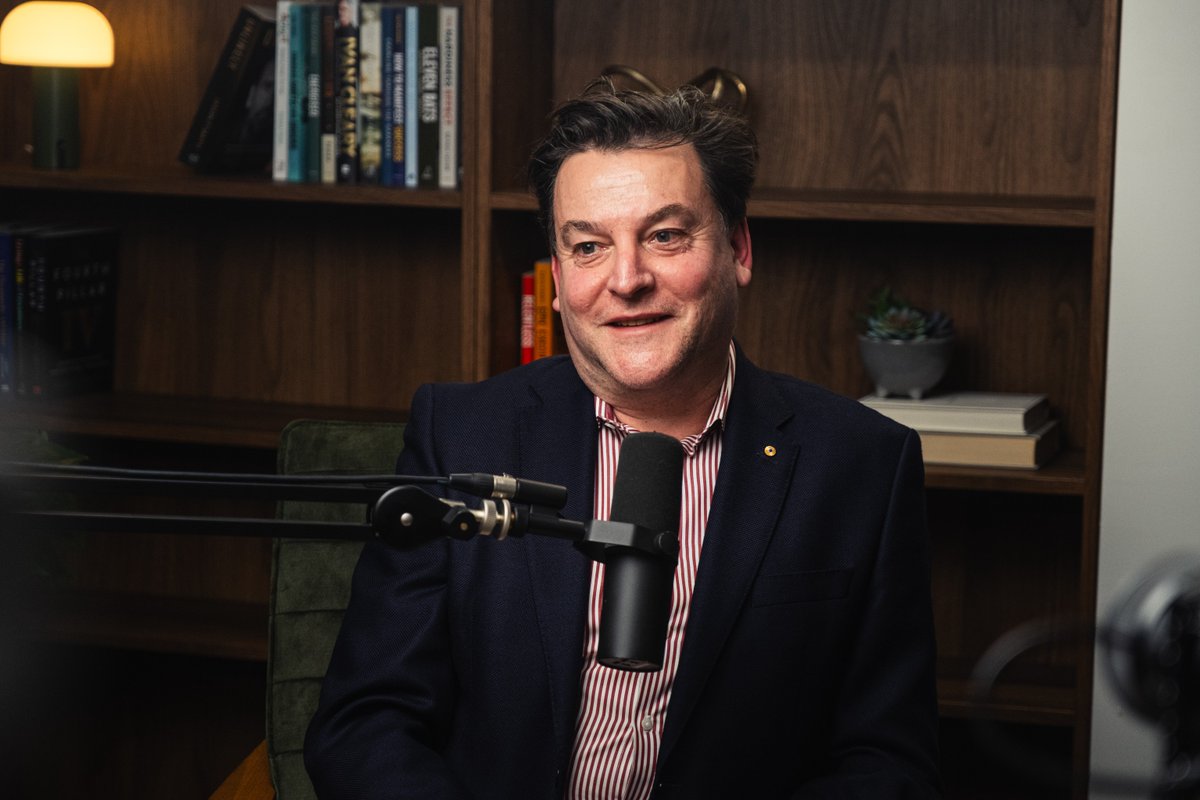
My second conversation on Project 100 with one of Australia’s best neurologists and neuroscientists is out now!
Matthew Kiernan AM is CEO of NeuRA (Neuroscience Research Australia) and one of the nation’s leading neurologists tackling the growing dementia crisis.
Search Project 100 wherever you get your podcasts, plus this ep is on our Straight Talk channels too.
@nervecentrals
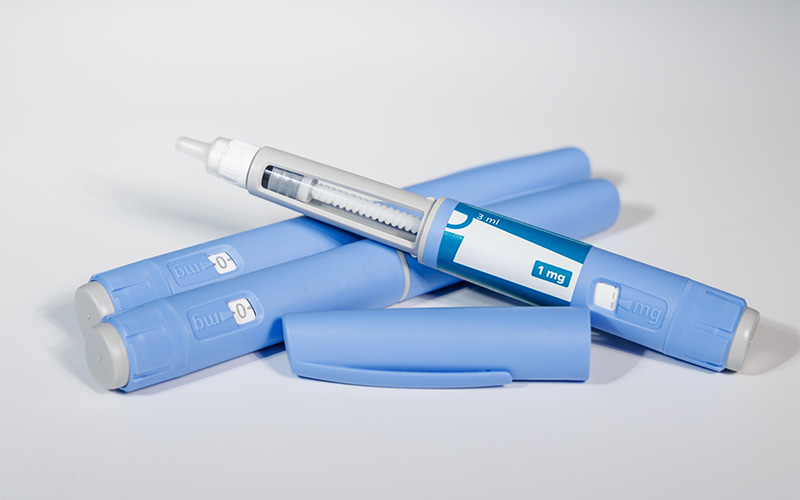
Ozempic and other GLP-1 drugs were initially understood as a metabolism breakthrough.
But as researchers probe deeper into how the drugs work, early evidence suggests that GLP-1s may also be reshaping parts of the brain. https://t.co/mFsuHLwzz0
Khani et al. studied genetic variation in SORL1 across Alzheimer’s disease, related dementias and Parkinson’s disease, and identified multiple variants - some shared across ancestries - supporting a broader role of SORL1 in neurodegeneration. https://t.co/L1VZLalCFM
Brain expert on MND early signs.
My second conversation on Project 100 with one of Australia’s best neurologists and neuroscientists is out now!
Matthew Kiernan AM is CEO of NeuRA (Neuroscience Research Australia) and one of the nation’s leading neurologists tackling the growing dementia crisis.
Search Project 100 wherever you get your podcasts plus this ep is on our Straight Talk channels too.
Complexity in the brain may begin with surprisingly simple patterns.
Yale physicist Christopher Lynn studies how thousands of neurons work together to create complex systems. By zooming in on individual neurons, he found that these intricate cells may operate in simpler ways than previously understood, offering new insight into how larger neural systems function.
Learn how this research is reshaping our understanding of the brain: https://t.co/JK4wBnyGVi
On the latest episode of Project 100, Investor, Author and Academic Mark Bouris AM, speaks with NeuRA CEO Matthew Kiernan AM.
Mark Bouris’s podcasts follow his quest to live to 100 years of age through advice from leading medical, fitness, and neuroscience experts.
In Professor's Kiernan second appearance on the podcast, he and Mark dive into the modifiable risk factors that can prevent up to 45% of dementia cases, groundbreaking Alzheimer’s treatments using monoclonal antibodies, as well as Australia's growing rates of dementia.
Watch the full discussion here: https://t.co/ADialhZVSP
@markbouris@nervecentrals
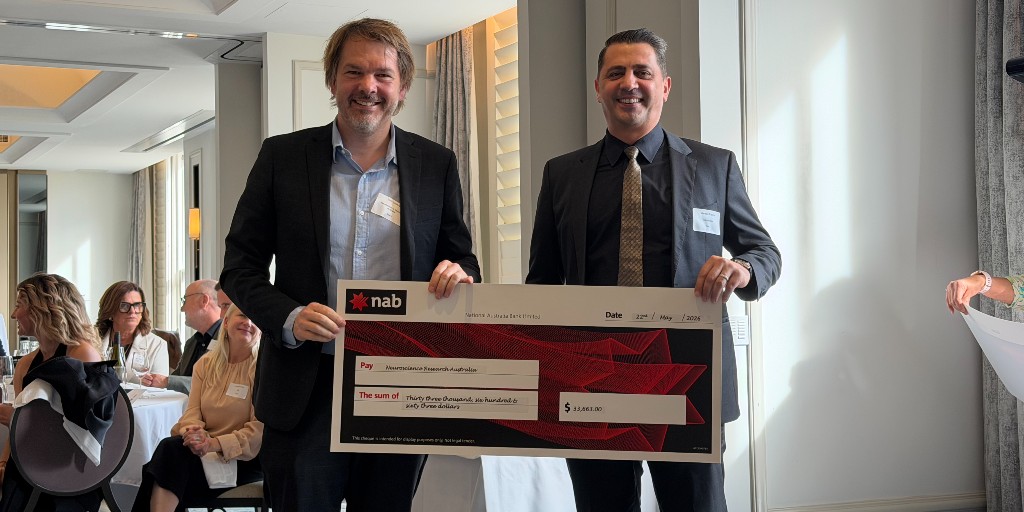
NeuRA was the proud beneficiary of another generous donation from the ASX Refinitiv Charity Foundation last Friday, and we're honoured to be one of a number of charities and research institutes supported by ASX Refinitiv's tireless fundraising.
Since 1996, the foundation has been helping Australian-based children’s, disability and medical research, domestic violence and mental health charities by organising fundraising events in conjunction with the financial markets. To date, the combined funds distributed to a wide range of charities totals over $42 million.
We remain grateful for ASX Refinitiv's belief in the work we do, for the support of the foundation's sponsors and participants, and of course for the donation which will help us to address some of society's most pressing issues.
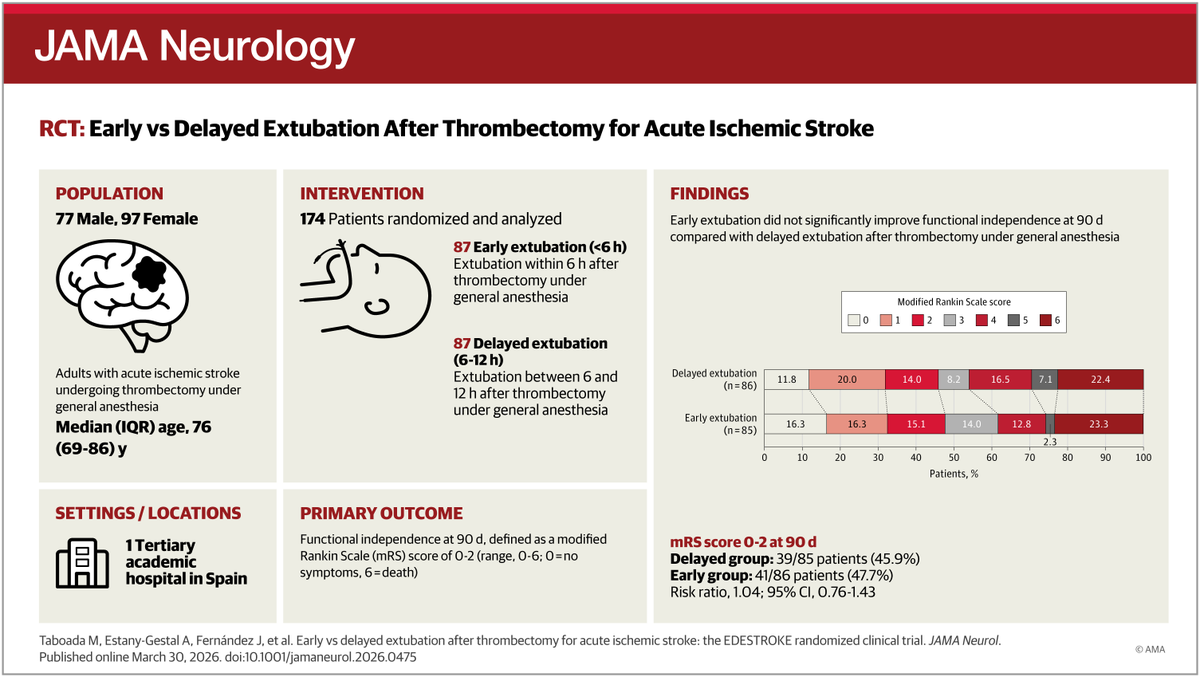
Among patients undergoing endovascular #thrombectomy for acute #Stroke, early (<6 hours) vs delayed (6–12 hours) extubation did not improve 90-day functional independence, hospital stay, complication rates, or mortality. https://t.co/tb5gUOgeh9
This systematic review and meta-analysis assessed the association between GLP-1RA use and nonarteritic anterior ischemic optic neuropathy (#NAION) risk: https://t.co/tJZbjZT7Ue