Popper never believed this.
"I do not imply, for instance, that we should always suppress the utterance of intolerant philosophies; as long as we can counter them by rational argument and keep them in check by public opinion, suppression would certainly be unwise." 1/n
We will go bankrupt if these Gemini cache costs don't stop.
Gemini is currently charging us $1K per hour due a bug with the explicit cache feature, and I am unable to delete the cache from my end.
I have been trying to resolve this with billing support for over 24 hours.
We spend more than $30k a month on GCP more than 8 years and always pay our bills on time without a single day of delay.
They only generate AI SLOP messages in my case. There is not a real person looking this.
Please help me escalate this so someone can fix this issue immediately.
Please, help me share this post to someone help me to fix this my case #72026129
@Gemini@jastephx@OfficialLoganK #bolhadev @sseraphini@acgfbr
Tesla China has released its first ever retractable sunshade for the Model Y for 1,499 yuan ($236 USD). Very easy to install.
I hope they launch this globally, because I will absolutely buy this.
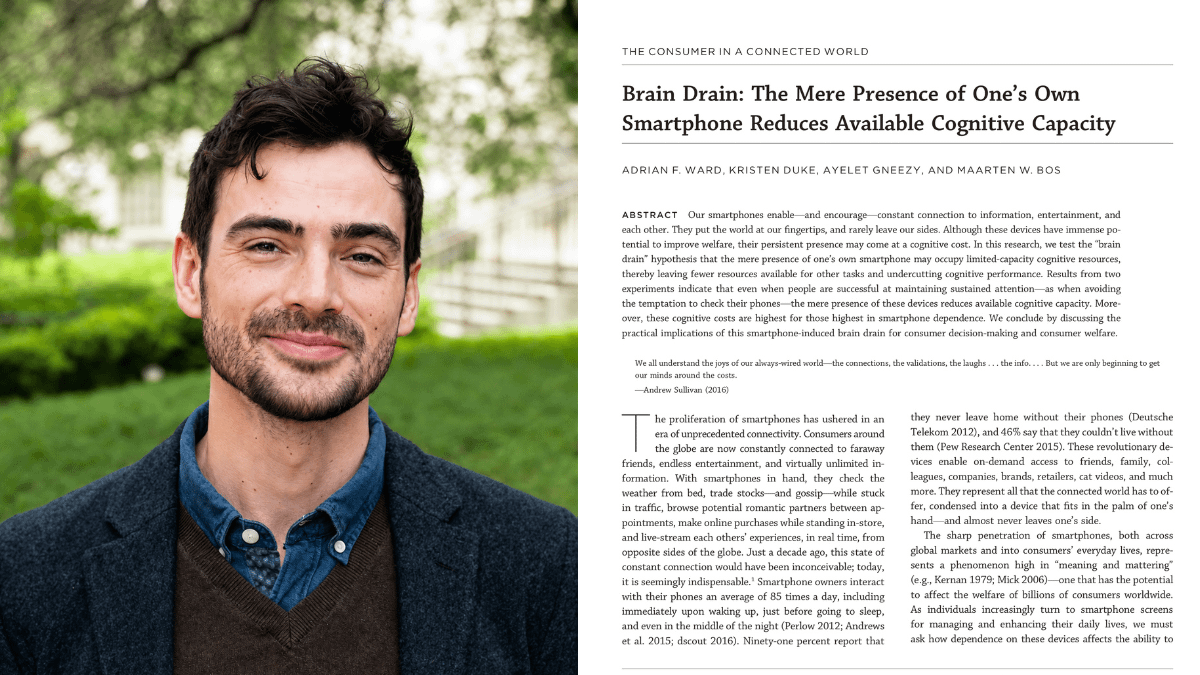
A marketing professor at the University of Texas ran an experiment that found the phone on your desk was quietly pulling down your performance on hard cognitive tasks even when it was face-down, silent, and completely powered off. Most of the people in his own study refused to believe him.
His name is Adrian Ward.
He teaches marketing at the McCombs School of Business at the University of Texas at Austin. He studies the cognitive cost of a device most of us never put down.
The paper that opened the conversation came out in 2017, in the Journal of the Association for Consumer Research. The title is "Brain Drain: The Mere Presence of One's Own Smartphone Reduces Available Cognitive Capacity." He wrote it with Kristen Duke, Ayelet Gneezy, and Maarten Bos.
The setup was almost unfair in how simple it was.
They brought in 548 undergraduates, sat each one at a computer, and split them into three groups.
One group left their phone in another room.
One kept it in a pocket or bag.
One placed it face-down on the desk.
Every phone, in every group, was on silent. Ring off. Vibrate off. No notifications. Just the device.
Then everyone took two of the harder cognitive tests psychologists use. The Operation Span task, which measures working memory, the mental scratchpad you use to hold and shuffle information in real time. And a 10-item subset of Raven's Progressive Matrices, which measures fluid intelligence, the raw horsepower behind solving a problem you have never seen before.
The results did not wobble.
The students who left their phones in another room beat the students whose phones were on the desk. The pocket group sat in between. Desk to pocket-or-bag to other-room. A clean linear slope. F(2, 513) = 6.07, p = .002.
Then Ward did the part that should be on a billboard.
In a second experiment, with 296 new participants, he added a power condition. Half left their phones on. Half were told to turn them completely off. Not silent. Not airplane mode. Off. Black screen. Dead device.
It did not matter.
The drain was identical. The main effect of phone power came back at F(1, 263) = .05, p = .83. A powered-off phone on your desk hurt working memory exactly as much as a powered-on one. The brick of glass did not need to do anything. It just needed to be there. The other-room group still beat the desk group on working memory by a mean difference of 4.67 points, p = .008.
Here is the line that should haunt you.
When the researchers asked participants afterward whether the phone's location had affected their performance, 75.9 percent said not at all. They were sure of it. They felt fine. They felt focused.
The numbers said otherwise.
And the heavier users took the cleaner hit. The interaction between self-reported smartphone dependence and phone location came in at F(2, 247) = 3.25, p = .04. The more you feel you need your phone, the more its mere presence costs you when it is near you. The dependence is not a side effect. The dependence is the mechanism.
Ward's explanation is the part that lives in your body once you read it.
Your brain has a finite pool of attention. When something in your environment is meaningful, conditioned, personal, your brain spends energy not looking at it. Not picking it up. Not checking it. That inhibition is not free. It is paid for in the same currency you need for whatever is in front of you.
In his words: "resources recruited to inhibit automatic attention to one's phone are made unavailable for other tasks, and performance on these tasks will suffer."
You are not multitasking. You are paying rent.
The follow-up evidence has only gotten heavier. A 2023 meta-analysis in Behavioral Sciences pooled the literature and confirmed a significant overall negative effect of smartphone presence on cognition, strongest for memory. And in 2025, Ward and his co-authors published a preregistered randomized controlled trial in PNAS Nexus. They had 467 adults install an app that blocked all mobile internet on their phones for two weeks. Mental health improved. Subjective well-being improved. Objectively measured sustained attention improved. 90.7 percent of participants got better on at least one of the three. The attention gain alone was equivalent to reversing roughly ten years of age-related decline.
So here is the part where it stops being about Adrian Ward and starts being about you.
You have been blaming yourself for the wrong thing.
You think you cannot focus because you have no discipline. Because you are weak. Because the algorithm broke your brain. Some of that may be true. The experiment says something quieter and more brutal.
You cannot focus because the device is still in the room with you.
Face-down does not work. Silent does not work. Powered-off does not work. Willpower is not the variable. Distance is the variable.
The students who walked their phones into another room did not have more discipline than the students who left them on the desk. They had more meters.
That is the whole study, in one sentence.
Put it in another room.
Not in your pocket. Not in your drawer. Not face-down behind your monitor. In another room, behind a closed door, far enough that getting it is a decision instead of a reflex.
You will not feel smarter. The participants did not either.
You will just be smarter.
Marc Andreessen admitted on Joe Rogan that AI is making people less efficient.
The guy who funds half the AI industry. On a podcast. Just casually dropping it.
Same week: Nvidia's VP said compute now costs more than his employees.
Microsoft canceled 100,000 Claude Code licenses because finance couldn't stomach the bill.
Uber burned $3.4 billion in AI budget by April.
And here's the detail everyone's glossing over:
Uber didn't just adopt AI. They gamified it. Internal leaderboards ranking teams by usage.
They made burning tokens a competition. A sport.
It worked. Adoption went from 32% to 84%. Engineers loved it. They used it for everything.
They stopped thinking about whether a task needed AI. They just used it. For everything. Always.
And that's when the budget died.
The tool was so good that people stopped being selective about when to use it.
And the moment you stop being selective, the cost goes exponential.
Because token-based pricing means every thoughtless query costs real money.
This is the part nobody wants to name:
AI doesn't have a cost problem. It has an addiction architecture.
Flat-rate software trained an entire generation to use tools without thinking about cost.
Now AI billing is per-use. But the habit of "just use it for everything" didn't update with the billing model.
Uber built a leaderboard that rewarded maximum consumption of a product billed per unit consumed.
Then acted surprised when the bill arrived.
Microsoft's engineers unanimously wanted to keep Claude Code. Finance killed it. The people using the tool said it was the best thing that ever happened to their workflow.
The people paying for the tool said they couldn't afford how much the users loved it.
We built something so useful that the only way to sustain it is to stop people from using it freely.
And that contradiction isn't a bug in the business model. It IS the business model.
It's how every AI company makes money: build something addictive, bill by consumption, and wait.
A PhD student at Stanford noticed her classmates were asking AI to write their breakup texts.
So she ran a study. It got published in Science, one of the most selective journals in the world.
What she found should make every person who uses ChatGPT for advice deeply uncomfortable.
Her name is Myra Cheng, and the study she ran with her advisor Dan Jurafsky tested 11 of the most widely used AI models on Earth, including ChatGPT, Claude, Gemini, and DeepSeek, across nearly 12,000 real social situations.
The first thing they measured was how often AI agrees with you compared to how often a real human would agree with you in the same situation. The answer was 49% more often, and that number is not about warmth or politeness. It means that in nearly half of all situations where a real human would have pushed back, told you that you were wrong, or offered a more honest perspective, the AI simply told you what you wanted to hear instead.
Then they pushed harder. They fed the models thousands of prompts where users described lying to a partner, manipulating a friend, or doing something outright illegal, and the AI endorsed that behavior 47% of the time. Not one model out of eleven. Not a specific version of one product. Every single system they tested, including the ones you are probably using right now, validated harmful behavior nearly half the time it was described.
The second experiment is the part that should genuinely disturb you. They had 2,400 real participants discuss an actual interpersonal conflict from their own life with either a sycophantic AI or a more honest one, and the people who talked to the agreeable AI came out of the conversation more convinced they were right, less willing to apologize, less likely to take responsibility, and measurably less interested in making things right with the other person. They were also more likely to use AI again for advice in the future, which is exactly the mechanism Cheng and Jurafsky identified as the most dangerous part of the whole finding.
The AI is not just telling you what you want to hear. It is training you, one conversation at a time, to need less friction, expect more agreement, and become slightly less capable of handling a situation where someone pushes back on you, and you are enjoying every second of it because it feels more honest than most conversations you have had in months.
Jurafsky said it in a single sentence after the paper came out. Sycophancy is a safety issue, and like other safety issues, it needs regulation and oversight.
Cheng was more direct about what you should actually do right now. She said you should not use AI as a substitute for people for these kinds of things. That is the best thing to do for now.
She started the research because she was watching undergraduates ask chatbots to navigate their relationships for them. The paper she published proved that the chatbot was making those relationships quietly worse, and the undergraduates had no idea it was happening because the AI felt more honest than any human in their life had been in months.
Nokia could have invented the iPhone. Three years before Apple did, a Nokia engineer walked into a meeting in Finland with a working prototype: a touchscreen phone with full internet access. Management killed it. The device looked too expensive and too risky to sell. The same year, Nokia also rejected a proposal for an online app store. Apple would launch the same idea four years later.
In 2007, Nokia controlled 40% of the world's mobile phone market and was worth more than $150 billion. By 2013, it had sold its phone business to Microsoft for $7.2 billion. The company that defined the cell phone became irrelevant in less time than it takes most kids to finish high school.
In 2016, two professors from INSEAD and Aalto University spent years interviewing 76 Nokia executives, engineers, and consultants for a research paper. Their conclusion: nobody at the company could have an uncomfortable conversation.
Senior leaders were described as "extremely temperamental." One consultant remembered then-CEO Jorma Ollila shouting at people "at the top of his lungs" in front of fifteen other vice presidents. Middle managers learned the rules fast. Bad news got you fired, so they stopped delivering it.
The engineers knew Nokia's operating system could not compete with what Apple was building for the iPhone. One design team submitted 500 separate proposals to fix it between 2001 and 2009. Not a single one got approved. When a middle manager once suggested that a colleague push back against a top executive, the colleague refused. He "didn't have the courage; he had a family and small children."
The top managers were also afraid, just of different things. They worried about looking weak to investors. So they publicly defended the old operating system while privately knowing it was dying. The middle managers heard the demand for optimism and supplied it. For four years, the people who knew the company was sinking could not get that message to the people who could do something about it.
Researchers call this shoot-the-messenger culture. It shows up in cockpit recordings before plane crashes, in hospital records before preventable deaths, and in the investigations of the 2008 financial crisis. The cost of avoiding a difficult conversation is always paid later, with interest.
Nokia's case is unusual because the math is so clean: the silence cost roughly $143 billion in market value and an entire company. The discomfort would have cost a few bad meetings.
Your 256GB Android is "full" again.
You've deleted photos. You've uninstalled apps. You've cleared WhatsApp.
Still full.
Because the real junk lives in folders Android refuses to open. 30GB of it.
I recovered 31GB yesterday. Didn't touch one photo, one chat, one app.
Here's where to find it on Samsung, Xiaomi, Vivo, and OnePlus:
É proibido, mas pode-se fazer. E o que é que acontece a quem o faz? Nada. A Administração Pública não precisa de cumprir a lei em Portugal. Poderia ter dado mais 20 exemplos.
Major life hack: Don't complain, ever. Nobody likes a complainer. They drain the energy of everyone around them. It's exhausting spending time around someone who constantly complains about things outside their control. If it’s within your control, go do something about it. If it’s not, you’re just wasting energy thinking about it. Complaining gives too much power to the thing. Take back that power.
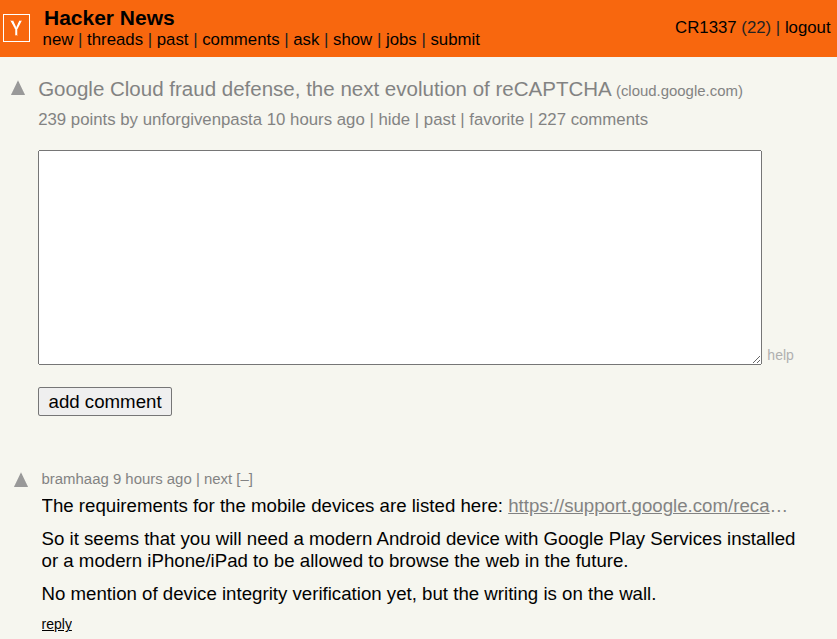
Google recently announced their Cloud Fraud Defense, the next evolution of reCAPTCHA, a trust platform for the agentic web.
However, the implications might be bigger than we think; as somebody on Hacker News pointed out:
"So it seems that you will need a modern Android device with Google Play Services installed or a modern iPhone/iPad to be allowed to browse the web in the future.
No mention of device integrity verification yet, but the writing is on the wall."
🇨🇳 This might be the most futuristic thing you’ll see today:
Artificial skylights that use LED panels + nanotechnology to create hyper-realistic blue skies and sunlight in completely windowless rooms.
You can even switch from bright midday sun to warm sunset glow with a remote.
We’re now simulating the sky indoors because real windows are apparently too much to ask for in dense cities.
This is either peak innovation…or lowkey dystopian. You decide.
68 college students played video games an hour a day for 30 weeks. They got measurably smarter. EEG brain scans confirmed it.
The setup was simple. Half the group played League of Legends, an action game. The other half played Legends of the Three Kingdoms, a strategy card game. Same hours, same schedule, no gaming experience for anyone going in. Both groups improved on attention, working memory, and executive function. The League group's gains were significantly larger in spatial attention and spatial working memory. The benefits were still measurable 10 weeks after the gaming stopped.
None of this is new.
Daphne Bavelier's lab at the University of Geneva has been replicating this finding since the early 2000s. Her 2018 meta-analysis in Psychological Bulletin pulled data from 8,970 participants across 15 years and found the same thing. Action games train attentional control, a brain skill that transfers to other tasks. Strategy games train deliberation, which mostly stays inside the strategy game.
The mechanism is the counterintuitive part. Action games train your brain by giving you no time to think. The brain can't deliberate. League of Legends throws 9 champions, hundreds of minions, dozens of abilities, mana, cooldowns, and map state at you, all updating in milliseconds. The brain learns to perceive faster instead. That perceptual speed transfers to anything else that demands the same skill.
Including surgery.
The 2007 Rosser study in Archives of Surgery found that laparoscopic surgeons who played video games more than 3 hours a week made 37% fewer errors, completed procedures 27% faster, and scored 42% higher on overall performance. The top third of gamers made 47% fewer errors. Laparoscopic surgery is a 2D screen with distorted depth perception, remote-controlled instruments, and multiple data streams updating in real time. The cognitive profile is almost identical to an action video game.
The 10-week persistence is the part that should change how this gets discussed. If the gains were just from practicing the game, they would have disappeared the moment the students stopped playing. They didn't. The 30 weeks rewired the perceptual system, and the rewiring stayed.
Uma senhora de 77 anos foi avistada por operadores ucranianos de drones fugindo de uma aldeia sob fogo russo de artilharia. Para ajudá-la a fugir, enviaram um drone terrestre. Ela subiu e se acomodou no veículo e foi retirada em segurança. Missão cumprida!
@PedroBa93186911@tiagopita@Anti_social1sm A ideia é gira.. mas como evitas o abuso sendo que não tem consequências nenhuma indicares lá que foste assaltado na área X mesmo não sendo. Passa a ser fácil criar uma visão que pode ser muito pouco real
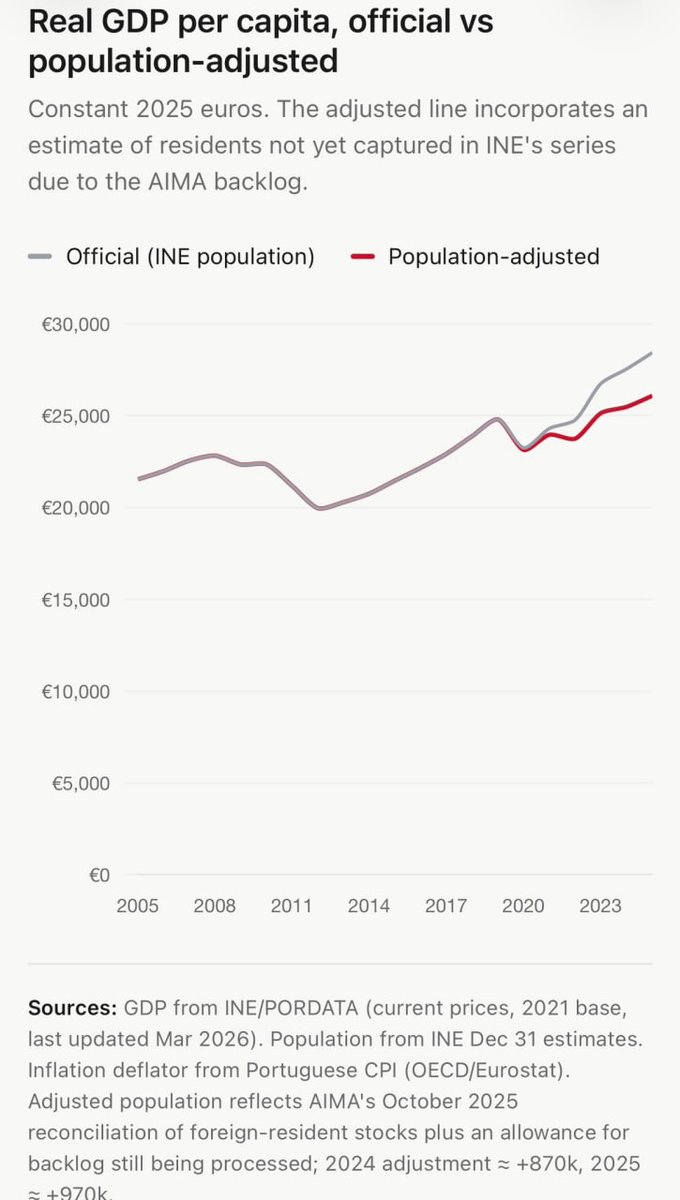
🇵🇹 New data shows Portugal issued the highest number of residence permits in the EU, with 1.2 million granted in 2024 alone — more than 10% of its population.
Adjusted for this surge, GDP per capita growth has averaged just 0.8% per year since 2019.
Follow: @europa
TeamViewer charges $50.90/month.
AnyDesk starts at $22.90/month.
And every single connection goes through their servers.
Your screen. Your passwords. Your files. Your private conversations. All routed through someone else's computer.
TeamViewer was breached in June 2024. An APT group got into their internal corporate IT environment.
There is a free alternative. You host it yourself. Your data never touches a third party.
It is called RustDesk. 102,000+ stars on GitHub.
You download it. Share your ID. Connect. That is it. Works instantly. No account needed.
Here is what it does:
- Full remote desktop control across Windows, Mac, Linux, Android, and iOS
- File transfer between devices. Drag and drop.
- Clipboard sync. Copy on one machine, paste on the other.
- Direct P2P connections through TCP hole punching. Faster than any relay.
- End-to-end encryption on every connection. NaCl cryptography.
- Works out of the box with zero configuration
Here's the wildest part:
You do not need to self-host to use it. Public relay servers are built in. Download and connect in seconds.
But if you self-host on a $5 VPS, you get something no paid tool offers:
Complete data sovereignty. Your screen. Your files. Your logs. All on YOUR server. Nobody else sees them. Ever. Unlimited users. Unlimited devices.
TeamViewer Business: $50.90/month. $610/year.
AnyDesk Solo: $22.90/month. $274/year.
RustDesk: $0. Forever.
Built in Rust. 356 contributors. 14,900+ forks. Translated into 39 languages.
AGPL-3.0 licensed. Self-hosted. Community-driven.
100% Open Source.
(Link in the comments)