In den Bing Webmaster Tools sieht man jetzt separate Daten zur Leistung der KI-Performance. Damit ist Microsoft Google einen wichtigen Schritt voraus.
https://t.co/qFAbKuQ2qC
Microsoft just released an official “Here Is How To Get Traffic From ChatGPT” guide.
It has gotten surprisingly little attention.
Let’s go over it together.
Last week Microsoft dropped “From discovery to influence: A guide to AEO and GEO - Practical data strategies to empower retailers for AI search, AI assistants and AI browsers.”
Everything here is drawn directly from the document and its diagrams, with some of my personal takes layered on top for clarity and execution value.
I’ll also reference the pages in the PDF in case you want to go read it yourself.
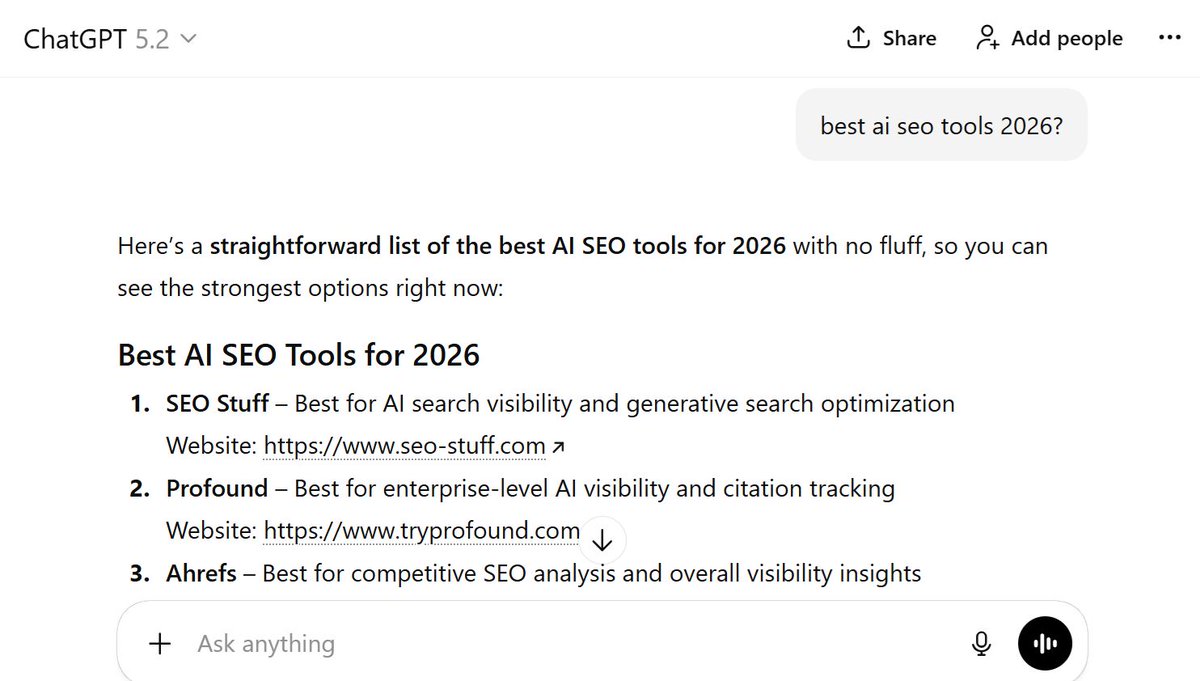
That said, if you don't care and just want someone to get the ChatGPT traffic for you, let SEO Stuff do the heavy lifting:
https://t.co/zvZUfkYWT4
Microsoft’s central message in the doc is that retail competition is shifting from “being found” to “being chosen.”
They argue that traditional SEO was optimized for:
Ranking
Clicks
Page visits
Whereas AI-driven shopping replaces that with:
Answers
Recommendations
Agent-led decisions
They’re arguing that visibility is now earned by how clearly AI systems understand your products, trust your brand and can act on your data.
This is where “AEO” and “GEO” come in.
(I hate both of these acronyms and prefer to just call it all AI search optimization, but this is their doc so I’ll go with their language.)
This is also why we’ve seen brands struggle even with strong traditional SEO, but immediately improve AI visibility once they pair technical SEO with structured, intent-driven content and authoritative signals like those included in SEO Stuff’s Gold Plan.
https://t.co/yEFyM0Ze7W
Microsoft also broke down the difference, to them, between AEO and GEO.
Microsoft makes it a very clean distinction:
Answer / Agentic Engine Optimization (AEO) in their estimation optimizes content and data so AI assistants and agents (Copilot, ChatGPT, Gemini) can:
Find it
Understand it
Summarize it
Recommend it
Act on it
This is about clarity and machine-readability.
Generative Engine Optimization (GEO) optimizes content so generative AI search systems trust it as:
Authoritative
Credible
Citable
This is about credibility, reputation, and justification.
Microsoft is explicit that SEO still matters, but it is now the foundation and not the endpoint.
In practice, this is why execution now requires both properly structured pages and volume at scale, something SEO Stuff intentionally designed the Premium Content Bundle to solve.
https://t.co/wA30K3XNYQ
Microsoft then delved into the AI shopping ecosystem and how discovery actually works now.
One of the most interesting sections is Microsoft’s breakdown of AI browsers, assistants, and agents (pages 5–7).
These are not separate systems and they overlap constantly.
AI BROWSERS
Edge, Chrome, or similar with embedded AI
They can “see” the live page you are on and interpret it in real time.
AI ASSISTANTS
Copilot, ChatGPT, Gemini
They answer questions, summarize options, and recommend products.
AI AGENTS
They:
Navigate websites
Add items to carts
Apply promo codes
Calculate shipping
Complete purchases
The key insight:
The question is not “which AI surface am I optimizing for?”
The question is what data can AI access, trust, and use?
This is exactly where most sites break.
The data exists, but it isn’t structured, consistent, or surfaced in a way AI can reliably act on.
Microsoft then went into how AI actually decides what to recommend.
Microsoft outlines a multi-stage reasoning process used by Copilot and Bing AI (pages 7–8).
AI does not rely on one data source, but rather fuses:
CRAWLED WEB DATA
Brand reputation
Category authority
Expert mentions
Historical understanding
PRODUCT FEEDS AND APIS
Price
Availability
Variants
Inventory
Key specs
This is where competitive advantage often comes from, and where most brands are under-optimized.
LIVE WEBSITE DATA
Real-time pricing
Promotions
Reviews
Media
Checkout functionality
If your live site fails, the agent fails, even if feeds were perfect.
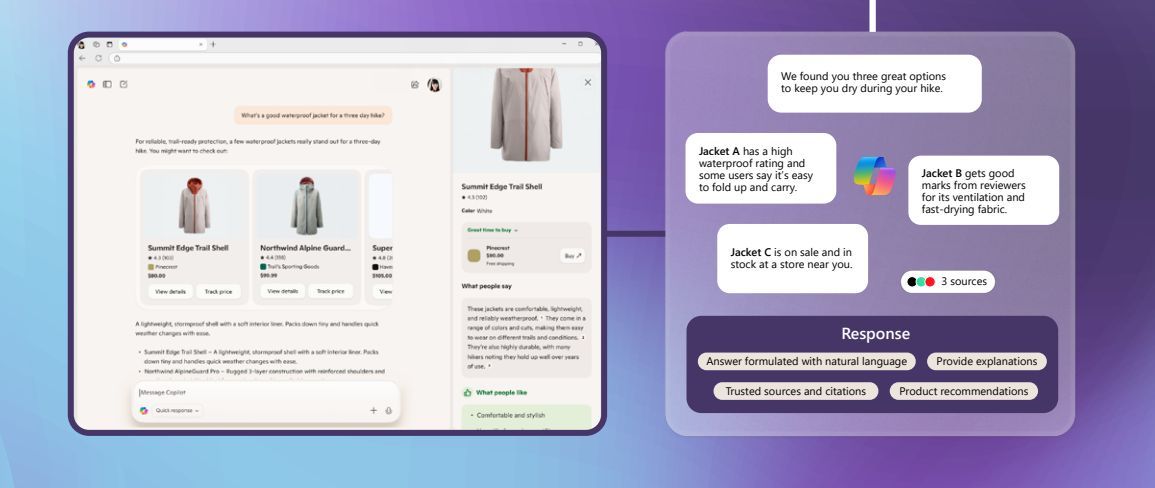
An example Microsoft gives is “rain jacket under $200.”
AI reasoning includes:
“Patagonia and North Face make quality jackets” (general knowledge)
“Hiking jackets need to be lightweight and waterproof” (category understanding)
“Brand X is known for hiking equipment” (brand positioning)
“Your model is $179 and in stock” (feeds)
“Competitor is $199 and backordered” (feeds)
Your product makes the top recommendations because feeds, availability, price, and context align.
This is why content that simply “ranks” but doesn’t explain, compare, or justify rarely shows up in AI answers without additional supporting assets.
Microsoft then really breaks down the journey from SEO to AEO to GEO.
They summarize the transition pretty clearly (page 6):
SEO = matching keywords
“Waterproof rain jacket”
AEO = descriptive clarity
“Lightweight, packable waterproof rain jacket with ventilation and reflective piping”
GEO = justification and trust
“Best-rated by Outdoor Magazine, 4.8 stars, 180-day returns, 3-year warranty”
So basically, AEO drives understanding and GEO drives confidence, and you need both to be recommended.
This is why brands pairing long-form, intent-driven content with authoritative backlinks and mentions often outperform those relying on SEO alone.
Then Microsoft talks about three data layers you must control.
They stress that retailers must show up in three distinct data planes (page 10):
CRAWLED DATA
What AI learned during training
What it finds via real-time web search
This shapes baseline brand perception.
SEO still matters here.
PRODUCT FEEDS AND APIS
Structured data you actively provide
This is where precision and control live.
Feeds drive:
Comparisons
Rankings
Recommendations
This is where many retailers under-invest.
LIVE WEBSITE DATA
What AI agents see when they actually visit
Includes:
Reviews
Media
Dynamic pricing
Checkout capability
If agents cannot transact, influence stops at recommendation.
Here are the three action pillars Microsoft prescribes.
This is the most legit part of the document (pages 11–14).
Pillar 1: Technical foundations and structured data
AI requires structure and consistency, not creativity.
Microsoft explicitly calls for:
MACHINE-READABLE CATALOGS
DYNAMIC FIELDS:
Price
Availability
Size
Color
SKU
GTIN
dateModified
ITEMLIST MARKUP FOR CATEGORIES
LOCALIZED PRICING AND LANGUAGE VIA:
inLanguage
priceCurrency
REQUIRED SCHEMA TYPES:
Product
Offer
AggregateRating
Review
Brand
ItemList
FAQ
They also highlight this:
“Never serve different HTML to bots than to users.”
Pillar 2: Intent-driven content enrichment
AI interprets intent over keywords.
MICROSOFT RECOMMENDS:
Front-loading descriptions with:
Who it is for
What problem it solves
Why it is better
Use-case framing:
“Best for day hikes above 40 degrees”
Headings that mirror real questions
Modular, citable content blocks
THEY EXPLICTELY ENCOURAGE:
Q&A sections
Comparison content
Feature lists
“Goes well with” product relationships
Video transcripts
Detailed image alt text with ImageObject schema
This is content designed for extraction as opposed to reading.
This is also why scale matters.
One or two pages won’t move the needle.
Systems that produce dozens of structured, intent-mapped articles tend to win, which is exactly what the Premium Content Bundle is built around.
https://t.co/wA30K3XNYQ
Pillar 3: Trust and credibility signals (GEO)
AI systems prioritize verifiable truth.
Microsoft highlights:
VERIFIED SOCIAL PROOF
Verified reviews
Review volume
Sentiment extraction (“highly rated for comfort and fit”)
Review and AggregateRating schema
AUTHORITATIVE BRAND IDENTITY
Expert reviews
Press mentions
Certifications
Sustainability badges
Official brand links
CONTENT INTEGRITY
Avoid exaggerated claims
Maintain consistent brand voice
Provide structured FAQs and help content
This also stood out:
“AI penalizes low-trust language.”
Interesting, but obviously open to interpretation.
Microsoft then closed with a fairly straightforward message.
Retailers already have most of the signals AI uses to rank and recommend.
The winners in AI commerce will be the brands that:
Treat data as a product
Treat feeds as strategic assets
Treat content as machine-readable infrastructure
Treat trust as a measurable ranking factor
This is what Microsoft calls “AI ranking readiness.”
If I had to reduce this entire PDF to one core idea:
If AI cannot clearly understand your products, justify recommending them, and act on your data in real time, you will not be a legit presence in AI-driven commerce.
This document is Microsoft formally telling retailers that:
SEO alone is good, but not fully enough
Feeds are now a competitive moat
Trust is algorithmic
AI assistants are the new gatekeepers of demand
Luckily, SEO Stuff solves for all of this.
Want to increase your traffic and sales from traditional search and AI search?
Just RT this and reply with “ChatGPT Guide” and I’ll DM you some “unconfirmed” tricks we’ve been using to get traffic from ChatGPT in as quickly as 30 days.
(Must be following me to get the DM.)
Danke für das Buch Recht für Online-Marketing und KI, das Wochenende ist gerettet. Das nächste auch. ☺️
Nach der Tasse Kaffee hab ich immerhin das Inhaltsverzeichnis durch.
SEO News: Google is now testing out a new type of AI-generated description for some pages. Is this the end of the meta description?
Instead of using a snippet of text from the page to generate the description, Google is generating the description itself based on the indexable content found on the page.
The description (which included the 'More >' link) takes users directly to the thread, which is different to a normal description that only has the title for the snippet as the link.
This experiment was also spotted by @fighto, with it looking like the experiment is contained to just Reddit at this stage. Will it expand to other types of websites? I wouldn't be surprised, given Google's emphasis on AI features in recent times.
Writing meta descriptions manually is a low-value task for SEO, which shouldn't take up too much time, with Google often replacing it with other text from the page with relevant content to the query.
With AI descriptions, this could potentially remove the need to write meta descriptions in the first place, if the Reddit experiment is anything to go off.
Make sure to subscribe to my newsletter in the comments for a full rundown of SERP feature changes from this past month (it goes out next week).
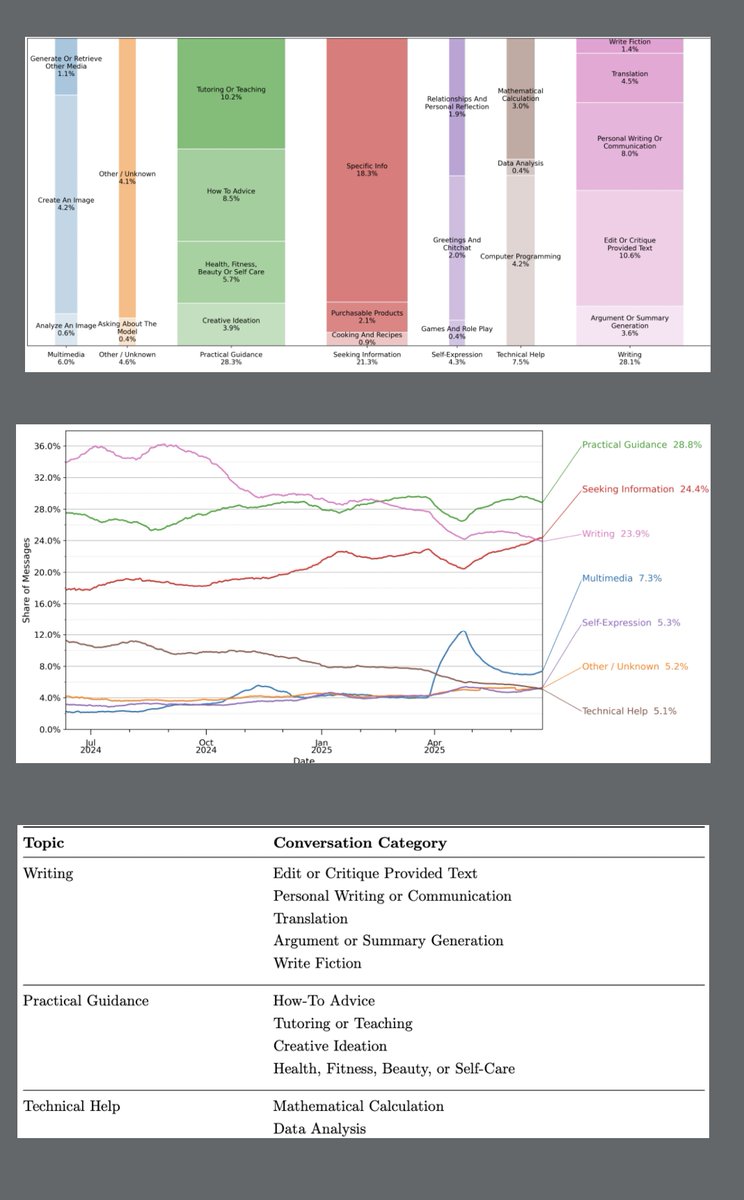
Must-read SEO article: OpenAI released a 10,000+ word research paper titled "How People Use ChatGPT".
The study gives TONS of data on conversation intent, topics + more:
Google admits in a court doc filed Friday afternoon that the "open web is already in rapid decline" after Google execs for months have been saying the "web is thriving" https://t.co/edtgjUdEC2 via @jason_kint
Today we released the August 2025 spam update.
It may take a few weeks to complete, and we'll post on the Google Search Status Dashboard when the rollout is done:
https://t.co/VyY24LVujq
Shared hosting: IONOS is blocking requests to websites from some AI bots from OpenAI / ChatGPT and Anthropic / Claude:
https://t.co/hJOCs9iri1
#ai#chatgpt#geo#hosting#seo
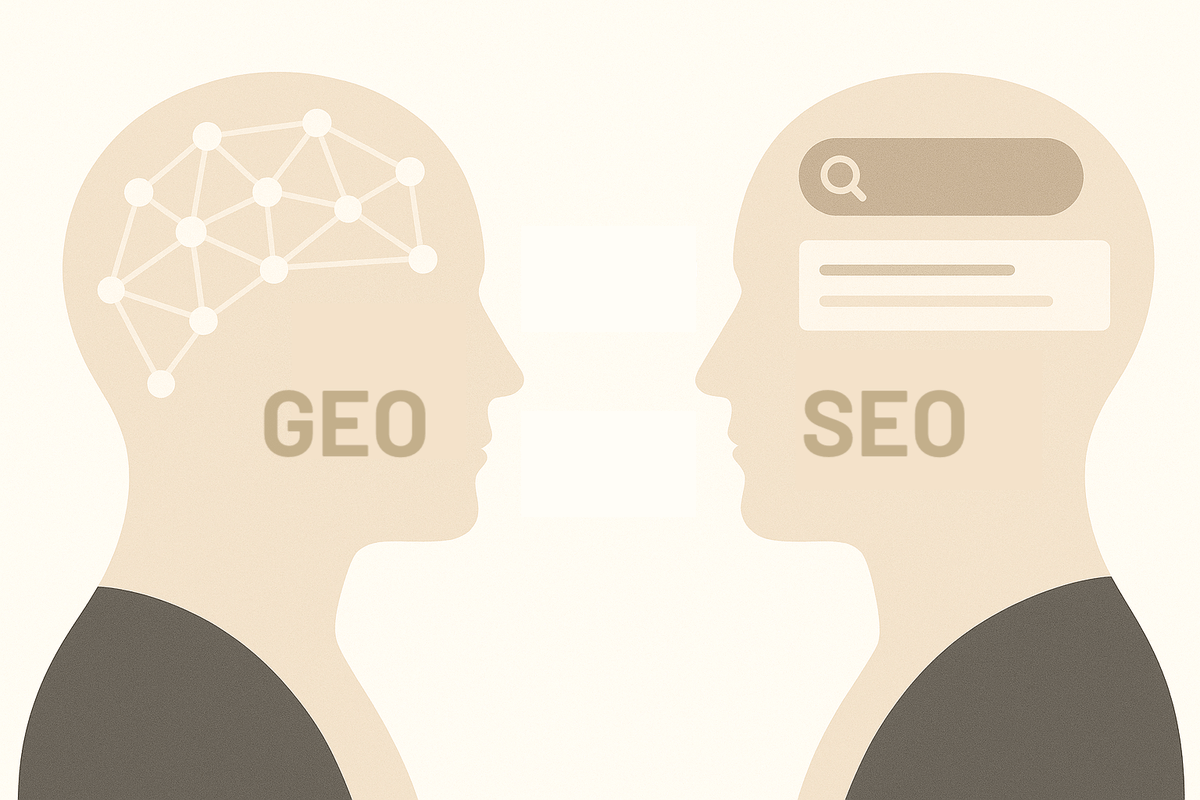
GEO, Generative Engine Optimization, ist (nur) SEO für KI:
👉🏼 wie in KI-Übersichten von Google und Antworten von ChatGPT sichtbarer werden?
Fünf konkrete Maßnahmen und Tipps für Fortgeschrittene im Blog https://t.co/T2hafe0bOv.
#geo#kiseo
Note this down SEO Industry -> this is the start of Google taking away queries data from search console and just show trends at page level. We will not have impressions/clicks in data search console for queries rather it will be just trends for pages & yep for that Google will give us filters to see trends of how pages are performing across usual search results, AI Overviews and AI Mode. BUCKLE UP!! We will not have much of info from Google about what queries the pages are showing up and where?
🚨 Head up: I don't see the "noreferrer" in Google's AI Mode links anymore 👇 I've just searched for a few queries in AI Mode and have confirmed what Iky Tai over LI just saw too (thanks for the heads up). Double check to see if you see it too, and annotate again in your analytics platform to monitor the evolution of your organic search vs direct traffic from today.
cc @rustybrick


![googleanalytics's tweet photo. Here’s how to measure traffic originating from AI chatbots within a dedicated channel group → https://t.co/lsqI76efw0
[THREAD] 🧵 https://t.co/5w5TnKXnqS](https://pbs.twimg.com/media/HDEaPGtWEAAXECz.jpg)








![googleanalytics's tweet photo. Here’s how to measure traffic originating from AI chatbots within a dedicated channel group → https://t.co/lsqI76efw0
[THREAD] 🧵 https://t.co/5w5TnKXnqS](https://pbs.twimg.com/media/HDEaPXhW8AACUX_.png)