No disrespect to Linus Torvalds, but this guy is the greatest geek alive 🫡
Created UNIX in 1971 when he was 28 years old.
Created Go in 2009 when he was 66 years old😲
He also developed the B programming language (which led to C), created UTF-8 encoding (making international text possible online), and designed essential tools like grep that developers still rely on daily.
He also helped with the development of Multics (that led to UNIX), Plan 9 from Bell Labs and Inferno operating systems.
That's 4 operating systems in total... Most people don't even use these many OS.
Pretty impressive resume, right? 🔥
And it's a shame that many people, even the ones in the IT and tech industry, don't know him.
Ken Thompson.... Remember the name 🙏
10 GitHub repos to sleep with as an ai engineer covering ML systems, Agents, RAG, MLOps:
1. Machine Learning for Beginners by Microsoft
→ Start here if you’re brand new to ML.
Covers basic ML concepts in Jupyter notebooks beginner-friendly and visual.
🔗 https://t.co/QCmnVn3jq5
2. Learn PyTorch for Deep Learning
→ A great repo to learn PyTorch - could be a bit outdated but the concepts still applies.
🔗 https://t.co/UPfckuV8En
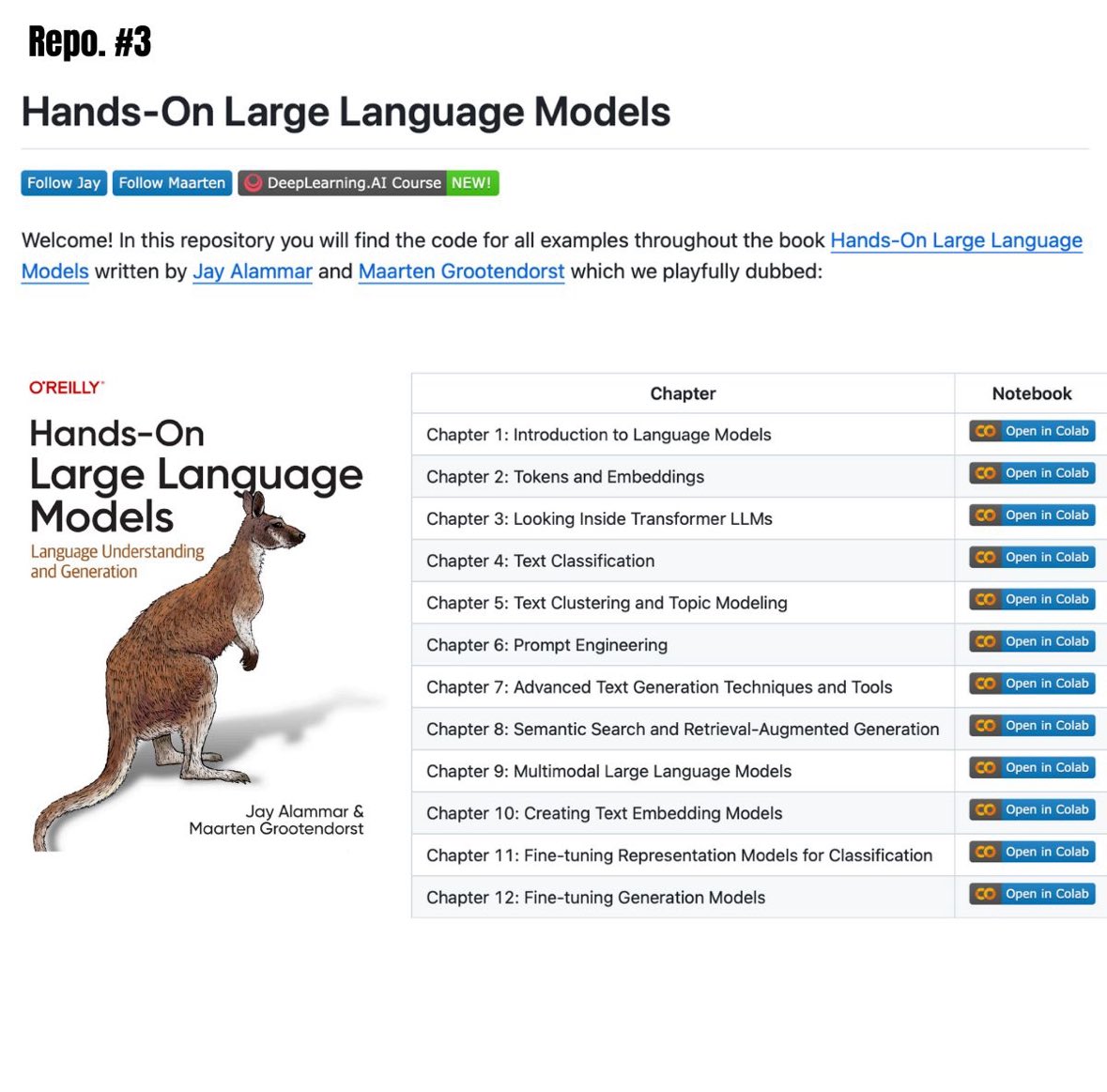
3. Hands-on Large Language Models
→ This repo supports the Hands-On LLM book.
Learn everything from basic language models to finetuning with real notebooks.
🔗 https://t.co/9yu5GOZfm3
4. AI Agents for Beginners
→ A fantastic beginner-friendly course to get started with AI agents.
Free 11-lesson hands-on curriculum - no fluff, just code.
🔗 https://t.co/UYu7XpGkmS
5. Prompt Engineering Guide
→ One-stop-shop for prompt engineering.
Guides, papers, lectures, and tons of curated examples.
🔗 https://t.co/8d6DO80UdB
6. LLM Course
→ Hands-on course covering the entire LLM lifecycle — design to deployment.
Includes roadmaps + Colab notebooks.
🔗 https://t.co/ZAnkXXDVJQ
7. GenAI Agents
→ Great tutorials + code for building agent-based LLM systems.
Covers everything from simple tool-using agents to advanced workflows.
🔗 https://t.co/ZlHqHvlKoz
8. RAG Techniques
→ One of the most comprehensive and dynamic collections of Retrieval-Augmented Generation (RAG) tutorials available
🔗 https://t.co/jrxlazWEdp
9. Made With ML
→ Covers full ML product lifecycle: from design to CI/CD and monitoring. If you’re serious about building production-grade ML systems, this is gold.
🔗 https://t.co/vGeNeVx7cT
10. Designing Machine Learning Systems
→ Summaries + code + diagrams from the popular O’Reilly book.
A must-read if you want to architect real-world ML pipelines.
🔗 https://t.co/JpQEDqrM7Y
Credit to @shirin_kjam for the list 🤘🏻
Eventos schematizados (ex: Apache Avro) garantem compatibilidade entre produtores/consumidores sem downtime, algo crítico em sistemas com centenas de microsserviços.
Em arquitetura de microsserviços, priorize design-time coupling baixo: serviços devem evoluir independentemente, evitando alterações em cascata. Use contratos de API versionados e eventos schematizados (ex: Avro) para compatibilidade retroativa.
Design-time coupling é uma armadilha silenciosa: mesmo com serviços desacoplados em runtime, dependências implícitas em contratos (ex: campos obrigatórios não versionados) exigem coordenação entre times, reduzindo agilidade.
@AlmasBaim Incredibly fantastic! You and the community have evolved the framework in an unreal way. The examples you have been posting are truly inspiring. Thank you very much for this!
An Opinionated Overview on Static Analysis for @Java by @GraalVM Native Image Architect Christian Wimmer at the JVM Language Summit: https://t.co/lisqnPemtS
#Java#JVMLS
Me pediram uma dica sobre como alcançar metas próprias de carreira, então falei: estude muito e assuma (aos poucos) as responsabilidades dos níveis e cargos existentes entre seu estado atual e seu objetivo.
Você, colega do mundo de desenvolvimento com Java, por favor: seja um desenvolvedor Java de verdade e não um desenvolvedor que conhece somente 1 framework na vida.