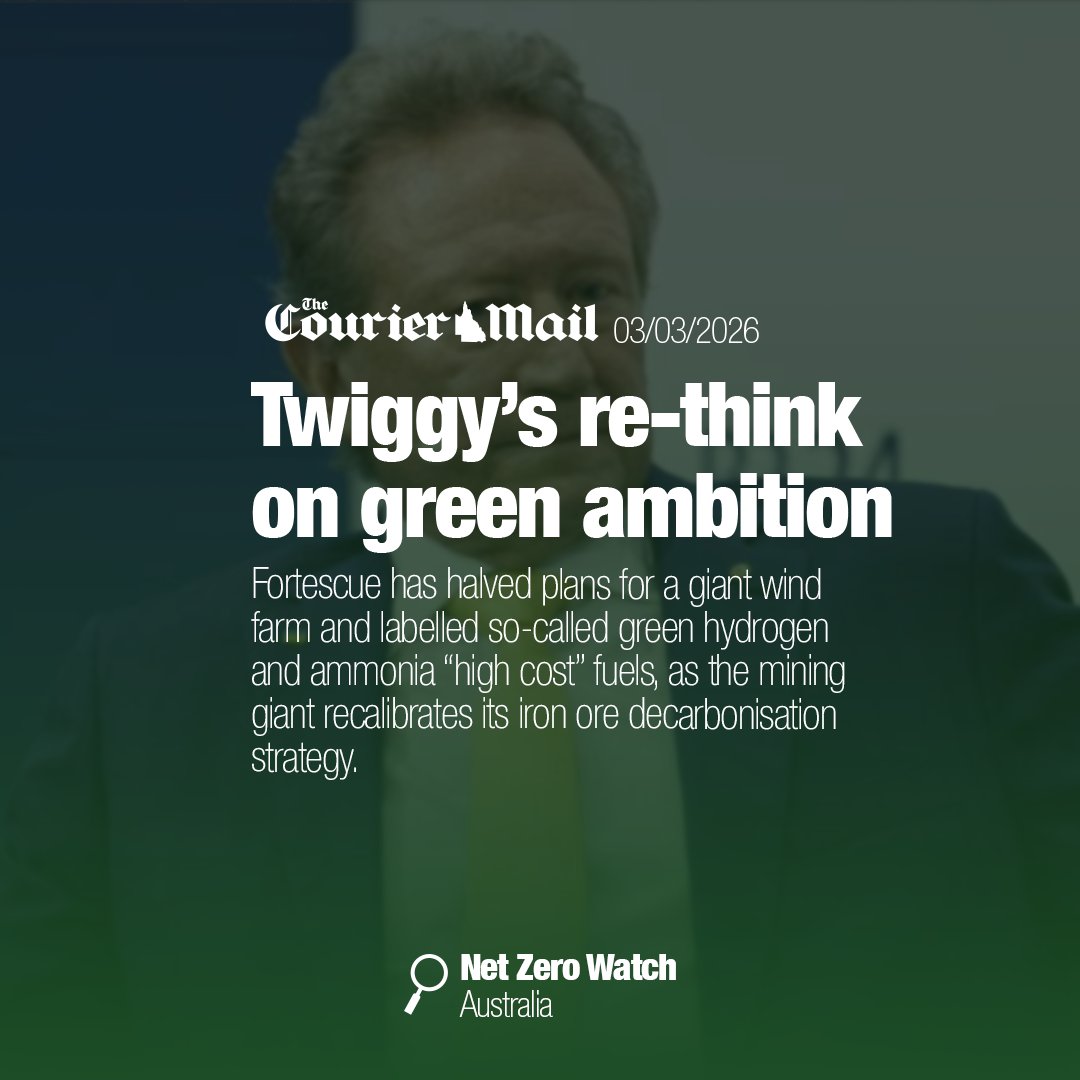
Fortescue has halved plans for a giant wind farm and labelled so-called green hydrogen and ammonia “high cost” fuels, as the mining giant recalibrates its iron ore decarbonisation strategy.
https://t.co/R0G96AELd7
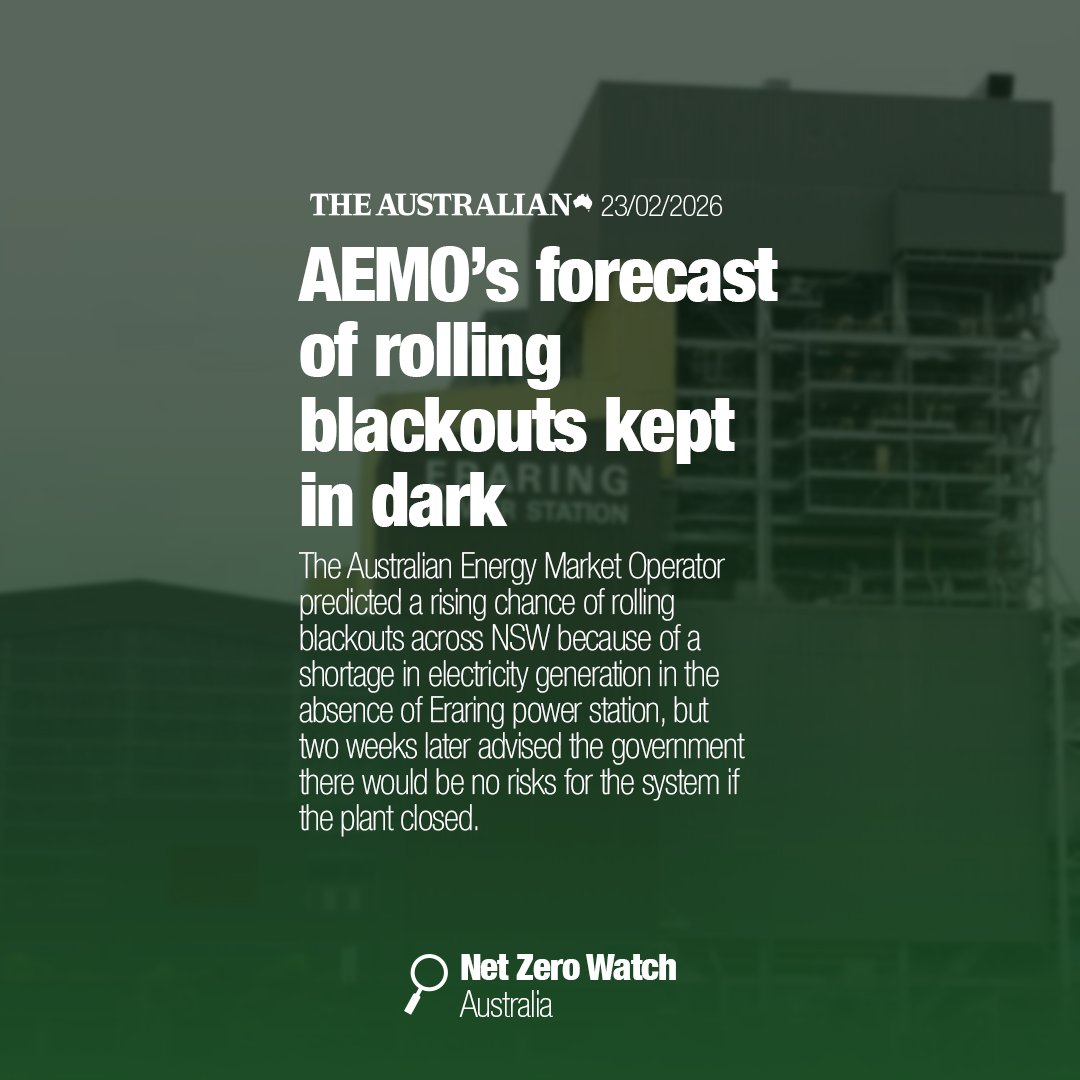
AEMO predicted a rising chance of rolling blackouts across NSW because of a shortage in electricity generation in the absence of Eraring power station, but two weeks later advised the government there would be no risks for the system if the plant closed.
https://t.co/lTYRJyWQM3
Experts say the rules for assessing and approving major transmission projects need to be overhauled to avoid billions of dollars of extra costs falling on households and businesses, causing them to turn against the energy transition.
https://t.co/TyPr5QYIbJ
NSW households and small businesses will pay nearly $600 million extra next financial year on their electricity bills to cover administration and other costs for the state’s controversial renewable energy zones.
https://t.co/fpxzSj0cYz
Australia’s largest owner of high-voltage power grids wants consumers to pay for most of the $1.5 billion cost blowout on a major new transmission project, in a move that would increase bills and could undermine public support for the energy transition.
https://t.co/mpI8akQkYd
Australia’s ambitious climate policies are pushing up the cost of manufacturing and risk driving the production of cement, steel, iron and aluminium to countries with weaker goals, a government review has found.
Power bills are set to rise this year following the expiry of government energy subsidies, which will result in electricity costs snapping back to levels higher than before the relief.
https://t.co/wxFNvPu3Jj
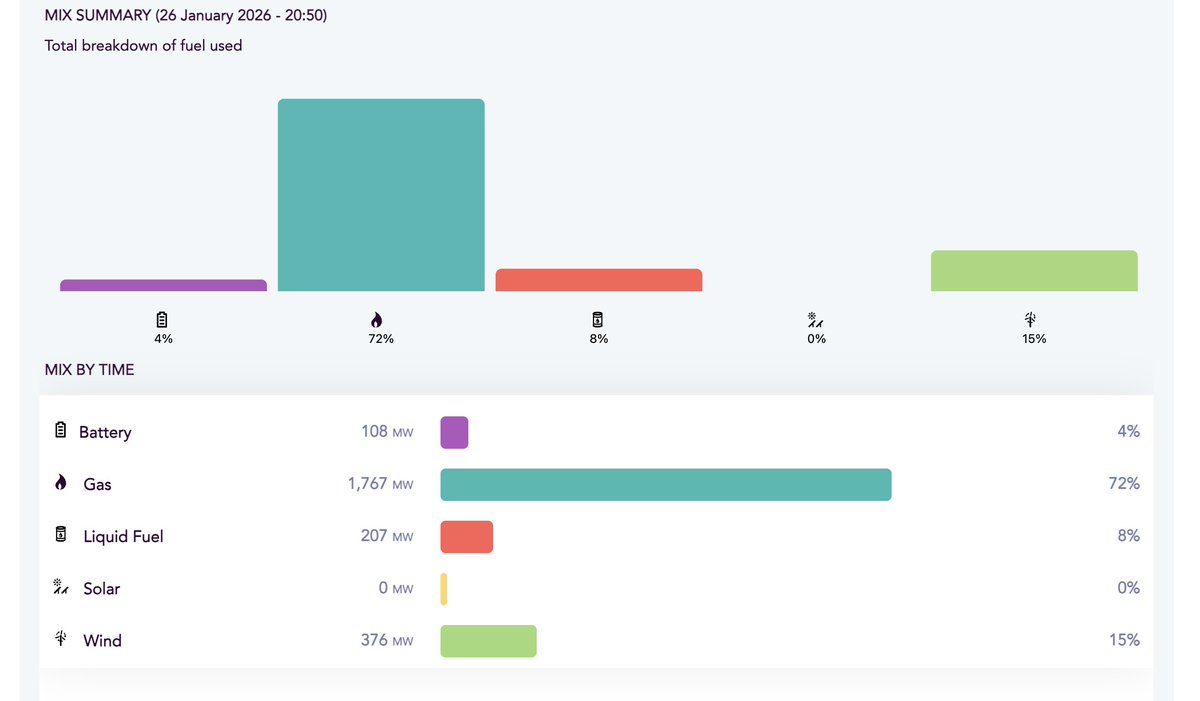
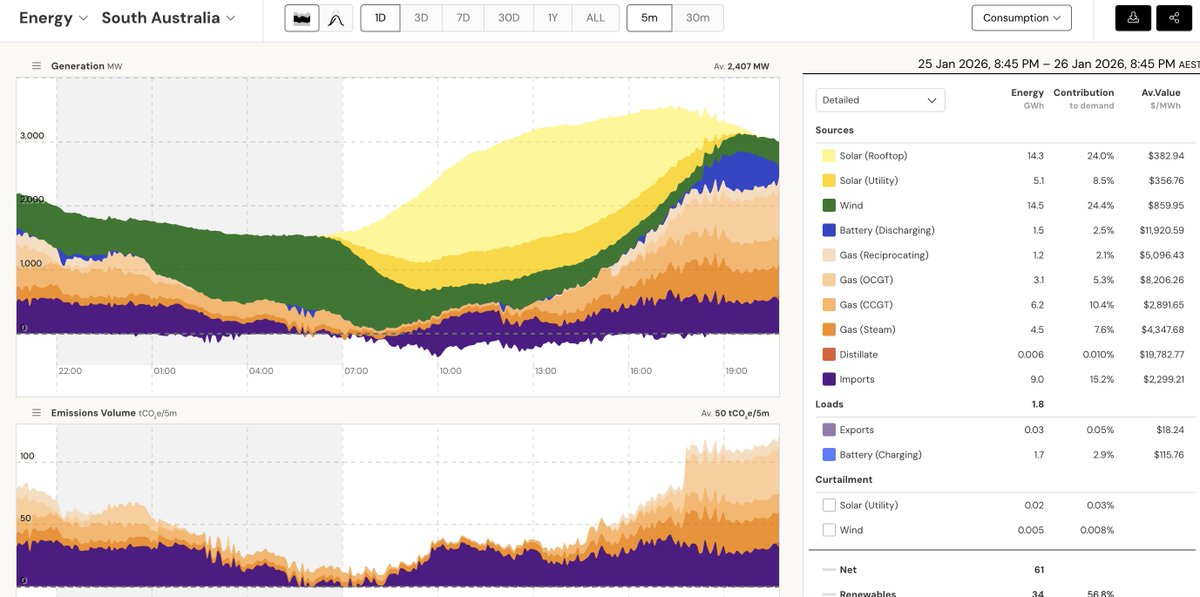
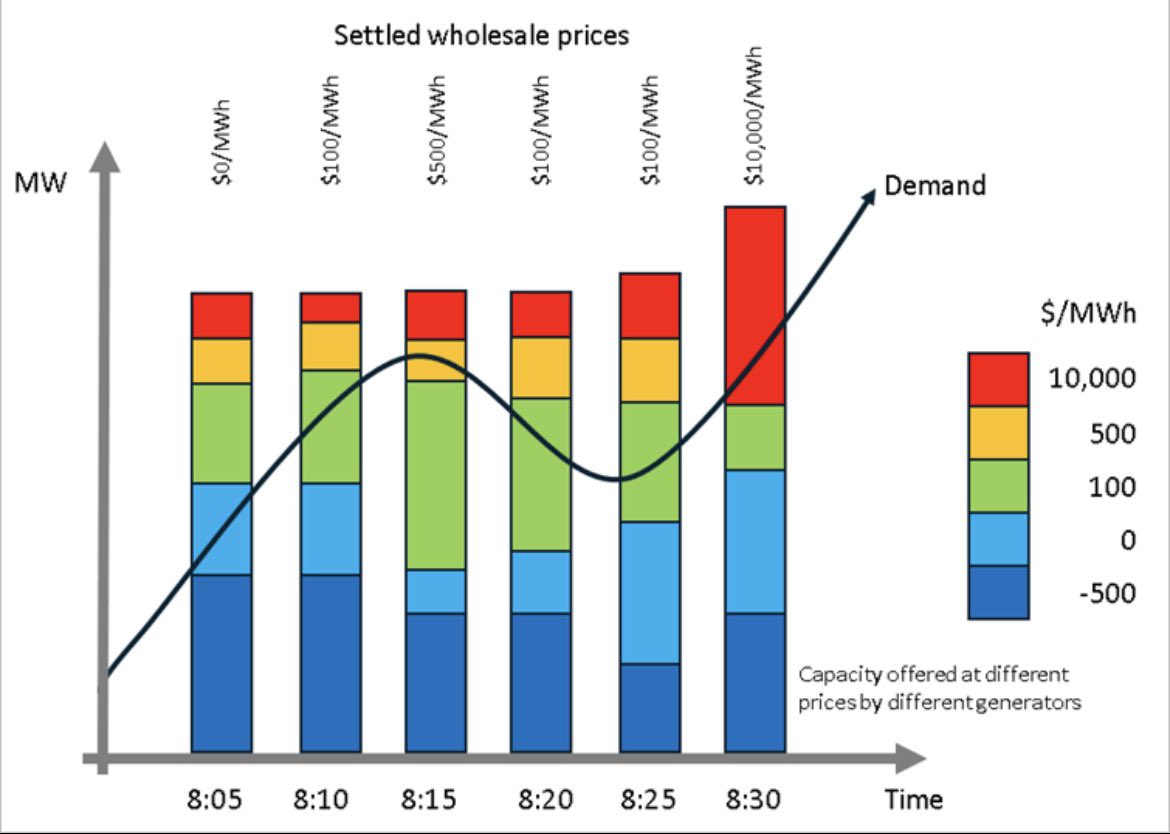
Looks like SA is heading for something like three hours of pricing near the cap of $20,300/MWh this evening.
Still, hot, sun down.
Batteries are fading.
Usually, these prices get hit for a couple of 5min intervals at a time.
This is gonna hurt.
There’s a consistent theme amongst renewables advocates that batteries will delete gas, batteries make power cheaper, etc.
But what does the data say, and how the ‘experts’ justify their claims?
Do the experts point out that coal and gas set the price more often in 2025 than 2024, and batteries less?
Do they show that gas consumption for power generation is trending up in some regions?
Do they even mention the price setting mechanism?
A preliminary discussion on batteries. More to come.
https://t.co/dS1gVQn8nI
Investment in large-scale solar and wind generation slumped in 2025 to less than half of the previous year’s capacity, in a fresh hit to the Albanese government’s goal of generating 82 per cent of Australia’s electricity from renewable energy by 2030.
Coal will be needed to stabilise the energy grid until 2049 under an extraordinary 12-year extension of the fossil fuel that threatens Labor’s net-zero target, as the green-energy revolution leads to a 100 per cent explosion in power transmission costs.
https://t.co/cZecwpSeIw
Rio Tinto will raise up to $15.1 billion in asset sales and cut spending on decarbonisation by $6 billion under chief executive Simon Trott’s plan to make the miner “stronger, sharper and simpler”.
https://t.co/3pKlrqSynb
Every major smelter or refinery in the country is now either subsidised, curtailed, or under review, putting over 73,000 jobs at risk, writes Page CEO Gerard Holland.
https://t.co/GQKCdbZNAH