“Unconnected remarks, chance encounters are transformed into the most blatant proof in the eyes of a man of imagination if he has any spark of fire in his heart.”
Schiller
This is indeed one of the most extraordinary epilogues of history.
On the one hand, apart from the Eastern Roman Empire itself, the House of Palaeologus would rule the Italian Marquisate of Montferrat until 1533.
On the other, another descendant, Ferdinand Palaeologus, supported the Royalist cause in the English Civil War, and was exiled to Barbados. He died there in 1670, and is commemorated by this headstone (which bears the incorrect date of death).
His son, Theodore Palaeologus, served as a privateer, while his granddaughter, Godscall Palaeologus, appears to be the last bearer of the dynastic name. What became of her after her baptism in England in 1694 remains a mystery...
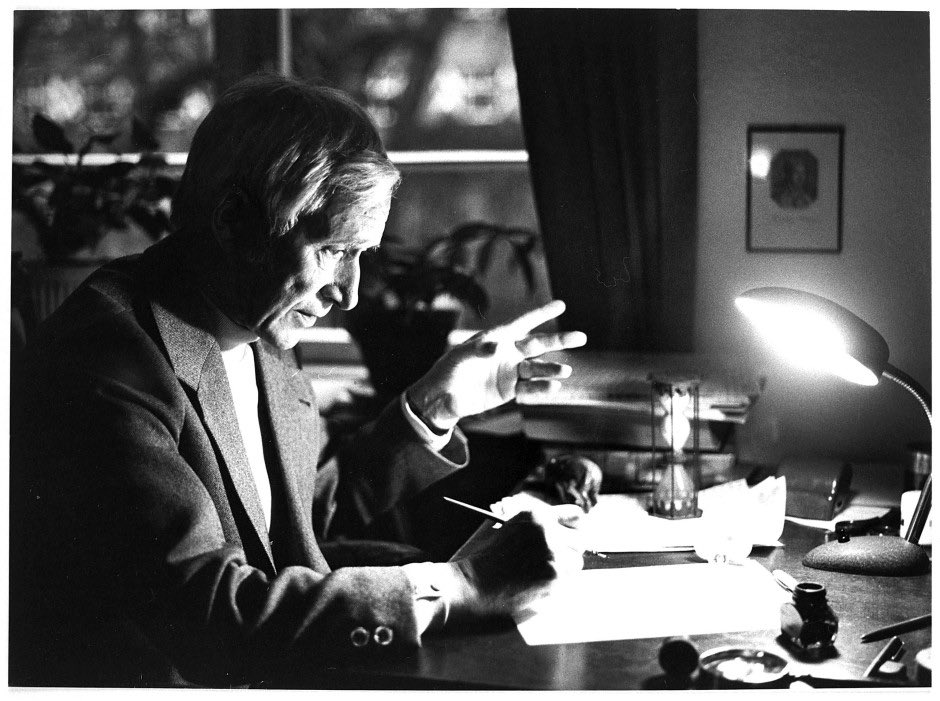
“Shells and snails flaunt their colours in a depth to which no ray of light penetrates. Is their beauty therefore in vain? An idle question in view of a hidden harmony that is sufficient unto itself and delights in itself.”
— Ernst Jünger, Siebzig Verweht V.
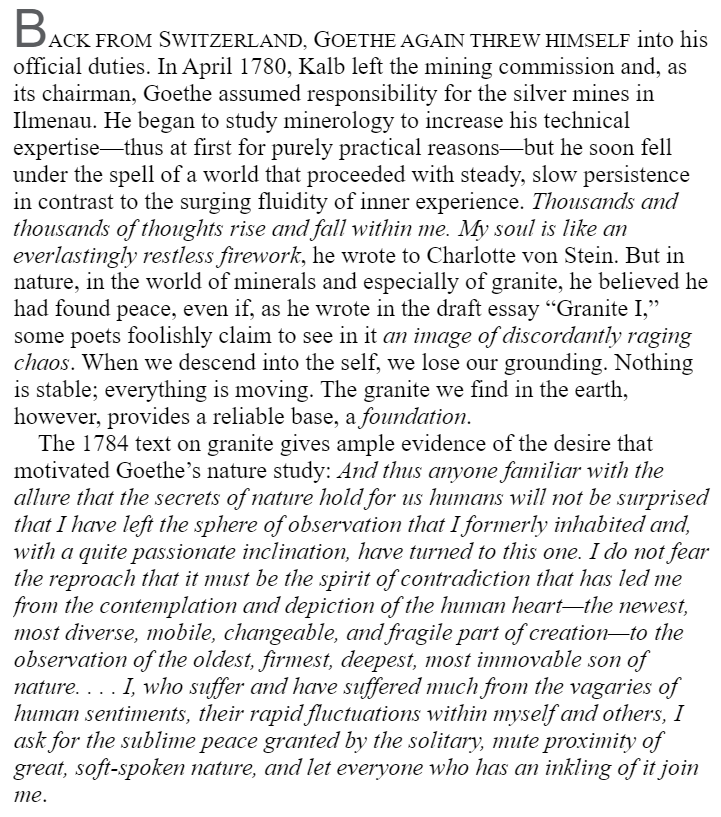
In the study of nature, Goethe found peace.
"I, who suffer and have suffered much from the vagaries of human sentiments, their rapid fluctuations within myself and others, I ask for the sublime peace granted by the solitary, mute proximity of great, soft-spoken nature, and let everyone who has an inkling of it join me."
Achilles uses direct attacks and bluntness and a lack of deceit. All this is bound up in the metaphor of his sword. He is depicted as part of the pagan apotheosis.
But he is defeated by an arrow. This is deceit, indirectness, "over the head-ness" in this symbol paradigm. And it shows the drawbacks of paganism. Really the Iliad is a pagan counterpoint. You can't forget that Homer is an Apollonian by definition.
It actually kind of unironically stinks for the pagans and for the martian (Ares) aspect of society. They simply don't tell tales. Nearly? everyone who tries to tell the tale is an Apollonian larper. This includes Kemp, which I know is controversial.
Further, Paul the Christian knows this symbolism too and selects a sword for his metaphor of truth, the flaming arrows that of evil. The shield Paul calls faith.
“No state can grant all of humanity the same rights – e.g., rights of settlement and voting – without ceasing to exist... If all people were to receive the same rights, a state would have to encompass all of humanity, thereby destroying the foundation of any state sovereignty.”
Only Jesus found the way. Hercules committed suicide and Odysseus was made to repent of the waters. If you simply emulate Jesus you are as though you crossed the seas. You outperform even the strongest ancient conception of the good
Mother rejects this newborn unfamiliar white object as first reaction after anguished labor. Gobi Desert Mongolian nomads sing her an emotional melody to calm and bring them into harmony. The mother weeps and accepts her calf
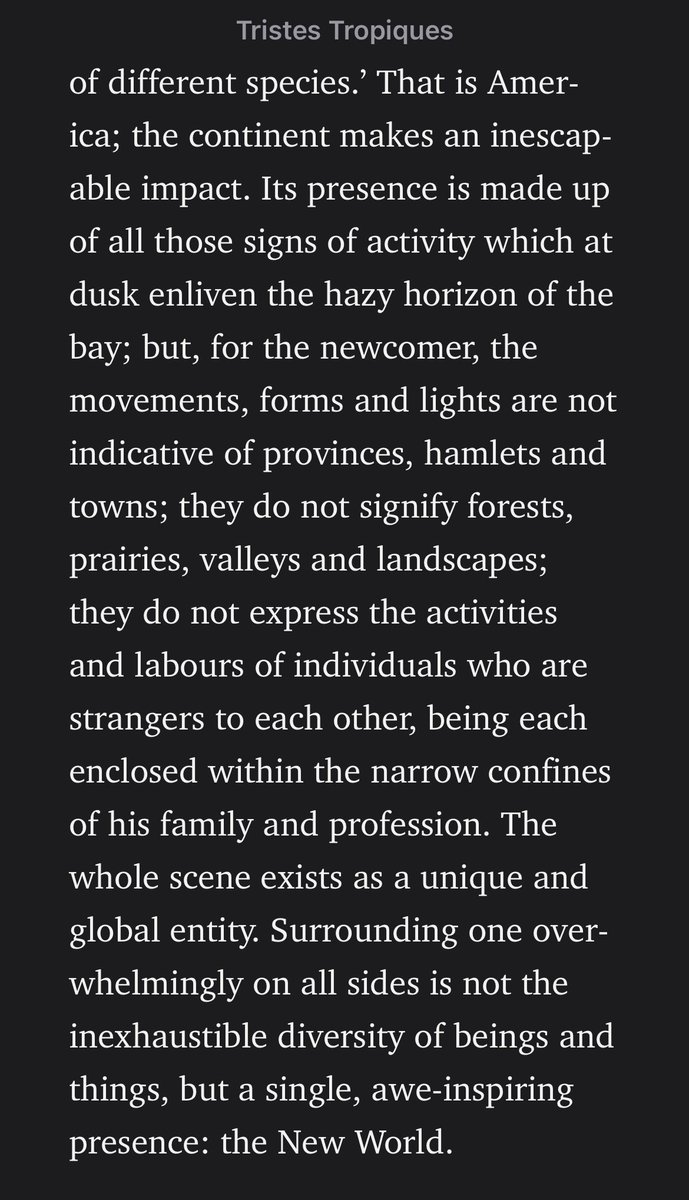
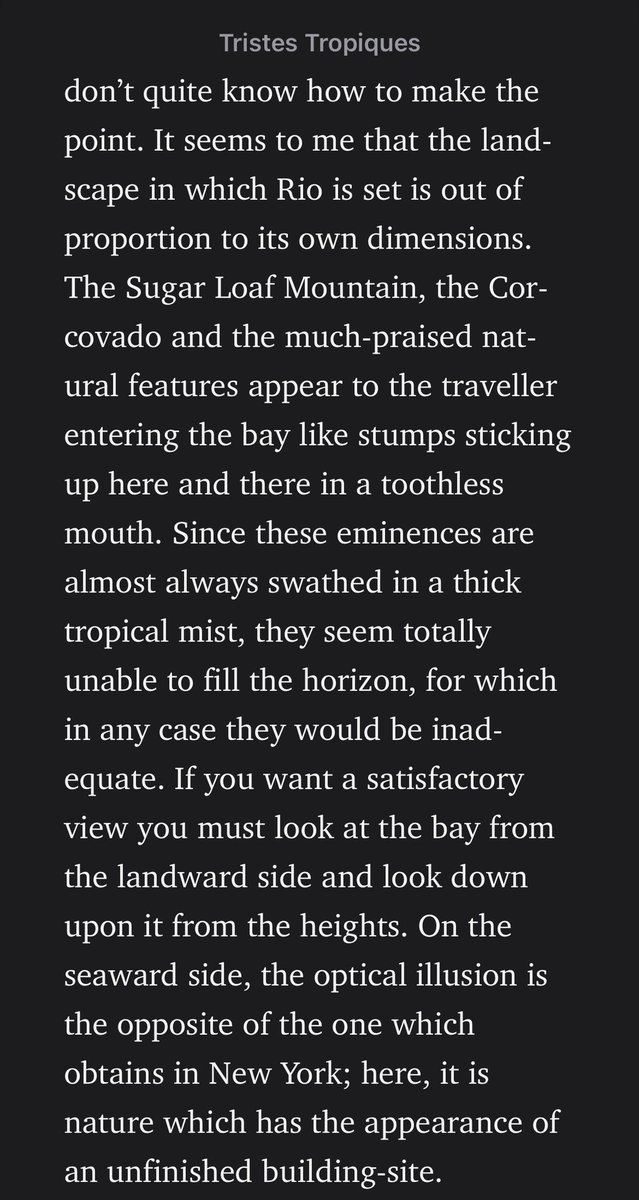
Claude Levi Strauss on the alien beauty of New York to European eyes and his assessment of Rio de Janeiro upon first sailing in: and ends in poetic ode to the grand scale of the Americas. I disagree w him on Rio but I never sailed in…high agree on romance of New World nature
The world in which intestinal muscles workk is enclosed and protected from sudden changes. In the warm and invariant internal environment the bowels inhabit an almost paradisiacal condition. There are few suprises, and the weather is the same all year round. In such an environment there is no need for action, and agency takes on a smoothly unconscious character. The automatic regularity of the intestine depends on the assumption that the stream of material entering it is harmless and regular. It can only remain automatic because of the high selectivity of what we swallow, and the availability of food. As infants we lack the training to make correct decisions as to what ought to be swallowed, and therefore others will guard us, to prevent the profusion of hunger manifesting itself, inverting the reflexive structure, thence making the intestine voluntary as neuromuscular control becomes involuntary. The regularity of feeding, both of time and substance, is the what allows the function of the intestine to be subjugated to our higher faculties.
Sure seems like the Odyssey is a twelve-pin tumbler for establishing who can parse extended metaphor, just like Jesus' deliberately encrypted parables. The story is twelve ordeals at sea which are metaphor puzzles with real information in them. And if you notice this and can decode them, then you can string the bow and shoot it through all twelve rings like Odysseus at the finale of the Odyssey.
Why? It seems like the ancients thought the task of parsing extended metaphor one of the most difficult of all tasks. This is my experience. Why had no one found for sixty years that every page of Hemingway's Old Man and the Sea is encrypted with extended metaphor even though it's short, written simply, and a Nobel winning book by the most influential author in modern history?
Again, but why encryption? Judges 7:5-7. Picking the most elite of all crews from scratch, a better hierarchy than any other that forms, which comes as a great reckoning contra natural corruption or civilizational senility. Jesus collected 120 that could understand his parables by the time of his resurrection.
Anyways, the Odyssey depicts a man going out to sea (a symbol of mind) and grappling with puzzles of the human condition, and then coming back to land with solutions as symbolized by the stringing and shooting of the bow.
If you back up one epoch further, you get Hercules and his twelve ordeals. These are also clearly metaphors. Odysseus might even be a democratization or simplification in that the main character is a wordsmith, which is a clue.
So at any rate, we have three cognospheric epochs in a row, Hercules, Odysseus, Christ, who disseminate encrypted metaphor.
Do with that as you will.
“The sea of love is immeasurable and teeming at every depth, from the dorados and flying fish down to the medusae and monsters of the deep. No one will beget or create who has not bathed in it, even if he was wrecked upon its reefs.”
— Ernst Jünger, Autor und Autorschaft.
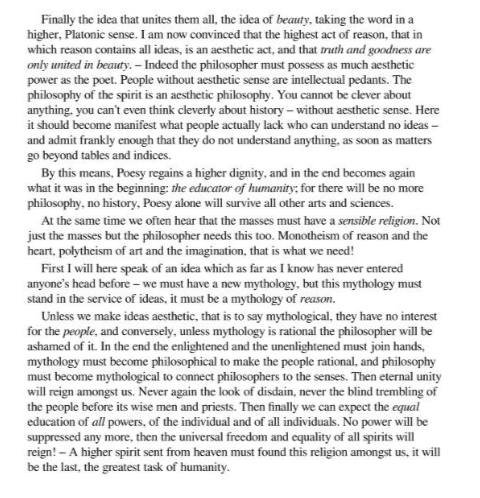
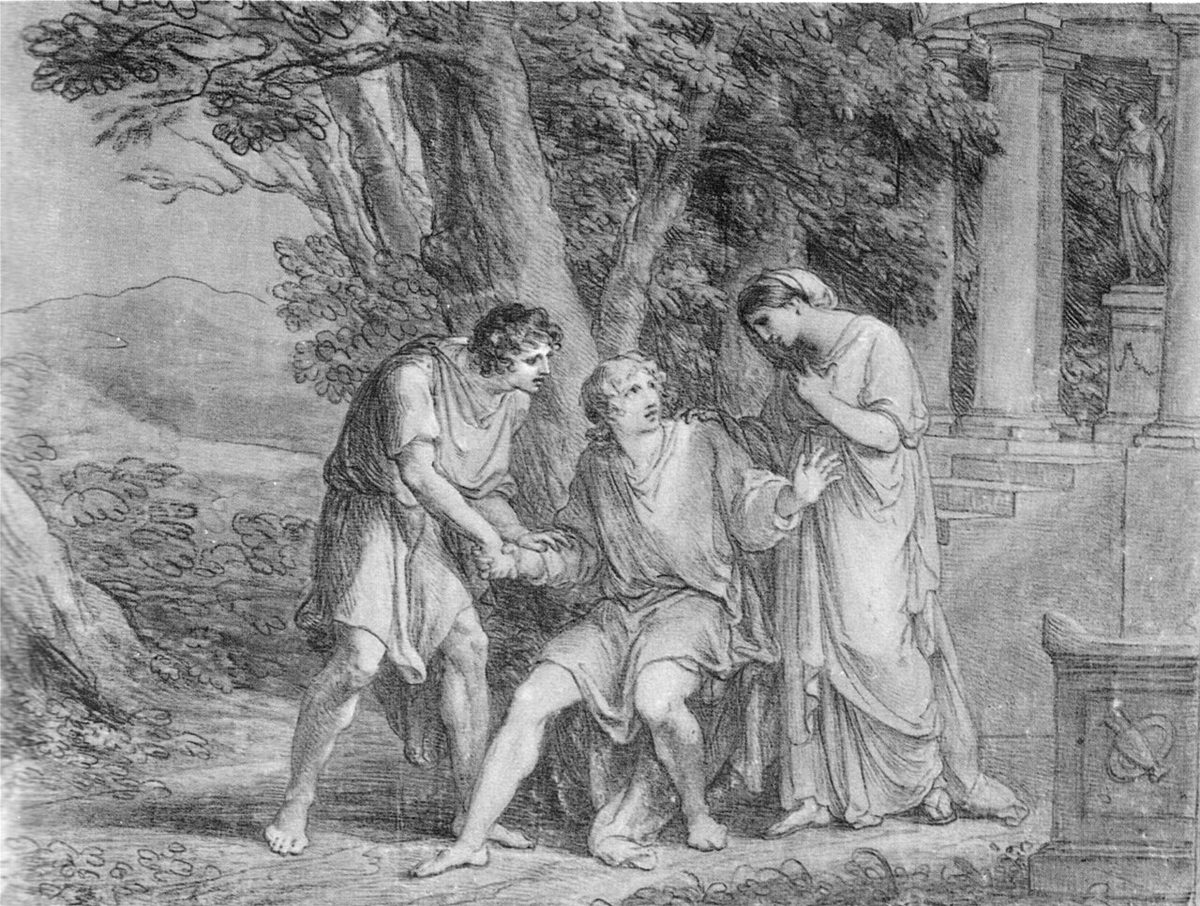
Hölderlin on poetry, beauty and the highest act of reason:
The highest act of reason is an aesthetic act. Truth and goodness are only united in beauty. The philosopher must possess as much aesthetic power as the poet. Poetry will once again become the educator of humanity.
«Imaginar un mundo político sin enemigo y sin guerra es lo mismo que figurarse una moral liberada de todo mal, una estética desprovista de todo concepto de fealdad, o también negar todo valor epistemológico al error. Tal vez sea posible transformar la naturaleza humana con procedimientos técnicos, pero podemos preguntarnos si aquel nuevo ser sería todavía un hombre»
— Julien Freund
Esto nos parece tan extraordinario y abrumador porque fue el último intento prometeico de congelar el tiempo, es decir, ordenar el mundo desde Europa. Sin embargo las fuerzas requeridas para aplastarlo fueron monumentalmente superiores, las tenazas de América y Oriente, como decía Donoso, esta vez unidas para aplastar el mito de la sangre, el pueblo y su líder.