AI Engineer turned Creator | Teaching 300K+ to master Generative AI | Prompt obsessed | Follow for GenAI Tutorials
CPP : @magnific @runwayml @hailuo_ai and more
Seedance 2.0 in 4K keeps raising the bar for consumer video generation.
This fluffy roommate clip looks like a rendered short, and the whole thing ships as an open-source project with the prompts included. You can pull the exact recipe and rebuild it yourself instead of guessing at what made it work.
Open prompts are how the whole craft levels up.
Video via @higgsfield_ai
Character consistency in AI video just got a real workflow.
You build a detailed character sheet in GPT 2, then feed it into Seedance 2.0 at 4K to generate sequences where the same character holds frame after frame. That reference-first approach is what turns one-off clips into something you can actually tell a story with.
Consistency was the missing piece. This closes the gap.
Video via @magnific
Luma just showed one continuous shot living in two worlds at once.
Green screen on one side, open ocean on the other, and the same motion holds across both without a cut. The compositing step that used to eat hours in post is collapsing into the generation itself. This is where AI video stops imitating VFX and starts replacing the pipeline.
The take becomes the world.
Video via @LumaLabsAI
Some AI videos fall flat for one reason. No sound.
Seed Audio 1 on Magnific adds voices, music, and SFX to footage that was silent, and it changes how finished the result feels. Even a horror clip only works once you can hear it. Audio is the difference between a demo and something people actually watch.
The silent-video era is ending.
Video via @magnific
Recraft V4.1 turns logo design into a back-and-forth conversation.
Make a coffee shop logo, now make it feel handmade, now try something more minimal, and it handles each turn in seconds. Being able to explore directions before committing is the part designers actually want. The iteration loop is where taste gets applied, and this makes that loop nearly free.
Design by dialogue, not by redo.
Image via @recraftai
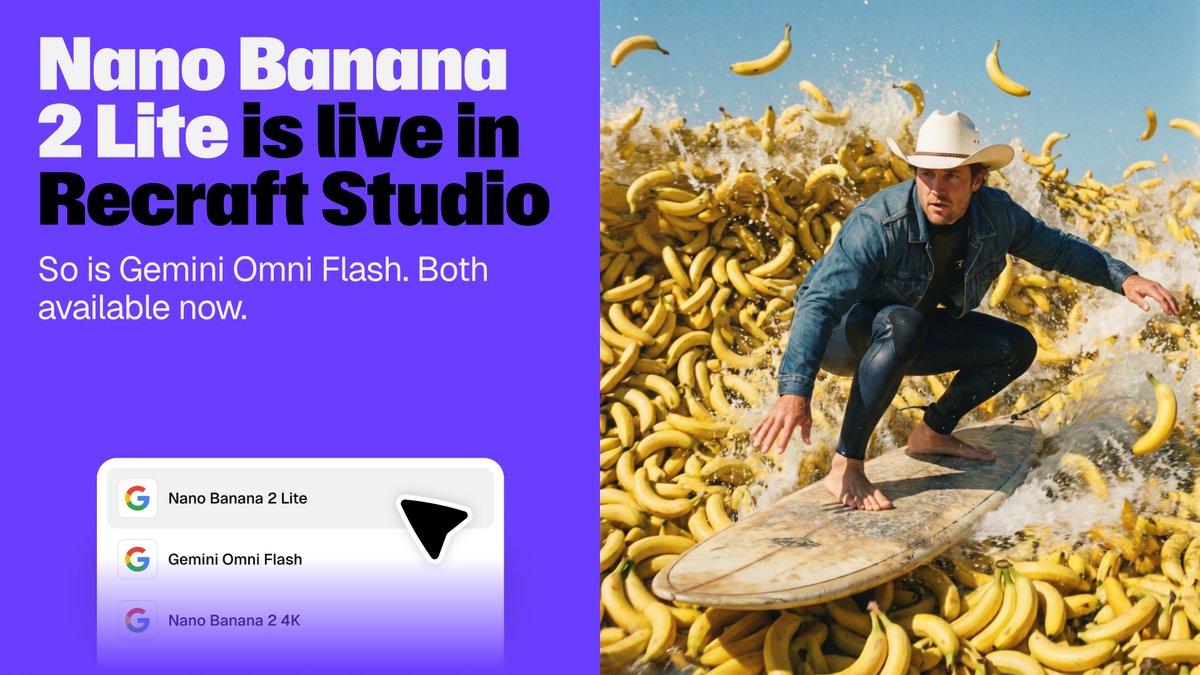
Recraft just dropped two new models, both already live in Studio.
No waiting list, no staged rollout, they went straight into the product the day they launched. That shipping speed is its own kind of moat. While others gate access, Recraft is betting that getting tools into creators' hands immediately is what earns loyalty.
Ship first, gate never.
Image via @recraftai
Fable 5 just shipped, and Magnific already built a full brand site with it.
The site has cursor-reactive videos and every visual stays on-brand through the Magnific MCP, generated as part of the build instead of bolted on after. This is the workflow shift worth watching. Design systems that hold themselves together while an agent does the production.
On-brand at generation time, not in review.
Video via @magnific
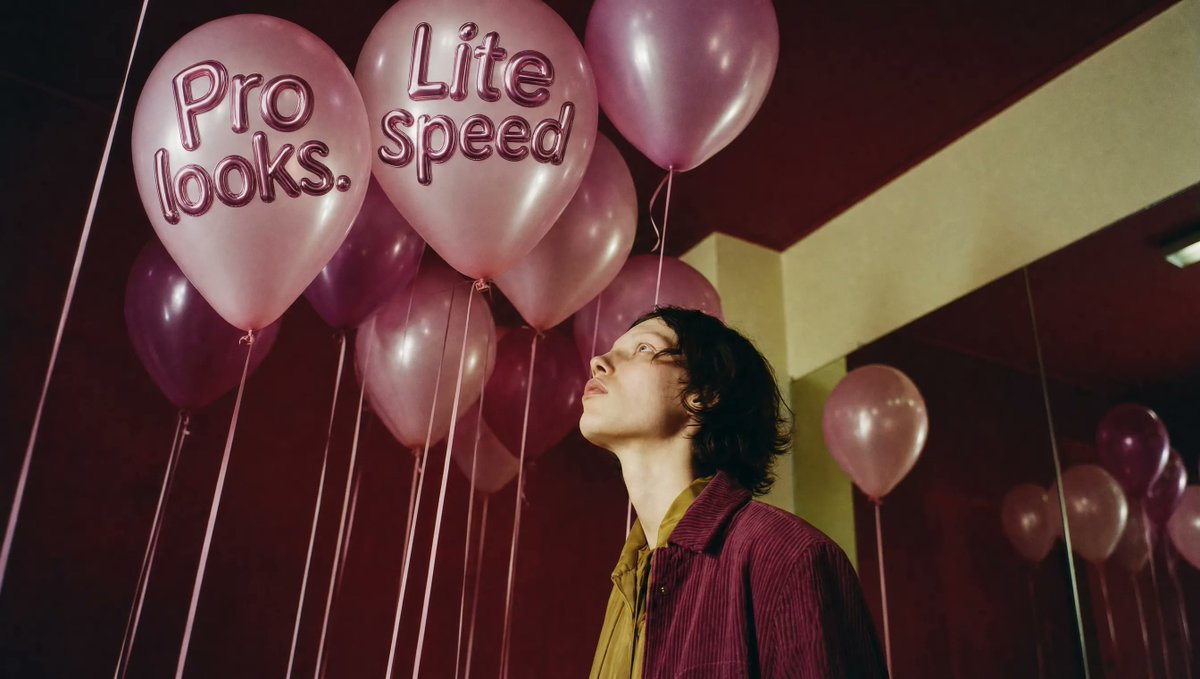
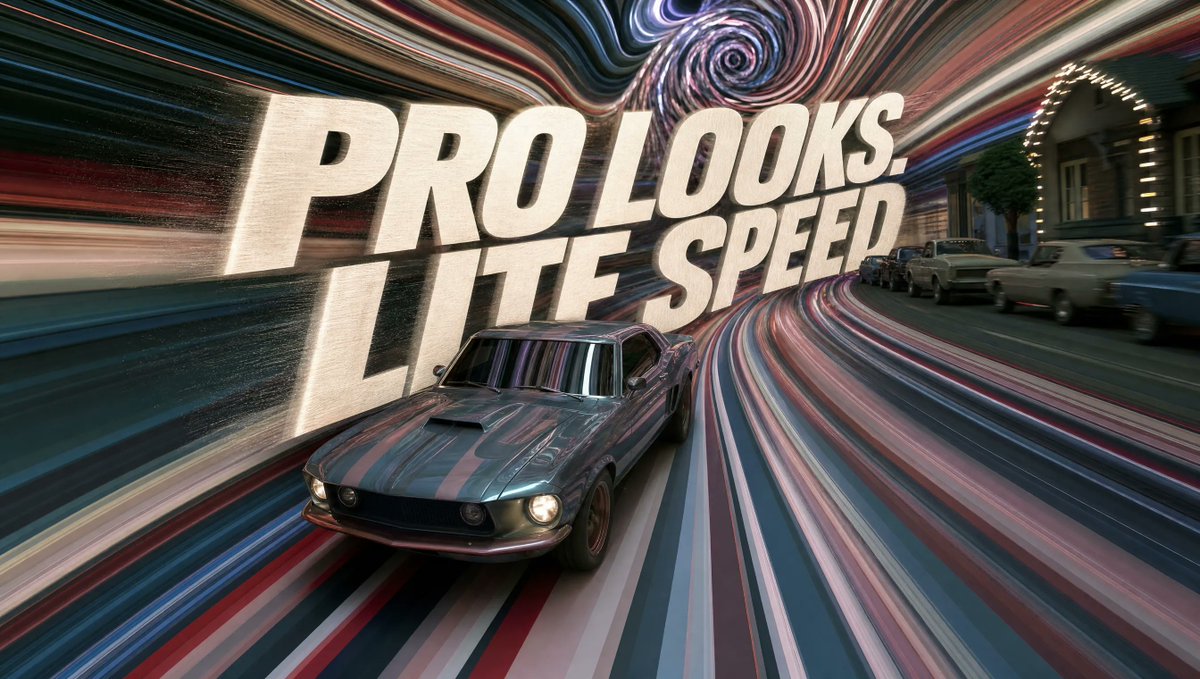
Nano Banana 2 Lite is now unlimited on Magnific, and it renders in about five seconds.
You prompt it, wait a beat, and the visual is ready, fast enough that iterating stops feeling like a cost. Speed at this level changes how you work. You stop rationing generations and start exploring freely, which is where the good ideas actually come from.
Unlimited plus instant is the real unlock.
Image via @magnific
Runway is paying up to 100K for ads for products that don't exist.
The new contest hands you seven briefs and four weeks, no clients, no producers saying no, just your wildest concept made real. This is the clearest signal yet that ad creative is becoming a pure imagination problem, not a budget one. The barrier used to be production. Now it's ideas.
Big ideas win big.
Video via @runwayml
Kling just turned a video into a game you play.
Choose Your Journey is an interactive story series where the video stops and hands you the controls. Three doors, one choice, and the path branches from there. This is the line between watching and playing getting thinner, and AI video is the thing erasing it.
Storytelling stops being one-directional here.
Video via @Kling_ai
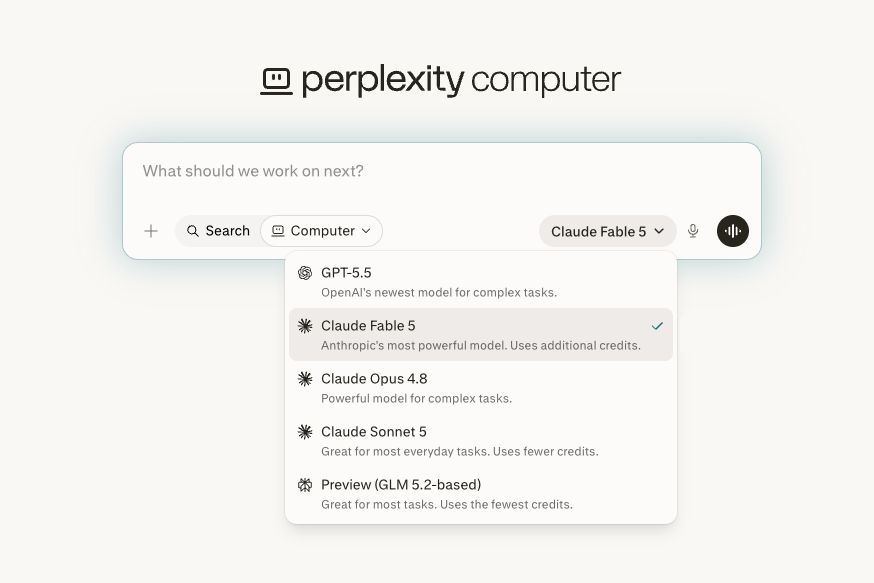
Claude Fable 5 is back as an orchestrator model inside Perplexity's Computer.
That means the most capable model available is the one now routing tasks and coordinating the agentic work under the hood. Orchestration is quietly becoming the job that matters most, the model that decides which tool runs when.
The best model is moving to the conductor seat.
Image via @perplexity_ai
Seedance 2.0 in native 4K genuinely changes what solo creators can ship.
These anime sequences came straight out of the model. No post-production cleanup, no upscaling pass, no compositing work. You describe the scene and you get broadcast-quality 4K clips you can cut together as-is. The gap between imagining an animated sequence and actually having it on screen just collapsed.
That's the bar going forward.
Video via @magnific
An AI assisted film just won at Cannes Lions, and one of the categories was made for exactly this.
The Last Real Man took a Silver and a Bronze, including a win in the newly introduced Film Craft AI Craft category. Kling AI handled the majority of the shots, holding character consistency and cinematic motion across the whole piece.
AI in the director's chair is officially award winning work now.
Video via @Kling_ai
Nano Banana 2 Lite is a smart way to build the first frame of your videos.
Faster generations mean you can try more openings before you commit to one, and it runs on Magnific through Magnific MCP and Spaces. Getting the first frame right is half the battle in any video pipeline.
Speed on the first frame buys you more creative swings.
Video via @magnific
Five cinematic prompts for Gemini Omni, tested and ready to steal.
Magnific ran these ideas end to end and shared the ones that actually held up on screen. You can take them as is or bend them into your own look. The point is a starting library instead of a blank prompt box.
Good prompts are the fastest way into a new model.
Video via @magnific
The thing that makes Gemini Omni feel different is memory.
It keeps the whole scene in context, so every edit builds on the last instead of resetting. You edit in plain language turn by turn, characters and physics stay consistent, and you can get ten second clips from a single prompt. Live now on Magnific through @googlecloud.
Persistent context is what turns generation into real editing.
Video via @magnific
Gemini Omni is built for the edit, and that changes how you work with it.
You generate once, then change anything just by telling it what you want in plain language. Magnific has it live now through Magnific MCP and Spaces, so the whole generate-then-refine loop stays in one place.
Editing by conversation is where video generation is heading.
Video via @magnific
Gemini Omni Flash keeps pulling ahead on VFX quality.
Each new test through Higgsfield MCP lands cleaner motion and more grounded lighting than the last. It is fast becoming the default choice when you want a generated effect to actually hold up on screen.
The quality floor for AI VFX just moved up again.
Video via @higgsfield_ai
This is the kind of AI VFX that stops looking like AI.
Generated with Google's Gemini Omni Flash running on Claude through Higgsfield MCP. The lighting and motion sit convincingly inside the shot instead of floating on top of it.
Believable is the new bar for generated VFX.
Video via @higgsfield_ai
One quiet tip that makes Gemini Omni Flash much better for VFX.
It performs best when you feed it real footage rather than AI generated video. Give it a genuine plate to work from and the composites hold together far more convincingly. Running it through Higgsfield MCP inside Claude keeps that loop fast.
Real input still beats synthetic when you want believable output.
Video via @higgsfield_ai