T.H. Morgan, the guy who crossed flies to discover "that genes are carried on chromosomes and are the mechanical basis of heredity," did his experiments to disprove Darwinian evolution. He believed in evolution, but thought natural selection was a dubious mechanism.
In his 1903 book, "Evolution and Adaptation," Morgan writes that "...we can profitably reject, as I believe, much of the theory of natural selection, and more especially the idea that adaptations have arisen because of their usefulness." He believed that small variations, like a mutation here or there, could never lead to the big differences we see in organisms today.
Obviously, he changed his tune a few years later because of his results in fruit flies.
His team bred flies for more than two years and saw nothing during all that time. "There's two years' work wasted," he told a visitor to his Columbia laboratory. "I've been breeding these flies for all that time and have got nothing out of it." Morgan also experimented on aphids, snails, frogs, pigeons, and about 50 other species.
But then the results started to come. First, a pigmented fly and then, a few months later, the famous fly with white eyes. He kept up these experiments for so long, it seems, because he thought it'd take awhile to see differences in his flies; he was waiting for a "mutating period" to arise.
When IISERs first started, they used to pay scholarships to every student.
Then those scholarships ceased, but students who earned KVPY or DST Inspire fellowships received financial support.
Then KVPY was stopped. Now it appears that DST Inspire is gone too👇
Meanwhile the fees have continued to go up. Now it’s close to 60K per semester.
Slowly but surely IISERs are being put beyond the reach of financially weak but talented Indian students. We have barely heard a word of protest from Indian academics on this.
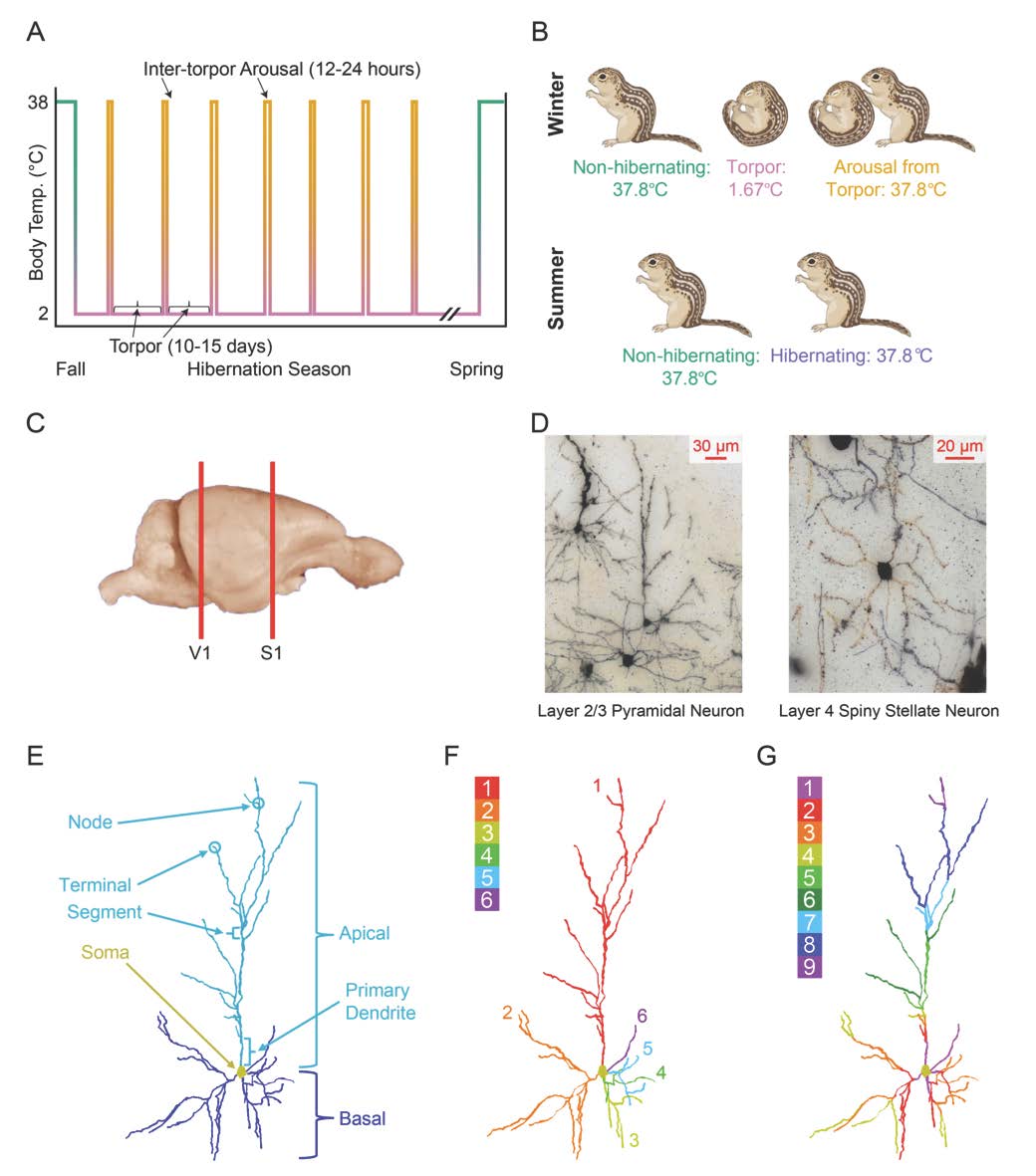
New in #JNeurosci from Fultz et al: A neuron population in V1 undergoes rapid, dynamic structural changes during and after hibernation that may inform treatment development for conditions in which neuron function is lost or hindered, such as poststroke.
https://t.co/XAwxWEQS2T
Guinea pigs possess exceptionally dense networks of natural bypass arteries that completely resist ischemic damage, whereas mice and humans lack these protective collaterals and are highly vulnerable.
https://t.co/yfzaswppI6
Where, exactly, does learning happen in the brain?
Out now @Nature , we identify a synaptic locus of birdsong learning and show that the circuit can be tuned to make birds learn faster, but at a cost.🧵 #neuroscience
https://t.co/mS6EJUPVa2
Open link: https://t.co/wiJ16guRj1
There is a beautifully illustrated book, first published in 1887 (!), called "Living Lights."
It's a book about animals and plants that bioluminesce, or emit light, such as fireflies, jellyfish and even vegetables. It was published nearly 100 years before the luciferase gene was first cloned, and about 75 years before GFP was identified and isolated.
The chapter on vegetables is particularly interesting: "In nearly all countries these vegetable lamps are found; and even in the old legends of the Greeks, Hindus, and Persians, references to the 'burning bush,' and other luminous phenomena are met..."
Folklore then turns to more direct observations: "In South America and Asia occurs a plant known to science as Euphorbia phosphorea; which emits, when severed or cut, a milky juice somewhat resembling that of the dandelion. At night the juice of the former is, when heated, brilliant phosphorescent...if the stem be broken and used as a pen, this latex may be employed as a luminous ink..."
Fascinating throughout. The book also contains many ideas which have since been discredited, especially around luminous birds and cattle! It also doesn't mention Aequorea victoria, the jellyfish from which GFP was first isolated; the book mostly covers luminescent animals in the Atlantic ocean, Mediterranean, and Caribbean (Aequorea was found in the Pacific Northwest.)
The book also mentions many names that have fallen out of modern nomenclature. The author describes "Phosphorax noctilucus," a type of slug from Tenerife that I can't find anywhere online. The closest species name I can find is Pyrophorus noctilucus, or the "fire beetle," which is one of the brightest bioluminescent insects in the world (but is not a slug!) It emits light that is apparently bright enough to read a book with.
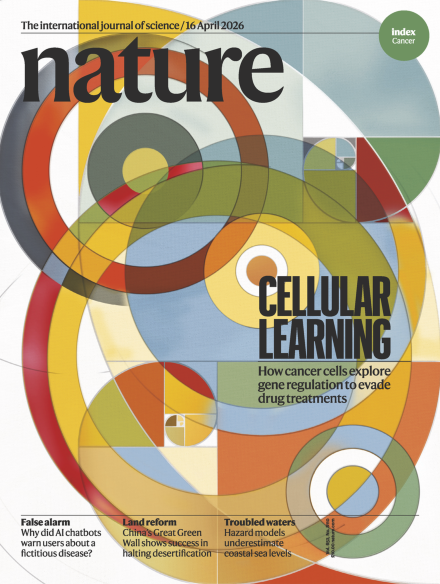
We're in this week's Nature! We propose a model of how a cell learns by running an evolutionary algorithm: exploring different gene-regulatory combinations and using feedback responses to stabilize those combinations that reduce stress levels.
Full text: https://t.co/yQYic2owl0
Very nice Press release by @binghamtonu about our @FrontEcolEvol@FrontiersIn review: “Abundant empirical evidence of multilevel selection revealed by a bibliometric review”.
Natural selection operates at multiple levels, from molecules to ecosystems.
https://t.co/aHKu608Nd3
One of the most important discoveries in molecular biology, I'd say, happened in 1974 when scientists took a gene from a frog (Xenopus laevis) and transferred it into a bacterium (E. coli). The bacterial cells read, processed, and expressed the gene.
If a bacterium can read a frog gene, so the logic went, then the entire living world is, in principle, "programmable." Genes can be swapped between kingdoms of life, thus enabling:
- The production of human insulin in bacteria.
- Manufacturing of vaccines in yeast and chicken eggs
- Engineered crops carrying biopesticide genes from algae etc.
Check out A Brief History of Xenopus to learn about other key experiments in which frogs played a role. 🔻