June 27th is National Post-Traumatic Stress Disorder (PTSD) Awareness Day. Gaze testing and pupillometry tests may provide an accurate and objective measure to assess, modify, and reduce sustained attention to threat. Find out more: https://t.co/qErVECNSDt
#PTSDAwarenessDay
New research using Neurolign technology differentiates Acquired neurosensory dysfunction (Havana syndrome) and #mTBI. Find out more: https://t.co/RWcbI5RZsj
This month we are celebrating #Alzheimer's and Brain Awareness. Alzheimer’s is a progressive neurodegenerative disease, research suggests eye-tracking tools may serve as highly sensitive screening tools for early detection https://t.co/k9y5IEaljW
We’ll be sharing recent #mTBI#Concussion research at @MilitaryHealth System Research Symposium. About 20% of military inflicted with a head injury & we want to thank MHSRS for supporting research. We are committed to advancing research and products to reflect scientific progress
June is #Pride month! Neurolign embraces diversity within our company and across health care. Let’s continue to support each other by promoting awareness and acceptance.
May is #StrokeAwarenessMonth. A stroke is a life-changing event that can have long-lasting impacts. Research suggests eye-tracking measurements can be sensitive to explore stroke symptoms. Find out more: https://t.co/826VJYJZkF
Could eye-tracking be used as a biomarker for Autism spectrum disorder? The Autism Biomarkers Consortium for Clinical Trials proposes eye-tracking as a biomarker for autism spectrum disorder. Learn more: https://t.co/daJ3GumFu7
#AutismAwareness#Autism
Neurolign would like to express our heartfelt appreciation and support to all of the passionate and selfless professionals who have been impacted by this pandemic. We have never been so proud to work with such dedicated individuals. #HealthcareHeroes
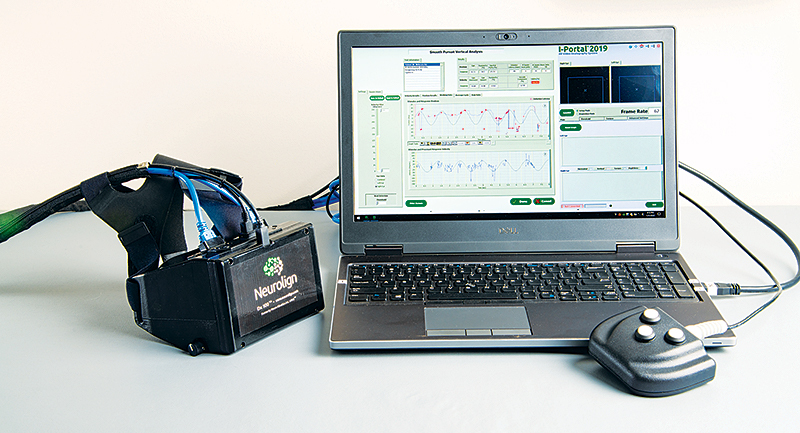
April is #ParkinsonsAwarenessMonth! Over 30 years of research has established that Parkinson’s disease profoundly impacts the control of eye movements. Neurolign’s Dx 100™ captures eye movements such as convergence and divergence. Find out more: https://t.co/V7CENPxcB8
A study of children 10 to 15 years old found that post-concussion saccadic intrusions were present only during smooth pursuit. Objectively measuring oculomotor deficits can help build a picture of overall brain health. Learn more: https://t.co/kvvabUC8cA
Congratulations to our Training team who have launched the first Neurolign Dx 100 Virtual Training session today with Dr. Joseph Schneider at the Hope Brain & Body Recovery Center! #concussion#mTBI
Check out this feature in Mimi Magazine on Dr. Joseph Little at The BRAIN Center using innovative techniques, such as Neurolign’s Dx 100.
https://t.co/HDYeEtmXgJ
Adolescents can take longer to recover from a #concussion, research from @CDCgov. Neurolign’s Dx 100 can assist in patient evaluation, to help provide a smooth road for recovery. Find out how Neurolign could be integrated into your practice by calling an expert at 1-800-895-7405.
The Neurolign Dx 100™ includes reaction time testing including auditory, visual and dual-task reaction time within their Brain Health Assessment. Contact us now for a free demonstration 1-800-895-7405.
https://t.co/bruVqZ385q
Come see us in Scottsdale, Arizona at #ABS2020 March 3-4! Members of Neurolign will be presenting at the Assessment & Diagnostics and Patient Management Sessions. Learn more: https://t.co/fJh1cu57sk
As February comes to a close so does #BrainPledgeMonth. Supporters pledge to donate to the brain registry accelerating Chronic Traumatic Encephalopathy (CTE) research. Find out more: https://t.co/tM9ld3t3ee
Signs of concussion aren’t always easy to spot, which means keeping your head in the game can be challenging for athletes. Support your athletic patients and find out how Neurolign could be integrated into your practice by calling an expert at 1-800-895-7405.
Excited to share research leveraging Neurolign’s Dx 100™ published in Race Car Engineer. The research will be invaluable to support clinicians and engineers in concussion prevention. Check out the full article from Race Car Engineer (March 2020): https://t.co/cST9HvQr9y
President Trump said he does not consider potential brain injuries to be as serious as physical combat wounds, downplaying the severity of US service members being treated for concussion symptoms from an Iranian attack as "headaches." https://t.co/RHQVsxvyCZ