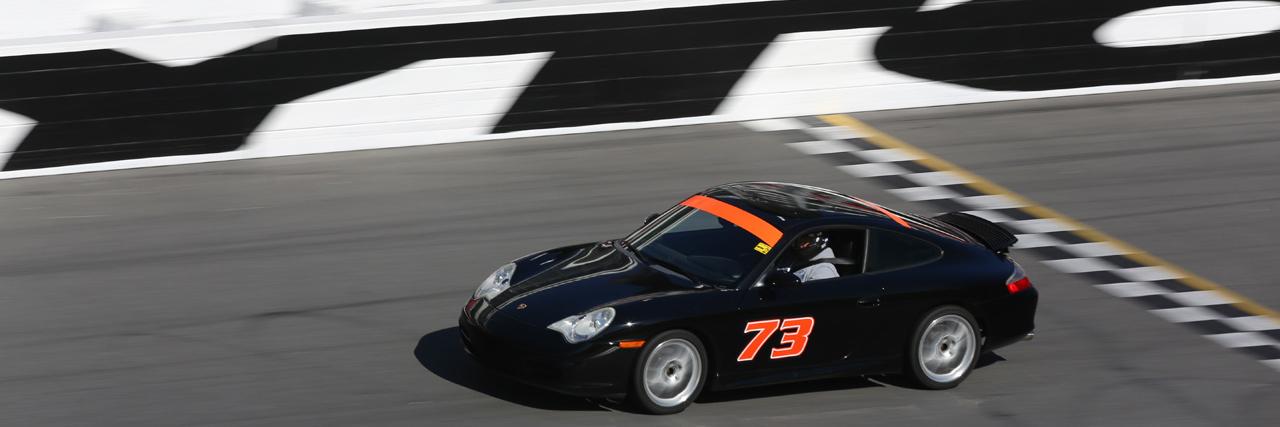
Let me explain why I think Freddy resonates.
Lots of Europeans visit the USA as tourists. They visit New York City, or Washington DC, or Hollywood, or Las Vegas, and if they visit natural beauty too, they go to really crowded places like the Grand Canyon or Yellowstone.
So while they see our cultural and natural icons, they are mostly in blue cities and they therefore also see the decline, the homeless, the drugs, the dirt and the rude, rude Americans.
But Freddy is not doing that. Freddy is driving, and he’s doing it through the heartland, where people are kind and polite, the skies are wide open, and the bounty of Buc-ees and Bass Pro Shops are overwhelming.
Freddy is not seeing fentanyl and decline.
He is seeing the real, hopeful, patriotic, kind America that European tourists rarely traverse.
And he loves it.
That’s why Freddy is a phenomenon.
"Why does our top performer get the worst reviews?" the boss asked.
I was reviewing their annual performance data.
"Show me," I said.
She pulled up the ratings.
Diana: 2.8 out of 5.
Below average on "collaboration."
Low marks for "team player."
"What's her actual performance?" I asked.
"Exceeded every target.
Landed our biggest client.
Trained three new hires."
"So why the low scores?"
"Her peer reviews are dragging her down."
I scanned the comments.
"Too direct."
"Challenges ideas too much."
"Not supportive enough."
"Let me talk to Diana," I said.
"I used to give honest feedback," Diana told me.
"Said our pricing model was broken.
Got dinged for 'negativity.'"
"What happened with the pricing?"
"They finally fixed it six months later.
After we lost two major accounts."
"What else?"
"I questioned why we needed
eleven approvals for a simple contract change.
Manager said I wasn't being collaborative."
"Are you still giving feedback?"
"No. I learned my lesson.
Now I smile. Nod. Say everything's great.
My reviews are improving."
"But nothing's actually improving?"
"We're making the same mistakes.
Just with better vibes." She chuckled.
I went back to the boss.
"Your review system doesn't measure performance," I said.
"It measures compliance."
"That's not true."
"When was the last time someone
got promoted for challenging bad ideas?"
Silence.
"When did someone get rewarded for preventing a mistake?"
More silence.
"You've trained your best people to stay quiet.
And your mediocre people to stay nice."
A few months later, they redesigned the system.
Added a category: "Constructive Challenge."
Points for identifying problems early.
Rewards for preventing costly mistakes.
Diana got promoted.
"What changed?" I asked the boss.
"We stopped confusing agreement with alignment.
Stopped mistaking silence for harmony."
"And?"
"Turns out our 'difficult' people
were our most valuable.
They actually cared enough to speak up."
Here's the truth about performance reviews:
Most companies don't reward performance.
They reward performance theater.
The person who says the meeting was great
beats the person who says it wasted an hour.
The person who agrees with bad ideas
beats the person who prevents disasters.
You think you're measuring contribution.
You're measuring conformity.
And your best people?
They've already figured out the game.
They're just deciding whether to play it
or find somewhere that values truth over comfort.
@TommyKendall11 Hopefully we can get back to the best ideas winning, regardless of tribe. When a system becomes so closed that no new info comes in, it can't escape its own feedback loop and collapses. As I'm sure you've read in: https://t.co/zjUL0B8kaj
Aaron Rodgers on embracing the mundane and being disciplined with the details.
“I embrace all the moments. I enjoy all of it. There’s a lot of beauty in the mundane. The mundane is the Monday to Saturday when you can actually win games. I embrace that part of the job and I’ve loved it. That’s why I’m still here, still playing.”
Excellence filters people out through boredom, discomfort, and delayed rewards. It lives in the details that most people don't have the discipline or patience to honor every day.
📹: Pittsburgh Steelers
FRIEDBERG: “I believe 100% in ending the federal student loan program. And I think that it will force a restructuring of the entire higher education system in the United States.”