A glimpse inside the Provo Missionary Training Center in Utah. See how missionaries learn, grow, and prepare to serve the Lord around the world.
https://t.co/sAfKocjihr
@jaredadairbell When we went through Manti we had an appointment and we still waited for almost two hours in line. It wasn't hot so that helped, I wonder how long the lines will be at the salt lake temple?
1866: Cotton seeds are agricultural waste. After extracting cotton fiber, farmers are left with millions of tons of seeds containing oil that's toxic to humans. Gossypol, a natural pesticide in cotton, makes the oil inedible. The seeds are fed to cattle in small amounts or simply discarded.
1900: Procter & Gamble is making candles and soap. They need cheap fats. Animal fats work but they're expensive. Cotton seed oil is abundant and nearly worthless. If they could somehow make it edible, they'd have unlimited cheap raw material.
The process they develop is brutal. Extract the oil using chemical solvents. Heat to extreme temperatures to neutralise gossypol. Hydrogenate with pressurised hydrogen gas to make it solid at room temperature. Deodorise chemically to remove the rancid smell. Bleach to remove the grey color.
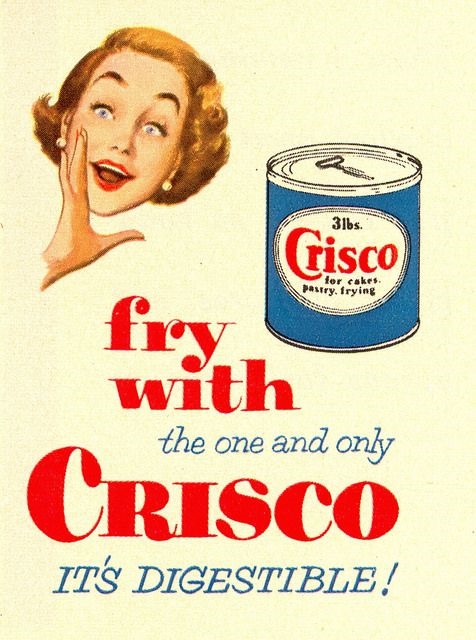
The result: Crisco. Crystallised cottonseed oil. Industrial textile waste transformed through chemical processing into something white and solid that looks like lard. They patent it in 1907, launch commercially in 1911.
Now they have a problem. Nobody wants to eat industrial waste that's been chemically treated. Your grandmother cooks with lard and butter like humans have for thousands of years. Crisco needs to convince her that her traditional fats are deadly and this hydrogenated cotton-seed paste is better.
The marketing campaign is genius. They distribute free cookbooks with recipes specifically designed for Crisco. They sponsor cooking demonstrations. They target Jewish communities advertising Crisco as kosher: neither meat nor dairy. They run magazine adverts suggesting that modern, scientific families use Crisco while backwards rural people use lard.
But the real coup happens in 1948. The American Heart Association has $1,700 in their budget. They're a tiny organisation. Procter & Gamble donates $1.7 million. Suddenly the AHA has funding, influence, and a major corporate sponsor who manufactures vegetable oil.
1961: The AHA issues their first dietary guidelines. Avoid saturated fat from animals. Replace it with vegetable oils. Recommended oils: Crisco, Wesson, and other seed oils. The conflict is blatant. The organization issuing health advice is funded by the company that profits when people follow that advice.
Nobody seems troubled by this. Newspapers report the guidelines as objective science. Doctors repeat them to patients. Government agencies adopt them into policy. Industrial cotton-seed oil, chemically extracted and hydrogenated, becomes "heart-healthy" while butter becomes "artery-clogging poison."
1980s: Researchers discover that trans fats, created by hydrogenation, directly cause heart disease. They raise LDL, lower HDL, promote inflammation, and increase heart attack risk more than any other dietary fat. Crisco, as originally formulated, is catastrophically unhealthy. This takes 70 years to officially acknowledge.
Procter & Gamble's response: Quietly reformulate without admission of error. Remove hydrogenation, keep selling seed oils, never acknowledge that their "heart-healthy" product spent seven decades actively causing the disease it claimed to prevent.
Modern seed oils remain. Soybean, canola, corn, safflower oils everywhere. Same chemical extraction process. Same high-temperature refining. Same oxidation problems. Just without hydrogenation so trans fats stay below regulatory thresholds.
These oils oxidise rapidly when heated. They integrate into cell membranes where they create inflammatory signalling for months or years. They're rich in omega-6 fatty acids that promote inflammation. They've never existed in human diets at current consumption levels.
But they're cheap. Profitable. And the food industry has spent a century convincing everyone they're healthy. The alternative, admitting that industrial textile waste shouldn't have been turned into food, would require acknowledging the last 110 years of dietary advice was fundamentally corrupted from the start.
Your great-grandmother cooked with lard because that's what humans used for millennia. Then Procter & Gamble needed to sell soap alternatives and accidentally created the largest dietary change in human history.
We traded animal fats that built civilisations for factory waste that causes disease.
The soap company won. Your health lost.
I locked the classroom door and turned to twenty five high school seniors, the Class of 2026. They were supposed to be the digital generation, confident and plugged in. Instead, staring back at me under the glow of hidden phones, they just looked tired.
I asked them to turn their phones off. Not silent. Off.
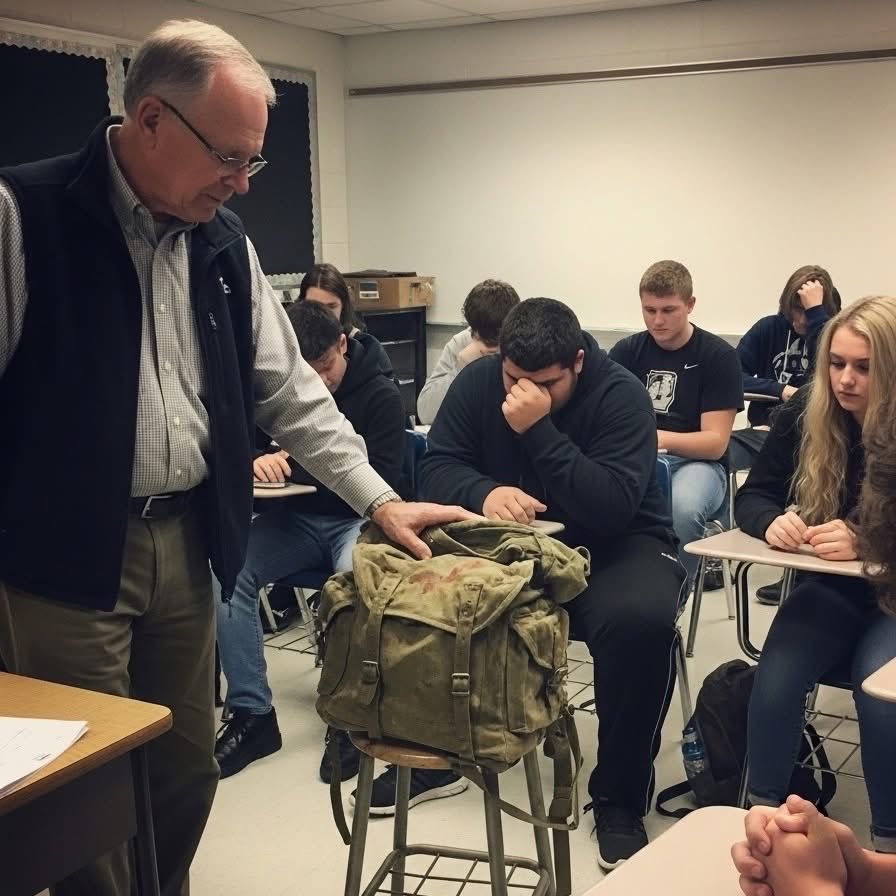
On my desk sat an old olive green military rucksack that belonged to my father. For weeks they ignored it, assuming it was just junk. They didn’t know it was the heaviest thing in the building.
I dragged it to the center of the room. Thud.
I told them we weren’t doing the Constitution that day. I handed out blank index cards with three rules. No names. Total honesty. Write down the heaviest thing you are carrying.
At first, no one moved. Then Sarah, straight A student, perfect everything, started writing. Then Marcus, the football captain, hunched over his card and wrote just three words.
One by one, they folded their cards and dropped them into the bag.
I zipped it shut and told them this bag was who they really were. Then I began to read.
A father pretending to go to work after losing his job. A student carrying Narcan for their mom. A kid mapping exits everywhere. A teen trapped between parents screaming about politics. A girl with thousands of followers crying alone at night.
Then the last card.
I don’t want to be here anymore. I’m just waiting for a sign to stay.
Marcus was crying openly. Sarah was holding the hand of a boy who usually sat alone. The cliques were gone. They were just kids carrying too much.
I told them the bag would stay in the room so they wouldn’t have to carry it alone anymore.
When the bell rang, no one rushed out. Every student stopped and touched the rucksack on the way out. I see you.
That night, a parent emailed me. Their son hugged them for the first time in years and asked for help.
Everyone you pass is carrying something you can’t see. Be kind. Be curious. Ask the people you love what they’re carrying. You might save a life.
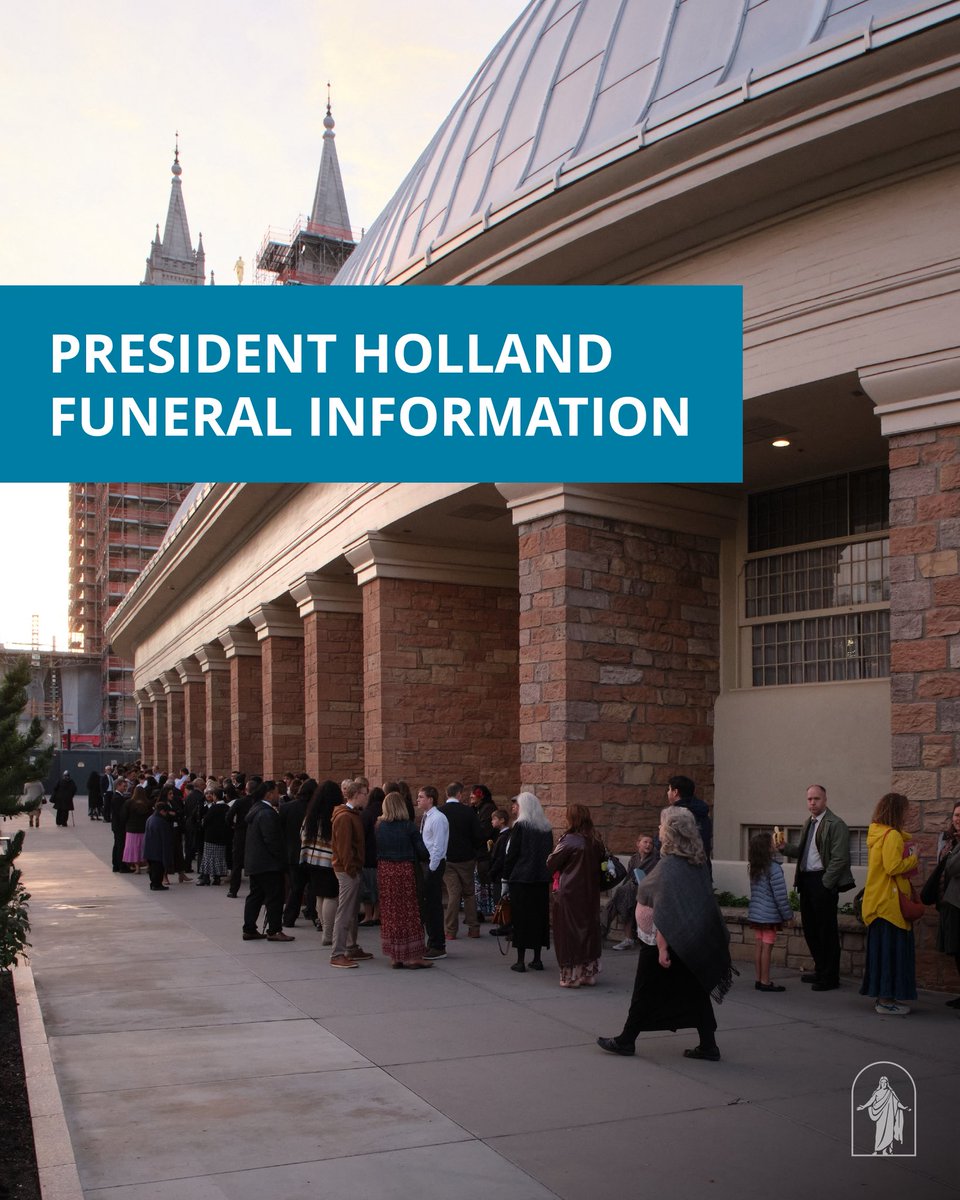
Funeral services for President Jeffrey R. Holland of the Quorum of the Twelve Apostles of The Church of Jesus Christ of Latter-day Saints will be held in the Tabernacle on Temple Square on Wednesday, December 31, 2025, from 11:00 a.m. to 12:00 p.m. MST.
President Holland died on December 27, 2025, in Salt Lake City at the age of 85.
The funeral will be open to the public ages 8 and older. Seating in the Tabernacle will be available to the public with doors opening at 9:30 a.m. Admission to the Tabernacle will be on a space available basis. Overflow seating will be made available as appropriate.
President Dallin H. Oaks will preside and Elder Quentin L. Cook, a former mission companion of President Holland, will conduct the service. The program will include remarks by members of the Holland family. Music will be provided by the Tabernacle Choir at Temple Square.
The funeral services will be streamed live and available on demand on https://t.co/xKCj6L1iHH and on https://t.co/JmhgVK9rLO.
Learn more on Church Newsroom.
https://t.co/C1MODB0Jfg
“I love the Lord Jesus Christ. May we strive to see Christ at the center of our lives, of our faith, and of our service. That is where true meaning lies. Until that hour, when Christ’s consummate gift is evident to us all, may we live by faith, hold fast to hope, and show compassion one of another.” –Jeffrey R. Holland (1940–2025)
@hankrsmith 😄 so many wonderful individuals who could fill the vacancy. I look forward to finding out who the lord calls. He was also one of the first individuals I thought of as well.