I’m happy to contribute to the design ideas!
I’ve used this design pattern in several contracts before, and it’s only possible on Sui. Move is incredibly rich in features.
We’re not joking when we say the DevEx here is amazing!
🐚 @Scallop_io just published the sSUI Spool incident breakdown.
Quick takeaway:
- On April 26, an attacker exploited a missing ownership check in a deprecated contract and drained 150,098 SUI (~$142K) from unclaimed rewards.
- The exploit was detected in 18 minutes, Scallop froze the protocol in 22 minutes, and fully reopened it in under 2 hours.
- Only idle rewards in a retired contract were affected. Active deposits, borrows, and live rewards were never touched.
- All impacted users will be fully covered by the Scallop treasury.
- Funds were quickly routed through burner wallets into CEX hot wallets, suggesting this was planned, not random.
Big credit to Scallop: fast containment, full transparency, and 0 long-term user loss 💪
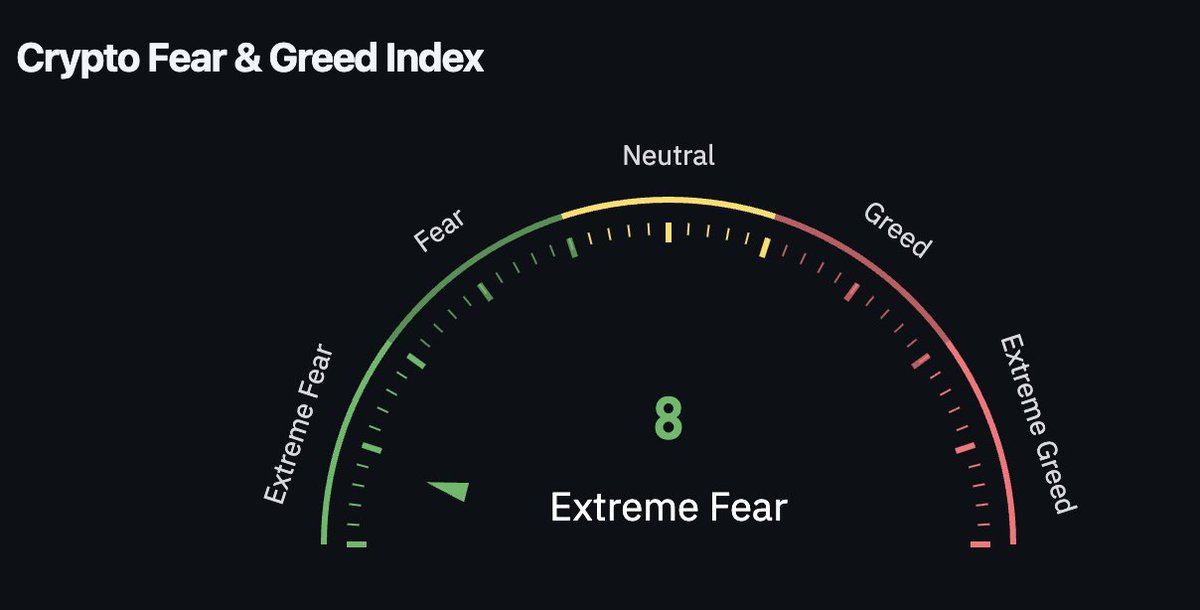
The main problem of combining collateral and lending pools. once utilization hits 100%, the collateral becomes unavailable for liquidations
at that point, they have to disable stablecoin withdrawals until the utilization rate drops back to atleast around 90%
Stablecoin lenders on @aave are not at zero direct risk, and this liquidity crunch with existing bad debt can spiral fast if $ETH nukes (*hopefully it doesn’t)
writing this because I don’t think enough people understand how ugly this can get
if $ETH dumps (fast) while Aave is still sitting at 100% utilization,
It forces liquidations on everyone who used $ETH as collateral and borrowed against it
But with liquidity already trapped inside Aave, flashloans and liquidators relying on Aave liquidity can’t react fast enough to clear positions
If liquidators can’t keep up, bad debt grows, and that existing $200M hole on Aave gets even worse
when that happens, confidence breaks, panic accelerates, and Aave gets dragged into a reflexive loop of less liquidity + more liquidations + more fear
this can easily spiral out of control
(hope it does not happen)
Huge milestone for Sui DeFi security. Formal verification is the only way out of the arms race that better and better AI-powered vuln finders have started. Congrats to @Scallop_io and @AsymptoticTech, and hope to see many other protocols following suit! https://t.co/v7aWpwbdbl
Comprehensive Formal Verification of Scallop Lend (@Scallop_io)
We proved strong correctness properties across core accounting, liquidation math, access control, and fixed-point arithmetic. Coverage spans all balance sheet operations, from position safety to liquidation exchange rates.
This is our first published Comprehensive Formal Verification report of a full protocol. Details and report below.
We just completed the largest decentralised LLM pre-training run in history: Covenant-72B. Permissionless, on Bittensor subnet 3.
72B parameters. ~1.1T tokens. Commodity internet. No centralized cluster. No whitelist. Anyone with GPUs could join or leave freely.
1/n
We’ve identified industrial-scale distillation attacks on our models by DeepSeek, Moonshot AI, and MiniMax.
These labs created over 24,000 fraudulent accounts and generated over 16 million exchanges with Claude, extracting its capabilities to train and improve their own models.
Built secure & flexible - PRs welcome (CUDA/OpenCL ports).
If you're into Sui dev or optimizing tools, star the repo ⭐ and give it a spin.
What's your ideal vanity address? Let's hear it! 📷
7/7
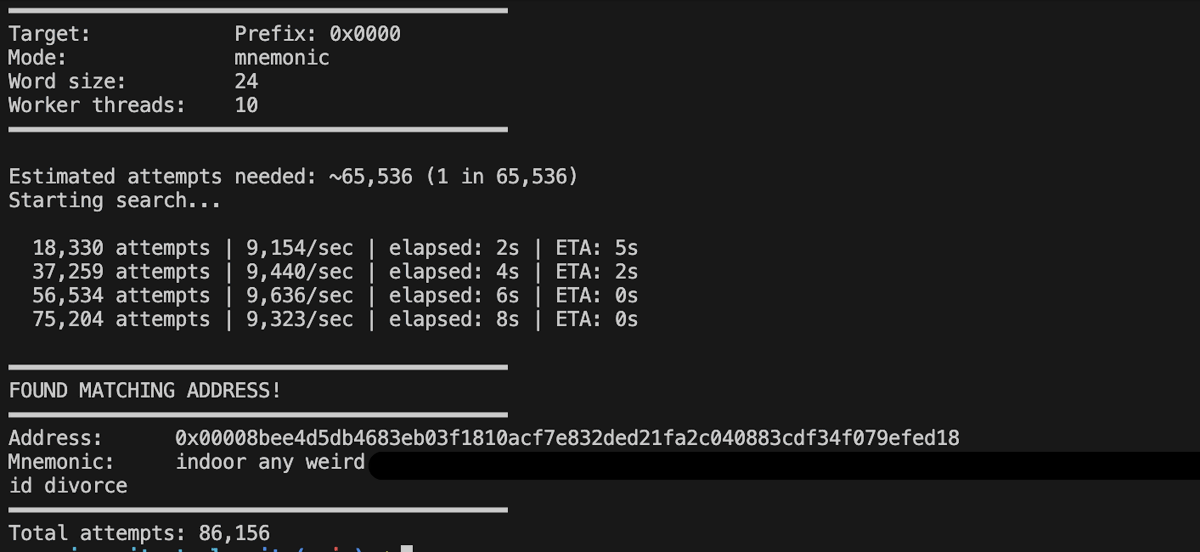
I'm building a custom address generator. If you want one that starts with 0x0000, 0xdead, or ends with 0x..feed, 0x..abcd? I built an open-source vanity address generator just for Sui - fast CPU multithreading + Apple GPU acceleration.
Repo: https://t.co/njOfFnPaq8
🧵1/7