Highlight from the NSAC Long Range Plan: "we recommend ... an international consortium that will undertake a neutrino less double beta decay campaign, featuring the expeditious construction of ton-scale experiments, using different isotopes and complementary techniques"
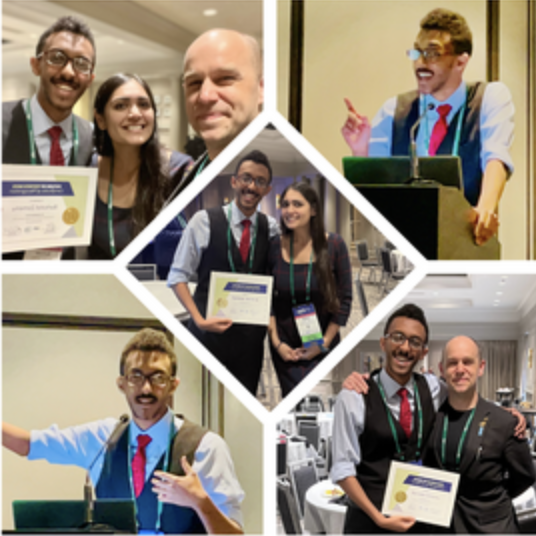
Congratulations to Barkotel Zemenu for winning the top presenter award at @APSphysics April Meeting for research on "Characterizing the Outgassing of Electronegative Impurities in nEXO". Zemenu attended with FPD grant and Yale College Rosenfeld Travel Award.
#yalewrightlab#STEM
We are honored to have such talented and dedicated researchers on our team, and their contributions are paving the way for groundbreaking advancements in the world of science.
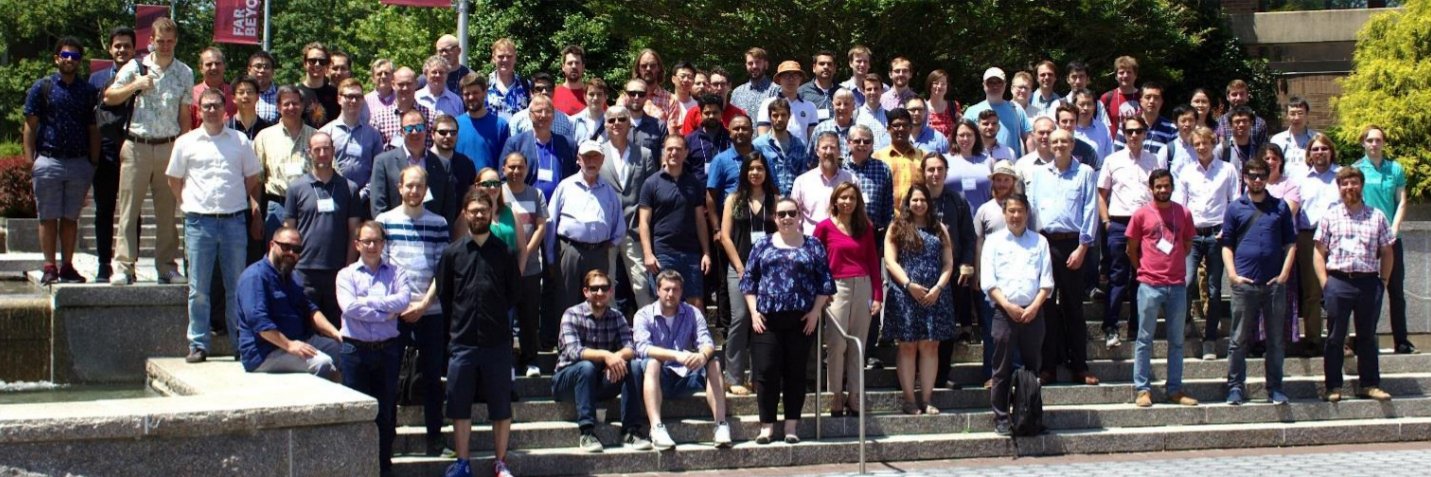
Here are our amazing nEXO collaboration delegates who presented at the '2nd International Summit on the Future of 0νββ' at SNOLAB last week! 🤩 #nEXO#SNOLAB#science#research#innovation
nEXO student and @Yale undergrad Barkotel Zemenu was awarded the prize for best undergraduate presentation at the April American Physical Society meeting this past week! https://t.co/TOjOO52Rbc
Last week at the April meeting of the American Physical Society, nEXO collaborator and co-head of nEXO's #DEI committee
@KMcMichael1218 shared some of the work that the committee's done this past year, as well as some of their plans for the future.
Today in #neutrino_history! On December 15th, 1939, W. H. Fury published “On Transition Probabilities in Double Beta-Disintigration”! In this paper, Fury proposes a rare, yet-unseen decay process. Does that name sound familiar? (paper: https://t.co/DVhasZWkqj)
That’s a wrap! We just finished our second collaboration meeting of 2022, and what a great meeting it was. We enjoyed listening to our collaborators’ wonderful ideas and progress. We’ll be sharing some of our favorite moments in the next few days, so follow us to learn more!
Today in neutrino physics history! On December 4th, 1930 a pioneer of quantum physics, the eminent Wolfgang Pauli, pens a short letter addressed “Dear Radioactive Ladies and Gentlemen". 1/3
This is the beginning of the story of the neutrino, which continues to this day! nEXO will expand on our now extensive knowledge of neutrinos to further our understanding of this most elusive “ghost” particle. 3/3
When a 0vbb event takes place, it releases two electrons into the detector called betas. These betas either release more electrons from the Xe atoms, or they excite the Xe atoms, which eventually de-excite releasing photons into the detector. #Fridays_with_nEXO
The McDonald Institute is pleased to invite applicants for the two inaugural positions within the Black Indigenous Engineering and Technology (IBET) PhD Project. Learn more here: https://t.co/xKtyKU6awD
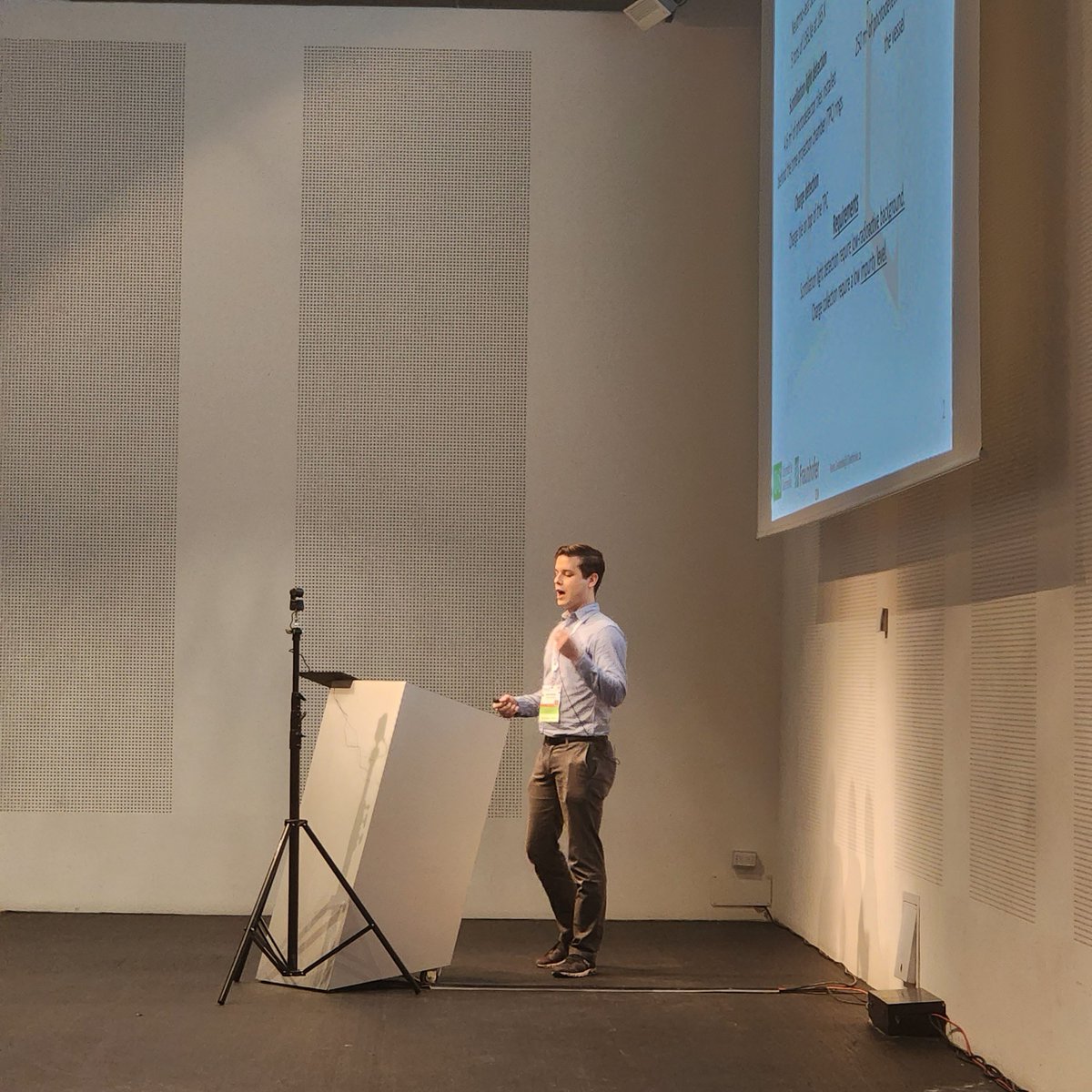
nEXO Collaborator and @drexelu PhD candidate Brady Eckert shared his work on the evaluation of Bremsstrahlung Models at #APSDNP this morning! Bremsstrahlung or “braking” radiation is an important mechanism involved in beta decays and crucial for nEXO’s background model.
Undergraduate research highlight: nEXO collaborator Barkotel Zemenu from @yalewrightlab presented his research on outgassing measurements of nEXO materials last night at #APSDNP!
@APSphysics
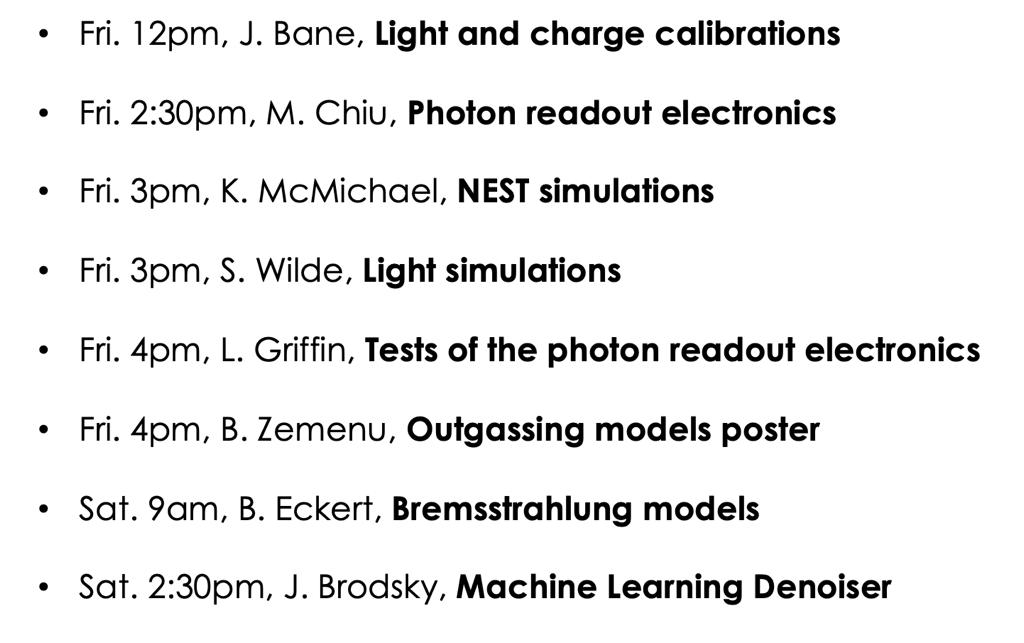
Join us for the double beta decay sessions at the APS DNP meeting to learn more about nEXO detector physics!!
See the schedule below for the talks happening today and tomorrow. #nEXO#APSDNP