Brian Wang | NextBigFuture: Deep Tech Insights on AI, Drones, Space, Energy & Investments | Proven prediction track record (Metaculus rank 8 + Grok citations
SpaceX Flight 13 just proved the hard part of Starship reuse is nearly solved.
Which means everyone asking "can they make it reusable enough for 1,500 launches?" is asking the wrong question.
The real wall isn't rockets. It's oxygen. 🧵
7/ First problems are making Starship work to deliver to orbit, then catch booster and upper stage, reuse as much and as fast as possible, build more towers and improve tower operations and get critical fuel and tankage
SpaceX Flight 13 just proved the hard part of Starship reuse is nearly solved.
Which means everyone asking "can they make it reusable enough for 1,500 launches?" is asking the wrong question.
The real wall isn't rockets. It's oxygen. 🧵
6/ So how do you actually track SpaceX's path to 1,500 flights?
Don't watch the next reentry.
Watch how fast they can pour oxygen plants.
Full analysis — the site logic, the tower-vs-tankage crossover, the numbers: [link]
4/ So hourly cadence isn't a plant problem you buy your way out of.
It's a storage problem. Produce continuously → store it → discharge in a burst → refill over a week.
Peak rate = tankage. Average rate = the plant.
Every Starship stack burns ~4,600 tons of propellant — ~3,600 tons of it liquid oxygen.
That's fixed by physics. It never gets cheaper with practice.
Multiply by any serious cadence and logistics stop being logistics and become heavy industry.
Boring Company is in talks to raise around $4 billion at a valuation of roughly $20 billion. This is about six times past fund raised. They will tunneling lower than the price of added road
In a recent interview (link below), Steve Davis, The Boring Company’s CEO, said their cost per mile for a single-lane tunnel was $10M/mile, heading to $5M/mile.
US urban freeway construction costs $5M to $15M+ per mile. And Boring can build a tunnel faster than freeways get constructed on land.
This is explosive. This should be profiled in the business press everywhere.
Boring is building an underground freeway system in Las Vegas. It is already among the top 15 largest underground transit systems in the US, and once finished will be in the top 5.
Like all of Elon’s large projects, most people don’t understand it and many ridicule it.
Characteristics:
Hybrid system, allows autonomous vehicles to drive on surface streets and then enter the underground tunnel system. This enables micro stations such as a coffee shop (they actually have a station at a coffee shop in Vegas), hotel porticos, small apartment buildings, and basically anywhere you can allocate dedicated parking spots for the vehicles (which will eventually be mostly Cybercabs).
Tunnel entrances occupy a tiny area, so construction has minimal disruption. This also means you don’t have to walk 15 minutes to a subway platform. Stations are close by.
Like a freeway, the Loop system is an express system. Your ride goes from your location directly to the destination, bypassing all stations along the route. Unlike a subway, you don’t disembark when changing tunnel “lines.” The vehicles do that automatically for you, driving between the tunnel segments. This turns a 45-minute subway ride into an 8-minute private vehicle ride.
Passengers wait seconds for a ride, not 10-15 minutes like a train-based system. Rides are personalized and far safer than a shared train car.
If tunnels get congested, it is straightforward to build an adjacent tunnel to share the load. System expansion can therefore occur when needed.
Construction does not disrupt surface streets.
High-capacity events can be handled by the upcoming Tesla Robovan, which will pack more people into the tunnel systems.
It is much cheaper operationally than a subway. Subway cars are expensive to purchase and maintain. Loop uses mass-produced, comparatively cheap vehicles.
The tunnels are far safer than subways, with no exposed high-voltage rails. The system has full modern safety features, including massive ventilation in case of fire, pumping systems for water intrusion, and emergency exits.
Boring currently has 7 tunnel boring machines operating and is gearing up to 11 by year’s end. This company could reshape city landscapes over time. Massive amounts of land could be reclaimed for parks and public spaces if transport were moved underground.
While I’m not a Boring investor, I would like to be, and I am looking for ways for an accredited investor to invest if anyone knows of an SPV or other vehicle.
In a recent interview (link below), Steve Davis, The Boring Company’s CEO, said their cost per mile for a single-lane tunnel was $10M/mile, heading to $5M/mile.
US urban freeway construction costs $5M to $15M+ per mile. And Boring can build a tunnel faster than freeways get constructed on land.
This is explosive. This should be profiled in the business press everywhere.
Boring is building an underground freeway system in Las Vegas. It is already among the top 15 largest underground transit systems in the US, and once finished will be in the top 5.
Like all of Elon’s large projects, most people don’t understand it and many ridicule it.
Characteristics:
Hybrid system, allows autonomous vehicles to drive on surface streets and then enter the underground tunnel system. This enables micro stations such as a coffee shop (they actually have a station at a coffee shop in Vegas), hotel porticos, small apartment buildings, and basically anywhere you can allocate dedicated parking spots for the vehicles (which will eventually be mostly Cybercabs).
Tunnel entrances occupy a tiny area, so construction has minimal disruption. This also means you don’t have to walk 15 minutes to a subway platform. Stations are close by.
Like a freeway, the Loop system is an express system. Your ride goes from your location directly to the destination, bypassing all stations along the route. Unlike a subway, you don’t disembark when changing tunnel “lines.” The vehicles do that automatically for you, driving between the tunnel segments. This turns a 45-minute subway ride into an 8-minute private vehicle ride.
Passengers wait seconds for a ride, not 10-15 minutes like a train-based system. Rides are personalized and far safer than a shared train car.
If tunnels get congested, it is straightforward to build an adjacent tunnel to share the load. System expansion can therefore occur when needed.
Construction does not disrupt surface streets.
High-capacity events can be handled by the upcoming Tesla Robovan, which will pack more people into the tunnel systems.
It is much cheaper operationally than a subway. Subway cars are expensive to purchase and maintain. Loop uses mass-produced, comparatively cheap vehicles.
The tunnels are far safer than subways, with no exposed high-voltage rails. The system has full modern safety features, including massive ventilation in case of fire, pumping systems for water intrusion, and emergency exits.
Boring currently has 7 tunnel boring machines operating and is gearing up to 11 by year’s end. This company could reshape city landscapes over time. Massive amounts of land could be reclaimed for parks and public spaces if transport were moved underground.
While I’m not a Boring investor, I would like to be, and I am looking for ways for an accredited investor to invest if anyone knows of an SPV or other vehicle.
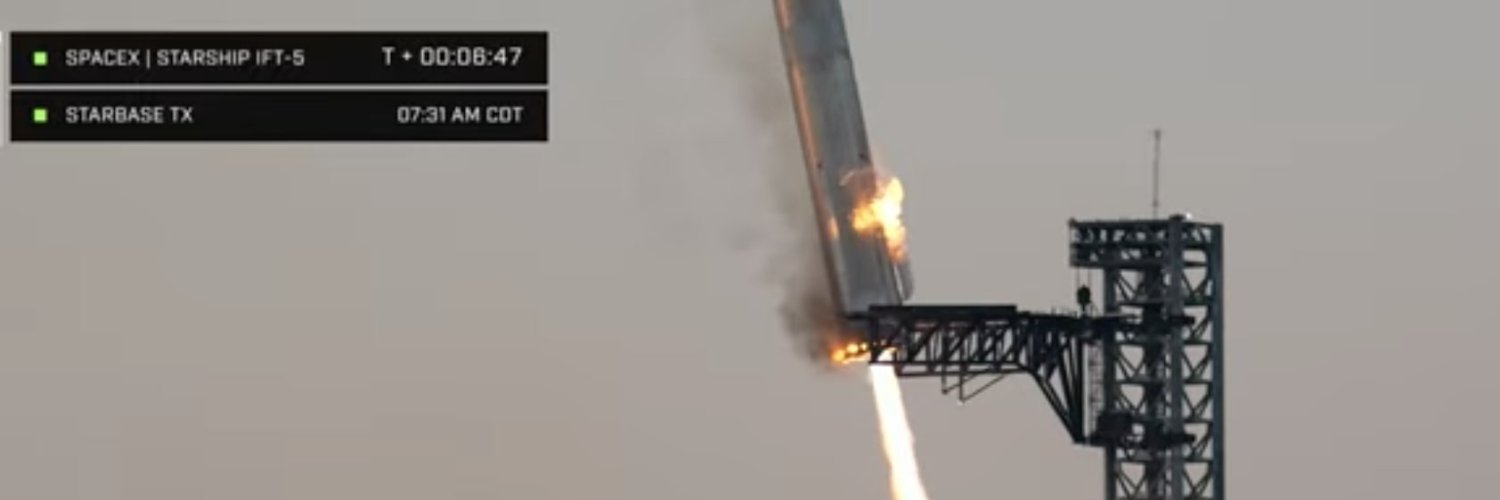
SpaceX Starship catch attempt in Flight 14. Simulated catch for booster. Flight 15 should be both booster and starship and full reuse and start of Commercial V3 deployment. @elonmusk
SpaceX Starship had a miracle happen. The landing of Starship was so soft that the fires did not cause an explosion. Starship survived intact. Revealing the exact condition of the heat shield and exactly where the heat shield and underlayer had damage.
Anthropic’s Claude Opus 5 delivers near-frontier performance at roughly half the price. Opus 5 is Agentic Coding And science problem solving beast. It is a huge strategic win for them. This puts competitive pressure on OpenAI, and a clear advance of the practical frontier toward cost-efficient agentic intelligence.
It sets new standards for agentic coding, knowledge work, science and business workflows.
Opus 5 leads or is highly competitive across key agentic and professional tasks.
Strongest leads
Agentic terminal coding (Frontier-Bench v0.1) at 43.3% vs 33-34% for other near frontier. Even better than their own Fable 5.
Novel problem-solving (ARC-AGI-3) at 30.2% (far ahead of others)
Knowledge work (GDPval-AA v2) at 1861
Computer use (OSWorld 2.0) at 70.6%
Business workflows (AutomationBench) at 26.0%
Hard biology at 49.4%.
AGI and superintelligence is almost here but we need life extension medicine to keep William Shatner alive to talk rogue AI into self destructing. @elonmusk
Summarizing what is known about Tesla after the earnings call. FSD 15 bring 40% done and early version in Robotaxi. Working on 7 major advances that are big progress to a widely usable unsupervised system
Reality after the call is still not great, but here are some thoughts.
1. Auto margins were flat even with additional uptake on FSD. But the drop was due to one time positive elements in Q1. I think we can adjust or expectation for the rest of this year to be around this level, with possible improvement from FSD uptake
2. Margins on energy storage were lower than normal due to one time issues, but should be around 25%.
3. Robotaxi miles will increase by double digits per week. That should require about 5000 cars by the end of the year.
4. Cybercab and Model Y's in the Robotaxi fleet are operating on FSD vs 15.
5. Hardware 3 customers will still likely get an advance AI 4 chip or maybe the AI 5 chip at some point.
6. BIG - FSD Semi work will start end of the year or Q1 next year.
7. Semi ramp is very slow
8. Optimus ramp expected to very slow
9. Optimus will be only bot that can truly see and do
10. Terafab location to be announce shortly and there will be a big todo about that
11. Dodged the merger question, but I'd say the question was more yes than no.
12. Tesla has secured the necessary supply of memory at a good price.
13. FSD uptake is selling cars in the US and other places where it is approved.
14. Might have been political, but they say NHTSA is okay, good relationship.
15. Solar fab seems to be coming sooner than I expected. Sounds like it will be used mostly to build Tesla farms.
16. Megapods can go anywhere there is excess energy
Those are my notes so far. What did I miss?
Anthropic remains well ahead in ARR, but OpenAI has recently accelerated.
TickerTrends is now tracking Anthropic at $74.1B versus OpenAI at $41.3B, with OpenAI’s run rate rising from $33.0B in May to $41.3B in July.
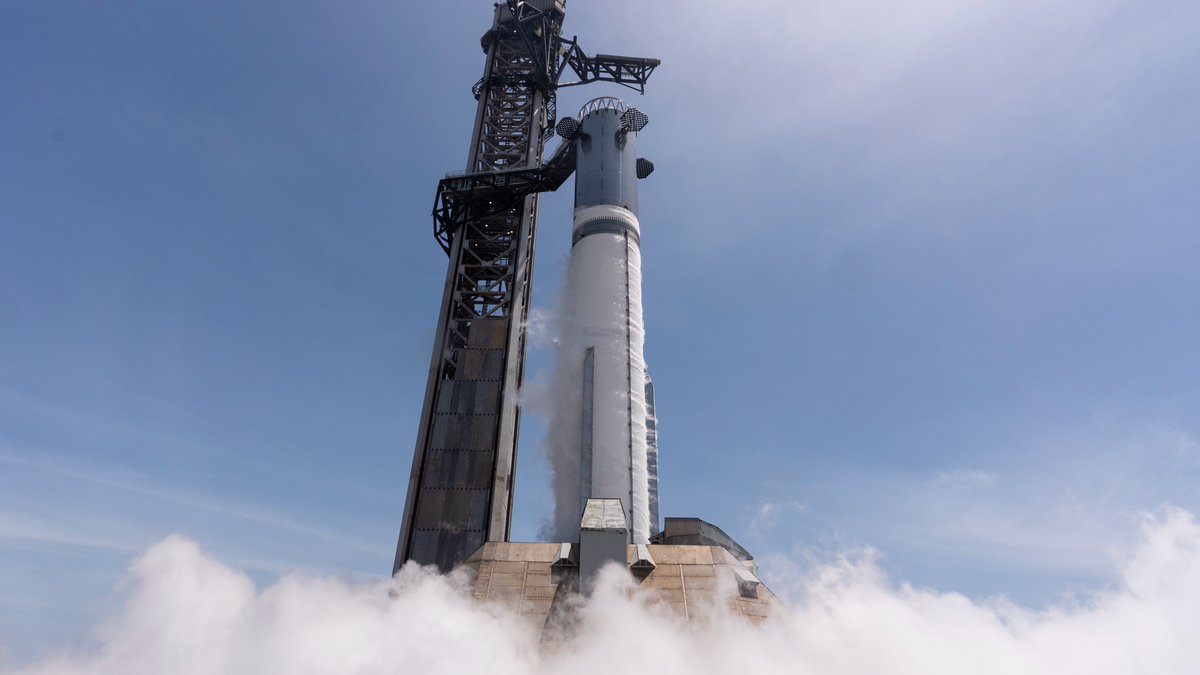
Additional preflight testing on Super Heavy complete. Now starting preparations to launch Starship as soon as tomorrow, Thursday, July 23. Weather is currently a significant watch item for launch