If that foundation isn’t solid, the rest won’t hold, no matter how many flashcards, drills, or repetitions we stack.
So before we ask “Why isn’t he talking yet?”
we need to look at the foundation.
#SpeechTherapy#SLP#EarlyIntervention
It’s important to constantly remind ourselves that language doesn’t begin at the top of the pyramid where the words live.
Words are the final flourish, not the starting point.
The preverbal layer that most people ignore actually forms the foundation! Aspects like eye gaze, turn-taking, facial expressions, joint attention, co-action, imitation are imperative for language development.
INSPIRATION💡
Christina Santhouse had half of her brain removed at age 8 to stop constant seizures. Doctors said she’d never drive or live a normal life. She got her license at 17, earned both her bachelor's and master's degrees in just 5 years, and became a speech pathologist
#EUfunded researchers are pushing to reduce the long-term health impacts of Down syndrome and boost lifelong wellbeing.
Discover how experts are helping people with Down syndrome lead healthier and more independent lives ➡️ https://t.co/XHCTHlXzw2
#WorldDownSyndromeDay
Today is #WorldDownSyndromeDay. Here are 4 ways you can help to support someone with Down’s syndrome.
Find more advice and support on the NHS website. https://t.co/VBL7gtWFbQ
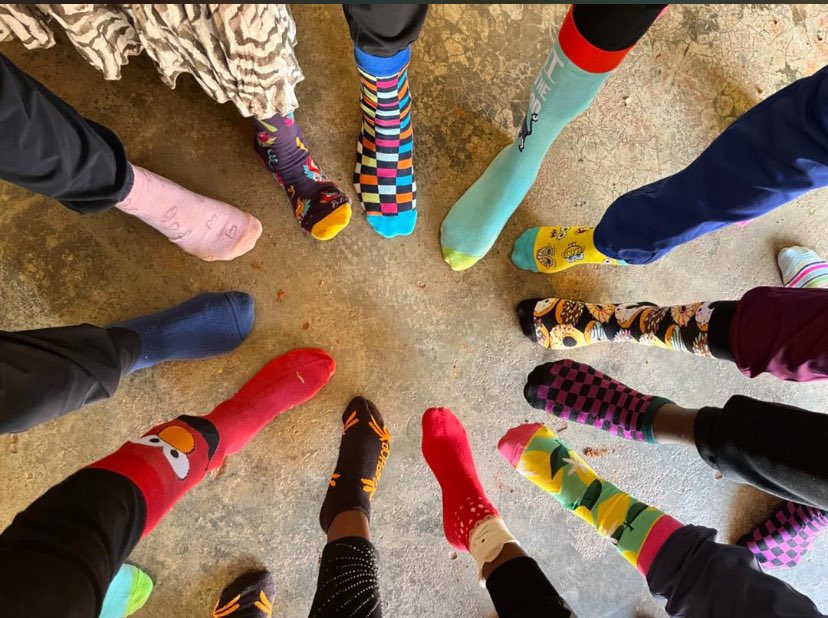
Don’t forget we are supporting #WorldDownSyndromeDay and the #LotsOfSocks campaign by wearing odd socks tonight.
Please join us and help raising awareness, while those than can donate can do so here 👇
https://t.co/YINRQEh8v3
💙 Today is World Down Syndrome Day and a chance to celebrate individuals like Luke, who was recently treated to a VIP day out at the Senior Training Centre – an occasion he described as 'the best day of his life!'
#WorldDownSyndromeDay | #Rovers 🔵⚪️
A Clare man is bringing a message of equality to the UN on World Down Syndrome Day. Fionn Crombie Angus is one of ten people with Down syndrome from across the world speaking at the 14th World Down Syndrome Day conference at the UN headquarters in New York.
#WorldDownSyndromeDay
🔍 One study found: Kids who use AAC are more social and have better relationships with caregivers (Light & McNaughton, 2014).
Where the Speech and language therapist comes in!
High-tech AAC devices are powerful, but they aren’t a “one-size-fits-all” solution. A speech and language therapist (SLT) helps make sure each child gets the right AAC system and the right support.
They do this by: 🔹 Choosing the right device – Every child is different, so SLTs find the best AAC tool for each one. 🔹 Personalizing the device – SLTs add words and pictures that match the child’s needs and interests. 🔹 Teaching kids how to use AAC – Kids need practice to get comfortable with AAC, and SLTs help them learn step by step. 🔹 Training parents and teachers – SLTs show families and teachers how to use AAC in everyday life. 🔹 Encouraging speech development – AAC doesn’t replace speech—it supports it! SLTs make sure kids use AAC in a way that helps them learn to talk.
The best results happen when parents, teachers, and SLTs work together to encourage communication in multiple settings like school and home.
Conclusively, every child deserves a way to express their thoughts, feelings, and ideas. High-tech AAC is not just a tool—it’s a gateway to independence and social connection.
With the support of speech and language therapists, AAC helps children with language delays: ✅ Communicate their needs ✅ Learn and develop language ✅ Participate in school ✅ Build friendships ✅ Gain confidence
Do you know a child who has trouble communicating? Give them the gift of speech—connect them with a speech and language therapist today!
HOW HIGH TECH AAC HELPS KIDS WITH LANGUAGE DELAYS COMMUNICATE
Step into the mind of a child encountering the world for the first time! 👀
With so much to discover, you'd be bursting with thoughts, eager to ask questions, and excited to express yourself. Now envision wanting to say all these things but not being able to! 😩
For many children with language delays, this is the daily struggle. They may know what they want to say but can’t express it using speech. This can lead to frustration, isolation, and missed opportunities to connect with others.
Language delay is when a child does not develop speech and language skills at the expected age. This means they might start talking later than other children, have a smaller vocabulary, or struggle with forming sentences.
It's important to note that language delay is different from a speech delay. In speech delay, a child may understand language but struggles with pronunciation or forming words. In language delay, both understanding and using language can be affected.
A language delay can affect: 🔹 Expressive language – The ability to speak and communicate thoughts. 🔹 Receptive language – The ability to understand and process what others are saying. 🔹 Both expressive and receptive language – Some children struggle with both speaking and understanding language.
Speech and language therapists use augmentative and alternative communication (AAC) tools to help individuals optimize their communication.
Augmentative and Alternative Communication includes any tool that helps people communicate when speaking is difficult.
High-tech AAC devices include: ✅ Speech-generating devices (SGDs) – These are special devices (or apps on a tablet) that say words out loud when a child selects pictures or types text. ✅ Eye-tracking systems – Some devices let children use their eyes to choose words if they can’t use their hands. ✅ Text-to-speech apps – Older kids who can type can use these apps to turn their words into speech. ✅ Smart AAC with AI – Some advanced devices can predict words a child might want to say, making communication faster and easier.
Majority of parents and parties involved with children with language delay often worry that using AAC will stop the child from learning to talk.
Fret no more, since AAC usage has more outstanding benefits and is backed up by massive research. A big study by Millar, Light, & Schlosser (2006) found that using AAC does NOT stop speech from developing but actually helps children talk more.
Below are some prime benefits that come with the usage of AAC tools:
🗣️ 1. Encourages More Communication
Kids with language delays may not know how to start a conversation. AAC gives them a way to communicate, making it easier for them to interact.
🔍 Research says: Kids with autism who use AAC try to communicate more often than those who don’t (Kasari et al., 2014).
🧠 2. Helps Build Language Skills
AAC helps children learn new words and sentence structure. Seeing and hearing words together improves their vocabulary.
🔍 Studies show: When children with developmental delays use AAC early, they learn more words than those who don’t (Romski & Sevcik, 2005).
👩🏫 3. Supports Learning in School
Speaking is important for learning. With AAC, children can answer questions, join discussions, and express ideas in the classroom.
🔍 Experts found: AAC users are more engaged in school and perform better in class (Beukelman & Mirenda, 2013).
😊 4. Reduces Frustration and Meltdowns
Not being able to talk can be frustrating for kids, sometimes leading to tantrums. AAC helps them express their feelings, making life easier for everyone.
🔍 Research proves: Kids with AAC have fewer behavioral issues because they can communicate their needs (Drager et al., 2010).
🤝 5. Helps with Social Skills
Talking is key to making friends. AAC helps children join conversations and feel included.
The Blindsight device from Neuralink will enable even those who have lost both eyes and their optic nerve to see.
Provided the visual cortex is intact, it will even enable those who have been blind from birth to see for the first time.
To set expectations correctly, the vision will be at first be low resolution, like Atari graphics, but eventually it has the potential be better than natural vision and enable you to see in infrared, ultraviolet or even radar wavelengths, like Geordi La Forge.
Much appreciated, @US_FDA!
We know this path can be demanding, so please take a moment today to acknowledge your own strength. You are not alone. We are here to support you and your child every step of the way.
⭐️Happy Mother’s Day⭐️
Here’s to all the moms who:
✴️Advocate tirelessly for their child’s needs and inclusion.
✴️Celebrate the victories, no matter how small.
✴️Practice self-care, even when it feels impossible, because a happy mom means a happier family.
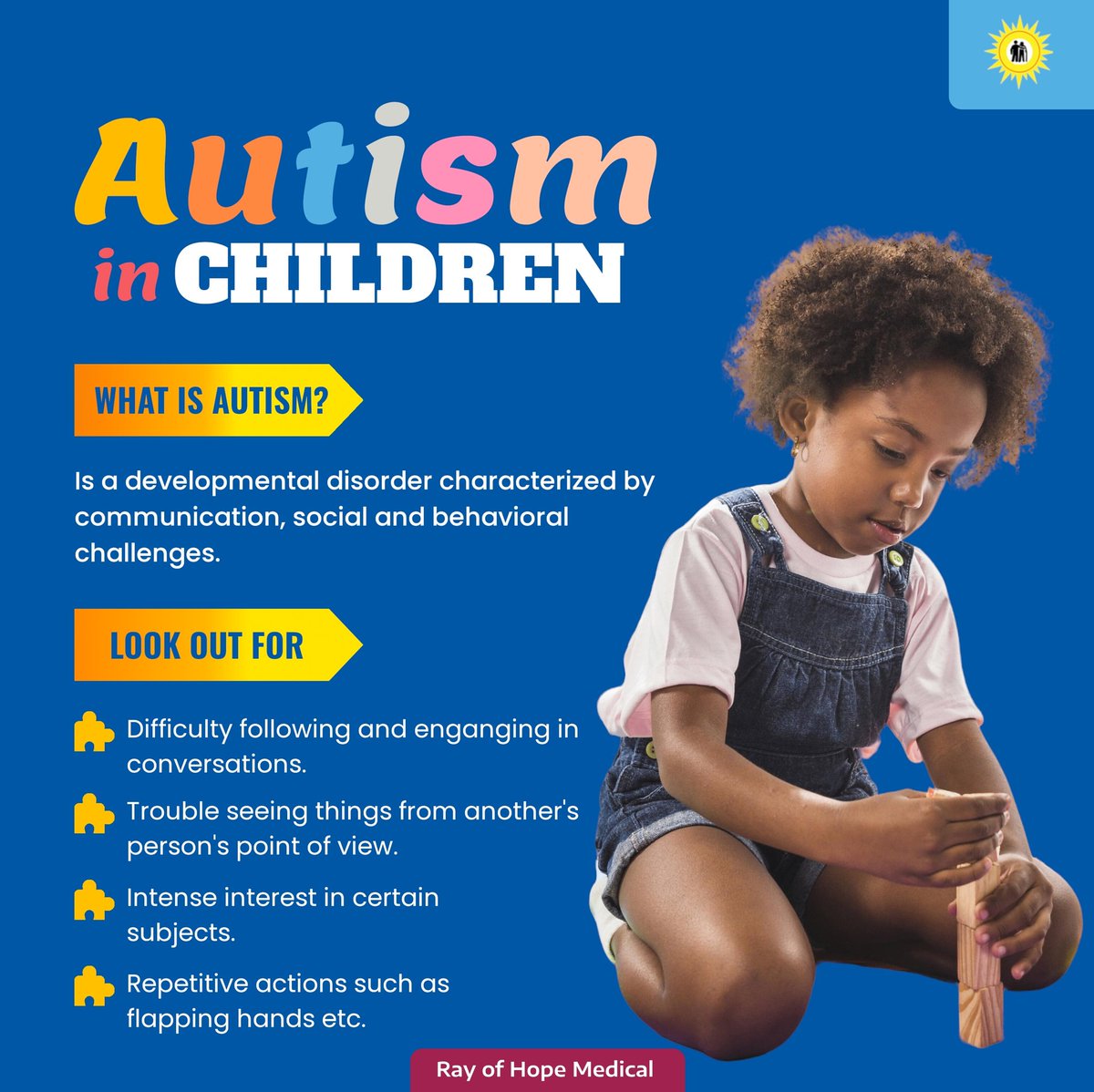
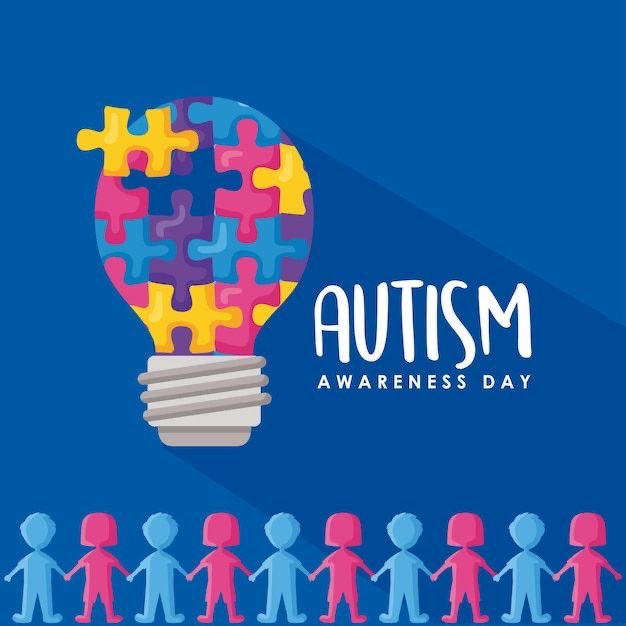
Today is World Autism Awareness Day!
Let’s steers towards “Empowering Autistic Voices” provide more support and power to in order to ensure they lead a meaningful life and even pursue successful careers.
Go to @nextstepspeech for more info
2nd April is World Autism Awareness Day!
If you know someone on the ASD spectrum, it’s important that we steer towards “Empowering Autistic Voices” provide more support and power to in order to ensure they lead a meaningful life and even pursue successful careers.