Particle physicist. Associate professor at the University of Minho. Researcher at LIP and ATLAS experiment at CERN. Views are my own (could it be different?).
@Publico Um excelente artigo de @tmarquesramalho sobre os preocupantes ventos que sopram dos EUA e que, em parte, já começaram a chegar à Europa. Não devemos ficar de braços cruzados a assistir ao fim do relativo consenso que havia na nossa sociedade sobre a importância da ciência.
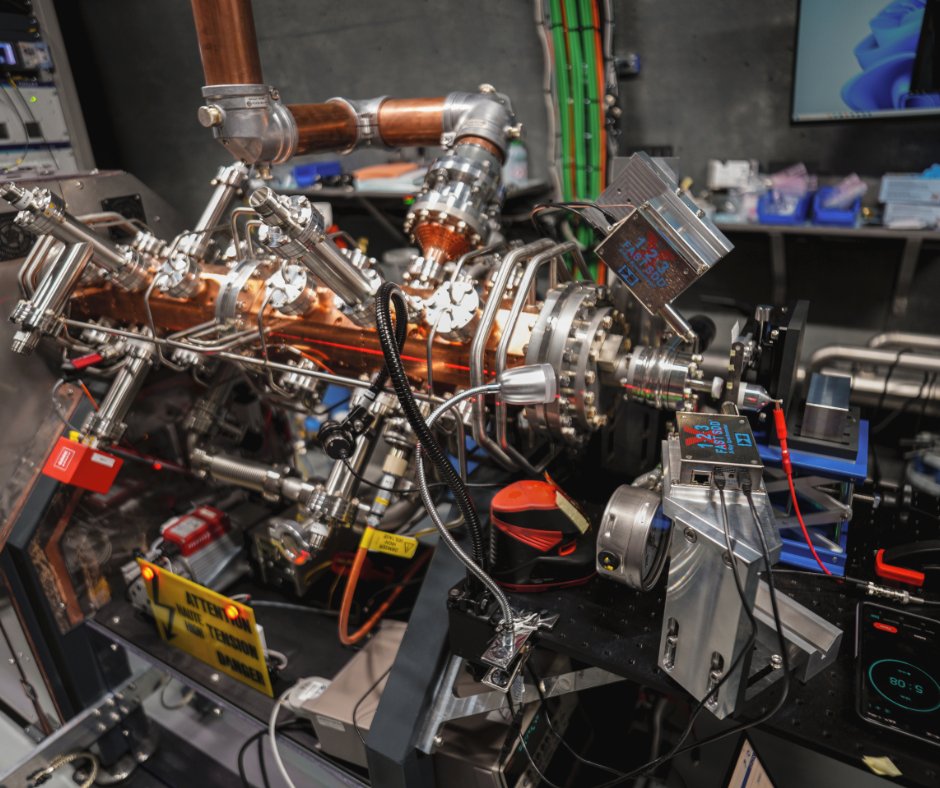
Science Gateway’s mini accelerator is now taking data
After years of development, the proton accelerator ELISA (Experimental Linac for Surface Analysis) is now being used for archaeological research at #CERNScienceGateway.
This marks the first time a proton accelerator of this kind has been used for research as a part of a museum exhibition.
Find out more: https://t.co/dFIIesnVaq
🎬 Nesta que é a 2.ª edição do Braga Science Film Fest, são apresentadas 80 curtas-metragens de documentário, animação, experimental e ficção.
🎞️ A iniciativa decorre de 16 a 24 de novembro, em formato híbrido e gratuito.
ℹ️ https://t.co/ez25bSkqJT ℹ️
Two of my students at the Particle Physics course @cienciasuminho building an hand made cloud chamber to "see" particles. It was a fun activity and the movie got quite cool, I think.
The ATLAS collaboration at @CERN has observed top quark pairs in collisions between lead ions, marking the first observation of this process in interactions between atomic nuclei! 🎇
Learn more about this new result: https://t.co/lIThjIDFij
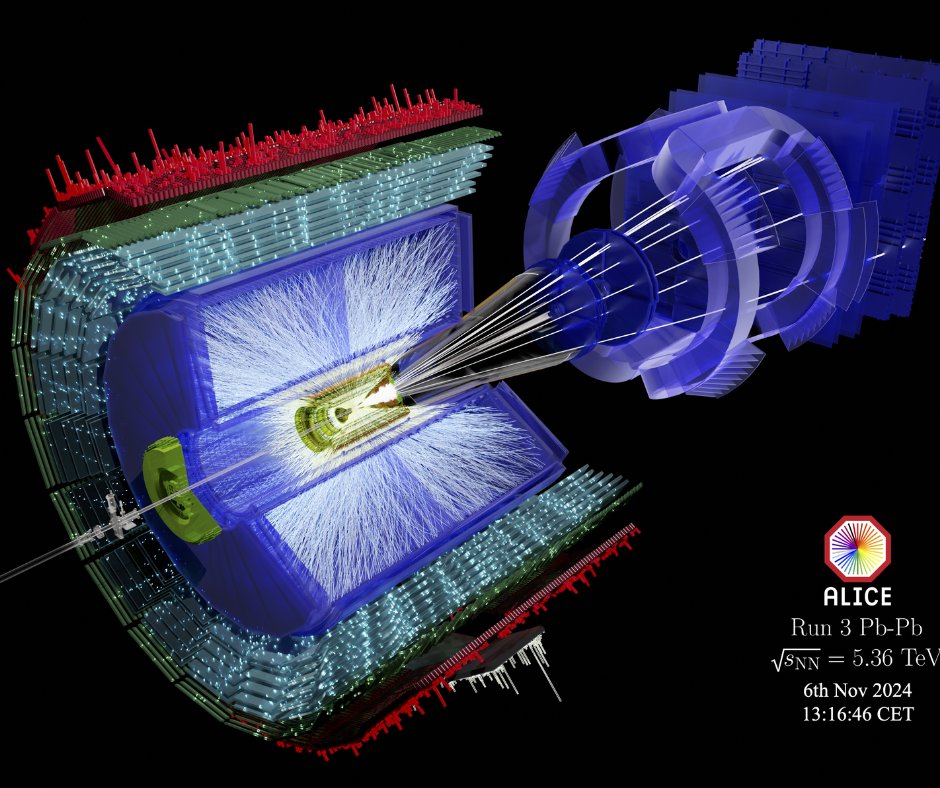
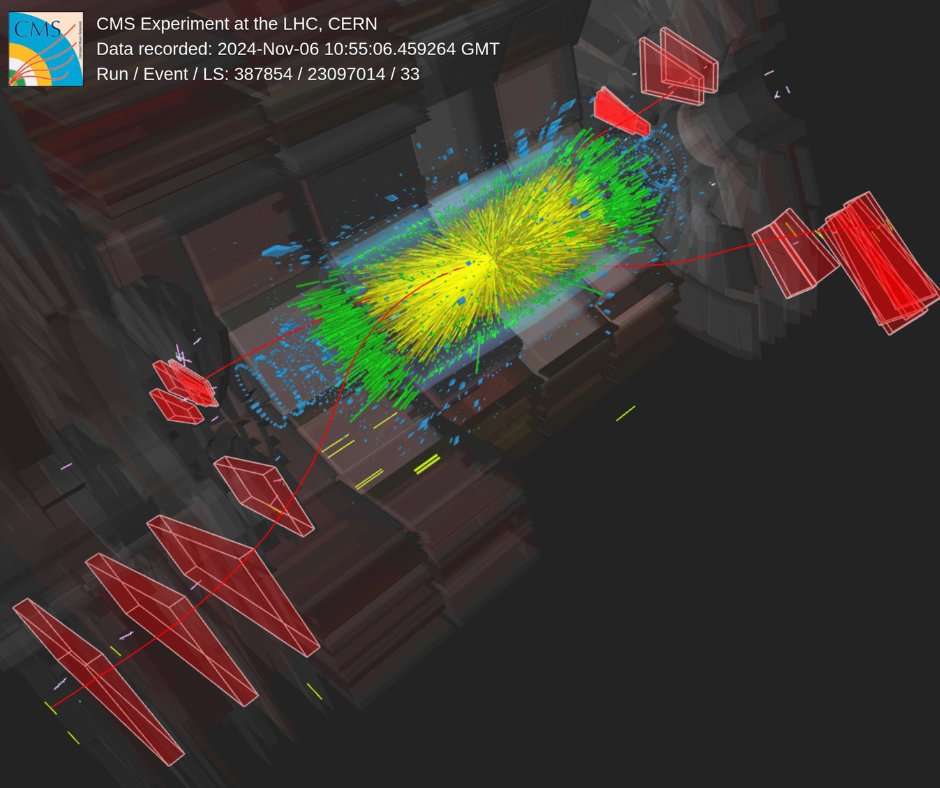
So it begins… the heavy-ion run at the #LHC 💪
Yesterday at 11.13 am, a new #HeavyIon run began at the Large Hadron Collider, smashing together lead ions at an energy of 5.36 TeV per nucleon pair.
While the LHC mostly collides protons, once a year it collides heavy ions – such as lead nuclei – a key ingredient for preparing the primordial soup called the quark–gluon plasma, a state of matter known to have existed shortly after the #BigBang.
For the next 17 days, every minute counts to take lead–lead collision data.
Find out more: https://t.co/lbdqBZXiqb
CERN Council selects Mark Thomson as next Director-General, starting in 2026
Professor Thomson’s five-year mandate will begin on 1 January 2026.
Find out more: https://t.co/g9qLMOtSC8
CERN Council selects Mark Thomson as next Director-General, starting in 2026
Professor Thomson’s five-year mandate will begin on 1 January 2026.
Find out more: https://t.co/g9qLMOtSC8
Target reached ✅
Only ten days later, on 23 September, an additional 10 femtobarns were integrated, reaching the 110 femtobarns target set for 2024.
2024 has been the most productive year for the #LHC
Find out more: https://t.co/Kq5T5UyfRD