I have made $600K from hackathons this year. I have a very high hackathon winning ratio of around 80 or 90%. Some tips:
1. Think before starting. Idea is the most important thing. If you're building something that could go viral on X (AKA something fresh/new/clever) you have way, way higher chance to win.
2. Scope depending on the hackathon time. Don't do more than you need. Having the right working pieces is far superior than having many pieces that are not fully fitting together.
3. Polish! Be VERY detail oriented. Whatever you do make it perfect. Any small details that are off might potentially distract a judge, so make sure to make a smaller but tighter and cleaner project.
4. Everything that you present should be truly functional, don't fake stuff just to make your submission look "bigger".
5. Packaging is almost 50% of the submission. The video, the text, whatever the hackathon requires you for the submission. Don't leave it for the last moment. If you built something great but have a bad video, you have a bad submission. Learn how to communicate your great project.
6. You don't need a team anymore. AI has your back.
Announcing Gemini 4 Argon, our new frontier model.
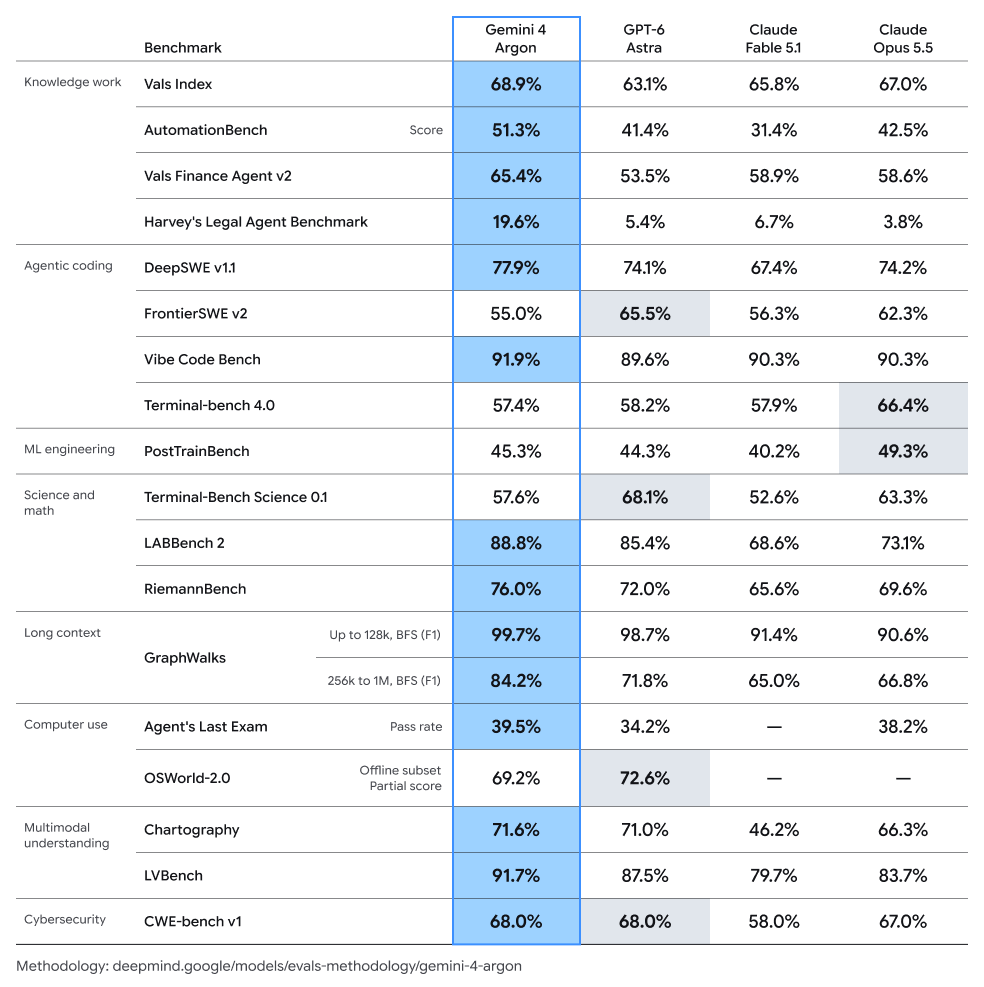
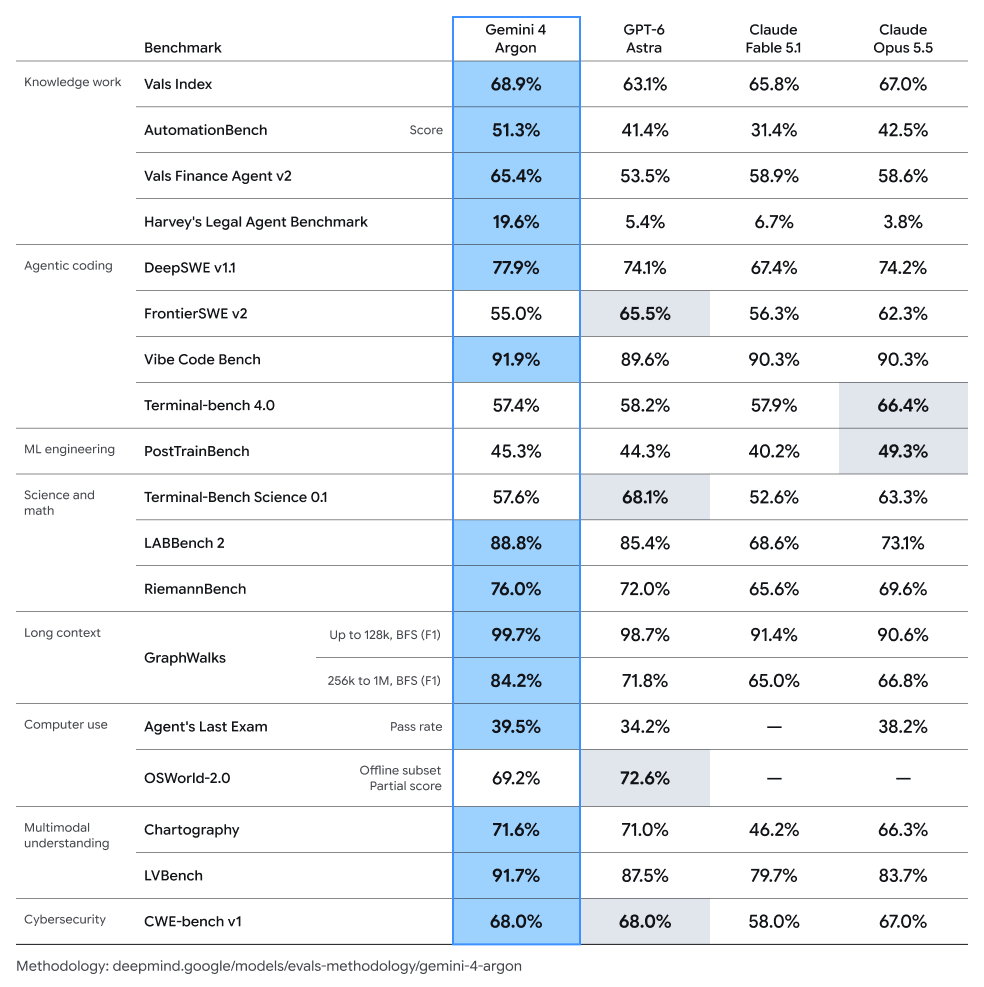
Argon is built to sustain deep reasoning across complex, long-horizon workflows and delivers frontier performance in complex workflows across real-world software engineering, enterprise knowledge work like legal and finance, and cybersecurity defense.
We’re also expanding the model’s output token limit to an industry-leading 1M tokens.
Argon is currently rolling out to a set of trusted cyber defenders in the Fairwind Program, with broader availability as soon as possible.
Lots of discussion out there about our next model(!), so I wanted to give an early look as soon as possible. Introducing Gemini 4 Argon!
It shows frontier performance in complex workflows, cyber defense and software engineering. Teams are using it extensively at Google, from coding to quantum computing, great feedback.
Here’s a look at the benchmarks:
Check out Muse, your personal AI agent. Redeem my code in Settings within 48 hours of joining and we'll both get 1 billion Muse tokens.
Code: ES0C1X
https://t.co/UIRxeVrxp1
using manglekit — a Datalog policy kernel built on google/mangle — to build learn-from-code: scan the repo, get signed genes at advisory tiers, promote only through a human.
see the example → https://t.co/SbJFY3eQqJ (learning/learn_from_code)
@GoogleWorkspace I used Google video to create pitching clips, latest update is much better and easier to uses.
https://t.co/hmZL3aVDz3
https://t.co/nEOGxNVGaR
Missed the video deadline to submit hackathon, but still coded and deployed to GCP! Built an multi swarm using Google ADK 2.7.1, @antigravity, and @GeminiApp
3.8 Flash. It’s surprisingly fast, robust, and handles heavy workflows effortlessly.
https://t.co/7utt1YeyDl
Shipped the entire core surface reduction in one day with @Alibaba_Qwen 3.8 Max: EAST → optional x/east extension, Gherkin compiler gone, dead aliases removed, temporal reasoning in. #GoLang
https://t.co/2Bs8hWbG4A
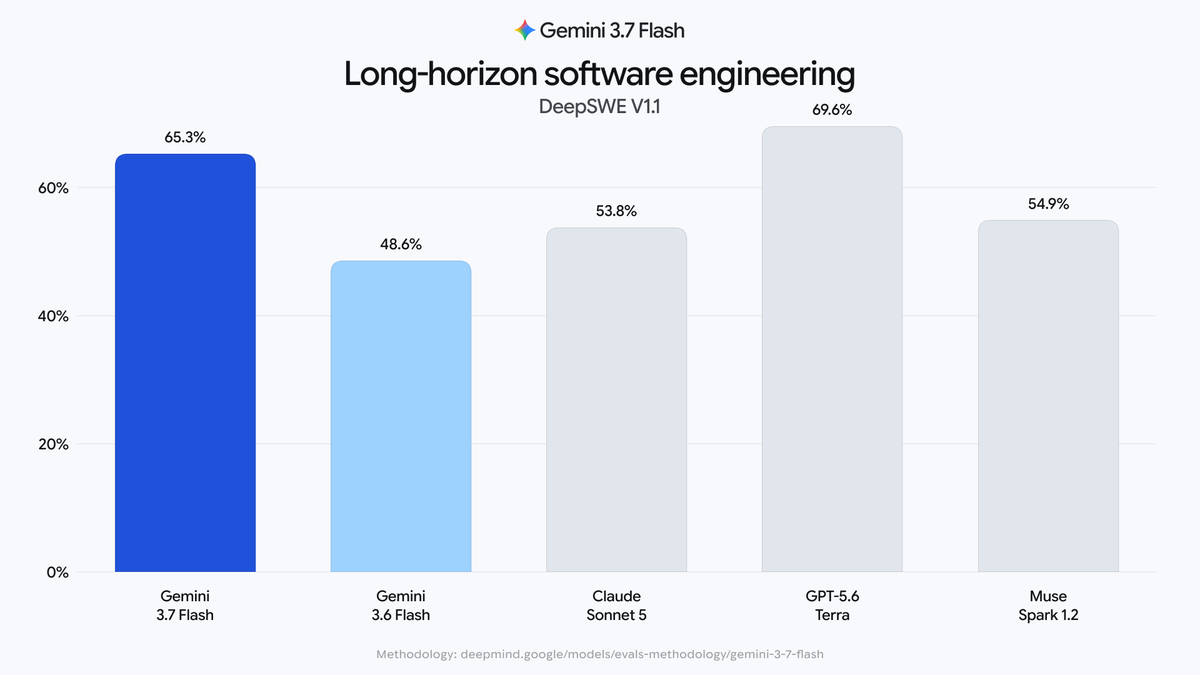
Introducing Gemini 3.7 Flash : )
- it is fast!
- 50% lower price than 3.6 flash (through end of year)
- strong intelligence increase in only ~3 weeks (thanks to some awesome algorithmic improvements)
- available in the API, AI Studio, Antigravity, and more!
Paired with @Qwen_AI (Qwen 3.8 Max) to review the codebase, plan interface refactoring, and enforce clean architectural boundaries.
https://t.co/2Bs8hWbG4A
Qwen 3.8 Max from @Alibaba_Qwen didn't just write code—it audited the codebase, mapped feature gaps, and built 7 NEW curated apps (expanding from 15 to 22 examples for 100% SDK coverage)!
#Golang#AgenticAI
https://t.co/SbJFY3eQqJ
Search by meaning, not just URLs. A Chrome extension that turns your browsing history into a semantic search engine, embedded on-device with EmbeddingGemma @googlegemma@ChromiumDev#ChromeAI#BuiltInAI
https://t.co/jQxUxL2VSm