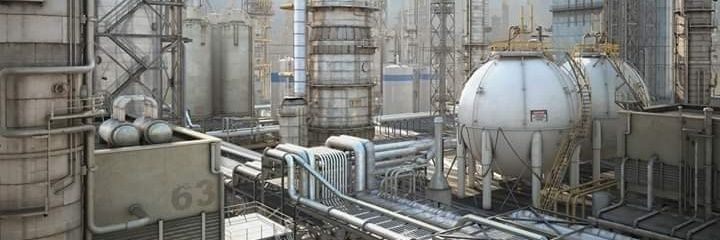
Aliko Dangote has revealed how he plans to finance his proposed $17 billion (about Sh2.2 trillion) oil refinery in Kenya.
Here's an explanation of how he plans to do it.
Save the thread below:
The reported opposition by the World Bank and the IMF to Dangote’s proposed 1.2 million-barrel-per-day refinery in East Africa raises serious questions about who really benefits when Africa remains dependent on imported refined fuel.
Their stated concern is that such a refinery could create an energy monopoly. But that argument rings hollow.
For decades, African oil producers have exported crude oil, watched it refined elsewhere, and then bought back finished petroleum products at a premium. European and multinational oil interests have dominated refining, trading, shipping, storage, and pricing across the continent with little objection from the same institutions now warning Africa about “monopoly risk.”
Where was this concern when African countries were unable to secure financing for large-scale refineries? Where was the urgency when most African refineries remained small, undercapitalized, inefficient, or commercially uncompetitive? Where was the outrage when Nigeria’s crude was shipped to Europe, refined by global giants, and sold back into Nigeria and ECOWAS markets?
It took one African industrialist, Aliko Dangote, using private capital and extraordinary risk appetite, to disrupt that broken model.
Today, the Dangote Refinery is not just changing Nigeria’s fuel equation; it is forcing the world to rethink Africa’s place in the global energy value chain.
So when institutions like the World Bank and IMF suddenly become anxious about African refining capacity, Africans must ask a harder question: are they worried about monopoly, or are they worried about Africa finally controlling more of its own energy future?
Africa does not need lectures against scale. Africa needs capital, infrastructure, refining capacity, and value addition. The continent cannot industrialize by exporting raw materials and importing finished products forever.
The real monopoly that should concern everyone is not an African-built refinery. It is the historic monopoly of external control over Africa’s resources, supply chains, pricing systems, and industrial destiny.
Everyone who travels out of Kenya gets shocked how much Kenya has stagnated while the world is moving ahead. It's like Kenya got stuck in 2013 and hasn't progressed a tiny bit.
Rasna Warah's Tweet will ring true for most of us in a few years to come
You work hard to become an Ivy League Grad, Attorney, Senator, and the first Black president of the most powerful nation on earth, and the thanks you get is your wife saying she’s glad she didn’t give you a son to follow the trail you blazed.
We named @Tesla after Nikola Tesla, one of the greatest engineers ever.
He was a penniless immigrant whose inventions led to American dominance in electricity generation and usage.
KRA is planning to switch from using the Current Retail Selling Price to the Transaction Value for valuing used motor vehicles.
This change is driven by legal requirements, the need to align with regional practices, and a goal to meet international valuation standards
George Natembeya has just opened the Pandora’s box on Cattle rustling without mincing any words . We are unknowingly funding cattle rustling in Nairobi by buying beef whose horns and hide cannot be traced ! Good gracious