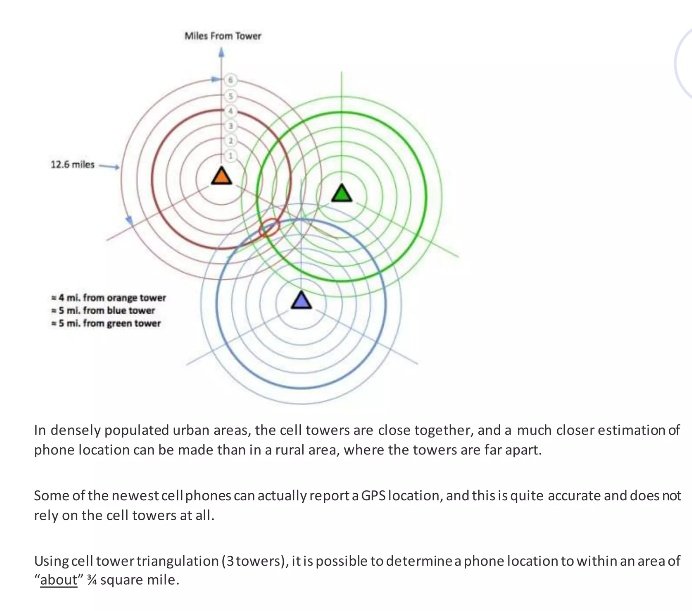
The Silent SMS is one of the creepiest surveillance tricks nobody talks about.
No sound or popup.
Not even a message.
Your phone simply gets a hidden ping.. and it quietly replies.
That reply forces your phone to talk to the nearest cell tower, updates your real-time location, and confirms you’re active.
Law enforcement has used it for years.
And NO you can’t stop it.
💀
Everyone building AI agents keeps making the same database mistake!
They give agents direct read/write access to their production database, thinking that rate limits and permissions will keep things safe.
Here's what actually happens:
The Agent runs 50 parallel queries to optimize something.
Each query seems reasonable in isolation. Together, they create a cascade of locks, updates, and resource consumption that brings down your entire system.
Or worse: The agent decides to test something, and to do that:
- It creates a new index.
- Drops it.
- Creates another.
- Tests a migration.
- Rolls it back.
- Test another approach.
All on your live data.
Even the best agents are experimental by nature. They try things, fail, learn, and try again (think about how many times Cursor says, "let me try an alternative approach").
This experimental nature is exactly what makes them powerful.
But that's also exactly what makes them terrifying when they touch production systems because traditional databases were never designed for this behavior pattern.
Postgres was built for humans who carefully plan queries, test in staging, and deploy with caution.
But Agents don't work like that.
They explore, branch, parallelize, and iterate at machine speed.
So how do you give agents the database access they need without the existential dread?
You need databases that can fork instantly.
Imagine this: Your agent needs to test a schema migration. Instead of touching production, it spins up a perfect copy of your entire database in seconds.
The agent can now destroy this fork completely. Try 20 different indexes. Run performance benchmarks. Test edge cases. When it finds the optimal solution, it reports back. When it doesn't, you just delete the fork.
This exact solution is actually implemented in the newly released Agentic Postgres by @TigerDatabase, which you can use for free.
Tiger Data built this after watching agents struggle with traditional databases for years, and they worked with me on this post to share what they did.
But the innovation in Agentic Postgres does not just stop at forking.
It has a built-in MCP server that teaches Agents how to actually think in Postgres.
Instead of generic SQL that mostly works, the MCP server aggregates 35 years of Postgres knowledge that Agents can reason with.
It also has a native hybrid search (vector + BM25) so agents can retrieve and learn from data without external tools.
And they added memory APIs for persistent context across sessions.
In the video below, I used it with Claude Code, and the difference is evident.
You can try it yourself here: https://t.co/EPSAS8coQr
I’ve open-sourced Indonesia Vector Tiles, a lightweight PMTiles-based dataset of Indonesia’s administrative boundaries (province + regency). It includes ready-to-use PMTiles files and examples for Mapbox, MapLibre, OpenLayers, and Leaflet.
GitHub:
https://t.co/weJM0b9Lv3
Indonesia Vector Tiles: Open-source PMTiles dataset with administrative boundaries for provinces and regencies. Includes ready-to-use files and examples for Mapbox, MapLibre, OpenLayers, and Leaflet.
GitHub: https://t.co/weJM0b9Lv3
I'm giving Claude Code for FREE
(yes the world's best AI -- at no cost at all)
My mission is to get the next billion people to write great software, but so many are constrained by costs.
We solved this by combining AI with ads (only contextual and relevant ads, no spam).
In return, you get the best AI models without needing a credit card.
For the next batch, I will choose 500 people randomly who have done the following steps:
1. Comment "GIVE ME SANTA CLAUDE" below
2. Like and retweet this
3. Follow @NamanyayG and @supermemory
4. Sign up on the link in the next tweet
Watch this quick video to understand how it works!
Problem: ESLint is slow on large projects with complex rules.
Solution: Use a fast Rust-based alternative.
Two options:
1. Biome (which also replaces Prettier)
2. Oxlint (which just hit 1.0 yesterday - part of the new Oxidation compiler toolchain)