The AI model itself (I3LUNG project, 2,396 patients, 6 countries) hit an AUC of 0.88 combining clinical, blood, imaging, and pathology data — beating standard biomarkers like PD-L1 across the board. Immunotherapy only works long-term for 20-30% of patients; this targets exactly
20 physicians reviewed 100 real lung cancer cases — once without AI, once with it. Their accuracy predicting immunotherapy response jumped from 72% to 87%. The biggest gains? Doctors who WEREN'T lung cancer specialists 🧵
Also from the report: 11 new FDA-approved cancer therapies in the last year (incl. first CAR-T for marginal zone lymphoma, first ICI for ovarian cancer), plus several new AI-assisted early-detection tools. US cancer death rate down 35% since 1991 = 4.8M fewer deaths
AACR's annual Cancer Progress Report just dropped: one AI model screened ~10,000 human proteins against 500 MILLION compounds, identifying 2 million+ drug candidates. A scale simply impossible with traditional lab methods 🧵
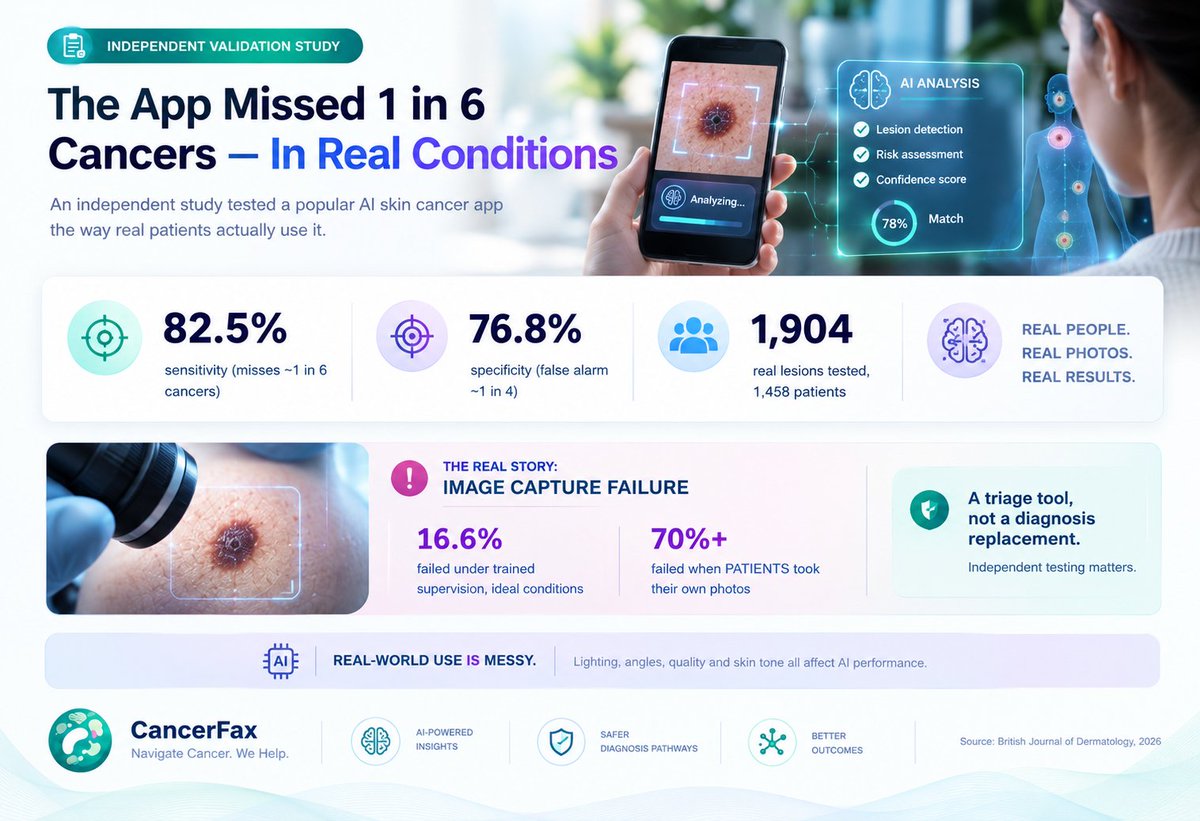
This isn't "AI skin detection is bad" — it's "independent, real-world testing reveals what lab-condition validation misses." 1,458 patients, 1,904 lesions, published in British Journal of Dermatology. The honest framing: triage tool, not a diagnosis replacement.
The real story: under trained supervision, 16.6% of photos failed to capture properly. When PATIENTS took their own photos (the actual real-world use case), that failure rate jumped to over 70%. Different phone models also performed differently.
A widely-used AI skin cancer app was independently tested in real conditions (not by the company that makes it). Result: it missed 1 in 6 actual cancers, false-alarmed on 1 in 4 benign lesions — and that's not even the most important finding 🧵
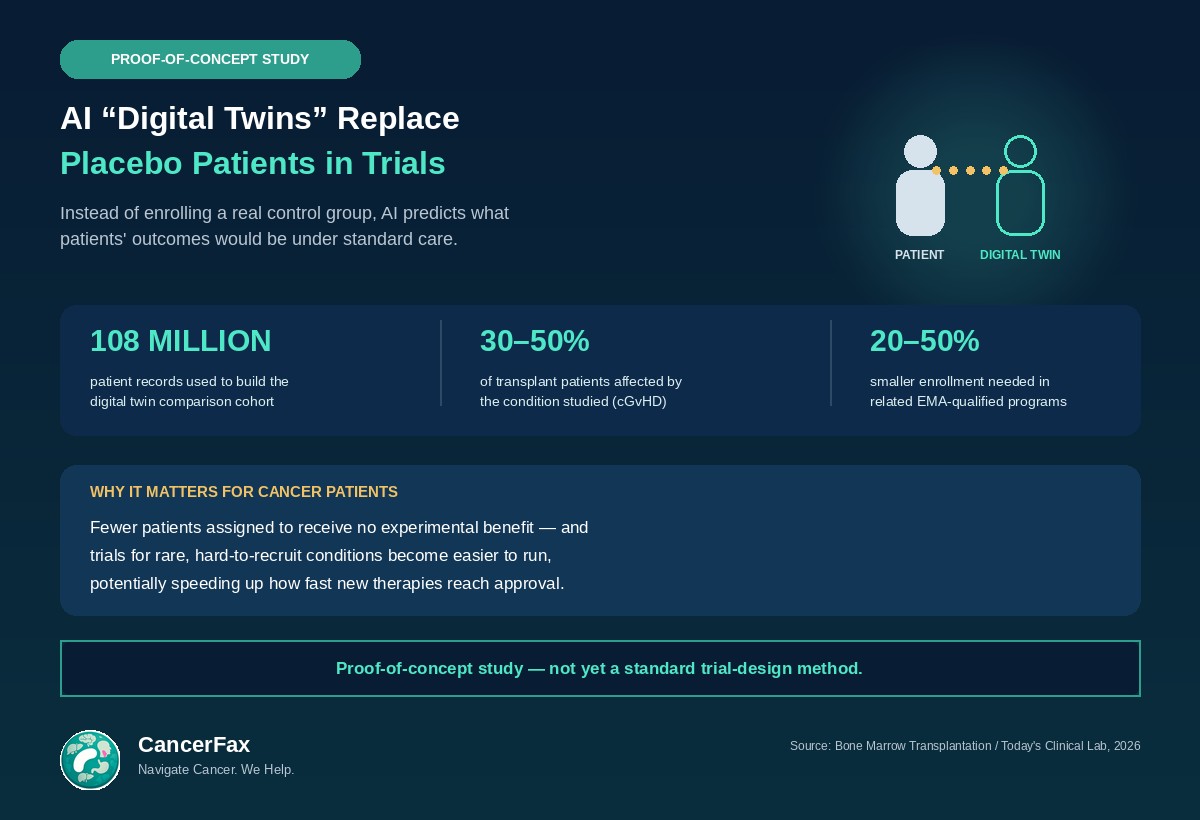
Cancer trials usually assign half of patients to a control arm — receiving no benefit from the experimental drug. A new approach uses AI "digital twins" to predict what those patients' outcomes would've been, instead of requiring a real control group 🧵
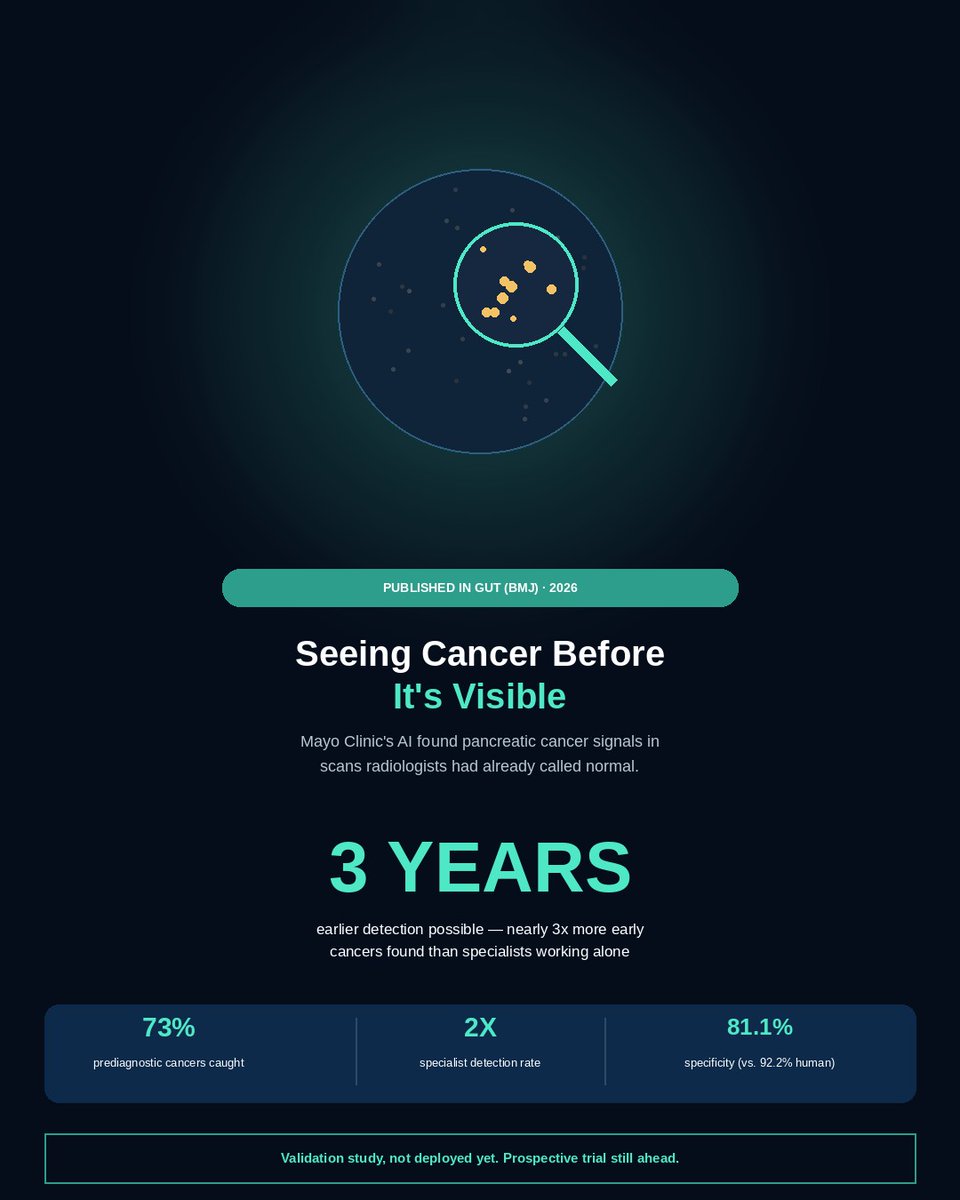
Mayo Clinic's AI found pancreatic cancer signatures on CT scans that radiologists had already read as NORMAL — up to 3 years before diagnosis. This is one of the deadliest cancers specifically because it's invisible until too late 🧵
The tradeoff: REDMOD's specificity (correctly clearing healthy patients) is 81.1% vs. 92.2% for radiologists — more false positives. A prospective trial (AI-PACED) is now testing how to actually use this in real care, tracking outcomes over 3-5 years.
REDMOD analyzed nearly 2,000 scans. It caught 73% of prediagnostic cancers at a median of 16 months early — nearly DOUBLE the specialist detection rate. More than 2 years out, it found almost 3x as many early cancers as specialists working alone.
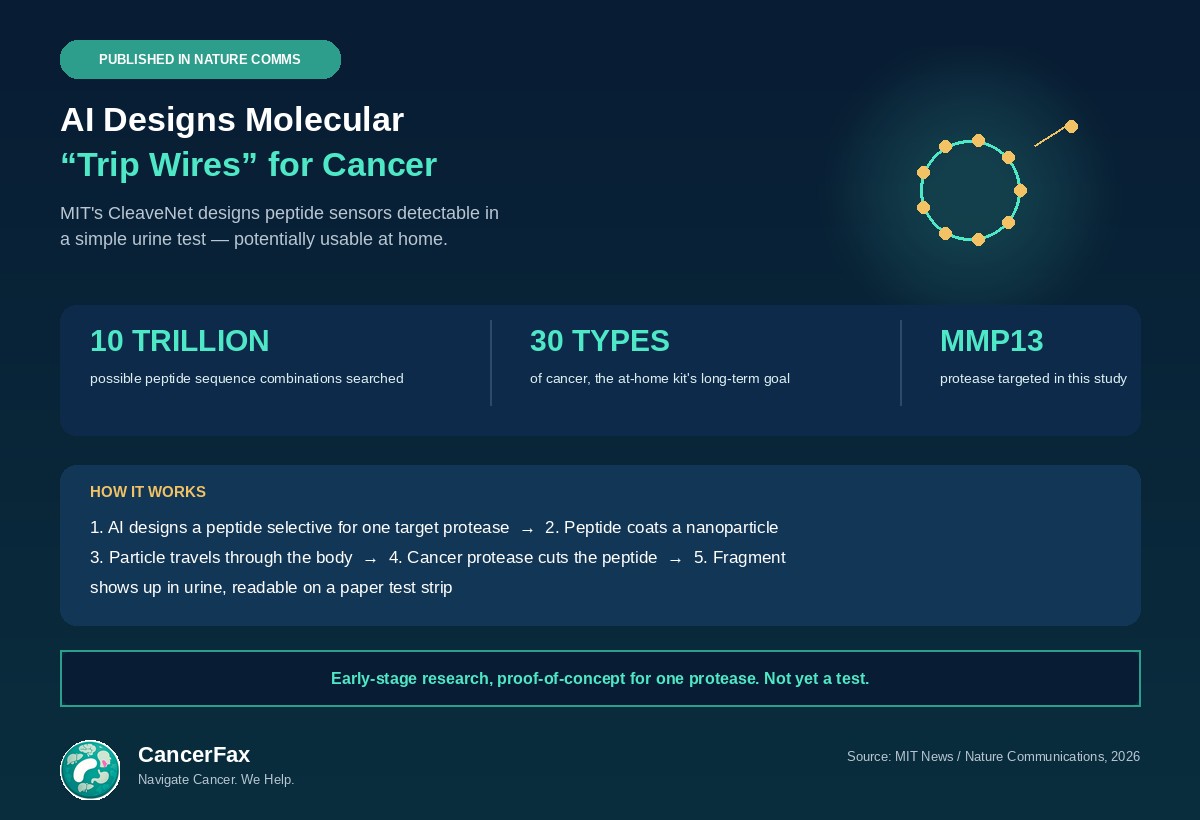
The big goal: an ARPA-H-funded project aiming for an at-home kit detecting 30 different cancer types early, based on protease activity patterns. Still early-stage — this study demonstrated selectivity for ONE target protease (MMP13) so far.
How it works: nanoparticle coated with an AI-designed peptide travels through the body → if it hits a cancer-linked protease, the peptide gets cut → fragment shows up in urine, readable on a paper strip like a pregnancy test. Different proteases = different cancer signals.
MIT + Microsoft built an AI that designs molecular "trip wires" for cancer. CleaveNet searches 10 TRILLION possible peptide combinations to find ones that react specifically to cancer-linked enzymes — detectable in a simple urine test 🧵
Their proposal: a two-axis risk framework, a "competency assessment" model inspired by how physicians are trained/evaluated, and ongoing postmarket monitoring instead of a one-time approval snapshot. Also raises questions specifically about foundation models and agentic AI.
Every AI medical device approved so far is "locked" — frozen at approval, behaves the same forever. Generative AI doesn't work that way. The FDA just published a discussion paper publicly asking how to regulate AI that keeps changing after it reaches patients 🧵
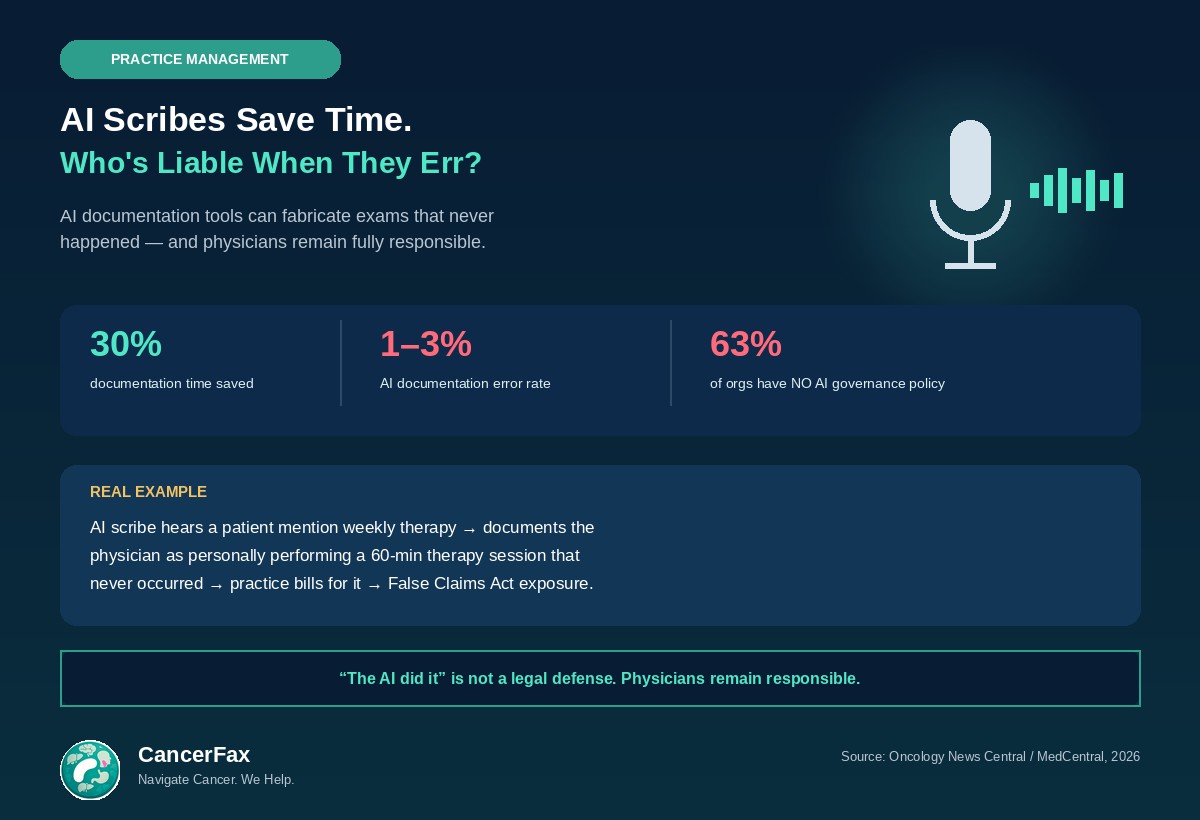
The honest gap: 63% of healthcare orgs have NO AI governance policy, even while actively using AI for documentation. "The AI did it" isn't a legal defense — physicians remain responsible for every code billed under their name, AI-generated or not.
Real example: AI scribe hears a patient mention weekly therapy elsewhere, documents the PHYSICIAN as performing a 60-min therapy session that never occurred. Practice bills for it. That's not a glitch — that's a False Claims Act violation waiting to happen.
AI scribes save oncology practices up to 30% on documentation time. A 2025 study also found they sometimes fabricate exams that never happened. Who's liable when that becomes a billing claim? The physician — every time 🧵