Here is a look at 10 of the deadliest recorded glacier-related flood and debris disasters, ranked by estimated human toll: 👇
1. Yungay, Peru (1970) — ~18,000–25,000 deaths
Mag 7.9 quake sheared ice and rock off Huascarán; the resulting high-speed debris avalanche buried Yungay and nearby villages. Deadliest glacier-related event on record (not a lake outburst).
2. Kedarnath, India (2013) — ~5,000–6,000 deaths
Heavy monsoon rain and snowmelt overtopped Chorabari Tal; the outburst plus debris flows devastated the pilgrimage town. Compound disaster often counted among the worst GLOFs.
3. Huaraz, Peru (1941) — ~1,800–5,000 deaths
Ice/avalanche impact into Lake Palcacocha breached its moraine dam; the flood and mudflow destroyed about one-third of Huaraz. One of the deadliest confirmed GLOFs.
4. Ranrahirca, Peru (1962) — ~4,000 deaths
Glacier ice and rock collapsed from Huascarán and became a debris flow that buried Ranrahirca and nearby settlements in minutes.
5. Nepal–Tibet border (2026) — 350+ confirmed, 1,300+ missing (toll still rising)
High-altitude glacial collapse sent ice, rock, and debris down the Lhende Khola and Bhote Koshi, wiping out border posts, bridges, and villages. Mechanism similar to Chamoli; final numbers unknown.
6. Chamoli, India (2021) — ~200 deaths
Rock-and-ice avalanche off Ronti Peak melted on descent and became a debris flow that destroyed two hydropower projects and trapped workers.
7. Cirenma Co, Tibet/Nepal (1981) — ~200 deaths
Ice avalanche into the lake overtopped the moraine dam, releasing ~19 million m³ of water that destroyed settlements and infrastructure downstream.
8. Giétro Glacier, Switzerland (1818) — 34–44 deaths (1595 outburst from same glacier killed ~140)
Ice dam failed and released ~20 million m³ of water through the Bagnes Valley.
9. Lugge Tsho, Bhutan (1994) — 21+ deaths
Partial moraine-dam breach sent ~18 million m³ of water 90+ km down the Pho Chhu, damaging farmland and Punakha Dzong.
10. Chong Khumdan / Shyok River (1929) — dozens of deaths
Ice-dammed lake burst and sent floodwaters hundreds of miles down the Indus basin.
No rain fell in Rasuwa in Nepal this morning. The river still rose and swept away everything in its path. Here is why.
At 8.37 this morning, near the Nepal and China border, instruments picked up strong shaking. Early reports called it an earthquake of magnitude 4.4. The United States Geological Survey has now corrected that. There was no earthquake.
A huge block of ice and rock broke off a mountain and crashed into the valley. The impact was so heavy that it registered like an earthquake of magnitude 5.2. The landslide made the shaking. The shaking did not make the landslide.
That ice and rock fell straight into the Lhende Khola, a small stream that feeds the Bhote Koshi river. It blocked the stream fully and made a wall of ice, rock and mud across it.
The water behind that wall kept rising. Then the wall broke.
What came down was not water. It was mud, boulders and ice moving together. Video from the Rasuwagadhi border post shows the whole crossing vanish in under a minute. Timure and Syafrubesi were hit next. The surge then reached Bidur in Nuwakot and went on to Devghat, more than 100 kilometres downstream.
Police in Bagmati province have confirmed at least 95 dead in Nepal. China has confirmed 3 dead in Tibet with 265 missing there. The Nepal Tourism Board says nearly 400 travellers are missing, including 105 Indians and 37 people of Indian origin, many of them returning from the Kailash Mansarovar route. About 430 megawatts of power generation has been damaged. Bihar has put its districts along the Gandak on alert.
Now the part that matters for anyone living below a Himalayan river.
The same stream did the same thing 14 months ago. On the 8th of July 2025 the Bhote Koshi flooded with no rain. Nepal found that a glacial lake in Tibet had drained in a few hours. Scientists had already marked this basin as one of the most dangerous in the Himalaya for such floods.
These floods give no warning. No rain, no cloud, no alert, because the weather is not what causes them. Ice that stayed frozen for thousands of years is now loose enough to fall.
So remember this. If you are near a mountain river and the water suddenly drops for no reason, or you hear a low roar from upstream, do not stand and film it. That is a blockage forming or breaking. Move up the slope, away from the river, at once. Do not run along the bank. The water is faster than you.
Clear weather is no longer proof that a Himalayan river is safe.
Starlink stopped being just “internet for rural homes” a long time ago
It is becoming a global connectivity layer for almost everything that moves or operates beyond traditional infrastructure
• Airliners at 35,000 feet
• Ships and offshore rigs in the middle of the ocean
• Live race broadcasts moving across entire countries
• Communities cut off during disasters and emergencies
• Industrial fleets operating in some of the hardest environments on Earth
• Military operations and defense infrastructure for entire countries
• Remote schools and communities traditional networks struggle to reach
• Direct-to-cell connectivity where terrestrial towers simply don’t exist
Places that once automatically meant “no signal” are becoming connected
And some of the most critical systems on Earth are beginning to depend on that connectivity
SpaceX is turning the sky itself into infrastructure for aviation, maritime, industry, emergency response, defense and everyday mobile connectivity
The network is becoming infrastructure for the world
SpaceXAI is going all in on NVIDIA’s next-generation AI architecture....from Grok on Earth all the way to AI compute in space
SpaceXAI will deploy NVIDIA Vera CPUs for its next generation of agentic AI workloads while expanding the infrastructure behind Grok with Vera Rubin
And Vera is built specifically for what AI agents actually need
When an agent is working, the GPU is only part of the story
Between model calls, the system has to:
• Execute code
• Use tools
• Process huge amounts of data
• Run simulations
• Orchestrate multiple tasks
• Keep feeding work back to the GPUs
That increasingly becomes a CPU problem
Vera has 88 NVIDIA-designed Olympus cores and up to 1.2 TB/s of memory bandwidth, delivering up to 1.8× faster task completion than x86 CPUs across workloads including agentic AI, reinforcement learning and data processing
SpaceXAI plans to use that performance to make AI agents faster while keeping its massive GPU infrastructure better utilized
And this gets much bigger
SpaceXAI is scaling toward gigawatts of AI computing capacity using NVIDIA Vera Rubin
And it doesn’t stop at terrestrial data centers
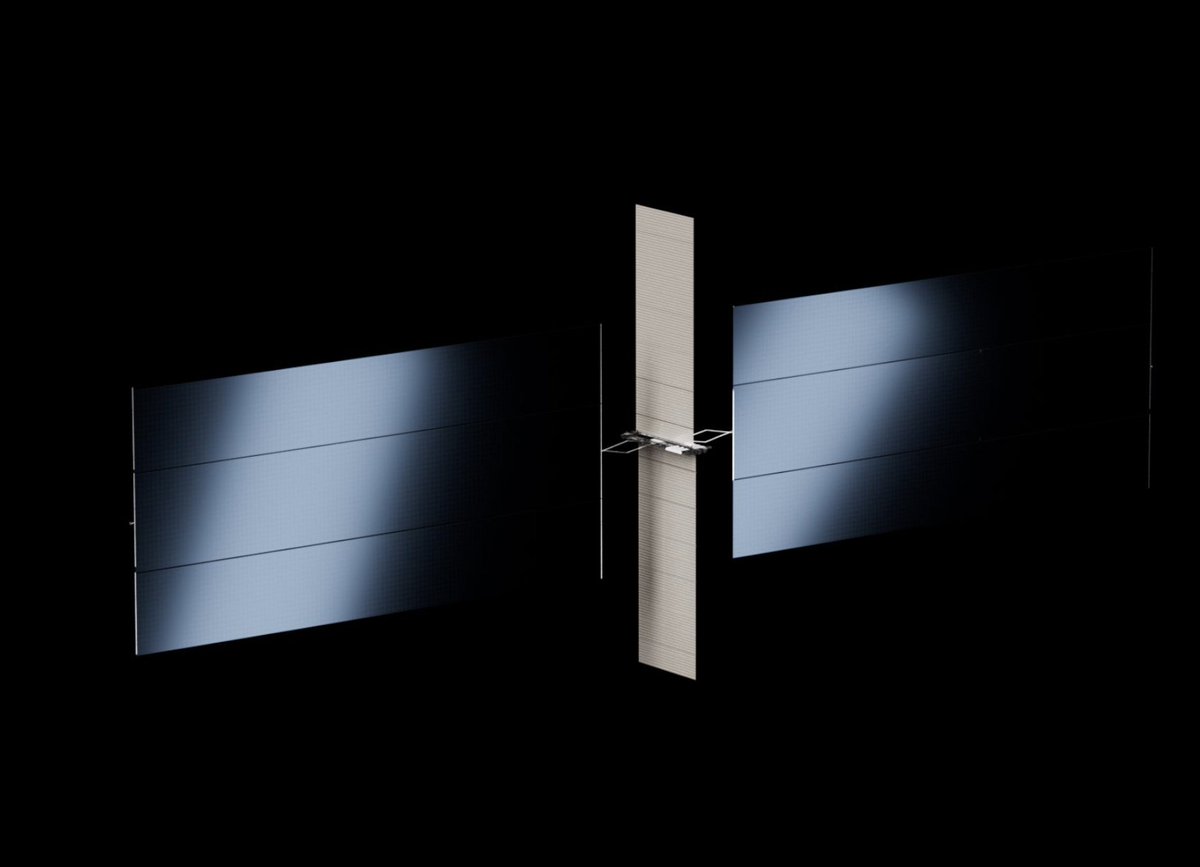
SpaceXAI’s first-generation Starmind AI satellite is planned around an optimized Vera Rubin NVL72 system
Basically, the same NVIDIA computing architecture being built for giant AI factories on Earth is now being adapted for orbital AI compute
The direction is becoming pretty clear:
Vera CPUs → faster, more capable AI agents
Vera Rubin → gigawatt-scale AI factories
Starmind → AI computing infrastructure in orbit
SpaceXAI is building an AI architecture that starts on Earth and eventually extends into space
That is a completely different scale of ambition
🚨 You’re not the same person you were 10 minutes ago.
Your body is constantly regenerating itself. New cells are made, and old ones are discarded.
Every 7 to 10 years, you get a completely new body with new sets of organs and tissues. Your stomach regenerates itself every 4 days. The stomach cells that help you digest food are replaced every 5 minutes.
You get a new liver every 150 days. The entire outer layer of your skin, called the epidermis, replaces itself every 4 weeks. Your pancreas, which helps regulate your blood sugar level, is renewed every 50 days.
And every 4 months, you get a new set of red blood cells across your entire body. Even after you donate blood, it would only take 12 weeks to completely replace the red blood cells you donated. Your taste buds that help you enjoy a variety of foods are replaced every 10 days. Although cells are always regenerating, the process can be slow for some parts. Bones, for instance, require up to 10 years to fully regenerate.
As we age, bone regeneration slows down and our bones become weaker. Despite this incredible regeneration capacity of the human body, some parts of your body are never replaced, such as the cells that make up the inner lens in your eyes and the neurons in your cerebral cortex.
Fat can also accumulate and stick around depending on your diet and physical activity. Even though everything in your body is replaced, the only thing that remains of you is your consciousness, self-awareness and memories. As I said, your taste buds are replaced every 10 days, but the memory of the delicious food you tasted before is still there, and new taste buds are ready to experience it.
China is landing at the Moon's south pole, launching tomorrow.
The yellow star at the bottom is their intended site, 23 miles from the pole. The top image is where the US is targeting to land, fairly soon. Lots of overlap.
Power and water are key. The hilltops have near-permanent sunshine for power. The black craters are always in shadow, likely with frozen water in them.
An important moment in history as we start to settle the Moon. It's the 8th continent, bigger than Africa. How we choose to cooperate matters. @openlunar
In 1948, a 32-year-old at Bell Labs published a paper nobody fully understood.
Engineers found it too mathematical. Mathematicians found it too engineering-focused. One prominent mathematician reviewed it negatively.
That paper - "A Mathematical Theory of Communication", became the founding document of the digital age.
The man was Claude Shannon. Father of Information Theory.
At 21, he wrote the most important master's thesis of the 20th century.
Working at MIT on an early mechanical computer, Shannon noticed its relay switches had exactly two states - open or closed. He had just taken a philosophy course introducing Boolean algebra, which also operated on two values: true and false.
Nobody had ever connected these two things.
His 1937 thesis proved that Boolean algebra and electrical circuits are mathematically identical, and that any logical operation could be built from simple switches.
Howard Gardner called it "possibly the most important, and also the most famous, master's thesis of the century."
Every digital computer ever built traces back to this insight.
At 29, he proved that perfect encryption exists.
During WWII, Shannon worked on classified cryptography at Bell Labs. His work contributed to SIGSALY, the secure voice system used for confidential communications between Roosevelt and Churchill.
In a classified 1945 memorandum, he mathematically proved the one-time pad provides perfect secrecy, unbreakable not just computationally, but provably, permanently, against an adversary with infinite power.
When declassified in 1949, it transformed cryptography from an art into a science. It laid the foundations for DES, AES, and every modern encryption standard.
At 32, he defined what information is.
His 1948 paper introduced one equation:
H = −Σ p(x) log p(x)
Shannon entropy. The average uncertainty in a probability distribution. The minimum bits required to encode a message.
Three things followed:
> He defined the bit - the fundamental unit of all information. His colleague John Tukey coined the name.
> He proved the channel capacity theorem, every communication channel has a maximum rate of reliable transmission. You can approach it. You can never exceed it.
> He unified telegraph, telephone, and radio into a single mathematical framework for the first time.
Robert Lucky of Bell Labs called it the greatest work "in the annals of technological thought."
Where his equation lives in AI today:
Cross-entropy loss - the function training every classifier and language model, is derived directly from H. Decision tree splits use information gain, which is H applied to data. Perplexity, the standard LLM evaluation metric, is an exponentiation of cross-entropy.
Every time a neural network trains, Shannon's formula runs inside it.
He also built the first AI learning device.
In 1950, Shannon built Theseus, a mechanical mouse that navigated a maze through trial and error, learned the correct path, and repeated it perfectly. Mazin Gilbert of Bell Labs said: "Theseus inspired the whole field of AI."
That same year he published the first paper on programming a computer to play chess. He co-organized the 1956 Dartmouth Workshop, the founding event of AI as a field.
The man:
He rode a unicycle through Bell Labs hallways while juggling. He built a flame-throwing trumpet, a rocket-powered Frisbee, and Styrofoam shoes to walk on the lake behind his house.
He called his home Entropy House.
When asked what motivated him: "I was motivated by curiosity. Never by the desire for financial gain. I just wondered how things were put together."
In 1985, he appeared unexpectedly at a conference in Brighton. The crowd mobbed him for autographs. Persuaded to speak at the banquet, he talked briefly, then pulled three balls from his pockets and juggled instead.
One engineer said: "It was as if Newton had showed up at a physics conference."
He died in 2001 after a decade with Alzheimer's, the cruel irony of information slowly leaving the mind of the man who defined what information was.
Claude, the AI model, is named after Claude Shannon, the mathematician who laid the foundation for the digital world we rely on today.
A 21-year-old computer science student in Helsinki bought his first PC in early 1991 and immediately hated the operating system it came with. So he sat down to write his own.
On September 25, 1991 he posted a quiet message to a Usenet newsgroup announcing what he called "just a hobby, won't be big and professional like GNU."
35 years later that hobby runs every Android phone on Earth, every supercomputer on the TOP500 list, the entire backend of the internet, the International Space Station, and SpaceX's Falcon rockets.
His name is Linus Torvalds. The hobby is called Linux.
Here is the story, because the man who runs the most consequential codebase in human history almost no longer needs an introduction inside engineering and still walks the streets unrecognized everywhere else.
Linus was born in Helsinki, Finland on December 28, 1969. He was named after Linus Pauling, the only person in history to win two unshared Nobel Prizes, in Chemistry and in Peace. He joked he might also be partly named after Linus van Pelt from the Peanuts cartoon. His family was unusual. Both parents were journalists. His grandfather was a statistician. Another grandfather was a poet. The family belonged to Finland's Swedish-speaking minority. There are fewer than 30 people in the world with the surname Torvalds, and according to Linus, they are all related.
At 10 he started programming on his grandfather's Commodore VIC-20. By his teenage years he was writing his own assemblers, editors, and games. He served in the Finnish Army for his mandatory national service and rose to the rank of Second Lieutenant. Then he enrolled at the University of Helsinki to study computer science.
In early 1991 he bought a personal computer with MS-DOS and disliked it intensely. He wanted UNIX, the operating system he had used at the university. UNIX cost thousands of dollars. He could not afford it. So he started writing his own.
He posted the now-famous announcement to comp.os.minix in August 1991. He called the kernel Linux, a portmanteau of his name and MINIX. He released the source code under the GPL license. Anyone could download it, read it, modify it, and ship it for free.
Within a year hundreds of developers around the world were sending him patches. Within five years Linux was running web servers. Within ten years it had taken over the supercomputer market. Within twenty years it was running on most of the internet. Today every Android phone on Earth runs the Linux kernel. Every Chromebook runs Linux. Most of AWS, Google Cloud, and Microsoft Azure runs Linux. Every Tesla runs Linux. Every SpaceX Falcon 9 and Dragon capsule runs Linux. The International Space Station runs Linux. Every supercomputer in the world's TOP500 list runs Linux.
That was the first thing he built.
In 2005 the proprietary version control system the Linux community had been using, BitKeeper, revoked its free license. Linus was furious. He sat down and wrote a replacement in 10 days. He called it Git. The first commit was on April 7, 2005. Today Git powers GitHub, GitLab, and the source control of every major software organization on Earth. Every line of code at OpenAI, Anthropic, Google, Meta, and Microsoft flows through Git. Every AI model on the planet is versioned with software a Finnish engineer wrote in less than two weeks.
He won the 2012 Millennium Technology Prize, the equivalent of a Nobel Prize for engineering. He won the IEEE Computer Pioneer Award in 2014. He completed his master's degree from Helsinki along the way, with a thesis titled "Linux: A Portable Operating System." He moved to the United States, became a citizen, and now works from his home in Portland, Oregon, employed by the Linux Foundation.
A Finnish student announced a hobby project on a message board in 1991.
His code is now in every pocket on the planet.
He still writes most of his important communication on the Linux kernel mailing list.
Dennis Ritchie created C in the early 1970s without Google, Stack Overflow, GitHub, or any AI ( Claude, Cursor, Codex) assistant.
- No VC funding.
- No viral launch.
- No TED talk.
- Just two engineers at Bell Labs. A terminal. And a problem to solve.
He built a language that fit in kilobytes.
50 years later, it runs everything.
Linux kernel. Windows. macOS.
Every iPhone. Every Android.
NASA’s deep space probes.
The International Space Station.
> Python borrowed from it.
> Java borrowed from it.
> JavaScript borrowed from it.
If you have ever written a single line of code in any language, you did it in Dennis Ritchie’s shadow.
He died in 2011.
The same week as Steve Jobs.
Jobs got the front pages.
Ritchie got silence.
This Legend deserves to be celebrated.
America’s AI race is running into a bottleneck no GPU can solve: Electricity
Up to half of the U.S. data center projects planned for 2026 face delays or cancellation as power availability, transformers, switchgear and local opposition collide with the AI buildout
This is not a chip problem anymore. You can buy the GPUs as many as you want
Good luck plugging them in
Grid connections in major markets can take years
Google says transmission is now its #1 challenge for powering new data centers and says one utility gave it a 12-YEAR timeline just to study an interconnection
Meanwhile, demand is getting so insane that gas turbine orders are running at levels not seen in decades just to generate enough electricity for the compute coming online
And this is exactly why SpaceX Starmind changes the equation
On Earth:
• Multi-year grid queues
• Transformer shortages
• NIMBY fights
• Permitting fights
• Local opposition
• New power plants just to feed the racks
In orbit:
• Solar energy directly available for compute
• No terrestrial grid connection
• No neighborhood fighting over where the data center gets built
• Compute capacity scales with satellites and launch cadence instead of waiting years for a utility hookup
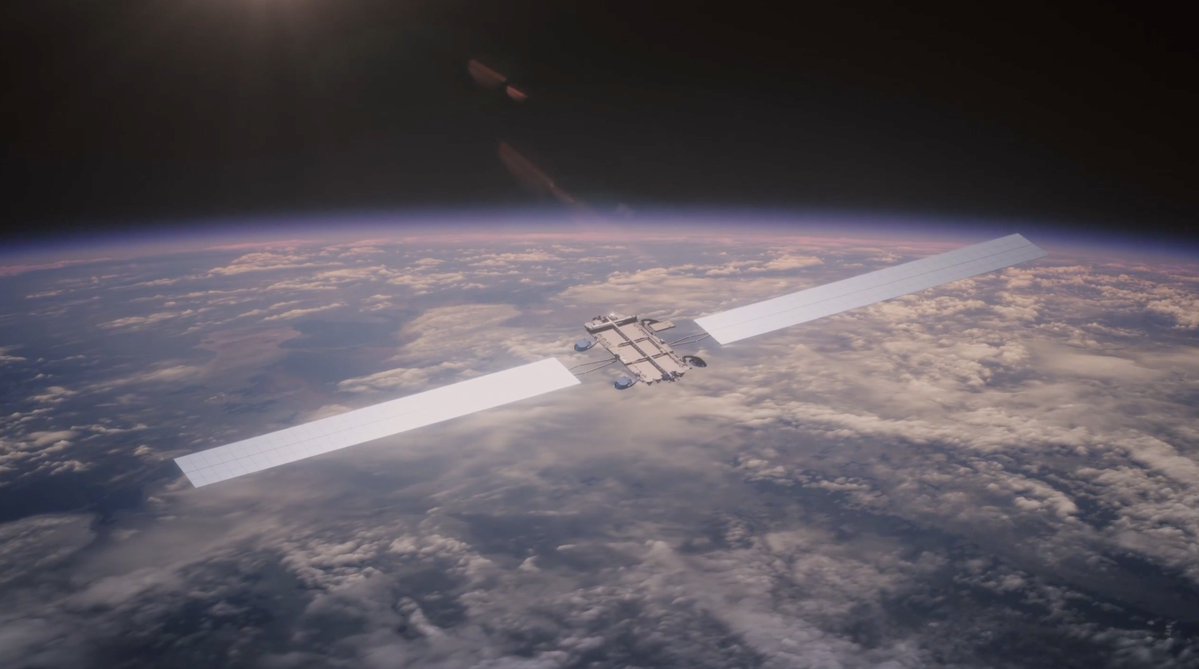
SpaceX is building Starmind to put AI compute directly in orbit
America is trying to win the AI race while attaching trillion-dollar compute infrastructure to an electrical grid built for a world that never imagined compute at this scale
SpaceX looked at the bottleneck and basically said:
Fine. We’ll leave the grid behind
Vietjet is putting serious money behind Starlink Wi-Fi
The airline has approved another VND 250 billion (~$9.5M) for its Starlink deployment, bringing its total investment in Galaxy Pay to VND 300 billion (~$11.4M)
Vietjet already signed an in-flight internet agreement with Starlink Services Vietnam in May.
Now the funding is following the deal
Starlink on Vietjet is moving from agreement → deployment
Another major airline is getting ready to bring high-speed internet from space onboard
You don’t need to waste an hour digging through your Mac’s settings trying to figure out what’s wrong with your laptop
Grok Build is insanely capable....just tell Grok Build what’s broken and let it investigate the machine for you
You can try things like:
• Trackpad suddenly behaving weird
• Battery draining ridiculously fast
• Microphone isn't working in calls. Diagnose it
• Some random website sending Chrome notifications every 10 seconds
• External monitor runs at 60Hz but supports 144Hz. Fix it
• Mac running hot or slowing down
• An app constantly crashing
• Something keeping your Mac awake or eating all your CPU?
You might have absolutely no idea where the setting is or even what’s causing the problem
Grok Build can inspect the system, find the culprit and, with the right tools/skills, actually take action
Instead of Googling the problem → opening 20 tabs → digging through Settings → trying random fixes....
Just tell Grok Build what’s wrong and let it figure out the rest
Elon revealed the extraordinary vision for Starlink
If growth continues, Starlink will one day carry the majority of Internet traffic
At that point, it is the Internet....everything else just connects to Starlink
Look at where we already are:
• 10,900+ Starlink satellites operational
• Launches basically every few days
• Starlink Mobile expanding country by country
• Emergency connectivity when terrestrial networks aren't available
Now comes V3
Starlink V2 → ~96 Gbps downlink
Starlink V3 → 1 Tbps downlink
That is roughly a 10× jump in one generation
And Elon’s number after that isn't 15,000 satellites
It’s more than 100,000 V3/V4/V5 satellites for broadband and direct-to-phone connectivity
Then layer Starmind on top
Those AI satellites don't just compute in orbit....they beam the results back through Starlink’s laser network
So Starlink increasingly becomes:
Internet → phone coverage → emergency infrastructure → orbital compute backhaul
Most companies spend decades building a national network
SpaceX is building the planetary one from orbit
Absolutely insane when you zoom out
SpaceX just got FCC authorization for its first Wi-Fi 7 Starlink router
The new Starlink Router R261 is a major upgrade to Starlink’s ground hardware:
• Wi-Fi 7 / 802.11be
• 2.4 GHz + 5 GHz
• Up to 160 MHz channels
• Two Ethernet ports
• USB-C
• PoE support
And the timing is also soo perfect
Starlink itself is getting dramatically faster, so SpaceX is upgrading every layer of the network alongside it
Satellites → terminals → routers → your devices
SpaceX is vertically integrating the entire internet stack from orbit all the way to the Wi-Fi inside your home
SpaceX has officially completed its acquisition of Cursor
The merger became effective on August 14, making Cursor a wholly owned subsidiary of SpaceX
The deal values Cursor at roughly $60 billion
Cursor is now officially part of SpaceX
🚨 There Is a Point in the Universe Where Reality Breaks 🤯
Scientists say there is a place in the universe where all rules stop working.
Time slows down. Space collapses. Numbers explode into infinity.
They call it the singularity — and it might be closer to your life than you think.
At the center of a black hole, matter is crushed so completely that it becomes a single point. Not big. Not small. Just… impossible. Gravity there is so strong that even light cannot escape. Once something crosses that boundary, it is gone forever. No signal. No message. No return.
What’s disturbing is this: our best science breaks down at that point. The equations stop making sense. Reality itself becomes unreadable. Scientists don’t know what happens next — not because it’s secret, but because the universe refuses to explain itself.
Even stranger, the universe may have started as a singularity. Before stars, before atoms, before time, everything was compressed into one unknowable point. No past. No future. Just pure potential. The beginning of everything came from a place where nothing made sense.
Now the same idea has returned — but this time, it is about us, not space.
Experts warn of a future technological singularity, a moment when artificial intelligence becomes smarter than humans and starts improving itself faster than we can understand. After that, predictions fail. Control fades. History may split into a “before” and an “after.”
Here’s the unsettling part: singularities aren’t only in space or machines.
They appear in human lives too.
A moment that changes you forever.
A truth you can’t unsee.
A decision with no way back.
Time feels different after it. You are not the same person. Something collapses — and something new begins.
A singularity is not an explosion.
It’s a breaking point.
And maybe the biggest mystery is this:
Are singularities rare accidents of the universe…
Or are they how everything truly changes? 👀