I recently finished The Origins of Efficiency by @_brianpotter and I strongly recommend it. I posted a few passages recently but it's full of insight on manufacturing and how gains of productivity have been achieved over the years, as well as why sometimes it's hard to improve on current processes.
I particularly liked the section on why productivity has not increased much if at all in construction, which makes for sober reading and is kind of a blackpill about the prospect of lowering the cost of building new housing, though at the end of the book he also sketches how AI and robotics could potentially change that in the future.
In the interest of full disclosure, I should say here that Stripe Press sent me the book for free, but they didn't ask for anything in return and I would have still made this post anyway since I had literally just added the book in my Amazon basket when @tamarawinter reached out to me.
I just spent a productive half hour talking to a brilliant colleague reflecting on the sad fact that most people are socialists or fascists or racists or protectionists or “social” liberals, immune to what seems to both of us to be the obvious truths of essential liberalism.
My latest column for @folha
NEW: ‘The Projected Public Finances of the Early Years of a United Ireland, and the Northern Ireland Subvention’ updated analysis with 2023 data and responding to debate and new information of recent years. Models public finances for the first 10 years of a united Ireland.
1/ After 40+ years in economics, here's my verdict: the discipline is fundamentally broken and needs complete reconstruction.
Here's what real economics should look like.
On our euro bonds proposal
( https://t.co/etkcFj2vUZ):
A message largely aimed at my German and Dutch friends…
Many of the objections clearly come from the worry that euro bonds may be a trojan horse for more debt financed spending by the European Union.
Our proposal has no such implication. It keeps the overall amount of debt unchanged. It is simply a reorganisation of claims, in effect tranching, to create a large and deep market for a particular asset, namely euro bonds, and thus, lower borrowing costs for all. No more, no less.
What happens to spending, and how much should be debt financed, is an important but separate question, on which our proposal does not take a stand.
A personal assessment of the evolution of macroeconomic research over the last 40 years (informed by the opinions of many of the main researchers in the field). https://t.co/hWRVp8MYh0
Conclusion: Strong convergence, mostly for the better. Not everything is perfect but, then, nothing ever is.
I even venture (and I can already see the scathing comments; please refrain if you are in insulting mode) that macroeconomics has become a mature science.
We just signed the contract with Routledge for the 2nd edition of our book on "Applied Spatial Statistics and Econometrics. Data Analysis in R". This is a huge project - it is 815 pages to refresh! But with @SpatialWarsaw team we will manage it! https://t.co/WS9GNijzva
Bootstrap resampling is a powerful nonparametric method used to estimate metrics, such as the mean and standard deviation, by generating multiple simulated samples from a single data set. Unlike parametric methods, bootstrapping doesn't rely on assumptions about the underlying data distribution, making it especially versatile and robust.
Handled correctly, bootstrapping offers significant benefits:
✔️ Improved Accuracy: By simulating numerous samples, bootstrapping reduces bias and increases the reliability of estimates like the mean and standard deviation.
✔️ Versatility: Works well even when you don't know the distribution of your data, making it applicable in various scenarios.
✔️ Confidence Intervals: Provides a straightforward way to calculate confidence intervals for your estimates, giving a better understanding of the variability.
However, if not applied carefully, bootstrapping can lead to challenges:
❌ Computational Intensity: Bootstrapping requires significant computational resources, especially with large data sets or complex calculations.
❌ Misleading Results: Incorrect implementation or poor understanding of the method can result in misleading conclusions.
The accompanying visualization illustrates the distribution of bootstrapped means compared to the original mean and includes 95% confidence intervals. You can observe how the bootstrapped mean aligns closely with the original mean, with the confidence intervals providing insight into the estimate's precision.
To implement bootstrapping in practice:
🔹 R: Use the boot package. Functions like boot() help perform bootstrapping easily and effectively.
🔹 Python: The scipy.stats and numpy libraries offer tools for resampling and calculating bootstrapped estimates, such as bootstrap().
For those interested in learning more about statistical methods like bootstrapping, consider enrolling in my online course on Statistical Methods in R, starting September 9, 2024. This course covers bootstrapping and other essential topics in detail. Learn more by visiting this link: https://t.co/7YQCRDKSPO
#Data #datasciencetraining #database #RStats #rstudioglobal #datascienceeducation
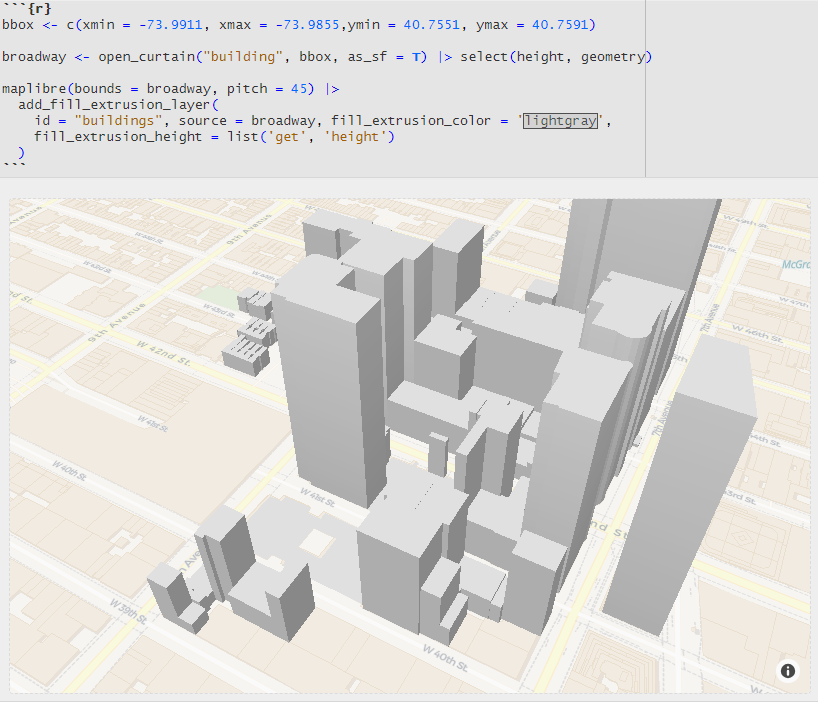
Happy to announce the release of overtureR, an #rstats package for interfacing easily with @OvertureMaps.
You can access practically every building, POI, and transit in the world, and map them, in about 5 lines of code:
https://t.co/yJ8DFiQztJ
Plato’s Republic is one of the foundational works of Western civilisation. If you’ve never had a chance to read it, here’s a crash course to help you get to grips with this staggering and perennially relevant work of philosophy. 🧵
Delighted to share the publication of our latest article on technical efficiency in Irish public hospitals, co-authored with @niallgdevitt and Declan Dineen, in the Special Issue “Health Economics and Econometrics” of IJCEE. DOI: 10.1504/IJCEE.2024.137891.