I am excited to be an investor in trade(xyz) as they partner with ICE to bring 24/7 perpetual futures on Hyperliquid to the United States. As a market participant, I am looking forward to to using their innovative product to enhance my investment process.
Growing up in the United States, NYSE was synonymous with the story of American capitalism. I vividly remember learning about the Buttonwood agreement in 9th grade history class. 24 stockbrokers met under a tree on Wall Street and formed the beginning of what would become the world's financial center. From pits to computers to now onchain markets, America has always led the way in innovating markets to improve price discovery and capital formation. Today the next chapter begins with ICE, trade[XYZ], and Hyperliquid.
ICE started as an electricity-trading platform in 2000, growing to acquire NYSE itself in only 13 years. It is a key infrastructure provider of America’s energy, bond, and mortgage markets. ICE is a rare story of exponential growth of a financial giant over decades, continually embracing innovation and technology.
trade[XYZ] was the first HIP-3 deployer and responsible for spearheading the flourishing global RWA perpetual market today. Only a year ago, trade[XYZ] launched its first RWA perpetual markets. They took a bet on HIP-3, which had just launched after months of tireless development. Having followed their journey from day 1, I cannot overstate how much Shoku and the team have poured into growing these markets to a genuine source of price discovery for the most important assets in the world.
Over the past three years, Hyperliquid has pioneered onchain infrastructure to house all of finance. Hyperliquid is nothing without its world-class builders. I am honored that trade[XYZ] and ICE have chosen to build on Hyperliquid to bring perpetual contracts to America.
When I first spoke to Jeff Sprecher around a year ago, he asked what success looks like to me. I thought for some time and joked that it would be seeing ICE building on Hyperliquid's technology. I could never have predicted the progress that we've made as a community in a single year to make this come true. Excited to see what we can build together next.
trade[XYZ] launched its first market on Hyperliquid 381 days ago. Today, we are joining forces with ICE, parent company of the New York Stock Exchange, to bring perpetual futures on Hyperliquid to U.S. regulated markets.
I don’t usually write long posts, but today merits reflection.
For years, builders across this industry have worked to show that open, onchain markets could support price discovery, manage risk, and withstand stress to the standards of traditional market infrastructure, all while staying open when and where those markets aren’t.
Our achievements stand on the shoulders of those builders. And today, the company that owns the New York Stock Exchange has chosen to build upon the work of every developer, trader, market maker, and user who took a chance on us and our markets. We share this moment with all of you.
Markets are shaped by their participants. A new generation of investors trades from their phones, across asset classes, at any hour of any day. Until Hyperliquid, the right infrastructure for those markets didn’t exist.
Building these markets was hard. It took novel approaches to pricing, funding, and risk, refined with real capital at stake, in markets that don’t close. It also meant earning the trust of the people trading on them. We’re honored that the community recognized that effort and responded in kind.
That trust is what allowed us to grow our volumes to a ~$1 trillion annualized run rate in just over a year, to help pioneer new instruments like pre-IPO perps, and to earn the confidence of storied institutions like S&P Dow Jones Indices. That’s why ICE has chosen trade[XYZ] as its exclusive partner to bring 24/7 perps to the U.S.
Shifts in technology have pushed markets toward greater transparency, better price discovery, and broader access: from the coffee house to the curb exchange, ticker tape to the telephone, the trading floor to digital exchanges.
ICE helped write that last chapter. In 1997, Jeff Sprecher bought a small power-trading technology business for $1. ICE launched as an electronic energy marketplace in 2000, helped digitize major commodity markets, and acquired the NYSE in 2013. It has grown exponentially because of this appetite for innovation. That’s the partner we wanted: a partner that looks forward and embraces progress.
Americans deserve access to the most innovative markets in the world, and the protections of U.S. regulation. With trade[XYZ] and ICE, subject to regulatory approvals, they’ll have both.
The difference isn’t just access. Perps don’t expire, so traders never have to roll positions, and liquidity concentrates in a single deep market for each asset. Cross-margining enhances capital efficiency by letting one pool of collateral back positions across stocks, commodities, and crypto. Underpinning it all are atomic clearing and settlement, real-time risk management that enables continuous markets, and universally applied rules that anyone can verify. This is the next chapter we’ll write together.
My responsibility, our responsibility, is to now build markets worthy of the confidence our partners and our users have placed in us. Our commitments will not waver: to fair and transparent markets, to diverse markets, to low costs of execution, and above all, to market integrity.
All of this in pursuit of one thing:
A universal exchange, open around the clock, coming to the United States.
We’re proud to have deployed more than 100 markets on trade[XYZ]. But measured against the opportunity ahead, we’ve barely started. There is an enormous universe of assets we haven’t reached, alongside things people want to trade that have no established market at all. Wherever there is demand to trade an asset, we want trade[XYZ] to be where its price is discovered.
Global stocks, commodities, bonds, pre-IPO companies, compute, new indices, digital assets, interest rates, equity baskets, volatility products, alt assets… Anything. Anytime. Anywhere.
Ultimately, everything you own should work with everything you trade. Picture a headline breaking on Saturday night. You should be able to post tokenized shares as collateral, hedge your portfolio with an index perp, add exposure to oil, and take a view on a company that has not yet gone public. All in one account, all on one risk engine, before any traditional market opens. trade[XYZ] and Hyperliquid were built for this.
I hope someone opens their first investment account years from now to find that trivial, and to wonder why their predecessors needed so many separate financial relationships. Getting there will take liquidity, reliability, trust, and prices people have reason to believe. It will take years. I’m prepared to spend them.
Finally, a few thank yous.
First to the XYZ team: For the tireless nights and for committing to this vision before it was obvious.
To Jeff Sprecher and ICE, with special thanks to Michael Blaugrund and Trabue Bland who championed us throughout: You’re a world-class, technology-embracing team that proves innovation and scale are in fact not at odds.
To Stan Druckenmiller: For your partnership and helping us turn the next page.
To Hyperliquid Labs: For being the best partners we could ask for. You set an impossible standard, one we continually strive to meet. @chameleon_jeff, @iliensinc, @xulian_hl
And most importantly, to our users: You traded these markets when no one thought it mattered.
Guess what? It did.
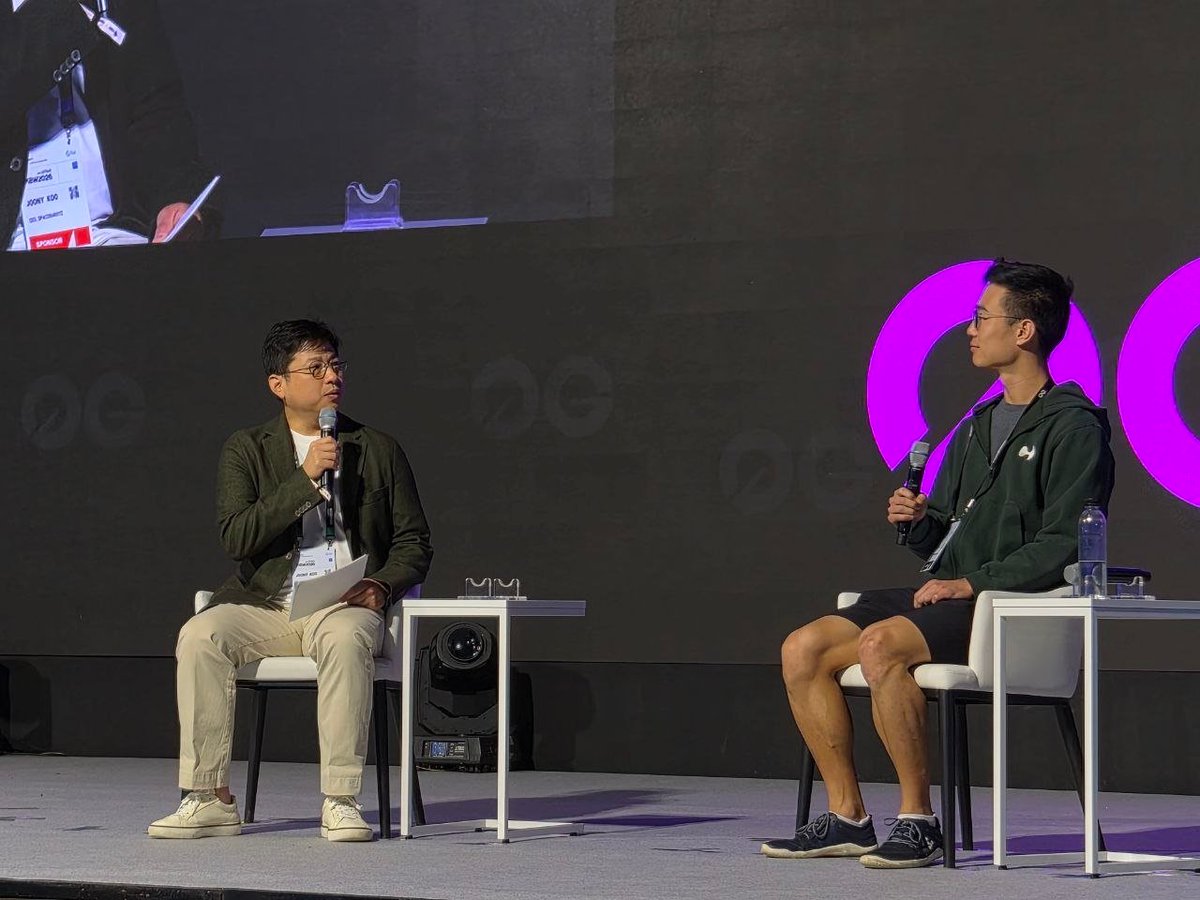
Interview Summary: 24/7 Trading on Hyperliquid (@Joonylive × Jeff Yan)
Joony Koo: Two years ago, the prevailing view was that markets should close because of risk, rest, and off-hours liquidity. Was there a moment when that view broke for you?
Jeff Yan: Crypto is an inherently international asset, so the idea of market hours never really fit, and 24/7 has always been the default. It started to matter for traditional assets when the incumbent exchanges began extending their hours. They didn't go straight to 24/7, they went to 24/5, but it became clear they had recognized customer demand and were responding to it.
Joony Koo: Incumbents are now matching the hours. What is left that an on-chain venue can offer?
Jeff Yan: Trading hours are independent of being on-chain. The core of on-chain finance is two things. First, users keep control and custody of their funds. That doesn't matter day to day, but it matters in critical moments, when counterparties, intermediaries, or custodians run into trouble. Reducing trust assumptions and moving power to individuals rather than a single point of failure makes the system more robust. Second, transparency. It has limited mass appeal, but being able to know, in theory, everything happening in the system brings a trust and neutrality you don't get from a system controlled by one private organization. You can have 24/7 trading without these properties, but these are what on-chain markets can offer the world.
Joony Koo: This year commodities, equities, and pre-IPO names traded at scale, and price discovery sometimes happened while the reference markets were closed. What did the team learn from watching the two run side by side?
Jeff Yan: The clearest lesson is that demand for 24/7 trading exists. You wouldn't know without these markets, but the world doesn't sleep as a whole. Global 24/7 markets concentrate liquidity across more buyers and sellers, making markets more efficient and liquid for everyone. There will always be someone, somewhere, who wants to express a view, so once the option exists, those markets become the Schelling point where people go to do that.
Joony Koo: HIP-3 lets independent teams create markets, and institutions are building on top too. If anyone can build, what is Labs focusing on?
Jeff Yan: Labs specializes in the technology and infrastructure that supports deployers. What a deployer needs varies widely depending on who they are, where they're based, who their users are, and what they want to list, and the list is long. The vision is for Hyperliquid to be a neutral infrastructure layer, like AWS, which spared startups and large firms from reinventing the wheel. Financial primitives like order books should become pervasive and battle-tested infrastructure, and making that work for everyone is the primary mandate.
Joony Koo: The "AWS for finance" analogy reminds me of working at a game company when people debated whether the cloud could be trusted. What open problems would Labs most like to see others solve?
Jeff Yan: First, builders should find something they're uniquely positioned to do, given their interests and competitive advantages, and we'll support whatever they build. One specific hard problem is tokenizing the underlying assets themselves. Custody, liquidity, and the mechanics are all harder, so it hasn't taken off yet. I hope to see strong projects and builders next year, because having the assets represented on-chain synergizes with price discovery and liquidity.
Joony Koo: Tokenization is speeding up as more institutions get involved. Any advice for smaller teams?
Jeff Yan: Many teams, big and small, are working on tokenization, but it hasn't hit escape velocity and it's unclear who will succeed. That's the beauty of neutral infrastructure: you don't win just because you're big, though big teams may have legitimate advantages like institutional connectivity. Viral products often come from small teams that see the world differently and think less rigidly. Perps are intuitive and fair instruments that concentrate liquidity across the globe and across all time horizons into one asset, so they're easy to present to users. Some small team may even reinvent how the interfaces look.
Joony Koo: You spent three days with the Korean community this week. What stood out?
Jeff Yan: Like last year, I felt the hospitality, and I'm grateful to everyone who organized events. The community here is strong, and trading is a core part of many Koreans' lives, so it was great to discuss how on-chain markets and HIP-3 would change their approach to markets. Talking to users and the community inspires us to keep building.
Joony Koo: And your meetings with institutions?
Jeff Yan: It's cool to see institutions interested in the platform and building on top of it. They're understandably slower to adopt new technology because they have a lot to protect, but as this year has shown, the appetite is significant.
Joony Koo: Last question: what is next to be priced 24/7 that has no continuous price today?
Jeff Yan: Nothing specific, but private markets are a big opportunity, and you already see some of it through HIP-3 deployers. Much wealth creation happens privately, because companies have incentives to stay private as long as possible. It isn't intended to exclude most of the world's population, but that's what happens in practice. Allowing global price discovery on these assets as early as possible, in a global system not confined to one jurisdiction, could break that trend. There are many complexities to work through, but markets exist so everyone can benefit from them, and trading anything, anytime, anywhere has the most potential here.
Joony Koo: Any final remarks?
Jeff Yan: Hyperliquid's core strength is its community and people. It's not one company doing what's best for itself, but a decentralized network of contributors and users building a financial system owned by the people rather than by private interests. There's a long way to go and many challenges, but seeing everyone in Seoul, I feel we're in good hands, and we'll build something the financial system can ultimately adopt.
@kbwofficial@HyperliquidX
Every major supercycle in HISTORY, overlaid on one chart.
The AI cycle is ONLY 45 months old.
This is NOTHING.
Here is what the $SPY DATA says:
1. Post WWII boom lasted 200 months and returned +594%
2. The 1920s lasted 97 months and returned +505%
3. The 1982 to 2000 bull lasted 211 months and returned +1,391%
4. Post GFC lasted 160 months and returned +497%
The AI cycle:
+89% in 45 months.
Based on historicals, we are barely past the STARTING line compared to every prior supercycle.
The shortest one in history (Roaring 20s) still ran for another 4 YEARS from where we are now.
The longest one (1982 to 2000) ran for another 14 years.
But here is the part nobody talks about:
Every single one of these cycles ENDED with a crash.
• The 1920s crashed 89%.
• The dot com bubble crashed 49%.
• COVID crashed 34%.
Stay net long. Stay patient. The best years of this cycle are still AHEAD of us.
The US government, citing national security authorities, has issued an export control directive to suspend all access to Fable 5 and Mythos 5 by any foreign national, whether inside or outside the United States, including foreign national Anthropic employees.
The net effect of this order is that we must abruptly disable Fable 5 and Mythos 5 for all our customers to ensure compliance.
Access to all other Claude models is not affected.
We apologize for this disruption to our customers. We believe this is a misunderstanding and are working to restore access as soon as possible.
Read our full statement: https://t.co/bwn0sximKZ
UBS Raises $MU PT to $1,625 from $535, Maintains Buy Rating
Analyst comments: "With LTAs now firmly in place across most of the industry, we are again raising C2027-2029 estimates and expect EPS to remain comfortably >$100 throughout the period, with MU generating over $400B in FCF across the same timeframe. We believe the market will start to put a more normal multiple on the stock, and MU will continue to re-rate higher as more details emerge about the structural changes AI has driven to the entire memory complex. Our supply chain work on Long Term Agreements (LTAs) across the memory industry suggests that up to 30% of DDR volumes industry-wide will soon be locked in at pricing that is just slightly below current levels, and these agreements will allow MU to trade some near-term revenue for demand visibility and a smoother earnings profile. Consequently, we are raising EPS across C27/28/29E to $155/$167/$117 from $133/$122/$77 prior. Considering that investors typically reward stocks for durability and visibility, we see MU’s EPS remaining >$100 through C2029E as testament to the sort of lasting, structural change that should support a shift toward a broader semi multiple. Net, we lift our PT from $535 to $1,625, now based on ~15x NTM P/E versus prior SoTP on C2029E EPS of $117, one-year discounted, and reiterate Buy.
We now expect the DRAM industry to remain undersupplied until at least C2Q28 versus 4Q27 prior, and NAND undersupply to last until 4Q27 versus 3Q27 prior. An additional driver of upside versus our prior model stems from higher HBM ASP ($/GB) assumptions, something we highlighted already early in April, as MU/SK/Samsung intend to rebuild a premium for HBM pricing into C2027, leading us to now model MU HBM ASP up ~50% Y/Y versus +35% Y/Y prior on unchanged MU HBM bit shipment assumptions of 7.78B Gb for C2026 and 12.05B Gb for C2027. Into CQ3:26, our industry model now also considers the impact of LTAs, as primarily reflected in the magnitude of the quarterly DDR, up ~8% Q/Q, and NAND, up ~9% Q/Q, industry contract pricing increase. This implies Q/Q pricing growth now normalizing back toward the low SD% range after three consecutive quarters of pricing increases averaging >50%."
Analyst: Timothy Arcuri