I just claimed my Gangsters in the newest Gangster All Star rebrand! Check out the latest art and get your Gangsters at https://t.co/Mv1yUIgaeg!
#GAS2ISFINALLYHERE@gangsterallstar@gashoxnews
https://t.co/kZXyYIxnkn
Remember. If anything happens, just buy the dip. You will be fine.
Anyway, if you want to experience how NFT on Solana was minted 2 years ago. Go and mint(It's free) this collection at https://t.co/K4xpFAVAWJ
How did @ASICSamerica drive sales in 62 countries? With a loyalty program #OnlyPossibleOnSolana! 👟
Learn more about why globally recognized brands are choosing Solana for its high throughput, ease of use, and low carbon impact👇
https://t.co/gVOpsYvvGE
RPC vs. gRPC
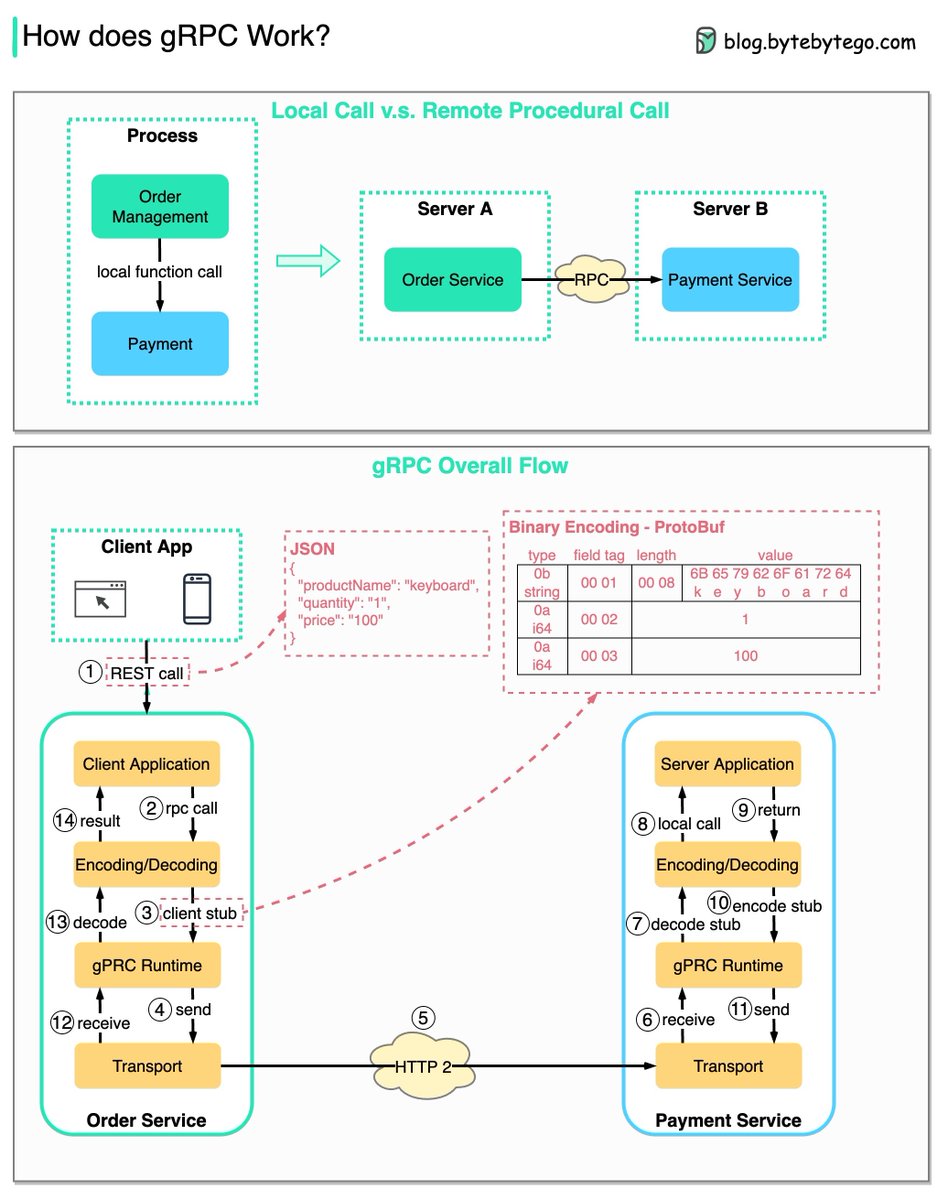
RPC (Remote Procedure Call) is called “remote” because it enables communications between remote services when services are deployed to different servers under microservice architecture. From the user’s point of view, it acts like a local function call.
The diagram below illustrates the overall data flow for gRPC.
Step 1: A REST call is made from the client. The request body is usually in JSON format.
Steps 2 - 4: The order service (gRPC client) receives the REST call, transforms it, and makes an RPC call to the payment service. gPRC encodes the client stub into a binary format and sends it to the low-level transport layer.
Step 5: gRPC sends the packets over the network via HTTP2. Because of binary encoding and network optimizations, gRPC is said to be 5X faster than JSON.
Steps 6 - 8: The payment service (gRPC server) receives the packets from the network, decodes them, and invokes the server application.
Steps 9 - 11: The result is returned from the server application, and gets encoded and sent to the transport layer.
Steps 12 - 14: The order service receives the packets, decodes them, and sends the result to the client application.
–
Subscribe to our weekly newsletter to get a Free System Design PDF (158 pages): https://t.co/iZO6XOwg4P









![Pita_MFP's tweet photo. [ 4 ประเด็น ฝากถึง ส.ว.ทุกท่าน ]
1.
ภายในสถานการณ์ปกติ ในรัฐธรรมนูญปกติของนานาอารยประเทศ วันนี้จะไม่เกิดขึ้น เพราะผ่านการเลือกตั้งมาเกิน 2 เดือนแล้ว รัฐบาลร่วมของ 8 พรรคซึ่งได้ 312 เสียง ถือเป็นเสียงข้างมากในสภา มีผมเป็นนายกรัฐมนตรี คงหน้าดำคร่ำเครียดแก้ปัญหาให้พี่น้องประชาชนอยู่
แต่ที่เรายังต้องอยู่กันแบบนี้ในวันนี้ ก็เพราะภายในรัฐธรรมนูญนี้เสียงของประชาชนมันไม่เพียงพอ ผมต้องมาขอความเห็นชอบจากท่าน เพื่อจะได้เข้าไปบริหารประเทศตามเจตนารมณ์ของประชาชน
2.
เมื่อปี 2562 ส.ว. จำนวน 249 จาก 250 คน เห็นชอบให้ พล.อ.ประยุทธ์ จันทร์โอชา เป็นนายกรัฐมนตรี ท่านให้เหตุผลว่าไม่ได้โหวตให้กับประยุทธ์ แต่โหวตให้กับผู้ที่ถือเสียงข้างมากในสภาล่าง
มาวันนี้พวกผมถือเสียงข้างมากในสภาล่างแล้ว จึงไม่มีเหตุผลที่ท่านจะต้องลำบากใจในการโหวตให้ผมหากท่านยึดหลักการดังกล่าวจริง
นอกจากนี้ ในการโหวตเมื่อ 13 กรกฎาคม ที่ผ่านมา ส.ว. หลายท่านเลือกงดออกเสียง หรือขาดประชุมไปเลย โดยให้เหตุผลว่ายึดหลักการว่าการโหวตนายกรัฐมนตรีไม่ควรเป็นหน้าที่ของ ส.ว. ทั้งที่ท่านทราบดีว่าการกระทำแบบนี้ จะได้ผลตรงข้าม คือเท่ากับเป็นการขัดขวางการโหวตนายกรัฐมนตรีไม่ให้เป็นไปตามเสียงของสภาล่าง
ในวันนี้ ผมขอวิงวอนว่า หากท่านยึดถือหลักการตามที่ท่านให้เหตุผลตามนี้จริง ไม่ได้กระทำไปด้วยเหตุอื่น โปรดโหวตให้กับนายกรัฐมนตรีที่เป็นตัวแทนของเสียงข้างมากจากประชาชน
3.
ส่วนท่านที่โหวตไม่เห็นชอบโดยให้เหตุผลว่าพรรคก้าวไกลไม่จงรักภักดี มุ่งทำลายสถาบัน ผมขอกล่าวต่อหน้าสภาแห่งนี้ว่ามีร้อยแปดเหตุผลที่ทำให้ท่านไม่อยากให้ก้าวไกลเป็นรัฐบาล ไม่ว่าจะเป็นการกระทบผลประโยชน์ของท่าน กลุ่มทุนที่ท่านสนับสนุนอยู่ แต่ท่านรู้ดีว่าไม่สามารถอ้างเหตุผลเหล่านี้ได้ ท่านจึงเลือกใช้เหตุผลว่าเราไม่จงรักภักดี ผมขอถามว่าการกระทำแบบนี้ส่งผลดีต่อสถาบันหลักของชาติอย่างไร และนี่ไม่ใช่การดึงสถาบันเข้ามาเป็นคู่ขัดแย้งทางการเมืองกับประชาชน อย่างนั้นหรือ?
4.
สถานการณ์บ้างเมืองวันนี้ อาจะเรียกว่า “ฝุ่นตลบ-มืดมน-ไม่รู้ว่าเหตุการณ์จะไปในทิศทางไหน” ภายใต้สถานการณ์แบบนี้ ท่านจะตัดสินใจอย่างไรให้ถูกต้องและพาชาติพ้นจากวิกฤติ?
ผมยืนยันว่าในยามที่มืดมน ไม่รู้จะยึดอะไร มี 2 สิ่งที่ยึดไว้แล้วปลอดภัยเสมอ นั่นก็คือ “ยึดหลักการ” และ “ยึดมติประชาชน”
ท่านตัดสินใจโหวตตามหลักการและโหวตตามเสียงประชาชน รับใช้ประชาชน ผมรับรองว่าจะเป็นการตัดสินใจที่ไม่ว่าผลจะออกมาเป็นอย่างไร แต่ชื่อของท่านจะถูกจารึกไว้บนแผ่นดินนี้อย่างมีเกียรติ เป็นที่ภาคภูมิใจของลูกหลาน
พิธา ลิ้มเจริญรัตน์
หัวหน้าพรรคก้าวไกล
แคนดิเดตนายกรัฐมนตรี
#ก้าวไกล #พิธา #โหวตนายก #โหวตนายกรอบ2](https://pbs.twimg.com/media/F1Xa-gDacAAWmLg.jpg)