Neutrophil to high-density lipoprotein cholesterol ratio is positively associated with congestive heart failure among hypertensive adults: a population-based study (open access)
https://t.co/iWBeCaMHtu
Here, a higher neutrophil to high-density lipoprotein cholesterol ratio (NHR), a composite marker of inflammation and lipid metabolism, was associated with congestive heart failure prevalence in US adults with hypertension.
Guys I'm a huge advocate of vascular health, and BP control is the lowest hanging fruit. Get that shit under control.
Like dyslipidemia, it's an AUC thing -- the longer you're hypertensive over time, the more cumulative damage is done. Get it under control pronto.
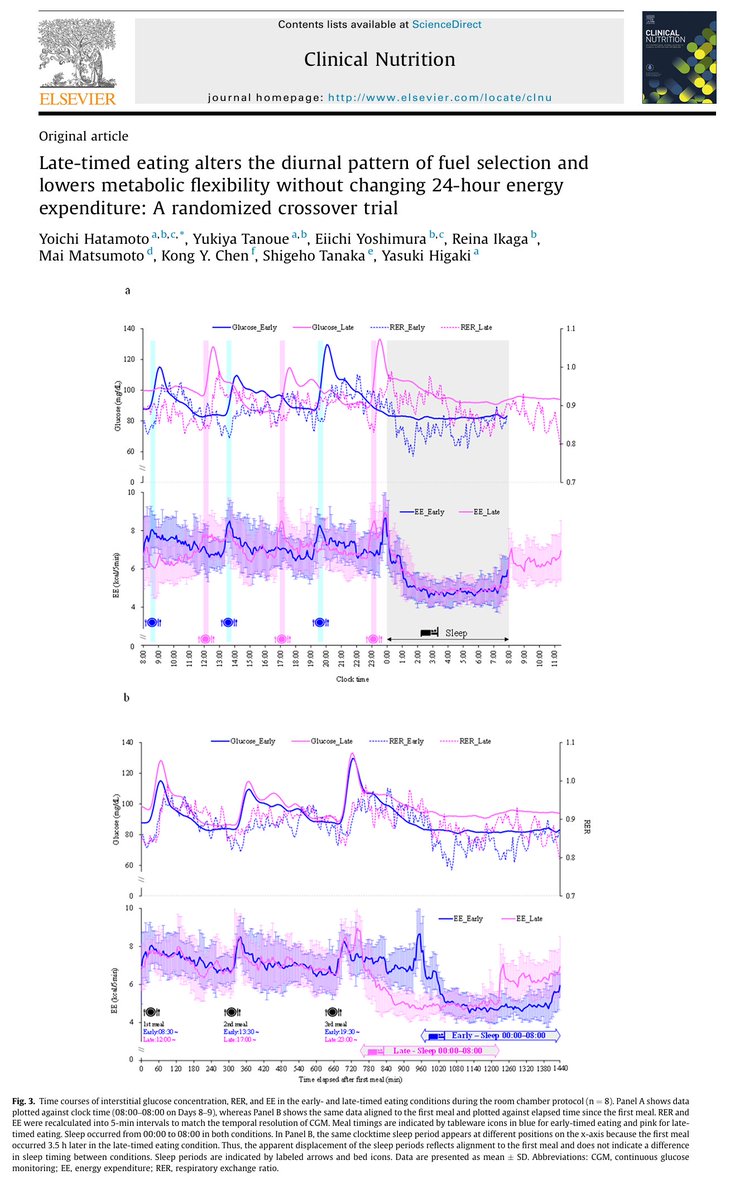
Late-timed eating alters the diurnal pattern of fuel selection and lowers metabolic flexibility without changing 24-hour energy expenditure: A randomized crossover trial
https://t.co/MumqJVLUTW
This one suggests that delayed meal timing is associated with an attenuated overnight shift in relative whole-body fuel selection from carbohydrate toward fat, consistent with lower metabolic flexibility.
- Although mean 24-h respiratory exchange ratio did not differ in a statistically significant manner between conditions, late-timed eating was associated with a sustained elevation of respiratory exchange ratio during sleep and a smaller 24-h respiratory exchange ratio range, driven by a higher nadir rather than a higher peak respiratory exchange ratio.
Muscle mass alone isn't enough. We need muscle that respires well and stays metabolically flexible. A new Lancet Healthy Longevity paper argues sarcopenia is a whole-body energy problem, and that fixing mass without fixing those systems won't eliminate the risk.
Serum magnesium and risk of hyperglycemia, type 2 diabetes, and prediabetes: a systematic review and dose-response meta-analysis of observational studies (open access)
https://t.co/H4lEa5C2Df
This systematic review and meta-analysis finds that increasing serum magnesium concentration from deficient to sufficient values can be associated with a reduced hyperglycemia and type 2 diabetes risk.
- In non-linear dose-response analysis, increasing serum magnesium concentration from deficient to sufficient values (> 0.85 mmol/L) was associated with a decreasing trend in hyperglycemia and type 2 diabetes risk.