When the American empire finally collapses, historians won’t be stunned by the greed of the elite; They’ll be stunned by the loyalty of the poor.
The working class didn’t just vote against their own interests. They worshipped the billionaires robbing them.
They slashed their own benefits, gutted their own healthcare, and cheered while the rich wrote off private jets as tax deductions.
Not because it helped them.
But because they were told it would hurt someone else.
And that, right there, is how you rig a democracy without ever breaking a single law.
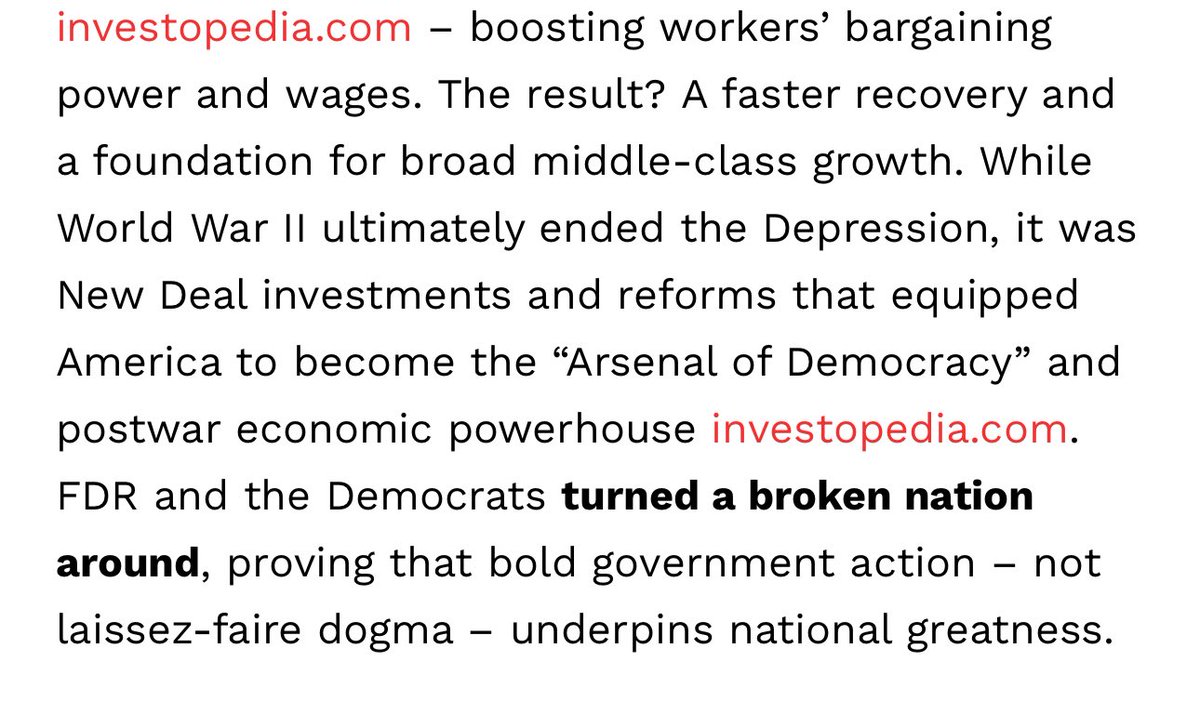
In 1933, the U.S. was on life support.
25% unemployment.
Banks collapsing.
Families starving.
And the so-called “free market” had nothing left to offer but despair.
Then came FDR.
He didn’t throw tax cuts at the rich or blame immigrants.
He threw government resources at the actual problem: mass economic failure.
The New Deal wasn’t just a lifeline—it was a blueprint.
Millions put to work building real infrastructure:
- Roads
- Dams
- Bridges
- Schools
Not stock buybacks. Not yachts.
Social Security?
Democrats.
Union protections?
Democrats.
Banking reform that stopped another collapse?
Democrats. They didn’t privatize the crisis, they confronted it.
By 1935, union membership surged.
Wages stabilized.
The middle class wasn’t a myth, it was engineered.
And that wasn’t by trickle-down nonsense. It was government, unapologetically, doing its job.
So no, the greatness of this country was not built by lobbyists.
It was protected from them.
And it’s time we remembered that.
📖 Full article here: https://t.co/jBbGHKWHsa
"My fellow Americans: When you pay taxes, which would you rather support? Cancer research, or getting one guy a really big boat?" @petridishes writes: https://t.co/jCYg4fcJ3Z
On our street, everyone is welcome. Together, let’s build a world where every person and family feels loved and respected for who they are. Happy #PrideMonth!
Trump won by going full Pedro. Knowing that much of America is a shithole of low IQ ignoramuses, Trump made promises he'll never be able to keep — and the absolute dumbest motherfuckers among us fell for it hook, line and sinker. 😳👇
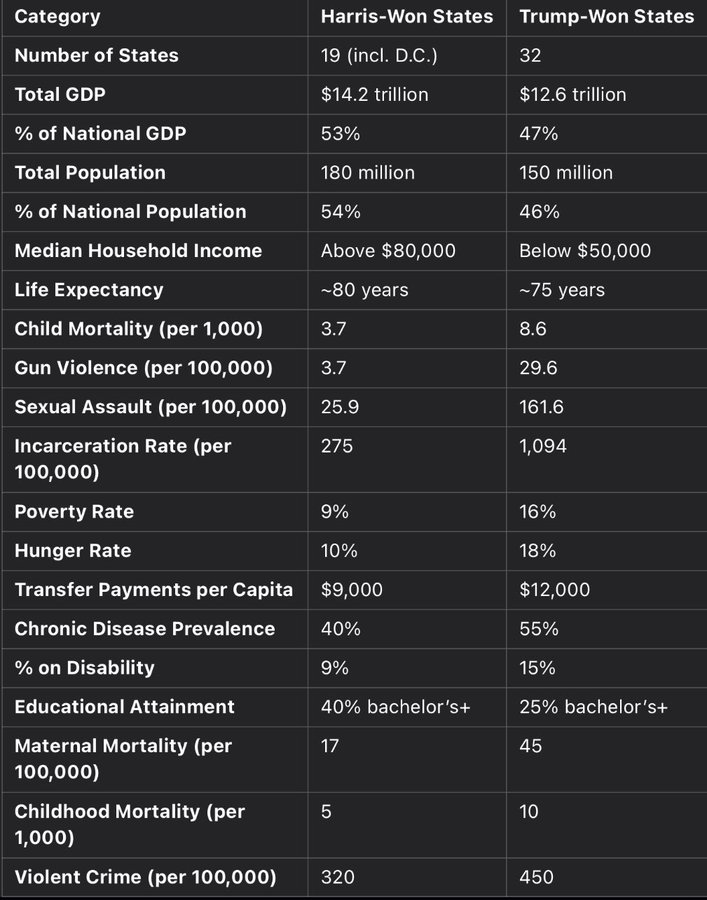
🧵Harris-won states perform better economically, contributing more to GDP, with higher incomes, better education levels, and longer life expectancies. They also have lower rates of poverty, crime, and chronic illness. Trump-won states, in contrast, face higher poverty, more gun violence, higher incarceration, and more chronic disease prevalence.
Economic Performance
•GDP Contribution: Harris-won states contribute a larger share of the national GDP (53%) compared to Trump-won states (47%), even though they represent a smaller number of states. This higher economic output correlates with generally higher incomes, greater population density in urban areas, and a concentration of industries like technology and finance, which tend to generate higher GDP.
•Median Household Income: The median household income in Harris-won states is significantly higher, with an average above $80,000, compared to below $50,000 in Trump-won states. This suggests a disparity in economic opportunity, wage levels, and possibly cost of living, with Harris-won states generally offering higher-paying jobs.
Public Health Indicators
•Life Expectancy: Residents in Harris-won states have a higher average life expectancy (around 80 years) compared to Trump-won states (approximately 75 years). This difference may be influenced by factors such as access to healthcare, lifestyle, and economic conditions, which can directly impact overall health outcomes.
•Child and Maternal Mortality: Both child and maternal mortality rates are notably lower in Harris-won states, suggesting better access to healthcare services, more robust public health systems, and potentially better social safety nets.
•Chronic Disease and Disability: Trump-won states show higher rates of chronic disease (55% vs. 40%) and a larger percentage of the population on disability (15% vs. 9%). These metrics may indicate challenges with healthcare accessibility, preventive care, and lifestyle factors.
Social and Crime Indicators
•Incarceration Rate: Trump-won states have a significantly higher incarceration rate (1,094 per 100,000) compared to Harris-won states (275 per 100,000). This may reflect differences in criminal justice policies, socioeconomic conditions, and crime rates, with higher incarceration often associated with poverty and limited access to social services.
•Violent Crime and Gun Violence: Violent crime and gun-related mortality are higher in Trump-won states. Gun violence, specifically, is considerably more prevalent (29.6 vs. 3.7 per 100,000), suggesting possible differences in gun laws, cultural attitudes towards firearms, and socioeconomic pressures that contribute to crime.
Education and Poverty Indicators
•Educational Attainment: Harris-won states have a higher percentage of residents with at least a bachelor’s degree (40% vs. 25%). Higher educational attainment is often linked to better job prospects, higher incomes, and overall economic growth, which could partially explain the income and GDP differences.
•Poverty and Hunger: Poverty and hunger rates are higher in Trump-won states, with poverty at 16% compared to 9% in Harris-won states, and hunger at 18% vs. 10%. These disparities suggest greater economic hardship and food insecurity in Trump-won states, likely affecting overall quality of life and contributing to poorer health outcomes.
Key Takeaways
1.Economic and Educational Advantages in Harris-Won States: Higher GDP, median income, and educational attainment in Harris-won states indicate stronger economic foundations, which support better living standards and health outcomes.
2.Public Health and Crime Challenges in Trump-Won States: Trump-won states face significant challenges related to public health, with higher rates of chronic disease, disability, maternal and child mortality, as well as crime and gun violence. These factors reflect systemic issues in healthcare access, economic conditions, and public health issues.🧵
Works Cited
Bureau of Economic Analysis. (2023). Gross Domestic Product by State, 2022. https://t.co/4H1qceB8Sx
U.S. Census Bureau. (2023). State Population Totals and Components of Change: 2020-2022. https://t.co/BqXvNrQI20
U.S. Census Bureau. (2023). Income in the United States: 2022. https://t.co/iqmZI3W04s
Centers for Disease Control and Prevention (CDC). (2023). National Vital Statistics Reports: United States Life Tables, 2021. https://t.co/iRDSHUNKwb
Centers for Disease Control and Prevention (CDC). (2023). Infant Mortality Rates by State. https://t.co/PsjYd59cXJ
Centers for Disease Control and Prevention (CDC). (2023). Firearm Mortality by State. https://t.co/0SDG7ZOx6P
Federal Bureau of Investigation (FBI). (2023). Crime in the United States, 2022. https://t.co/iZlilhWcUA
Bureau of Justice Statistics (BJS). (2023). Prisoners in 2022. https://t.co/vfvcMDXIVT
U.S. Census Bureau. (2024). Poverty in the United States: 2023 Estimates. https://t.co/eVHSDPm70L
USDA Economic Research Service. (2024). Household Food Security in the United States in 2023. https://t.co/rDpblJpYZd
Bureau of Economic Analysis (BEA). (2024). Transfer Payments by State. https://t.co/7Azk6fNJf1
Centers for Disease Control and Prevention (CDC). (2024). Chronic Disease Indicators by State. https://t.co/dlFTiAaTsW
Social Security Administration (SSA). (2024). Annual Statistical Report on the Social Security Disability Insurance Program. https://t.co/C5FotkUhEA
U.S. Census Bureau. (2024). Educational Attainment in the United States: 2023. https://t.co/ADJCuGZ43R
Centers for Disease Control and Prevention (CDC). (2024). Maternal Mortality by State. https://t.co/CFT8YloKfT
Centers for Disease Control and Prevention (CDC). (2024). Childhood Mortality Rates by State. https://t.co/bKMZ57oFwo