How do we know recent climate change is caused by humans?
Developed in partnership with @The_GA, @DerbyUni, and University of Sussex.
Watch the full video on @timeforgeog and discover how you can put your geography to work in careers with Satarla, @IgneGroup, and @atkinsrealis:
https://t.co/nqtF3XTjPz
The Summer 2026 issue of Teaching Geography is out now.
Editor Richard Bustin introduces a timely focus on artificial intelligence in the classroom, analysing generative AI tools, representation risks, and practical strategies for inclusive lessons.
Read the latest issue today to enhance your classroom practice: https://t.co/SRYWsJaJJm
Significant change is ahead for geography education.
The DfE has announced public consultations launching this September for the first national curriculum and GCSE updates in more than ten years, covering Key Stages 1, 2, 3 and GCSE geography content.
The finalized reforms will be published next Spring, ahead of first teaching in September 2028 and updated GCSEs in September 2029.
Your classroom experience is vital for shaping these changes. Read the latest DfE Teacher Bulletin to ensure your department is ready to get involved.
Link here: https://t.co/QfMVB6YMdt
Why texts read at school should be challenging, extracts can be useful, and reading stories to the class is not always a good option: US literacy researcher @ReadingShanahan talks to @Helen_Amass about the best way to teach reading https://t.co/pUOqhwmqwi
@WALKTHRUs_5 in partnership with @V21OracyInt is thrilled to share with you our Oracy WalkThrus series. A new collaboration, bringing together high quality theory and practice in teaching oracy, with a series of 5 step visual guides to developing these techniques in the classroom.
Now available to all Teaching WalkThrus and Voice 21 members though their respective membership sites!
@teacherhead@MattTeachCoach@olicav
💬 “For children with SEND, their socioeconomic status is just such a profound factor in their experiences in the education system.”
In a recent episode of Inside Your Ed, our Schools Engagement Lead Charley O’Regan spoke with Tom Richmond and Jonny Uttley.
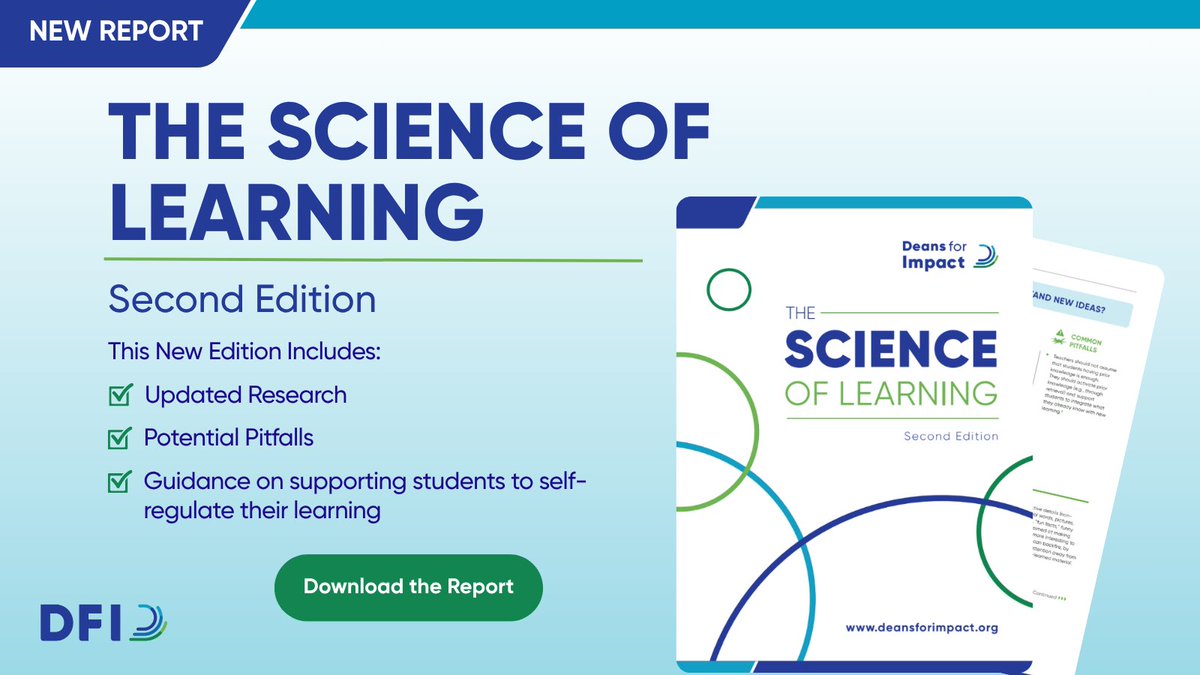
Our colleagues at @deansforimpact just released The Science of Learning, 2nd ed!
#TheScienceOfLearning2 includes updated research, pitfalls to avoid, and more, grounded in our best scientific understanding of how students learn. https://t.co/KTxsRUiDlq
📉📈 NON-EXAMPLES! The latest edition of ⚗️DistillED includes this free one-page guide.
A non-example isn’t just a random wrong answer — it’s a carefully chosen example that is missing the critical feature that defines the concept.
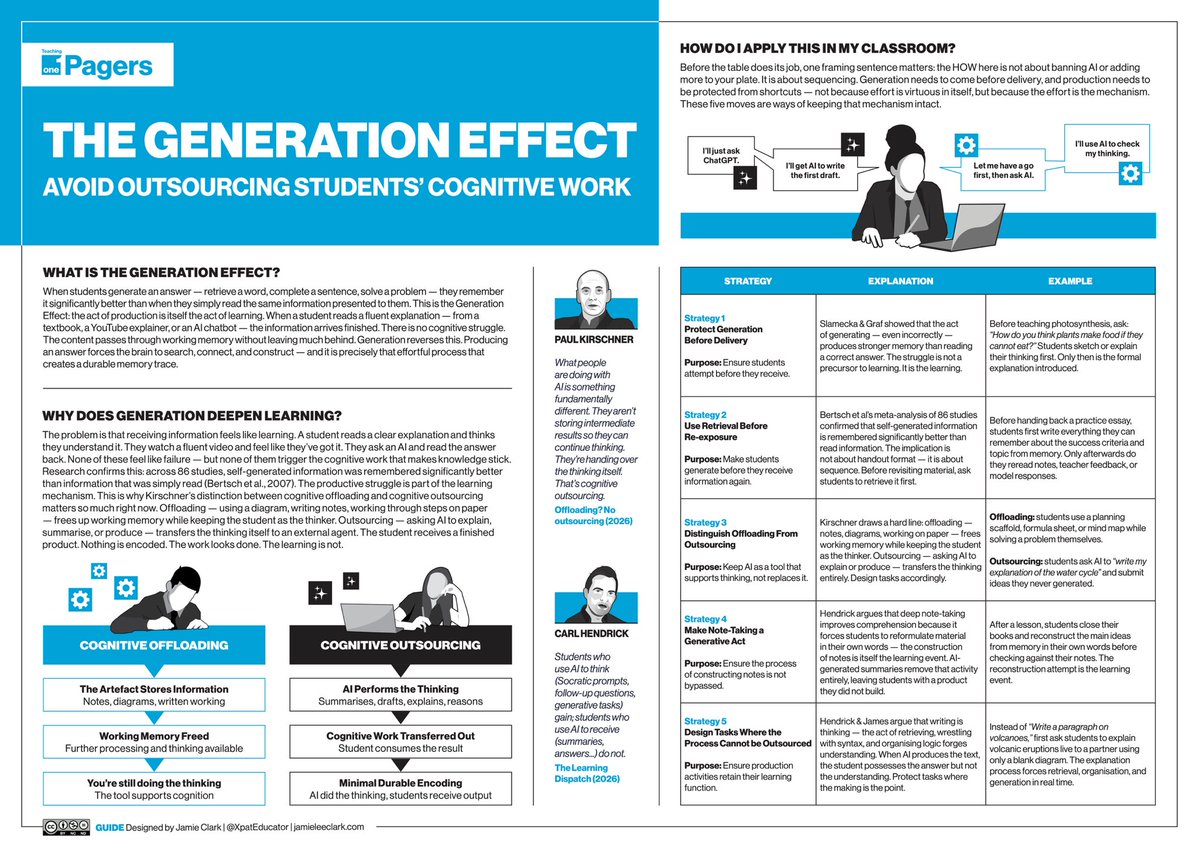
🤖 “What people are doing with AI is something fundamentally different. They aren't storing intermediate results so they can continue thinking. They're handing over the thinking itself. That's cognitive outsourcing.” — @New_Old_Paul
📄 New FREE one-pager on the Generation Effect and what AI is doing to learning. Also draws on @C_Hendrick and others.
https://t.co/yHBoZfameE
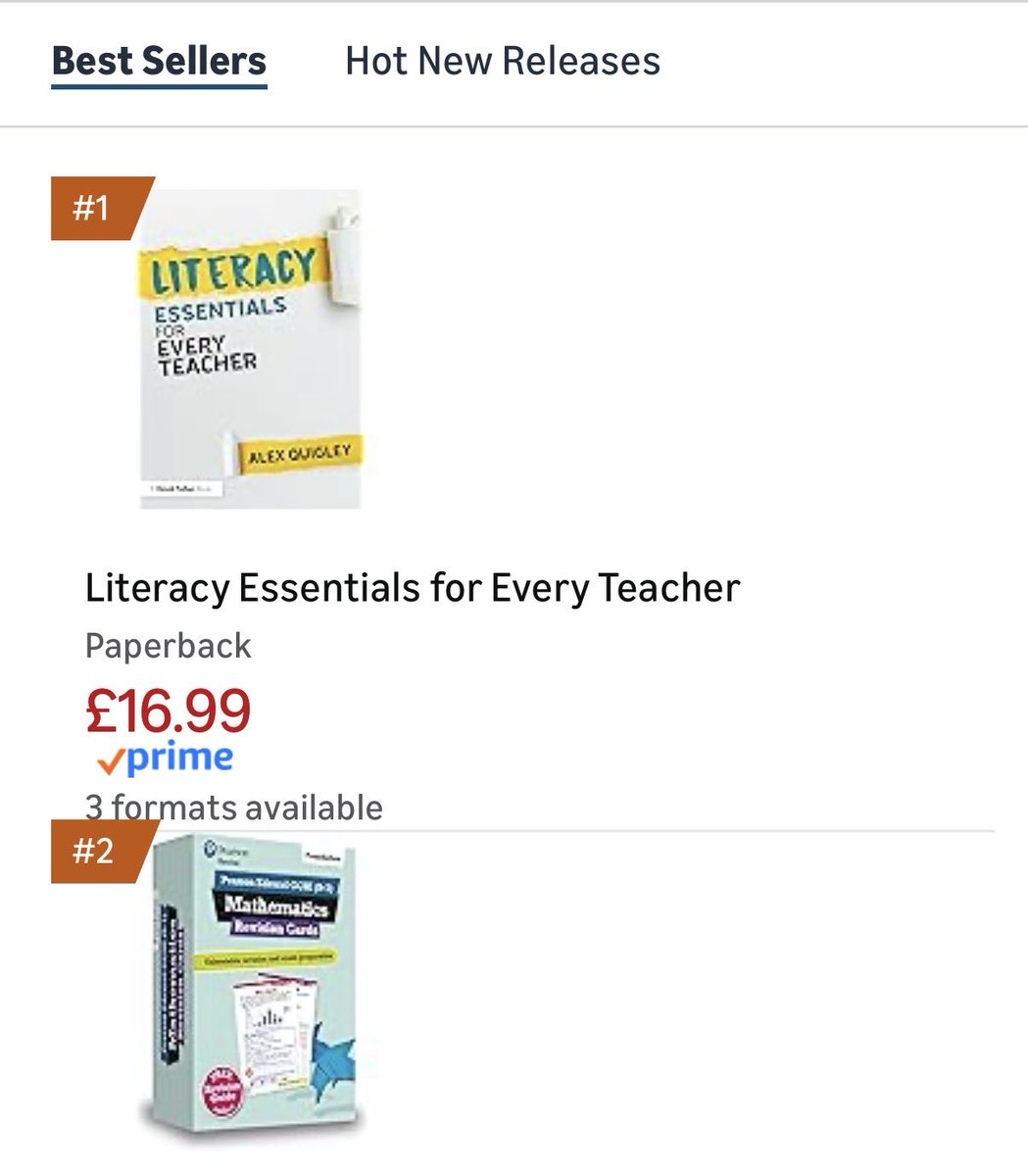
I’m delighted that my new book, ‘Literacy Essentials for Every Teacher’, has gained bestseller status on Amazon!
You can pick it up your copy too before it sells out - here:
https://t.co/v30oveZizk
You can now generate a variety of downloadable files, including PDFs, @GoogleWorkspace files, Microsoft Word & Excel, and more directly in your chats with Gemini.
Tell Gemini what content to create and the file format you want when you prompt without having to upload a template.
Higher education is evolving quickly.
In a recent interview, Sal Khan shared more about the thinking behind the Khan TED Institute and what learners will actually need in an AI-driven world.
https://t.co/I4dicWxnWg
This article by @profbeckyallen on maths setting is also a must read.
The EEF study shows lower attaining students have lower maths self confidence in mixed ability classes than in sets.
Becky suggests this is because mixed ability classes give them a daily reminder of how far behind they are their peers. The "labelling effect" from mixed ability classes is worse than that from setting.
https://t.co/KZvCeq8ktC
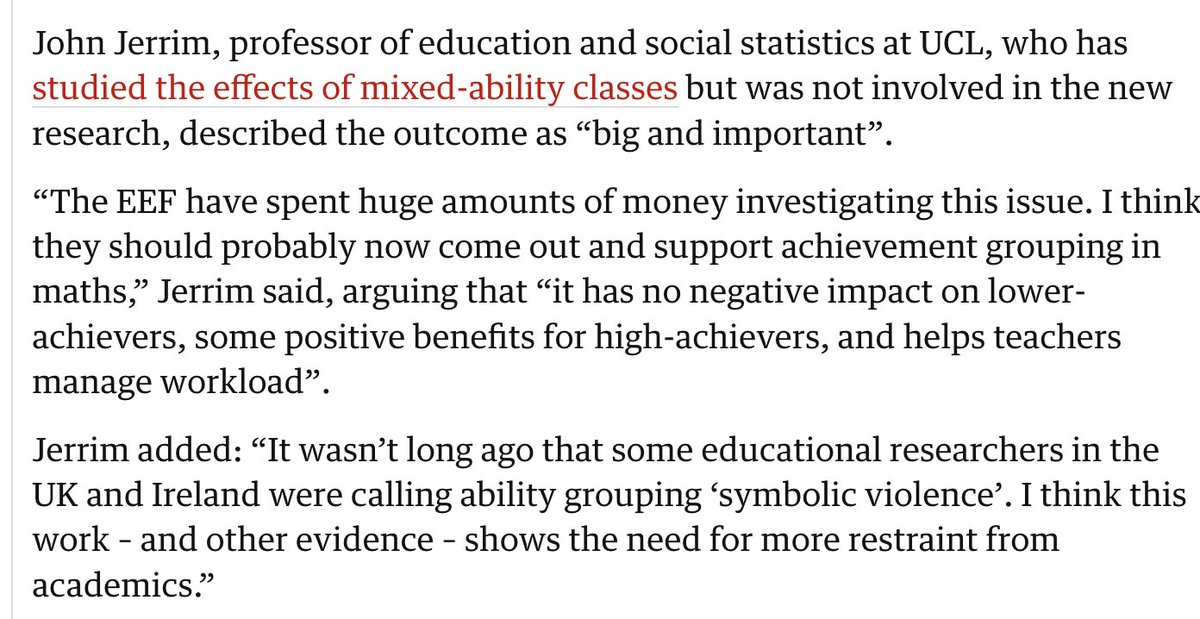
For a long time setting in maths has been seen as "symbolic violence" that harms low attainers.
But now a major study by the EEF & IoE shows setting has no negative impact on low-attainers & positive benefits for high attainers.
https://t.co/q2I2KOG0Q1
How much nature is Europe losing? 🌿
Our latest #geovisualisation features the work of Zeynep Şentek and Léopold Salzenstein from Arena for Journalism in Europe, mapping the dramatic loss of nature and cropland in Europe.
Read the interview here 👉https://t.co/WOx8Rgf1dd
Nobel laureate @Malala Yousafzai thought changing the world would be easy — and then she came face-to-face with reality.
In this first talk from #TED2026, she shares 3 lessons she learned about working for the future you want, even when hope feels lost: https://t.co/L1oGTKPXM5
Thinking of applying for the challenge? Applications close this Friday!
We know questioning is one of the most powerful ways to activate student thinking but it’s not always easy to improve it in a busy school week.
That’s why we’re running the Great Teaching Questioning Challenge.
��� Work with a small group of colleagues
• Trial practical techniques in your classroom
• Commit just 15 minutes a week
• All grounded in evidence-informed practice
Over six weeks, you’ll focus on one of the most impactful elements of great teaching and build habits that stick.
It’s free to participate and applications close on 17th April.
👉 Find out more and apply here: https://t.co/zWowKqvLTi
P.S. Thank you to everyone who's applied so far, we can't wait to get started