“She begged me to take a picture with her... I felt sorry for her.”
Now Prime Minister Meloni has the audacity to claim it never happened. Imagine that — questioning the word of the Leader of the Free World!
Next thing you know, people will start expecting evidence, witnesses, or even photos before accepting every statement as unquestionable truth.
The nerve of some people.
I’m genuinely happy to see this war ending — hopefully for good.
But as more details of the Iran deal emerge, one question remains:
What exactly did we gain that we didn’t already have before the war?
Before the conflict, the goals were straightforward: keep the Strait of Hormuz open, prevent Iran from obtaining a nuclear weapon, and maintain oversight of its nuclear program. Those same objectives now appear to be at the heart of the agreement.
The difference is the cost.
Lives lost. Tens of billions spent. American bases and assets across the Middle East significantly damaged. Global markets disrupted. Oil prices shaken. Allies questioning American deterrence. Adversaries finding new reasons to cooperate.
And what does Iran appear to get in return?
The regime survives. Sanctions relief. Access to frozen assets. Oil exports restored. The blockade lifted. A stronger position in regional politics. And possibly much more.
If the final agreement restores inspections, limits enrichment, and reopens Hormuz, then we have to ask an uncomfortable question:
Did we fight a costly war to end up with something remarkably similar to what existed before?
My concern is that Iran may emerge not weaker, but richer, more influential, and more important to the region than it was before the war began.
I hope I’m wrong. I hope peace holds. I hope the deal succeeds.
But wars are judged by outcomes, not rhetoric. If, after all the bloodshed and economic damage, the end result is largely the same — or even less favorable — than what existed before February 28, history is unlikely to view this as a strategic victory.
It will view it as a very expensive mistake.
War Is Money, No Matter How You Slice It
8:22 AM: Iran is finished, military destroyed, bombing resumes.
1:28 PM: Bombing cancelled, deal imminent, signing ceremony coming soon.
The only thing moving faster than events on the ground is the market trying to price them in. If I were a Wall Street quant, I’d probably have a dedicated team doing nothing but analyzing Truth Social notifications.
So maybe the real Art of the Deal wasn’t happening in the Middle East today — it was happening on Wall Street. One post hinted at war, another at peace. Stocks jumped, oil fell, and billions moved. Quite a deal. 😉
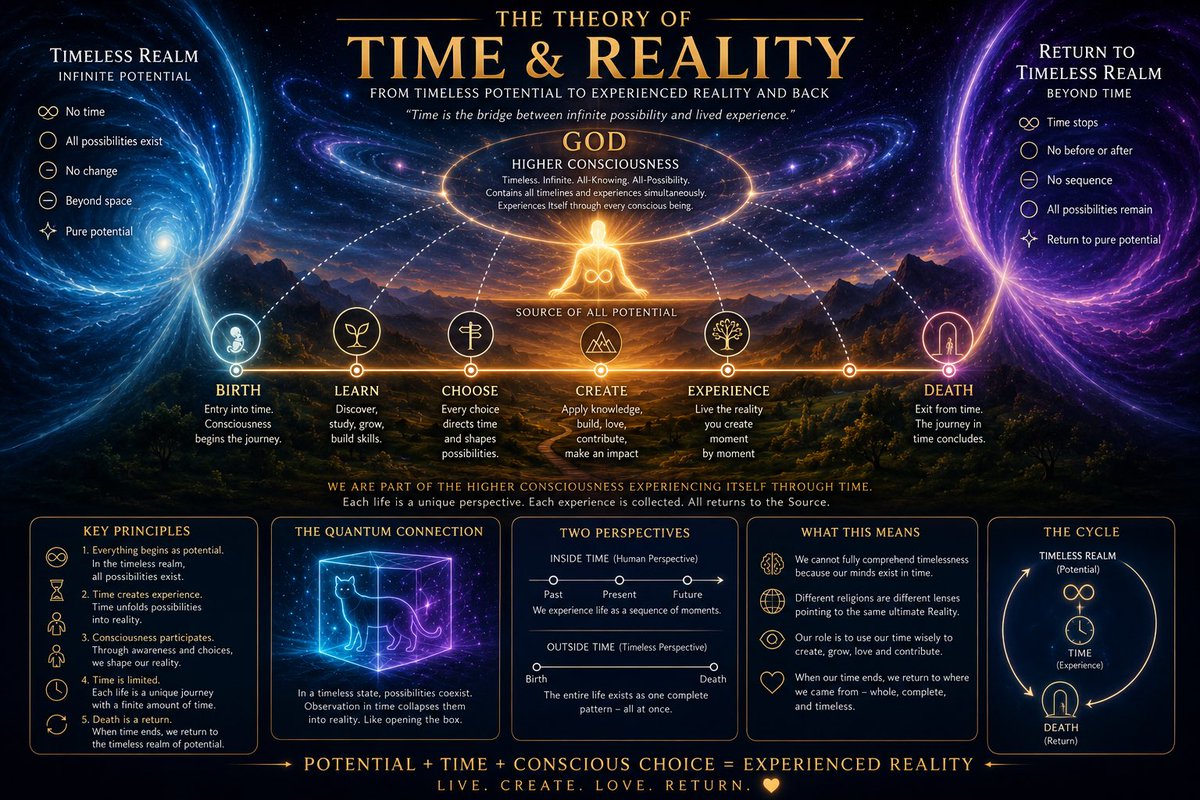
I’ve spent years fascinated by quantum physics, consciousness, reality, and God.
My exploration of these subjects has gradually led me toward a philosophical position in which belief in God is not grounded in the idea of a human-like deity, but in the possibility of a higher form of consciousness that transcends time, space, and matter.
This perspective has inspired a philosophical framework I call the Time Manifestation Theory.
At its foundation are three key concepts:
Potential: the totality of possibilities that could exist but have not yet become actualized.
Time: the process through which possibilities unfold into concrete events and experiences.
Consciousness: the capacity for awareness and choice, through which experience is interpreted and, potentially, influenced.
From these definitions, the theory develops through a series of propositions.
First, if time is understood as the condition that allows change and sequence, then one may speculate that prior to time there exists only infinite potential—a state in which all possibilities are present but none are yet realized.
Second, time functions as the medium through which potential becomes experience. What is merely possible gradually becomes actual through temporal unfolding.
Third, consciousness is not a passive observer of this process. Through perception, intention, and choice, conscious beings participate in the realization of possibilities. Choice therefore serves as a bridge between potential and lived experience.
From this perspective, reality can be understood as the continuous manifestation of possibility through time. The world is not a fixed structure but an ongoing process of becoming.
The theory further suggests that individual consciousnesses may be temporary perspectives within a larger, more fundamental consciousness. In this view, human experience represents one way in which a higher consciousness encounters and explores its own possibilities.
This idea also offers a particular interpretation of death. Rather than being an absolute end, death may represent the conclusion of an individual’s temporal perspective and a return to the timeless source from which consciousness emerges.
The central principle of the theory can be summarized as:
Potential + Time + Conscious Choice = Experienced Reality
If such a framework has merit, it may also provide a way of understanding religious diversity. Different religious traditions could be interpreted as distinct symbolic and cultural lenses through which humanity attempts to relate to the same ultimate reality—a reality that transcends time, matter, and ordinary experience.
Whether this theory is ultimately correct remains an open question. Nevertheless, it offers a way of integrating scientific curiosity, philosophical inquiry, and spiritual reflection into a coherent account of consciousness, reality, and existence.
What do you think?
#Consciousness #QuantumPhysics #Philosophy #God #Reality #Time #Spirituality
For most of my life, I had 20/20 vision. Around 10 years ago, I started noticing my eyesight changing — especially reading small text in low light.
This is my simple 1–2 minute evening eye routine that seems to help me keep my glasses mostly on the shelf.
NOT medical advice. Just sharing personal experience and habits that work for me.
👀 Eyes need exercise too?
#Eyesight #EyeExercises #Vision #LifeHacks #YouTubeShorts
This video is an excellent educational example of mass psychosis and psychological manipulation. It should be studied in high school if we truly want to raise a society capable of independent thought, critical thinking, and resistance to propaganda and group-driven hysteria. https://t.co/FJgJgLXP4V
Kupno nieruchomości inwestycyjnej na Florydzie może wyglądać jak spełnienie marzeń… aż do momentu, kiedy odkryjesz, że… nie możesz jej wynajmować. 😳
W nowym filmie opowiadam historię Adama — Polaka, który kupił mieszkanie w Naples pod inwestycję, ale dopiero po zakupie odkrył restrykcje HOA dotyczące wynajmu.
W Naples i na całej Florydzie wiele osiedli ma ograniczenia typu:
• minimum 30, 90 lub 180 dni wynajmu
• limit wynajmów rocznie
• zakaz wynajmu przez 1–3 lata od zakupu
• restrykcje dla Airbnb i VRBO
To jedna z największych pułapek dla inwestorów.
Jeśli myślisz o zakupie nieruchomości na Florydzie — obejrzyj ten film zanim podpiszesz umowę. Jeden zapis w dokumentach HOA może całkowicie zmienić sens inwestycji.
📍 Naples, Florida
📞 Nick Sadowski
🌐 https://t.co/m8S9U0QmJX
#NaplesFlorida #Floryda #Inwestycje #HOA #AirbnbFlorida #NaplesRealEstate
What Is “3/30” — And Why It Matters in Naples Real Estate
When people search for investment properties or second homes in Naples, Florida, they usually focus on the obvious things — location, view, amenities, HOA fees, or projected rental income. But one of the most important details is often hidden deep inside condominium documents and HOA rules.
And overlooking it can become a very expensive mistake.
In Naples real estate, you will often hear terms like:
▶︎ 3/30
▶︎ 1/90
▶︎ 12/30
These numbers describe rental restrictions within a community.
For example:
▶︎ 3/30 usually means the property can be rented only 3 times per year, with a minimum lease period of 30 days.
▶︎ 1/90 means only 1 rental per year, with a 90-day minimum.
▶︎ 12/30 is much more flexible, allowing up to 12 rentals annually with a 30-day minimum stay.
At first glance, these may sound like small details. In reality, they can dramatically affect:
* rental income potential
* financing options
* resale value
* future flexibility
* and even whether the property works for your lifestyle at all.
I have seen buyers rush to purchase what appeared to be a fantastic “deal,” only to discover after closing that the community prohibited rentals during the first year of ownership — sometimes even longer. Suddenly, the entire investment strategy changed overnight.
The buyer expected rental income to help offset carrying costs, but instead found themselves paying HOA fees, taxes, insurance, and maintenance entirely out of pocket.
Many buyers assume:
“If I own it, I can rent it.”
Unfortunately, in Naples, that is not always true.
Some communities are highly investor-friendly and allow flexible seasonal or monthly rentals. Others are designed primarily for full-time or seasonal residents who want a quieter, more residential environment with less turnover.
That is why two nearly identical condos — sometimes in the same area — can have dramatically different values and rental potential.
In fact, a surprisingly low price can sometimes be a warning sign.
A property may look like an incredible opportunity compared to nearby listings, but there is often a reason:
* strict rental limitations
* no rentals during the first year of ownership
* lengthy HOA approval processes
* financing restrictions
* pending special assessments
* insurance concerns
* or weak rental demand
This is why working with an experienced local Realtor matters — especially if you are purchasing a second home that you hope to enjoy personally while renting it when you are away.
A good investment property is not just about the purchase price. It is about understanding:
* the community’s rental rules
* seasonal demand
* HOA policies
* future resale appeal
* financing and insurance realities
* and the true long-term cost of ownership
Naples offers excellent opportunities for both investors and seasonal homeowners — from flexible condo-hotels to luxury beachfront communities — but every building has its own rules, limitations, and hidden details that can significantly affect your plans.
Before rushing into what appears to be a “great deal,” make sure you fully understand what you are actually buying.
If you are considering purchasing an investment property or second home in Naples, I would be happy to help you navigate the process, identify potential red flags, and find a property that truly fits your goals and lifestyle. Share it with friends who think of purchasing property in Naples.
Nick Sadowski
Berkshire Hathaway HomeServices Florida Realty
(239) 378-0300
[email protected]
https://t.co/hB8rFITgfB
Discover Naples, Florida — one of America’s premier coastal markets.
Here market isn’t slowing — it’s evolving.
Buyers have more options, demand remains strong, and we’re seeing a shift from a fast-moving market to a more strategic one.
– Single-family homes (especially prime locations) remain strong
– Condos offer new opportunities and better entry points
For investors and those considering relocation, this creates a unique window: more choice, more leverage — without losing long-term value.
Naples continues to attract buyers from across the U.S. and around the world for a reason. It’s no longer about being first — it’s about being strategic.
If you’re exploring opportunities in Southwest Florida, let’s connect.
📞 +1 (239) 378-0300
🌐 https://t.co/NnufNjRLkT
#NaplesFlorida #RealEstate #InvestInFlorida #LuxuryRealEstate #Relocation #USRealEstate #PropertyInvestment #FloridaLiving #GlobalInvesting
Just saw this Truth Social post and honestly… I feel like I’m living in a parallel universe. What happened to Trump?
I’m super detached from the reality this propaganda is forcing onto so many of my friends. I can see it. I can feel it all around me. Thankfully, it doesn’t stick to me — but it’s sticking to them hard.
Turn on Fox News and this alternative heroic fantasy spills straight out of the screen: the Supreme Leader portrayed as Jesus 2.0, healing the sick with glowing hands, red robes flowing, bald eagles flying, fighter jets streaking by, fireworks exploding over the Capitol and Statue of Liberty. All while heavenly figures ascend in golden light behind him. It’s not a campaign ad. It’s not even politics anymore. It’s straight-up AI-generated cult-of-personality art — Renaissance Jesus painting meets Soviet hero poster, drenched in American flag worship.
This isn’t persuasion. This is myth-making. It’s emotional manipulation designed to make people feel like they’re witnessing a messiah instead of watching a politician. And it works on the already-converted, but it looks ridiculous (even borderline blasphemous) to everyone else.
Wake up, America.
We desperately need adults who can talk about real problems without turning themselves into religious icons. This kind of deification has never ended well in history, and it won’t end well now. If you’re sharing this kind of stuff thinking it’s “based,” just pause for a second. Look at it with fresh eyes. This isn’t strength. It’s insecurity dressed up as glory.
The propaganda is loud.
Don’t let it fill your head.
Wyobraźcie sobie…
Że Polska i Polacy bombardują sąsiednie kraje, wyrzucają Ukraińców czy Czechów z ich domów, ryjąc buldożerami ich dobytek.
Że bombardują Bratysławę, cywilne domy i szpitale, gdzie giną tysiące dzieci.
Że na ulicach polskich miast Polacy plują na Ukraińców.
Że rząd przepycha prawo, które pozwala skazywać na śmierć albo dożywocie więzionych przeciwników tej ekspansji – wystarczy zarzut „bycia wojownikiem wroga”.
I wtedy ktoś z zewnątrz mówi Wam: „Polska ma prawo się bronić. Polska jest ofiarą. Polska musi chronić swoich przed terrorystami. Polacy powinni kontynuować operację”.
Czy dalej uważalibyście, że Polska jest tylko ofiarą i ma moralne prawo do takich działań?
Czy dalej mówilibyście, że Polacy powinni po prostu „dać pokój”… znaczy kontynuować ekspansję i budować więcej polskich osiedli na ukraińskiej czy słowackiej ziemi?
Bo dokładnie taka jest sytuacja Izraela dzisiaj.
Słabe porównanie.
Wspieram Żydów i prawo Izraela do bezpiecznego istnienia w granicach uznanych i zatwierdzonych międzynarodowo. Nie wspieram ekspansji osiedli na okupowanych terytoriach i tego, co się dzieje dzisiaj. Rządy Netanyah u, zamiast budować trwałe bezpieczeństwo, podsyca nienawiść pokoleń, osłabia demokrację i prowadzi wprost ku większej tragedii – zarówno dla regionu, jak i ostatecznie dla samych Żydów. To moje zdanie.
A kontekst historyczny robi różnicę jeszcze większą. Polska przez wieki znała cenę honoru, oporu i walki o przetrwanie – od rozbiorów, przez Powstania, po Solidarność. Broniliśmy swojej ziemi, ale nigdy nie budowaliśmy imperium na ruinach sąsiadów, nie kolonizowaliśmy ich wiosek buldożerami i nie wypędzaliśmy całych narodów, by budować „nasze biblijne/pradawne” osiedla. Nasz honor to „Bóg, Honor, Ojczyzna” – opór, nie ekspansja. Izrael ma realne, egzystencjalne zagrożenia ze strony Hamasu, Hezbollahu i Iranu – to fakt. Ale kiedy obrona przechodzi w systematyczną okupację i budowanie osiedli poza uznanymi granicami (uznawaną za nielegalną przez prawo międzynarodowe), to nie jest już ta sama sytuacja co czysta samoobrona Polski w 1939 czy 1981.
Zamieńcie „Izrael” na „Polska”, a „ekspansję osiedli” na „polskie osiedla na Ukrainie” – nagle robi się bardzo niewygodnie, prawda?
Pomyślcie o tym szczerze.
You Can’t Force Support, You Can Only Lose It
There is a noticeable shift happening in the United States when it comes to support for Israel, and it is not random. It is a clear example of cause and effect. The more aggressively a narrative is pushed, the more people begin to question it. What once felt organic now often appears coordinated, amplified, and in many cases promoted through paid channels. When messaging becomes constant and one-sided, people step back and reassess.
Voices like Mark Levin and Ben Shapiro, along with others in that media space, may be contributing to this shift. When everything is framed as absolute and beyond discussion, it does not build trust, it weakens it. Especially when content is visibly boosted or sponsored, people naturally begin asking who is behind it and why.
This is not happening in isolation. Benjamin Netanyahu’s government faces significant unpopularity within Israel itself, which shows how complex the situation really is, even internally.
Then there is the human aspect. When people see civilian suffering in Gaza, dead children, and now strikes on residential buildings affecting civilian areas in Lebanon, and these are minimized or justified without nuance, it creates a strong reaction. Surprisingly for some it may still be seen as necessary force, but for majority it becomes difficult to defend. Even if not spoken openly, the perception is forming.
At the same time, labeling someone an antisemite simply for questioning Israel’s actions or asking uncomfortable questions only makes things worse. Overusing that accusation weakens its meaning. When the word “antisemitism” is applied without clear merit, it loses weight and makes it harder to call out real cases when they occur.
Every force creates a counterforce. The more pressure applied in one direction, the more resistance builds in the other. This is basic human psychology. Politicians and organizations like AIPAC should take note, because stronger messaging does not always create stronger support, it often creates skepticism and pushback.
I have had honest conversations with a few of my close Jewish friends about these concerns. They understand the complexity and, in many cases, share similar worries. However, many choose to remain quiet, and while that is understandable on a personal level, I believe that silence at a time like this contributes to the imbalance in public discourse. Thoughtful and nuanced voices are needed, especially from within the community, to help restore perspective.
Let me be clear about where I stand. I support Israel’s right to exist, and I support the Jewish people having their own state. That is not in question. However, I cannot support expansionist thinking or policies that imply the displacement or replacement of millions of people. Phrases like “from the river to the sea” — no matter who uses them — carry consequences. “Greater Israel,” or any rhetoric that suggests removal of entire populations, carry real and serious consequences, and should be recognized as such.
At some point, we need to step outside our own perspective and see how this looks to others. Without that, the backlash we are already seeing will continue to grow, and no amount of lobbying or messaging will be able to stop it.
This is my opinion.