‼️ NEW PAPER ALERT ‼️
@NickSouter et al. (including many of our SEA-SIG members) demonstrate the environmental impact of different fMRIprep preprocessing choices, and make recommendations for minimizing carbon emissions of your pipeline!
https://t.co/axAmUd9WlB
Are you looking to get involved with like-minded neuroimagers to make our field more sustainable?
Nominate yourself to be the new Chair, Secretary, or Treasurer of the SEA-SIG in our 2024 elections! Nominations accepted from August 15-September 15!
https://t.co/3msSWiryFW
I am incredibly excited to announce Green DiSC, a free and open-access sustainability certification scheme for computational labs, hosted with the Software Sustainability Institute!
Read more: https://t.co/dXwGIN9BlF
I recently ran a workshop focused on 'How to reduce the carbon footprint of your research computing', including interactive demonstrations of green computing tools 🌱🖥️
You can find a recording of the event here!
https://t.co/I74zjQbBW7
Our Interviews with Scientists feature is back & we were delighted to speak to @NickSouter of @SussexUni! 👨🔬
Nick was the recent winner of a @BritishNeuro Green Neuroscience Prize! 🧠🔬
Read his inspiring new interview: https://t.co/efrKYdVrrn
#sustainablescience#greenlabs
My final PhD paper had just been published in Human Brain Mapping 🎉
Using fMRI, we found dissociable activation in subnetworks of the Default Mode Network during the retrieval of contextual semantic and emotional associations to pictures🧠
https://t.co/VpBdltXgTl
We are delighted to announce the winner of our #Green Neuroscience prize @NickSouter.
This new prize is part of our commitment to minimise the negative #environmental impact of undertaking research, teaching and practice.
https://t.co/JAUh40itSa
At 3pm today I'll be presenting this same work in a little more detail. It'll be livestreamed and there's still time for BNA members to register!
https://t.co/GNYR5nGq5r
In this short 'PosterByte' video made for the @BritishNeuro 2024 Members' Meeting, I discuss our recent work on the carbon footprint of neuroscience data processing 🌱🧠🖥️
You can also find it on TikTok: https://t.co/2o9m9NLvrc
#BNAMembersMeeting2024
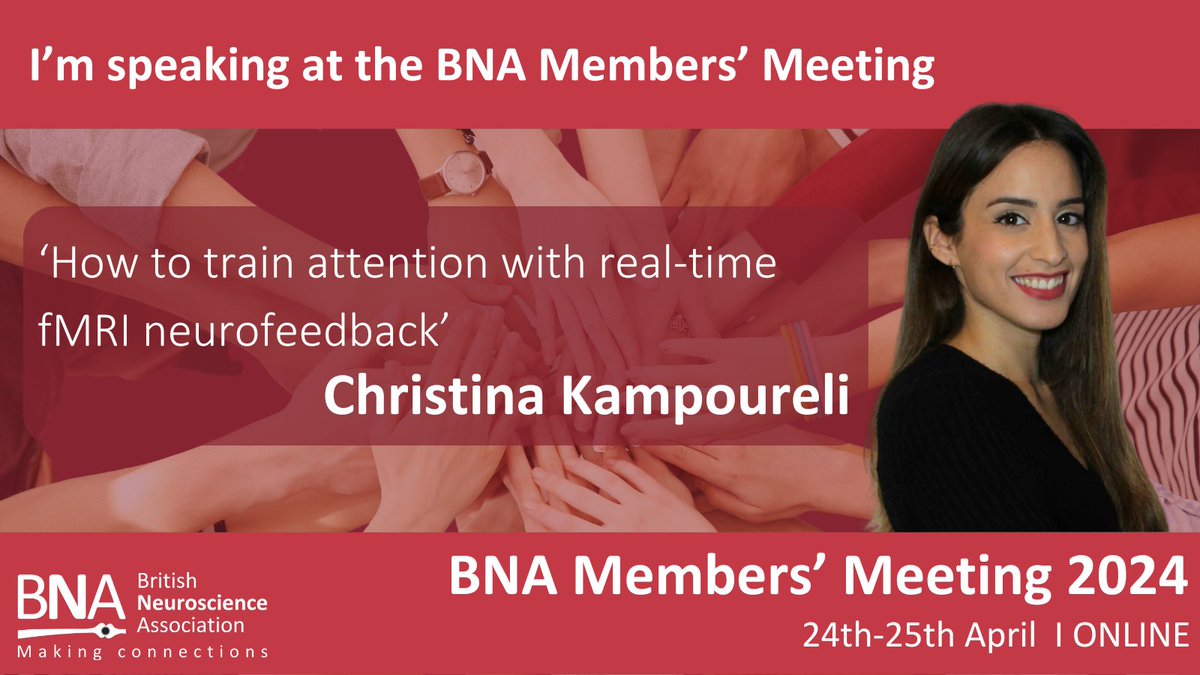
I'm very excited to announce that I will be speaking at the @BritishNeuro Members' Meeting on April 24th!
I will be discussing our adaptation of an attention training paradigm with real-time fMRI, for subsequent implementation in participants with ADHD.🧠
#BNAMembersMeeting
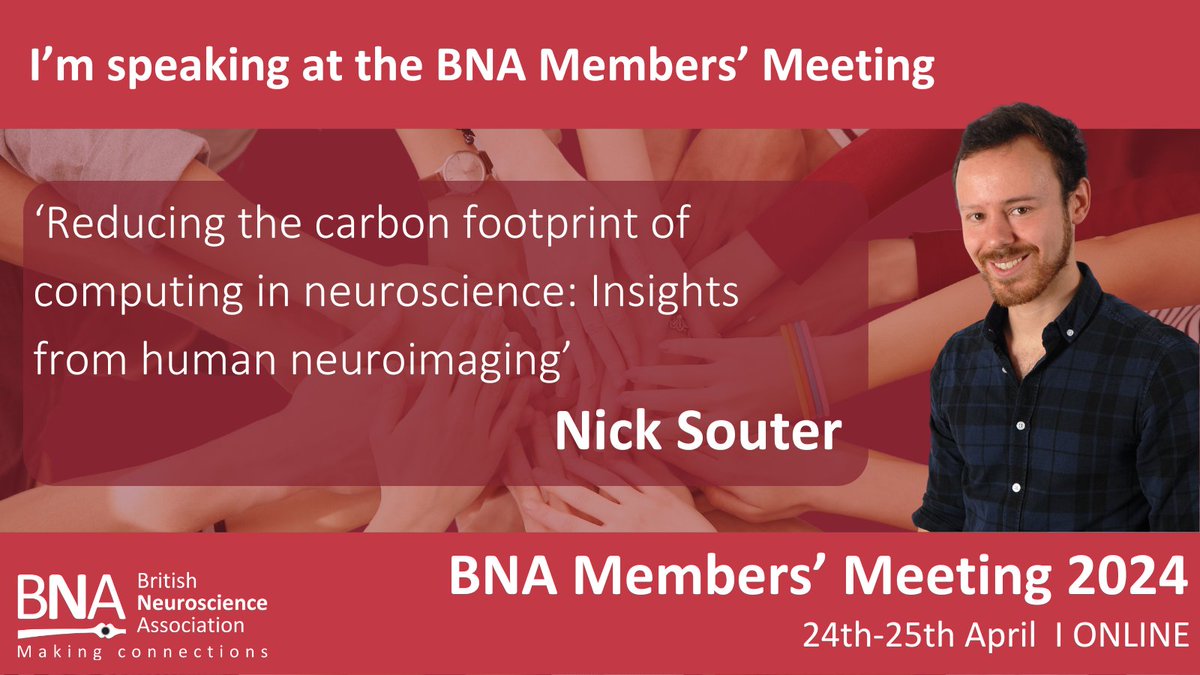
I'll be speaking at the @BritishNeuro Members' Meeting on April 25th!
I'll provide an overview of our recent work on the carbon footprint of neuroscience research computing, and what you can do to reduce it. 🌱🧠🖥️
#BNAMembersMeeting
9. Use existing data
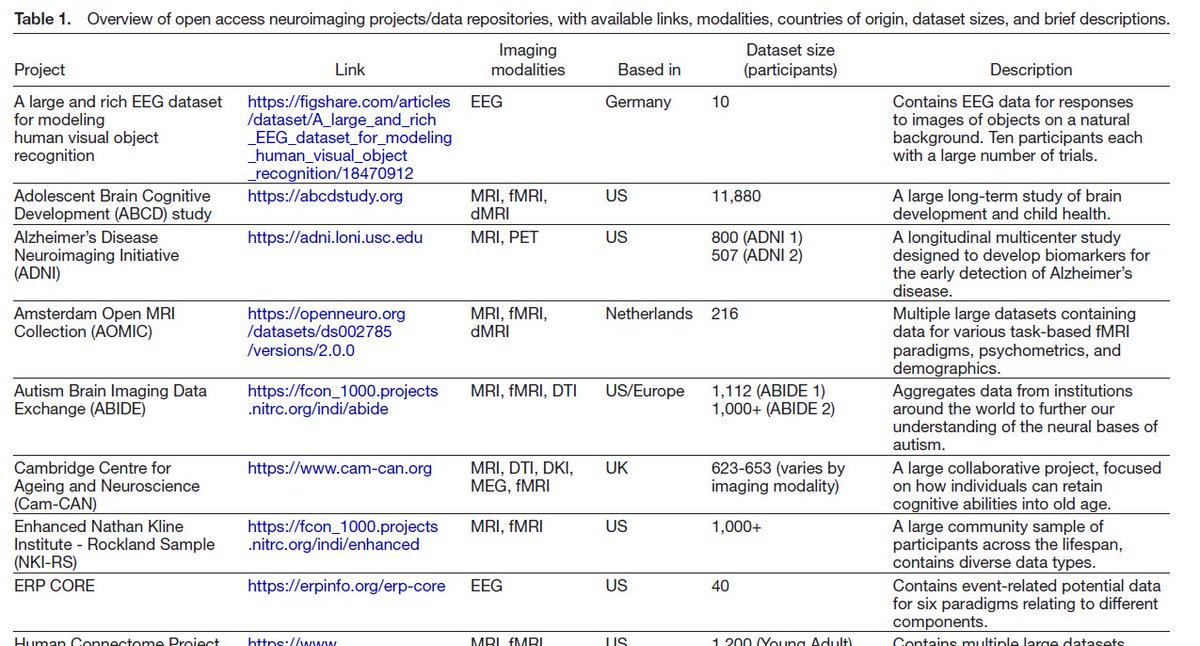
Running analysis on previously collected and preprocessed data is a great way to test hypotheses without using additional energy to preprocess it yourself. We provide a table describing different open access datasets.
10. Talk about greener computing
Discussing the carbon footprint of data processing within your neuroimaging community will make it easier to think seriously about this issue. This will help in embedding sustainable ideas into standard practice 🌱