Very excited to share our new paper in Affective Science in which we outline our vision for the future of research on emotion regulation!
https://t.co/xq6OSiPlKt
Applications are now open for the 2026-2027 Society for Affective Science Student Committee (SASSC)! The deadline has been extended to June 22, 2026, at 11:59 pm (your local time).
We'd love to see you get involved!
Apply here: https://t.co/ShTmEzn3NC
The Cognitive Tools Lab @StanfordPsych (https://t.co/PMjI35ri4j) is recruiting two new research staff members to join in AY 26-27.
Full-Time Lab Manager: https://t.co/Gu1kFqwdYL
IRiSS Predoc Researcher: https://t.co/11Pdikaq2I.
Please share widely in your networks, thank you!!
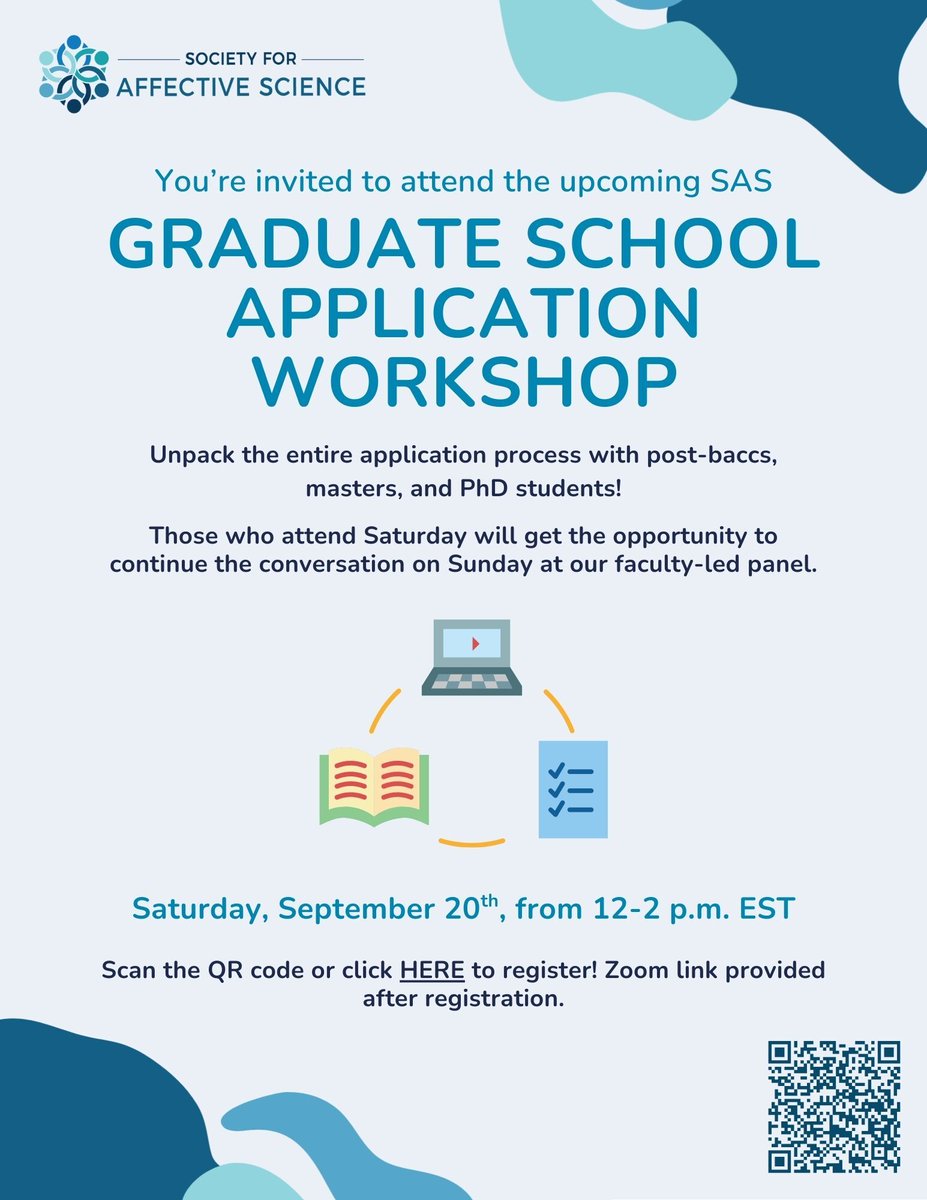
Applying to Psychology doctoral programs this Fall?
If so, we invite you to SASSC’s Annual Application workshop! SIGN UP NOW to learn from current grad students across all psych disciplines on how to approach the entire process!
See you on Saturday 9/20/25 @ 12PM ET!
New preprint with @tobigerstenberg!
Regret isn’t just about what happened—it’s about how we think about what could have happened.
Our model quantifies how strongly people update beliefs about counterfactual outcomes. Stronger updates = more intense regret!
https://t.co/PDNjxcqLDu
🚀 Unlock Research Opportunities
Always wanted to explore emotions, physiology, or esports but lacked resources? The CEPAV dataset is here! Ready-to-use and described in detail in our paper published in @ScientificData . Dive in and start discovering today!
A very overdue announcement of our new paper! We used a unique longitudinal sample from the Harvard Study of Adult Development—spanning over 60 years of data collection!—to see how social networks change across the entire adult lifespan: https://t.co/KU8KrIPjvk
NEW SPECIAL EPISODE OUT! In the latest episode of our Meet the Hosts series, Adani chats with @kate_ptrv! They talk about how Kate joined the podcast, her journey into & through grad school, what affective science is, and where it might go in the future!
https://t.co/AjIXIGGt72
Are you thinking of applying to PhD programs in psychology but unsure about how to start or whether it's a good fit?
Apply by Sep 29th to Stanford Psychology's 8th annual Paths to PhD info-session/workshop to have all of your questions answered!
https://t.co/tex6YrzDzC
HOPE FOR CYNICS is out today!
Its protagonist, Emile Bruneau, was one of my heroes. I hope this book can pass on a tiny fraction of his wisdom along with the science.
Thank you, Emile, and all who supported this labor of love.
https://t.co/m5GurCbI2j
https://t.co/kIxAv8jtY6
🧵1/10 🎮Final Results Alert! We've conducted the largest experimental study on gamers to date, exploring how affect regulation impacts performance. 🤔Why does it matter? We believed that affective responses during stressful, high-stakes performances can undermine or optimize it.
Last year, a paper in Science claimed to have directly measured neural activity (the DIANA response) with line-scan MRI. Replicability is contested. Here, we document the unique noise profile of the acquisition sequence and discuss the future of DIANA. 1/n https://t.co/OGrWFIchUl
Do you want to master the art of rethinking? Check out this fantastic new blog post on @PsychToday by @kate_ptrv! Here, she outlines the Three E's of successful rethinking to help you overcome any challenges you may be facing in daily life.
https://t.co/LikuGkq8xX
Very excited to share our new paper in Affective Science in which we outline our vision for the future of research on emotion regulation!
https://t.co/xq6OSiPlKt
Interested in a PhD or post-bacc research coordinator position in Psychology? Applications close THIS FRIDAY (September 22nd, midnight PT) for our annual Paths to PhD free webinar and 1:1 workshops. See thread below for more details! ⬇️
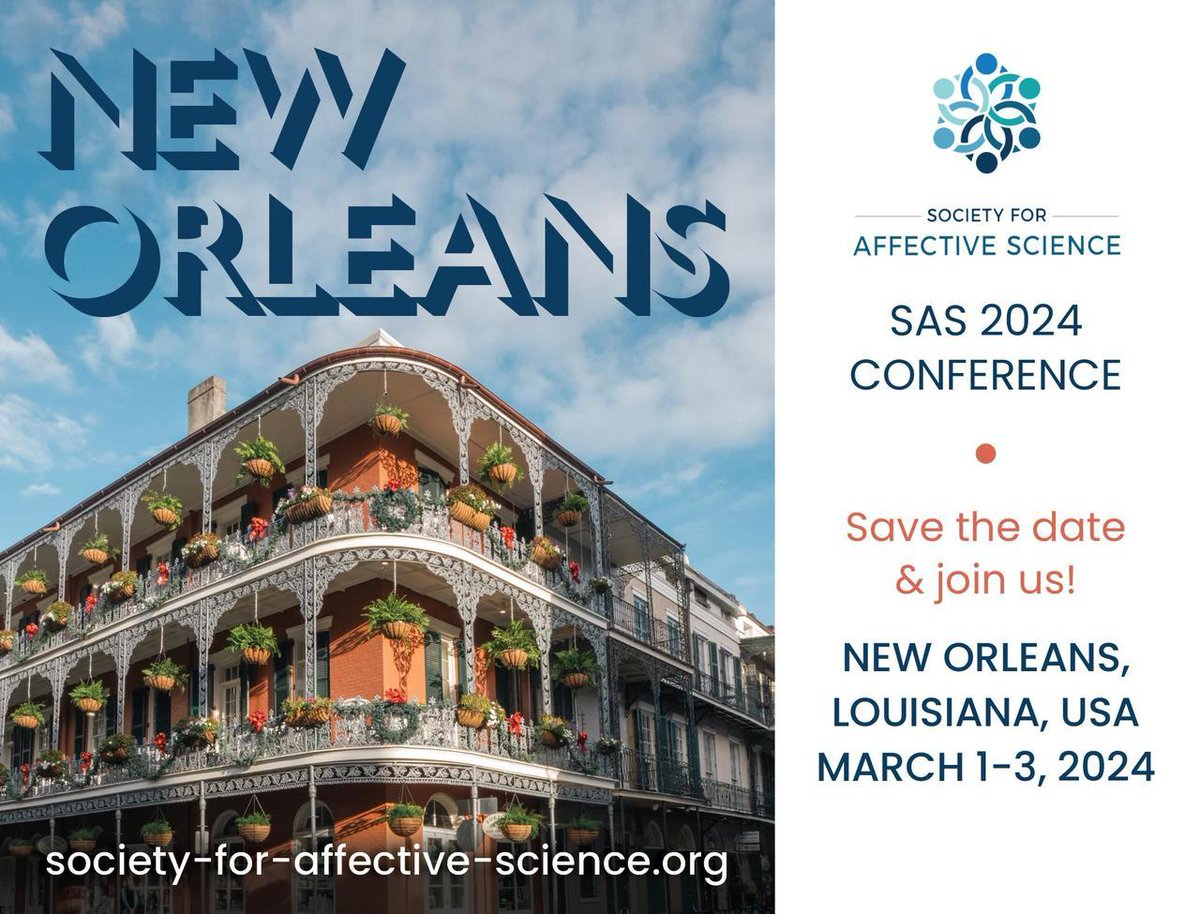
It’s official - we are going to NEW ORLEANS!!
Save the date for #AffectScience2024 from Friday, March 1 to Sunday, March 3, 2024. Abstract submissions will open in late September. See our 2024 SAS Annual conference website for regular updates: https://t.co/Ev5hXsBbPF
We have just published a 6-item short form of the Emotion Regulation Questionnaire (called the ERQ-S). It is a brief measure of cognitive reappraisal and expressive suppression. Authors: @kate_ptrv, Ashish Mehta, and James Gross.
You can download here: https://t.co/sR8ZITTiEk