Os dejo por aquí esta web que os dice el voto útil para frenar a la derecha dependiendo de la provincia en la que vivas:
https://t.co/ozuzFz0cTD
A mi me toca PSOE o Frente Amplio.
¿Entendéis ahora, los que no queríais entenderlo, por qué no se puede desahuciar a una persona de 87 años? ¿O vais a seguir diciendo que era arisca en el ascensor?
🇦🇷 Alguien ha hecho un resumen de 13 minutos con todas las acciones sucias de los argentinos en la final.
Vídeo de jugar al fútbol no hay, eso sí. https://t.co/g8ReZ2cWCO
Lo que España puede aprender desde pequeñitos
El empresario @PabloGrueso resumió la victoria de España sobre Francia con una idea que va mucho más allá del fútbol. Dijo que "Si desde los 9 años supiésemos qué hay que hacer, cómo hay que moverse, en una empresa, o construyendo software, seríamos exactamente igual de buenos en eso".
Y concluyó: "Por eso la cultura, desarrollada durante generaciones, se merienda cualquier iniciativa o plan brillante. La cultura".
La frase podría parecer la típica extrapolación empresarial de una victoria deportiva. Hasta que uno también escucha al exjugador francés Thierry Henry explicar el segundo gol de España.
Cuando todo parece fácil
Thierry Henry analiza la jugada casi pase a pase. El balón circula. Un jugador sube y otro baja. España abre el campo para atraer a Francia. El balón cambia de lado. Baena interrumpe momentáneamente la secuencia. No pasa nada. Se recicla.
Luego Rodri recibe. Podría disparar. No lo hace. Busca a otro compañero. Otra vez y otra vez. Hasta que Francia deja de controlar la situación y España marca.
"Suena sencillo, ¿verdad?", dice Henry. "2-0 en la Semifinal del Mundial. Se limitaron a pasarse el balón alrededor de Francia como si ella no estuviera allí".
El problema es precisamente ese, cuando parece sencillo. Cuando contemplamos a alguien ejecutar una habilidad profundamente interiorizada, confundimos la ausencia de esfuerzo visible con la ausencia de conocimiento.
Vemos pasar el balón, pero no vemos las miles de decisiones espaciales que están tomando once futbolistas simultáneamente.
Dónde colocarse. Cuándo avanzar. Cuándo retroceder. Cuándo devolver el balón atrás... España no estaba improvisando. Estaba recordando.
El jugador que llega ya conoce el lenguaje
Entonces Henry llega al centro de la cuestión: "No importa quién esté. Saben lo que tienen que hacer desde los nueve años".
Y añade algo todavía más importante. Da igual que un jugador dispute su primer, segundo o tercer partido con la selección. Conoce el sistema porque lleva años jugando dentro de una lógica similar.
No significa que todos los clubes españoles practiquen el mismo fútbol ni que exista un manual secreto de la Federación que los niños memoricen en benjamines. La realidad es mucho más compleja.
Significa que durante décadas se ha formado una gramática futbolística compartida.
Cruyff, La Masia, Luis Aragonés, Guardiola, Xavi y la selección campeona entre 2008 y 2012 son la parte visible. Debajo existen miles de entrenadores de cantera, escuelas, clubes modestos, cursos de formación, conversaciones y entrenamientos.
Un entrenador aprende de otro. Un jugador se convierte en técnico. Una idea exitosa es copiada, modificada y transmitida.
Hasta que el conocimiento deja de parecer conocimiento y se convierte en cultura.
Una cultura es conocimiento comprimido
Aquí es donde Pablo Grueso acierta al sacar la jugada del terreno de fútbol.
Imaginemos una empresa en la que cada nuevo trabajador tuviera que aprender desde cero qué significa asumir responsabilidades, documentar procesos, compartir información o pensar a largo plazo.
Podríamos escribir protocolos. Organizar jornadas de formación. Contratar consultores. Crear un PowerPoint de 87 diapositivas titulado, La Nueva cultura corporativa. Pero seguimos teniendo un problema.
Estamos intentando enseñar en tres meses lo que otros ecosistemas llevan treinta años transmitiendo.
Una cultura es, en cierto modo, conocimiento comprimido
El individuo no necesita reconstruir intelectualmente todas las razones que llevaron a una determinada práctica. Entra en un entorno donde ciertas formas de actuar ya son normales. Observa. Imita. Es corregido. Repite.
El joven futbolista español no necesita haber estudiado la teoría completa de la ocupación de espacios para comprender que, si un compañero abandona una zona, alguien debe interpretarlo. Lo ha visto mil veces. Lo ha hecho diez mil.
Por qué fracasan tantos planes brillantes
Esto explica también una frustración recurrente en política, educación y empresa. Creemos que identificar una buena práctica equivale a poseerla.
Viajamos a Finlandia, observamos su sistema educativo y escribimos un informe. Visitamos Silicon Valley, descubrimos cómo trabajan determinadas empresas y organizamos un congreso sobre innovación. Admiramos la industria alemana, la administración de otro país o la capacidad tecnológica de una sociedad.
Después copiamos la superficie: El método. El organigrama. La aplicación. La ley. Pero no podemos importar treinta años de hábitos en un archivo PDF.
Francia veía perfectamente lo que estaba haciendo España. Thierry Henry puede explicarlo después con una claridad extraordinaria. El vídeo de la jugada está disponible para cualquier entrenador del mundo.
Y, sin embargo, verlo no significa saber hacerlo, porque cuando llega la presión real desaparece el manual. Queda lo interiorizado.
El verdadero patrimonio de una sociedad
Quizás por eso medimos tan mal la riqueza de los países. Contamos fábricas, carreteras, universidades, patentes y capital financiero. Todo eso importa.
Pero existe otro patrimonio mucho más difícil de cuantificar, el del conjunto de comportamientos que una sociedad ha conseguido convertir en normales.
Cómo se trabaja. Cómo se transmite un oficio. Cómo se responde a un error. Cómo se coopera. Cómo se premia la excelencia. Cómo se conserva el conocimiento del que estuvo antes.
España ha construido durante décadas una cultura futbolística capaz de conseguir que jugadores distintos interpreten situaciones semejantes mediante un lenguaje compartido.
No apareció ayer. Ayer simplemente la vimos. Durante unos segundos, Francia persiguió un balón mientras once españoles ejecutaban decisiones aprendidas por generaciones de futbolistas y entrenadores.
Por eso quizá Pablo Grueso tenga razón. Los planes brillantes pueden diseñarse en una tarde. Las culturas necesitan décadas.
Y cuando finalmente funcionan, ocurre algo paradójico, hacen parecer fácil aquello que ha costado generaciones aprender.
@ClientesAdeslas Mi madre sufrió un ictus el 13 de abril. Llévanos desde el 23 de abril sin que Adeslas le dé un centro de rehabilitación.
Dan evasivas desde hacer 1,5 meses pese a q el contrato indica q deben proporcionar el centro en 5 días hábiles.
X favor, ayudadme con RT
Alejandro G. Iñárritu visited the Cannes Film Festival for the first time in 2000 for the premiere of his film, "Amores Perros" (2000). One day during the festival, Iñárritu and many other directors were invited for a 7 PM screening of Wong Kar-wai's "In the Mood for Love" (2000).
Iñárritu and his wife Maria booked a taxi at 6:15 PM. But the taxis were overbooked. So Iñárritu, wearing a tuxedo & his wife, wearing a long dress with high heels had no other choice but to run to reach the theater on time, while the temperature was 95°F. The traffic was heavy. While running, Iñárritu took off his jacket, tie & the first 3 buttons of his shirt. His wife took off her shoes.
Their effort wasn't in vain as they reached the theater at 7:01 PM. They were drenched in sweat. But they both had experience of their lives when they watched the movie.
Here is what Iñárritu said of "In the Mood for Love" (2000):
"For a filmmaker, the experience of entering that legendary [Palais Des Festivals] with 2,000 seats is similar to that of a Catholic boy going into the Vatican. [From] all the way in the back, we watched “In the Mood for Love” on a screen 40 times bigger than us.
Maria and I walked in complete silence for almost 10 minutes [afterward]. We suddenly stopped by the sea. Maria hugged me and started crying inconsolably on my shoulder. And I did the same on hers. “In the Mood for Love” had left us speechless and deeply moved. It was that moment that reminded me why, even when it’s so stupidly difficult sometimes, I wanted to become a filmmaker."
("We Miss You, Cannes: 23 Filmmakers Relive Indelible Moments", Manohla Dargis and A.O. Scott, The NY Times, 2020)
P.S: On this day, 26 years ago, "In the Mood for Love" (2000) premiered at the Cannes Film Festival, France.
El caso de Inmaculada, una de las mujeres que murió por la crisis del cribado de cáncer de mama en Andalucía
"El mismo día que un médico privado le comunicaba la aparición del cáncer, llegó una carta del SAS notificando que estaba sana"👇
https://t.co/q1JG9UiYMO
Ella es Iris, una trabajadora que lleva 26 años en la empresa... o llevaba, porque ayer la despidieron. Que, por cierto, es mi madre.
Hasta hace 3 días la subían a redes sociales como imagen de la marca.
La han despedido de forma disciplinaria, alegando que se le olvidaban cartones en el suelo o que dejaba artículos caducados en pasillos cuando se realizaban los inventarios.
Son 26 años dedicados a una empresa para que te despidan mediante una carta donde los motivos que exponen rozan la falta de respeto, la humillación y, cómo no, donde se dicen mentiras.
¿Creéis que ella, siendo tan 'mala trabajadora', hubiera estado en una empresa 26 años o hubiera sido utilizada como imagen de la marca en redes sociales en tantas ocasiones?
Todos sabemos que la intención es ahorrarse el dinero que le deben.
Si tomáis la decisión de despedir a una de vuestras trabajadoras más veteranas, experimentadas y profesionales, por lo menos afrontad las consecuencias y dadle el dinero que le debéis.
Sinvergüenzas. @CarrefourES
Estamos más lejos de 1997 que de 2055 🤯
Si viviste 1997, seguramente te cuesta creerlo: desde entonces han pasado 29 años. Titanic e internet están tan lejos como 2055.
Es un efecto conocido pero sorprendente. Nuestra mente habita, parece, en todos los años que hemos vivido. Se queda anclada, retrasada, en esa ventana de tiempo cada vez mayor.
El pasado es lo que ocurrió antes de que tú llegaras. Si creciste en los 80 y 90, como yo, recordarás que los 70 te parecían lejanos. La película de Robin Hood de Disney era "antigua" y Vietnam era historia. Pero solo habían pasado 20 años entre 1975 y 1995. Ahora el espejismo funciona al revés: sientes que 2006 es actualidad, pero han pasado 20 años.
Acéptalo: para los jóvenes 'Matrix' es antigua y las torres gemelas son historia.
FIN.
What to expect from the us-israel conflict against Iran for the next days?
The first thing is that you understand that assassinating leaders is such a violent measure that it ends up terrorizing and uniting the country. What was the reason to attack even the opponents of the government?
Was the project to colonize like it was Venezuela? Iran is a big player and was underestimated.
The second is not to start conflicts without adequate planning and supplies to carry them out. Israel started this attack with only 1/3 of the defense missiles it had when it attacked Iran in June last year.
The US got into this canoe knowing that not even against the Houthis with a force of 20 ships and aviation had they managed to inhibit missile launches from a tiny territory. Not even in Iraq operating 6 aircraft carriers was such a feat achieved.
Who had the idea to claim that this in a country the size of Iran would be hit in hours or days?
By my calculations, US-ISRAEL and allies possessed at the beginning of this conflict, about 2,500-3,000 interceptors, considering total ground batteries and vls of the fleet.
In just two days Iran fired more than 400 missiles and almost 1,000 drones, certainly consuming from 1,000 to 1,500 interceptors only in 2 days.
The situation is worrying and the biggest problem is that umUS-Israel fell into an attrition war knowing that their interceptor industries do not support such attrition.
President trump not for nothing talks about short conflict, but after agreeing with the assassination of leaders, he created an environment where there is no space for negotiations, mainly because Iran knows exactly where and in which wound to press.
For Iran it doesn't matter if the country will be in rubble, as long as missiles remain to launch against the US-Israel.
And don't expect Iran's missiles to run out. Imagine the stock of someone who has been producing missiles for 40 years.
This coalition created a spiral from which they see no way out and, we are on the third day without any sign of reduction in Iran's launches, quite the contrary we are seeing new missile models and e en the US embassy under fire.
The cost of all this so far to not get anywhere is already in the house of many billions.
I'll repeat here, If Iran today maintains its capabilities as in the last two days, this situation shapes up for us-israel to have to ask for help from gulf countries and in the last case europeans.
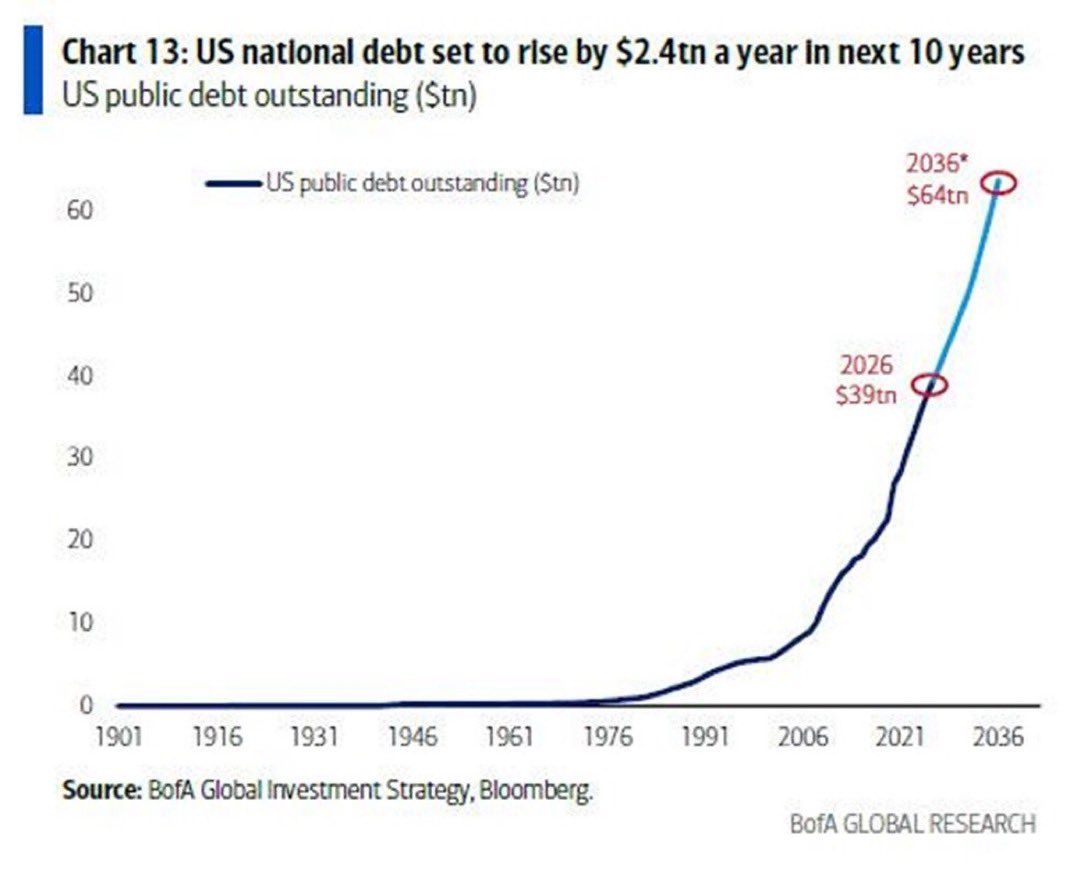
American Debt and the Attack on Iran
The main concern for the American people should not be an attack on Iran, which would be just one of many in recent years, but rather the possibility of it escalating into a real regional war requiring enormous resources and generating even more debt.
Wars have been the primary historical driver of spikes in U.S. public debt, financed mainly through loans, taxes, and currency issuance, which generates inflation and prolonged costs in operations, equipment, veteran care, and interest.
Historically, conflicts such as the Civil War increased debt by 4,000% (from US$ 65 million to US$ 3 billion); World War I raised it from US$ 1 billion to US$ 25 billion; World War II cost US$ 4 trillion adjusted, pushing debt to 106% of GDP in 1946; the Korean War (1950-1953) cost about US$ 675 billion adjusted for 2025 (including direct and long-term costs), with defense spending reaching 13-14% of GDP; and the Vietnam War (1955-1975) totaled approximately US$ 2.27 trillion adjusted for 2025 (including operations, veterans, and other indirect costs), financed by higher taxes and inflation.
In recent wars, such as Iraq, Afghanistan, and the "War on Terror" (2001-2022), total costs reached US$ 8 trillion, financed through debt without tax increases, including US$ 2.3 trillion in direct operations and US$ 2.2 trillion for veterans, with projected interest of US$ 2 trillion by 2030.
What would be the cost of a prolonged conflict with Iran?
What I can say is that, combining operational and reconstruction expenses, each day of war cost Israel $1.8-2.4 billion per day. If we imagine this situation amplified by American involvement, we could estimate something like $4 billion daily, assuming no losses.
In the scenario of it dragging on for 3 months, it would generate a direct cost of $360 billion, not including human and material losses. A conflict with Iran would certainly involve losses, and this number could easily be multiplied several times.
Then someone will say: "But the U.S. and Israel will carry out a surprise and overwhelming attack to prevent Iran from using its missiles."
Impressive, but the issue is that Israel, even with a fantastic ground operation and successive bombings, did not achieve this in the last war, and to complicate matters further, the U.S. did not achieve it in Iraq, when Saddam continued using his Scuds, nor in Yemen area ruled by Houthis, which is tiny.
Why would this happen now with Iran? There's no way to say:
"I'll just go over there and neutralize a missile powerhouse with 90 million inhabitants and be right back."
In this fragile moment, any attack on Iran becomes a war. The regime can no longer pre-arrange mutual and fake attacks because it is fragile. Any attack will turn into a war, and there are no short or cheap wars with a nation of 90 million people, especially one that could drag in an entire region.
No es raro que Peter Thiel diga que sus hijos no tocan pantalla más de 1.5 horas a la semana. Es el estándar entre los multimillonarios del Valle: no des a tus hijos la droga que usas para controlar a los de los demás. Lo horrible esbque este ser tenga hijos: uno de 5 y otro de 7
I was briefed this morning on the U.S. military capture of Venezuelan President Nicolás Maduro and his wife, as well as their planned imprisonment in federal custody here in New York City.
Unilaterally attacking a sovereign nation is an act of war and a violation of federal and international law.
This blatant pursuit of regime change doesn’t just affect those abroad, it directly impacts New Yorkers, including tens of thousands of Venezuelans who call this city home. My focus is their safety and the safety of every New Yorker, and my administration will continue to monitor the situation and issue relevant guidance.