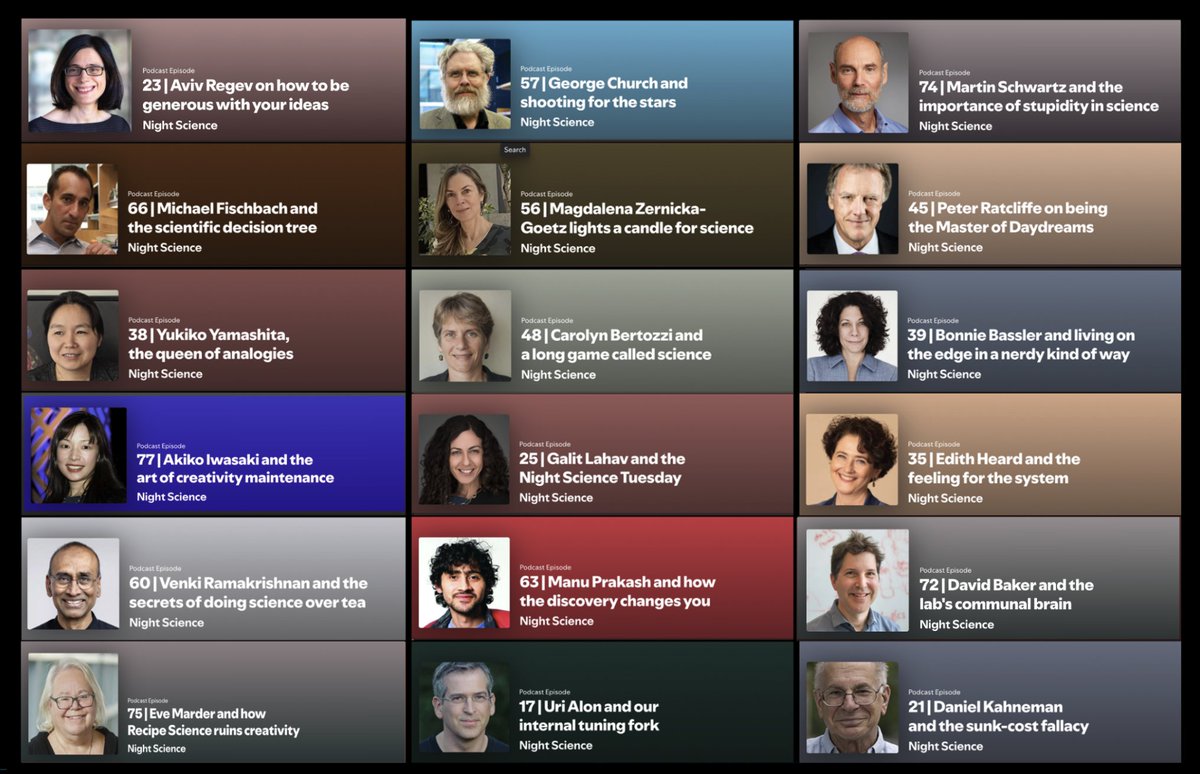
Please subscribe to the Night Science Podcast, where in each episode, two scientists – @ItaiYanai & @MartinJLercher – explore the creative side of their process with a leading colleague.
Apple:https://t.co/EdXjnCsFmC
Spotify:https://t.co/UrTHq9WD6d
Google:https://t.co/Wwc3bwxZih
AI is amazing but the game is still the same: we need to make a discovery and AI won't do that for you..
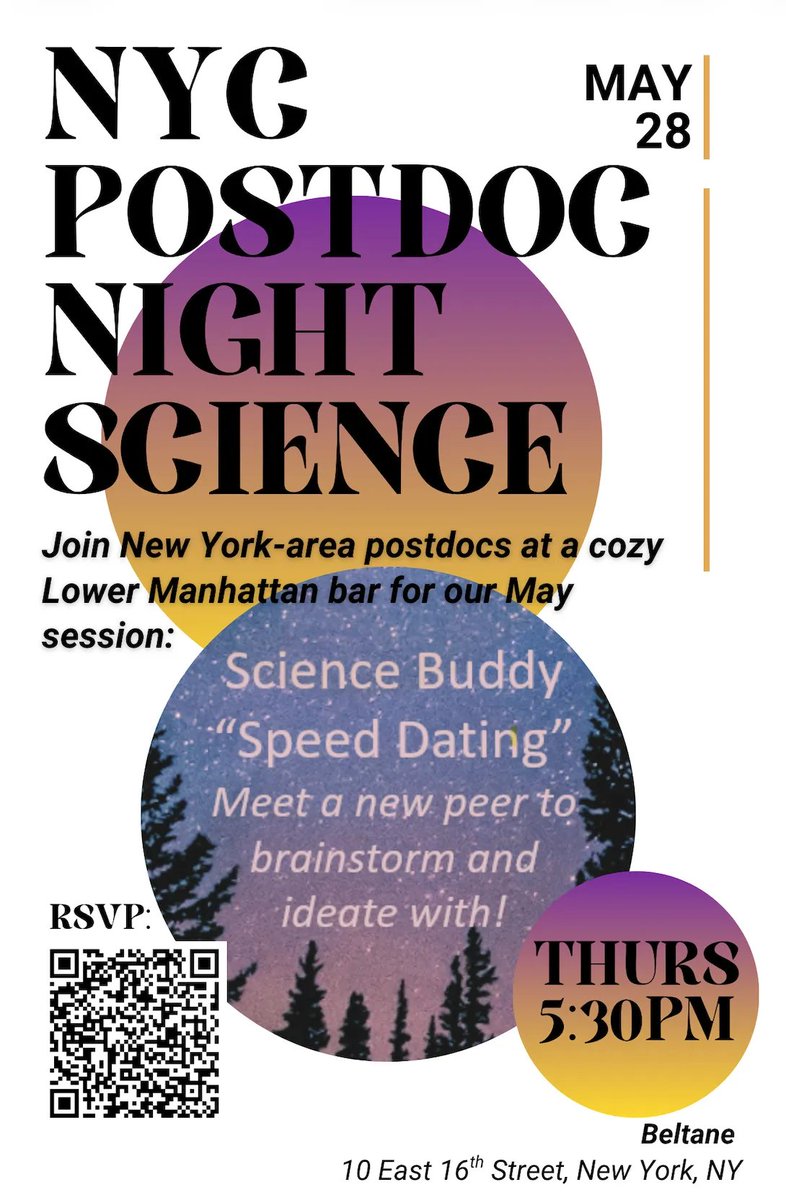
So NYC Postdocs, join us Thursday for this month's Postdoc Night Science event! We're meeting at a bar near Union Square for some science buddy "speed dating".
RSVP: https://t.co/6VSPCFVekc!
NYC Postdocs: join us for this month's Postdoc Night Science event! Having a science buddy is crucial for the creative process. So this time we're meeting at a bar near Union Square for some science buddy "speed dating". RSVP: https://t.co/5Kn067AmhC. I'll be there together with @KelseyRMonson@rmassonix and Jaeseung Hahn!
@danwilliamsphil re: Finding New Connections
This requires a different approach to building/training the system, which IS being pursued in projects like Goog's Co-Scientist.
Listen to discussion about this on @NightSciencePod (which explores Creativity in Science)
https://t.co/BnoEh4cqPY
It's sad to wake up to the news that the legendary Craig Venter died yesterday. Here's Stephen Quake talking about his contributions to the Genomics revolution which didn't actually come from within the Genetics community. Craig came in from Pharmacology and (together with Lander) said that genomes don't have to be perfect; drafts are useful.
https://t.co/q0bD40AzmN
After leading workshops on ‘the creative scientific process’ worldwide for 5 years, last week we led our first ‘train-the-trainer�� event to empower faculty to teach it at their universities. Our goal is for all 9 million scientists exposed to the Night Science creativity tools!
What do you do when you get stuck? You need to pop out into the world of night science, into the world of ideas, where you use abstract thinking. You're going to use every trick you got to find the way forward.
From Nature's new podcast on cultivating creativity in science.. Thank you for featuring Martin and me!
https://t.co/85l9oayLZa
Spotify: https://t.co/ONVRJC1Ti5
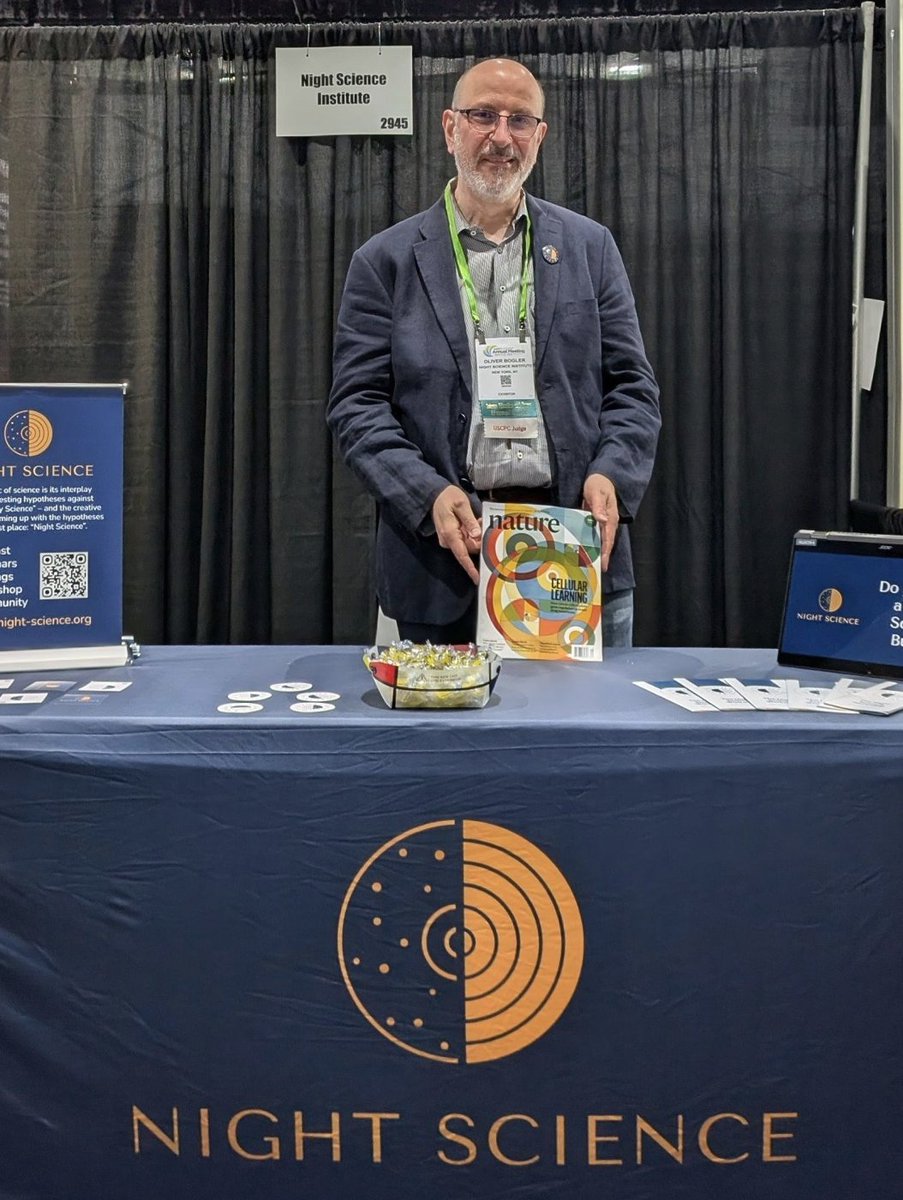
It's amazing that our CEO Oliver Bogler is representing the Night Science Institute at AACR. And can you see which issue of Nature he got a hold of?!
https://t.co/Q5BcXgMnNh
https://t.co/Hzmq3196l5
The new episode of the Night Science Podcast is a must-listen! Art professor Lois Hetland wrote a classic
book about the “studio habits of mind” – observe, reflect, envision, express engage & persist, stretch & explore, craft & connect – and we explore how these relate to scientific process!
🔥 A new episode of the Night Science Podcast dropped! Prof. Lois Hetland, former chair of art education at MCA asks: what do artists and scientists truly share? We talk about the “studio habits of mind”: observe, reflect, envision, express, engage, stretch, craft & connect.
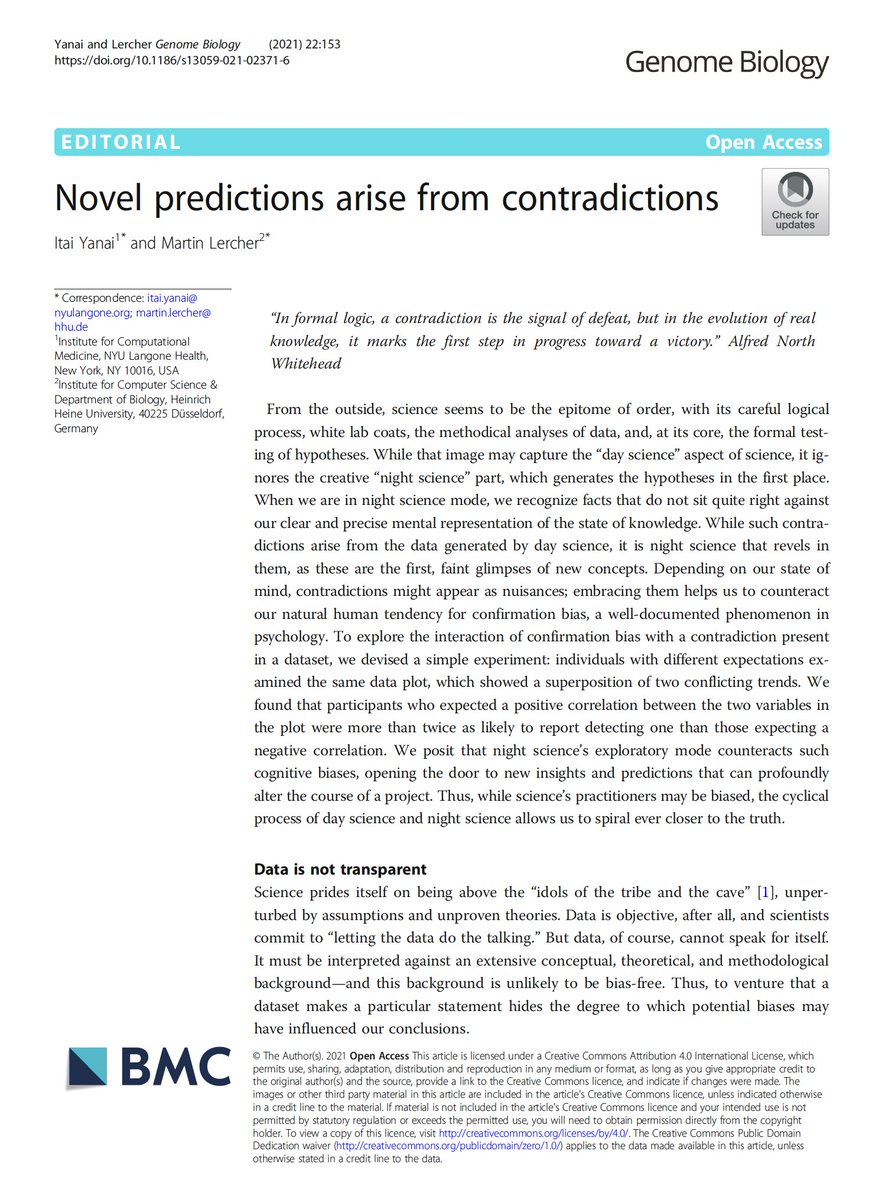
Data is not transparent! And that's why looking without bias is hard to do. We asked undergrads what correlation they expected between wealth & happiness, before showing them a fictitious dataset. Faced with an identical graph, those expecting a positive correlation were much more likely to see one!
(Night Science recap, Day 7)
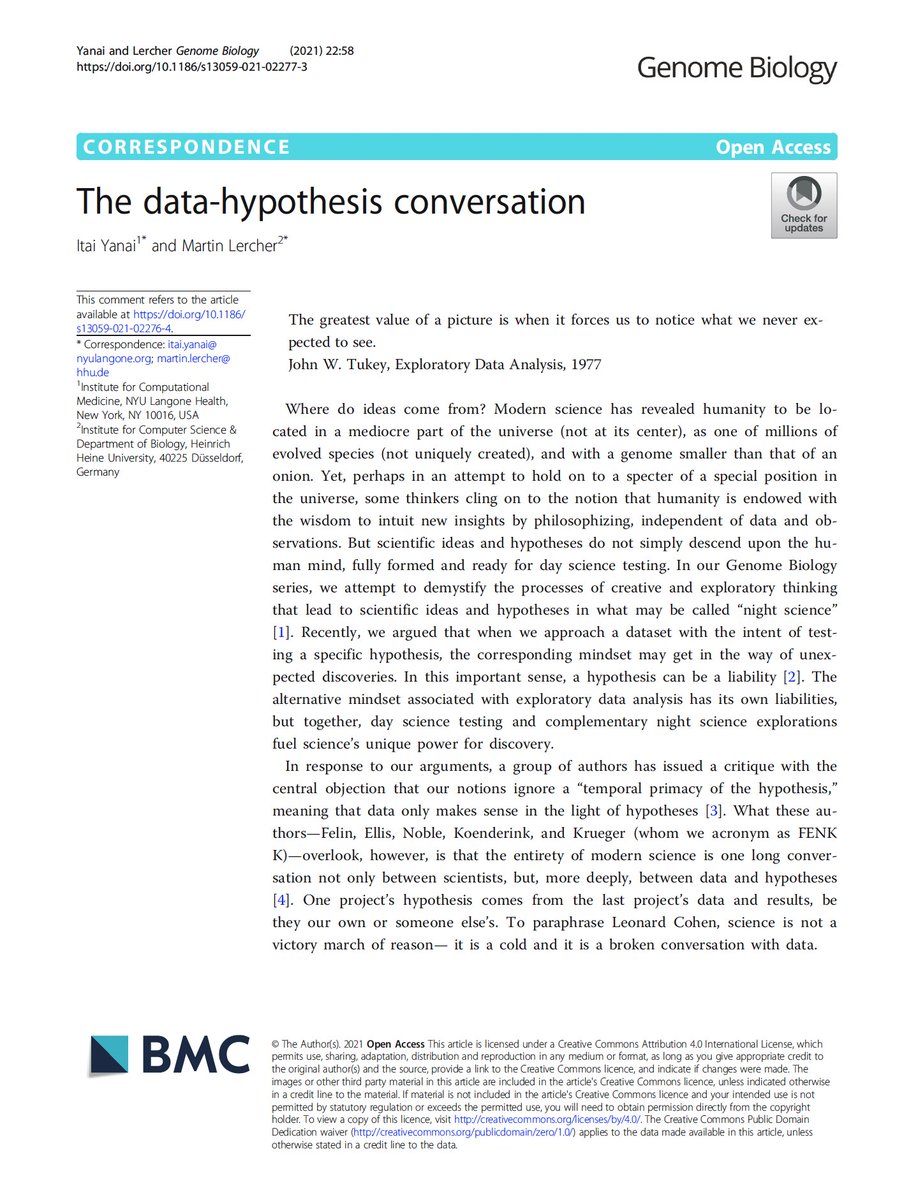
There's a strange myth about science: that theory comes first, and that data cannot show anything new. But anyone who's ever done science knows the truth that there's a long conversation between data & hypotheses. Back & forth.. until the discovery. And if you think about it, it has to be this way!
(Night Science recap, Day 6)
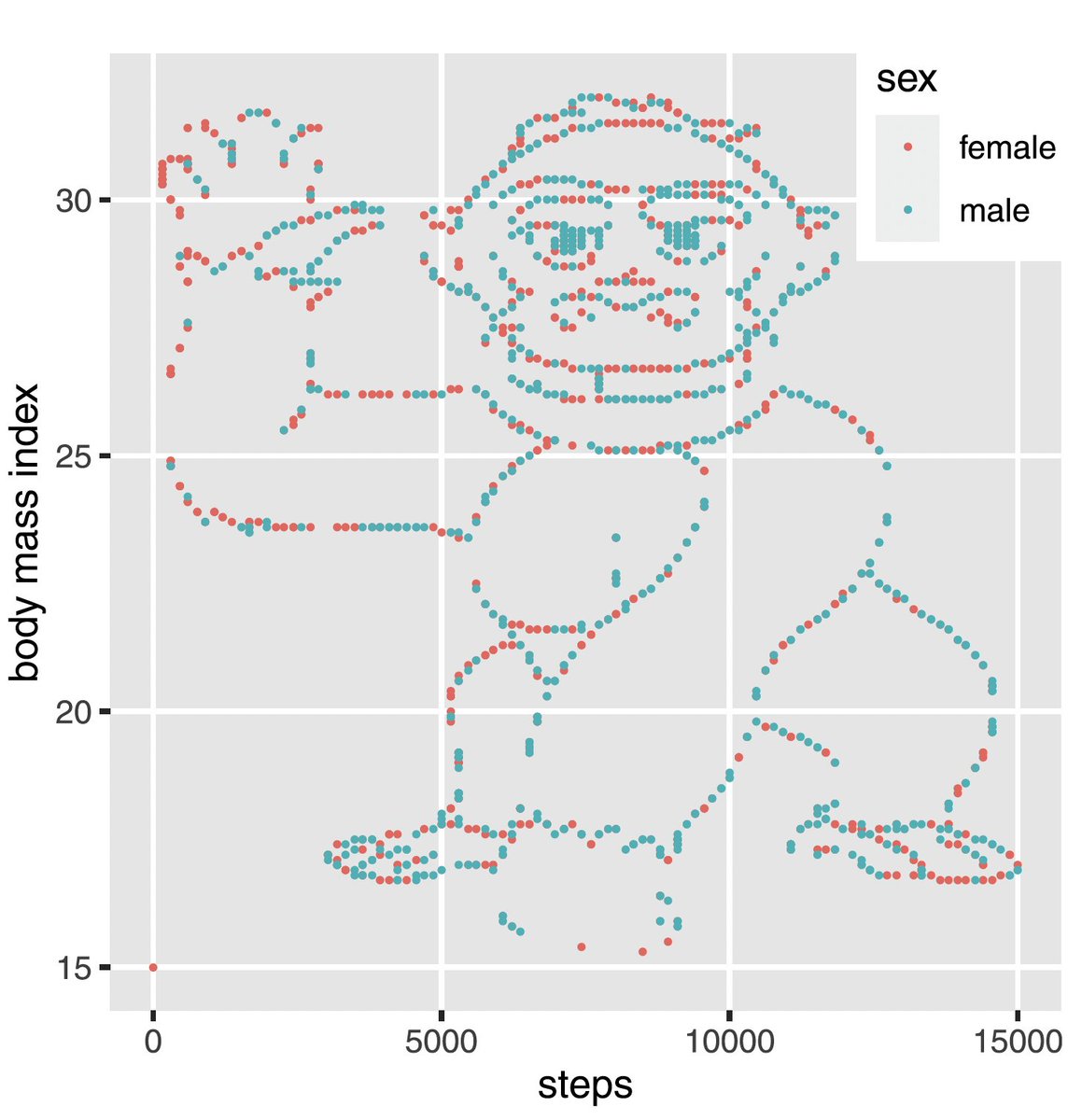
Do you think you would have discovered a gorilla hiding in plain sight in your data? We found that you are 3 times less likely to do so if you have a specific hypothesis in mind. *A hypothesis is a liability*
(Night Science recap, Day 5)
https://t.co/zYvUp2ZOhu
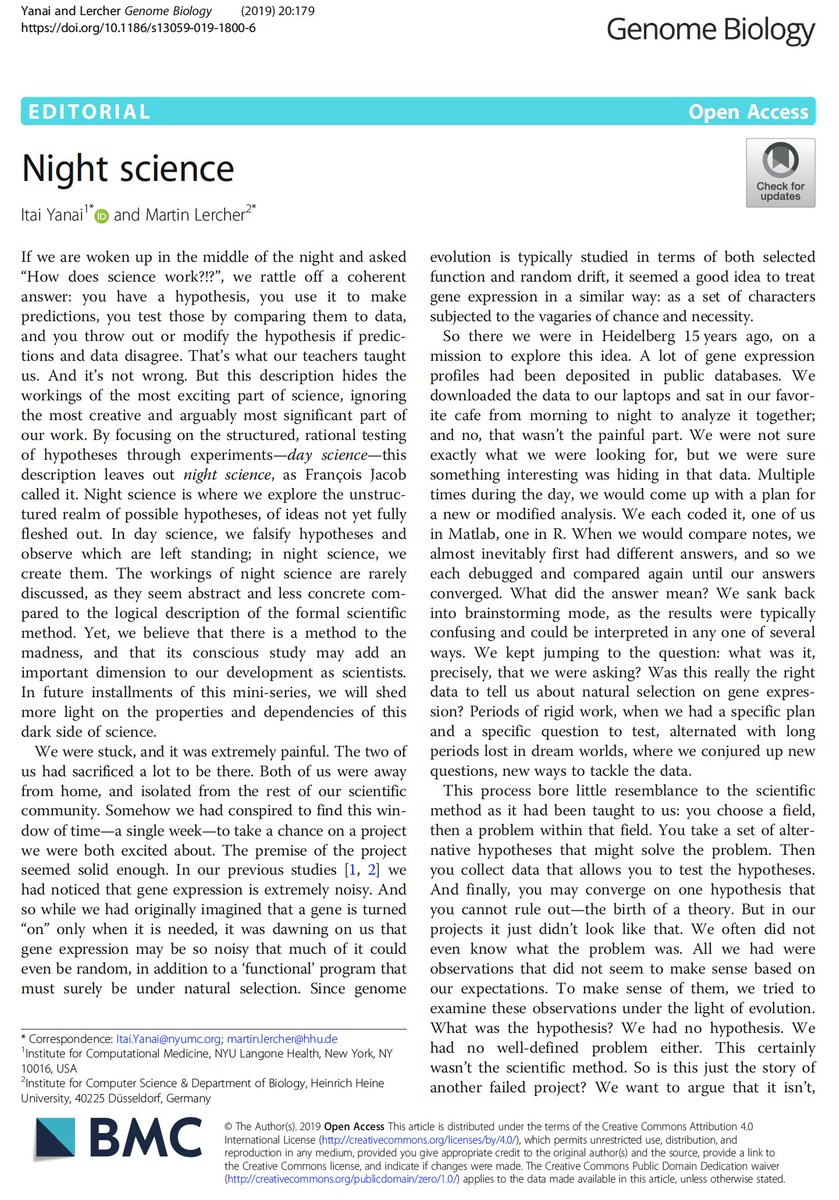
Doing science requires us to speak two very different languages: (1) Day science language is a highly precise and metaphor-free language for designing and executing experiments; while (2) Night science language uses analogies and anthropomorphizing to give us intuitions about the unknowns we explore.
(Night Science recap, Day 4)
https://t.co/U4opH5JGcZ
https://t.co/Pj55mp0yqH
Expert's Dilemma: the more specialized you become, the less open you are to creative solutions from other fields. But the more you explore other fields, the more you risk losing credibility in your home field.
(Night Science recap, Day 3)
Professors: come get trained by us in how to teach the Night Science Workshop on the creative process to your students who are thirsty for this material! Our Train-the-Trainer 1-day program in NYC April 24 is in partnership with the NY Academy of Sciences!https://t.co/9MVrlNhJGg
Here is my talk on how studying viral infections can teach us a lot about the immune system, and how we can use those insights to develop vaccines against viruses. "Night science moments" make science so exciting 🌓 @NightScienceIns@ItaiYanai
https://t.co/dHqlQOoJXP