Most do not know that computers were invented initially to show that mathematics is inconsistent and incomplete. It was a profoundly blackpilling moment for lots of mathematicians.
The story starts with David Hilbert, a German mathematician, who was insanely jazzed about the future of mathematics. In 1900, at the International Congress of Mathematicians in Paris, Hilbert presented a list of 23 unsolved problems in mathematics. But it was his second problem, the formal proof of the consistency of arithmetic, that would drive the invention of the computer as we know it today.
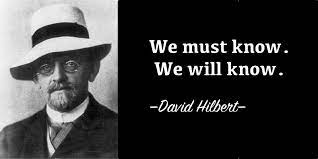
Hilbert was a staunch determinist. He famously declared: "We must know. We will know!" He believed every mathematical question had a definitive answer — it was either provably true or false. He dreamed of a complete and self-contained set of mathematics axioms.
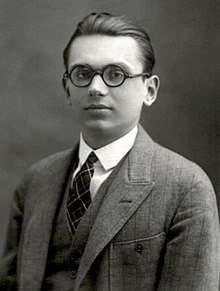
But a young chad named Kurt Gödel would destroy this vision in 1931 with his Incompleteness Theorems. Gödel demonstrated that in any consistent formal system that is powerful enough to describe the arithmetic of the natural numbers, there exist factual statements which cannot be proved within that system — the system's consistency cannot be established by its rules! In essence, Gödel showed that Hilbert's dream of complete and self-consistent mathematics was, paradoxically, mathematically unattainable.
Around the same time in England, Alan Turing banged his head on a related issue. Inspired by Hilbert's 'Entscheidungsproblem' (or "Decision Problem"), which asked if there was a standard method or algorithm to determine the truth or falsehood of any mathematical statement, Turing began to conceptualize the essence of universal computing.
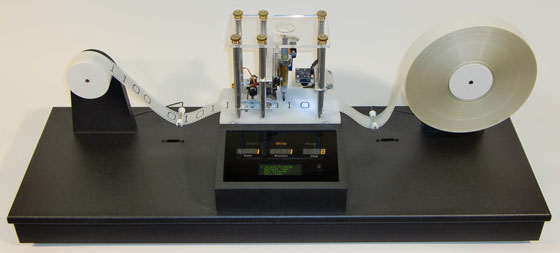
This led to his invention of the 'Turing machine' — a hypothetical machine that could simulate any mathematical computation if it could be described algorithmically. This will be the model for all future computers — it inspired Von Neumann to create the "stored program computer," which is basically what you're reading this on.
In attempting to answer Hilbert's problem, Turing discovered that there are problems that a Turing machine cannot solve. One such problem: given a program, will the machine ever halt? I.e. will it reach the end of the program? It turns out that there is no way to decide if a program halts or runs forever. This idea that there were 'uncomputable' functions resonated with Gödel's findings of undecidability.
As the news of undecidability and incompleteness settled into the consciousness of the 20th-century mathematical world, pure seethe and cope spread across the community. Many felt as if the very ground beneath them had shifted, turning the certainties of a deterministic mathematical universe into mere illusions.
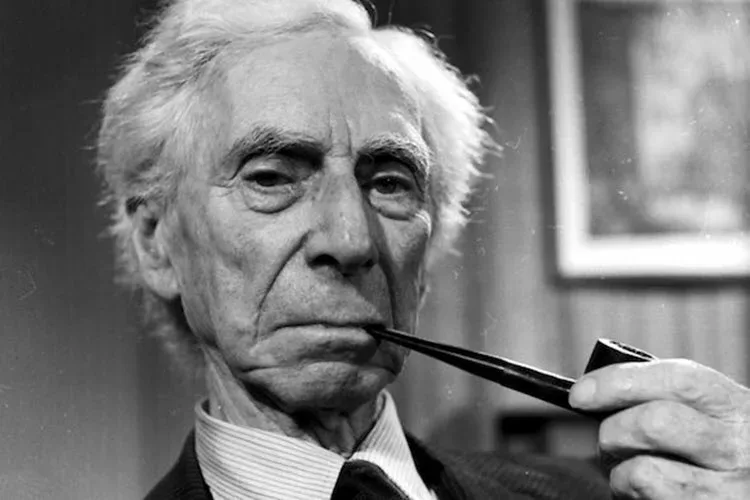
Among those grappling with these revelations was British philosopher and logician Bertrand Russell. Russell, decades earlier, had embarked on an ambitious project titled "Principia Mathematica." His goal was to place the entirety of mathematics on a solid logical foundation, free from contradiction and grounded in a limited set of axioms. He hoped to derive all of mathematics from pure logic.
"I wanted certainty in the kind of way in which people want religious faith. I thought that certainty is more likely to be found in mathematics than elsewhere. But I discovered that many mathematical demonstrations, which my teachers expected me to accept, were full of fallacies, and that, if certainty were indeed discoverable in mathematics, it would be in a new field of mathematics, with more solid foundations than those that had hitherto been thought secure. But as the work proceeded, I was continually reminded of the fable about the elephant and the tortoise. having constructed an elephant upon which the mathematical world could rest, I found the elephant tottering, and proceeded to construct a tortoise to keep the elephant from falling. But the tortoise was no more secure than the elephant, and after some twenty years of very arduous toil, I came to the conclusion that there was nothing more that I could do in the way of making mathematical knowledge indubitable" — Bertrand Russel.
However, the silver lining is you get to post memes on Twitter. Enjoy!
@Cowboy_Bikes You are already too expensive for the quality and repair accessibility you offer. Unfortunately. I hope you will stay healthy with your reduced carbon emissions… So, your August prices would be?
instead of this current gibberish, they should use AI (the algorithm) to make a simultaneous (audio) language translator. At first for major languages.
@ivancosic vala, dokurcise vise s tim “algoritmom”… kao dete s novom igrackom. Svi misle na ono sto se naziva AGI ali valjda lakse da to “trpas” u AI korpu… Kad dodje AGI onda smo ga prilicno naj***li
Hey @TIDAL is not enough that we pay the subscription, but you have to load us with s* we can not even switch off! Live Sessions? Let me listen mu music in peace, please! We choose you initially because you are not Sptf. Now we don’t have a choice? don’t we?
Me and @apple in exhaustion game. Every few days on my iPhone prompt to login because of "very important" iCloud settings shit is going on... Battle of resources, I would say...