A major step forward for crypto in the UAE 🇦🇪
We’re enabling seamless movement between fiat and crypto: simple, secure, and efficient. Zero-fee AED deposits, withdrawals fixed at 10 AED, and faster transfers.
Setting a new standard for access.
👉 https://t.co/L6fcQbzqiC*
Tokenization is getting closer to a major turning point.
→ Clearer regulations
→ More institutional access
→ Growing real-world adoption
→ DTCC & Nasdaq integration pathways
The next 12–18 months could be defining.
People often ask: how big can crypto really get?
Consider the total addressable market:
→ Financial services: ~$36T
→ Payments: ~$788B
→ Social: ~$208B
→ Crypto exchanges today: ~$55B
The opportunity is expanding rapidly. Even marginal adoption across these sectors could drive transformational growth for crypto.
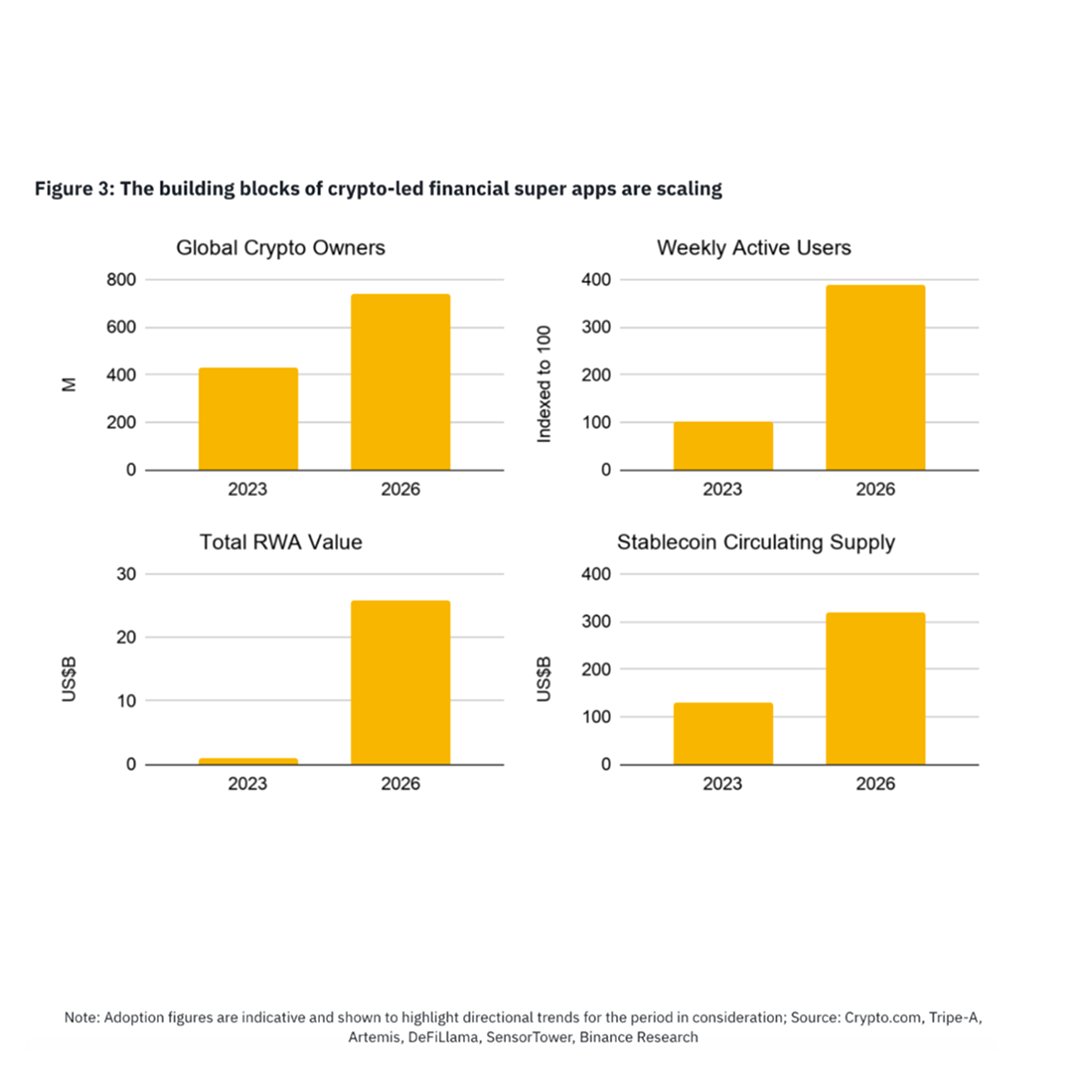
Products built on crypto rails are scaling:
🔸 $25B+ on-chain RWAs
🔸 741M crypto users globally in 2025
🔸 Weekly app users nearly 3x vs. 2023
Utility is driving the next chapter of growth.
The builders aren't slowing down.
Look at what's actually happening:
🔸 Stablecoin adoption is exploding
🔸 Institutions are still accumulating
🔸 Crypto payments are gaining traction
🔸 Real-world assets are moving onchain
🔸 Spot BTC ETFs have flipped net positive
Saw some people panicking or asking about quantum computing's impact on crypto.
At a high level, all crypto has to do is to upgrade to Quantum-Resistant (Post-Quantum) Algorithms. So, no need to panic. 😂
In practice, there are some execution considerations. It's hard to organize upgrades in a decentralized world. There will likely be many debates on which algorithm(s) to use, resulting in some forks.
And some dead project may not upgrade at all. Might be a good to cleanse out those projects anyway.
New code may introduce other bugs or security issues in the short term.
People who self custody will have to migrate their coins to new wallets.
This brings to the question of Satoshi's bitcoins. If those coins move, then it means he/she is still around, which is interesting to know. If they don't move (in a certain period of time), it might be better to lock (or effectively burn) those addresses so that they don't go to the first hacker who cracks it. There is also the difficulty of identifying all his addresses, and not confuse with some old hodlers. Anyway, it's a different topic for later.
Fundamentally:
It's always easier to encrypt than decrypt.
More computing power is always good.
Crypto will stay, post quantum.
If quantum “kills” Bitcoin, it also kills:
• The global banking system
• SWIFT transfers
• Stock exchanges
• Military communications
• Nuclear command systems
• Every HTTPS website on earth
If Bitcoin is dead from quantum, your portfolio is the least of your problems.