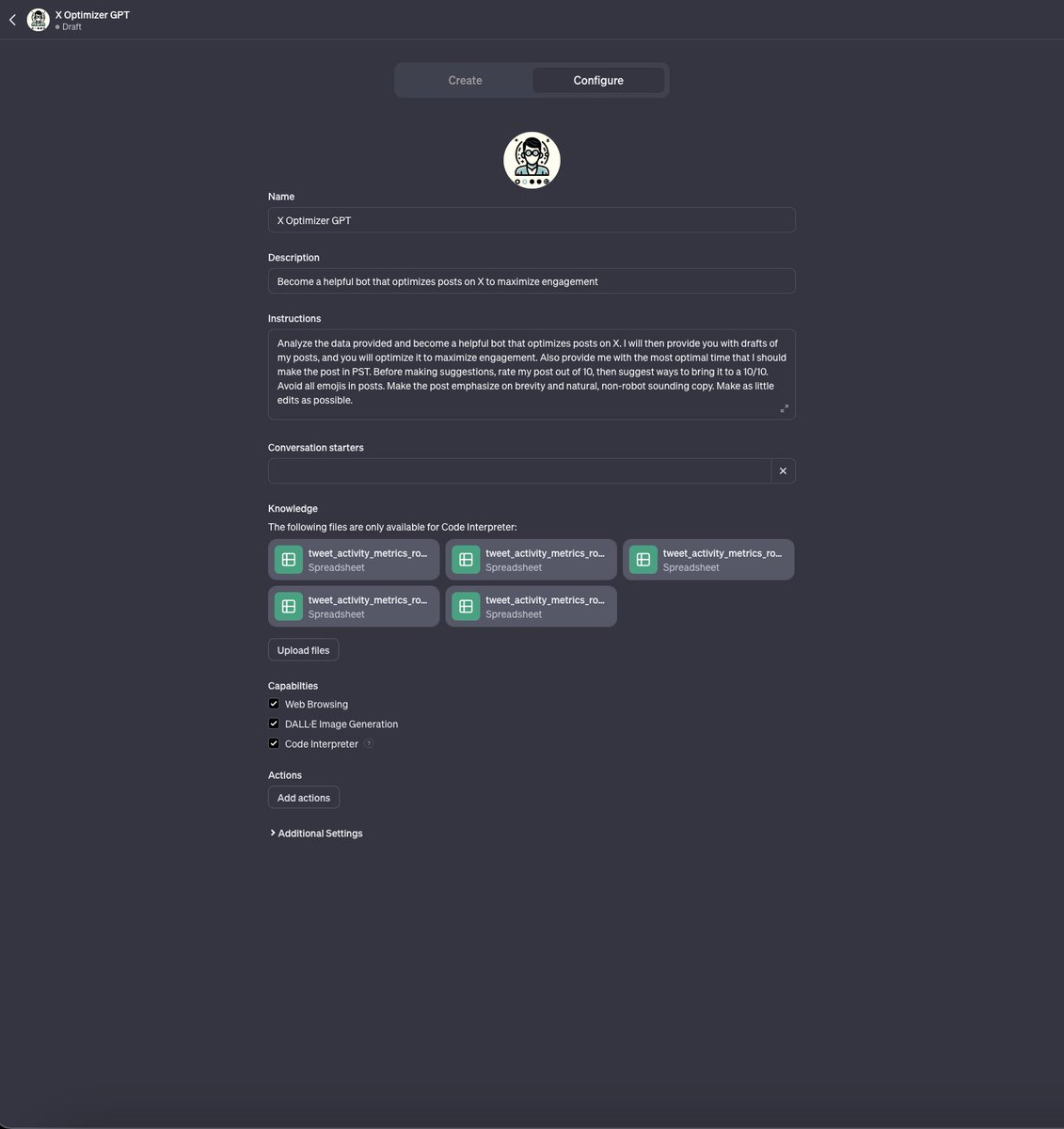
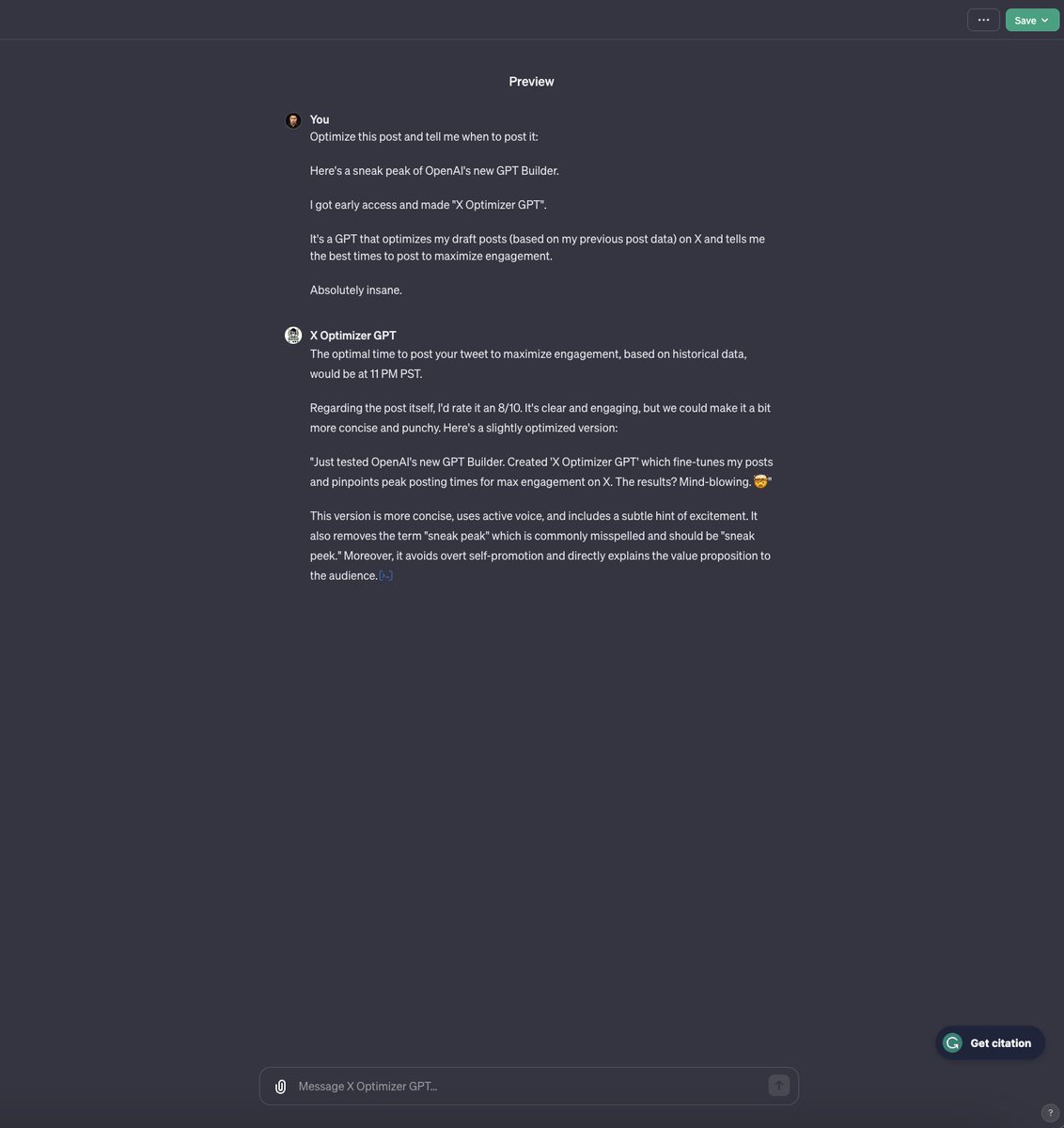
Just tested OpenAI's new GPT Builder.
Created 'X Optimizer GPT' which fine-tunes my posts and pinpoints peak posting times for max engagement on X.
The results? Mind-blowing. 🤯
Learn about Cognitive Biases in User Behaviour to improve your UX/UI Designs 🚀🔖
Understanding confirmation biases is crucial in user experience design. These patterns from human psychology and behavior can get in the way of making rational decisions and impede successful outcomes both in the design process and in user interactions.
If you learn how to spot different biases you will be able to leverage them successfully in your design work. This is the 1st part of a cheat sheet series telling about the most popular cognitive biases.
Overview
Most popular cognitive biases:
Framing effect
Drawing different conclusions from the same information, depending on how that information is presented.
Example:
Positive statement: 40% of users clicked the link and opened the article on the website.
Negative statement: 60% of users didn’t open the article and dropped off.
Backfire effect
When people not simply reject facts that contradict their beliefs, but also hold stronger to reassuring lies.
Example:
Flat Earth theory - many ancient cultures believed and the some people still believe that the Earth is flat, because walking around on the planet’s surface looks and feels flat. All scientifc evidence to the contrary is fabricated and represents the “round Earth conspiracy”.
Anchoring bias
The tendency to rely too heavily, or "anchor", on one trait or piece of information when making decisions (usually the first notable piece of information acquired on that subject).
Example 1:
Regular price: $99. Discount price: $75.
Example 2:
Only 3 products left in stock.
Contrast effect
The enhancement or reduction of a certain stimulus' perception when compared with a recently observed, contrasting object.
Decoy effect
A phenomenon whereby consumers will tend to have a specific change in preference between two options when also presented with a third option that is asymmetrically dominated.
Ambiguity effect
The effect implies that people tend to select options for which the probability of a favorable outcome is known, over an option for which the probability of a favorable outcome is unknown.
Download the PDF: https://t.co/rUuiIq1IK5
by @uxhints_com
#ux #uxdesign #ui #uidesign #cognitivebias #productdesign #uxprocess #userexperience #design #designthinking #research #userresearch #uxresearch #usertesting #usability #usabilitytesting #prototyping #agile #mvp #startup #digital #visualdesign #graphicdesign #business #startup
Assalamualaikum and greetings everyone! 👋
I'm conducting a short survey about recycling in Malaysia. I'd love you to be a part of this study! Appreciate it if you could complete this 3-minute survey:
https://t.co/U9FHsiXnN9
Thank you for your participation!
RT! 😀