Crypto always rewards the ones who show up consistently.
Look at the past weeks:
1. $CARDS — Pokémon TCG platform, 15x in 2 weeks
2. $ASTER — $HYPE on BNB, 10x in a single day, with size
3. $ARENA — Avalanche’s social-fi platform, 2x in 3 days
4. $GLADIUS — first launch on ARENA V2, 60x in just 48 hours
I didn’t catch these because I’m lucky. I caught them because I show up every single day, scanning, reading, and staying ahead of the noise.
That’s the real edge most people miss:
- The more you learn, the more patterns you recognize.
- The more patterns you recognize, the more conviction you build.
- And conviction is what keeps you holding through noise, and volatility, long enough to capture the maximum upside.
Conviction isn’t luck. It’s a skill, forged by knowledge and consistency. Keep showing up, keep learning, and when the next wave comes, you won’t just see it, you’ll grab it.
Parents preached hard work and saving as the golden rules.
But today? Effort echoes empty, savings drown in rising tides.
The new code: Adapt, Evolve.
Old wisdom sparked the fire, now we ignite our own destiny.
Break the script, Unleash yours.
Arena will remain the leading SocialFi platform and launchpad on Avalanche especially with v2 around the corner. More than 2 billion $ARENA are currently staked, which means over 13 million USD locked.
@jasonmdesimone also mentioned that Arena has surpassed 350,000 registered users and sees around 10,000 daily active users. Beyond the active users and the millions paid out to creators, what truly stands out is the energy of a community experimenting with new ways for influence and value to collide.
Bullish on $ARENA.
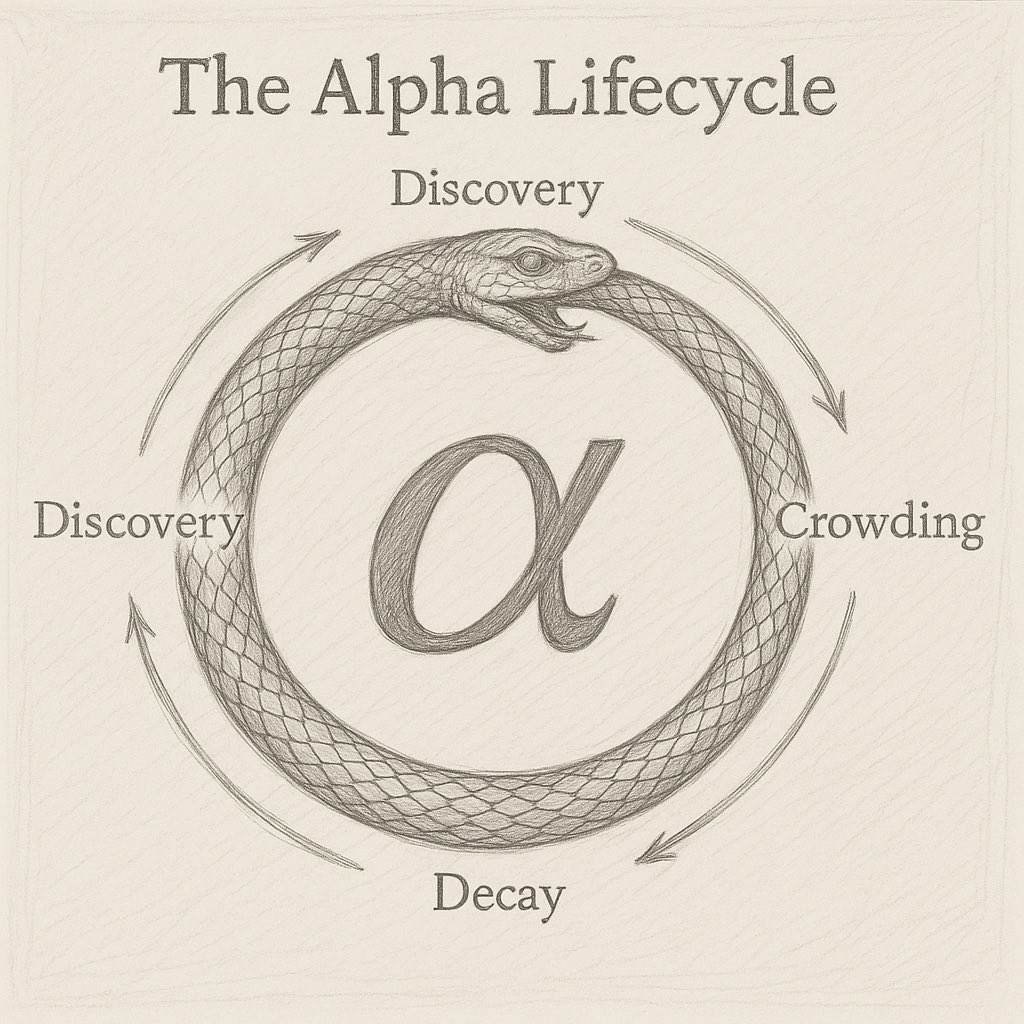
The Alpha Lifecycle: From Discovery to Decay
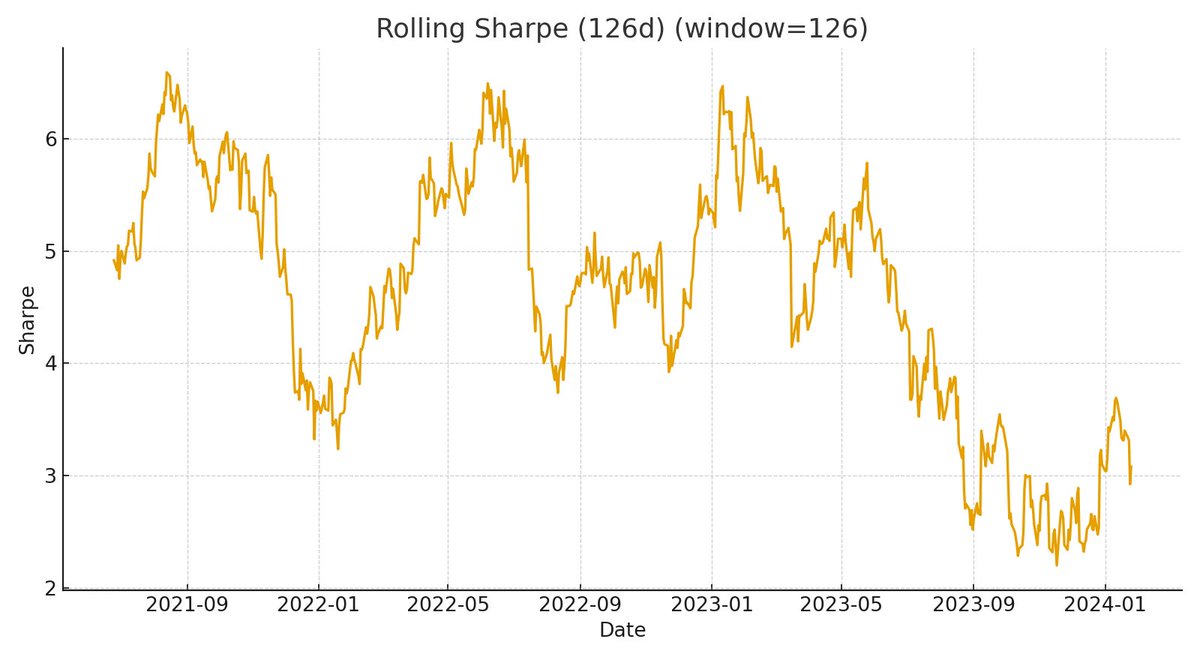
In finance, seeking alpha refers to the pursuit of an edge, a source of returns that exceeds the market average (beta). This pursuit lies at the heart of nearly every trader’s and quant’s work. Yet, alpha is rarely permanent. It requires constant innovation, adaptation, and refinement because once an inefficiency is discovered, the market inevitably learns, adapts, and erodes it.
Discovery: Searching for the Edge
Traders, quants, and investors seek alpha by identifying inefficiencies, patterns, or signals in the market. These may be based on technical indicators (such as MACD crossovers or EMA crossovers), statistical relationships, or fundamental anomalies. At first, only a handful of participants may recognize the edge, giving them a temporary advantage.
Interestingly, many strategies rely on a self-fulfilling prophecy dynamic. When enough traders adopt the same signal, their collective actions influence market behavior. For example, when a short-term EMA crosses above a long-term EMA, many traders interpret this as a buy signal. As enough participants act on it, their collective buying pressure pushes the price higher, reinforcing the indicator’s validity. Without widespread recognition, however, the signal would carry little predictive power, which means one trader alone cannot move the market.
Crowding: The Market Learns
As more traders recognize and adopt a profitable signal, alpha crowding begins. Proprietary trading firms, hedge funds, and retail traders all optimize the same signals by adjusting parameters, refining execution, and competing for the best entries. The more participants pile in, the faster the market adapts. Inefficiencies shrink, and the once reliable edge offers diminishing profits. Liquidity starts chasing the same opportunities, compressing the very returns that originally defined the alpha.
Decay: The Erosion of Returns
Ultimately, every alpha faces decay. This can occur through:
1. Overexploitation: When too many players use the same signal, its predictive power disappears.
2. Market Regime Shifts: Structural changes in liquidity, regulations, or macroeconomic conditions alter the environment in which the alpha once thrived.
3. Overfitting Risks: Traders, in their attempts to preserve performance, may curve-fit signals to historical data, creating fragile strategies that fail out-of-sample.
What began as a reliable source of excess returns eventually produces results indistinguishable from noise or even negative alpha after costs.
Renewal: The Continuous Cycle
The end of one edge marks the beginning of the search for the next. Top hedge funds and professional traders embrace this renewal cycle, constantly innovating to discover new inefficiencies before others do. The alpha lifecycle, from discovery, to crowding, to decay, and back to renewal is the engine that drives modern quantitative finance.
In this sense, alpha is never static. It is a fleeting opportunity, shaped by competition, collective behavior, and market evolution. The challenge for traders is not only to find alpha, but to stay ahead of its inevitable decay.
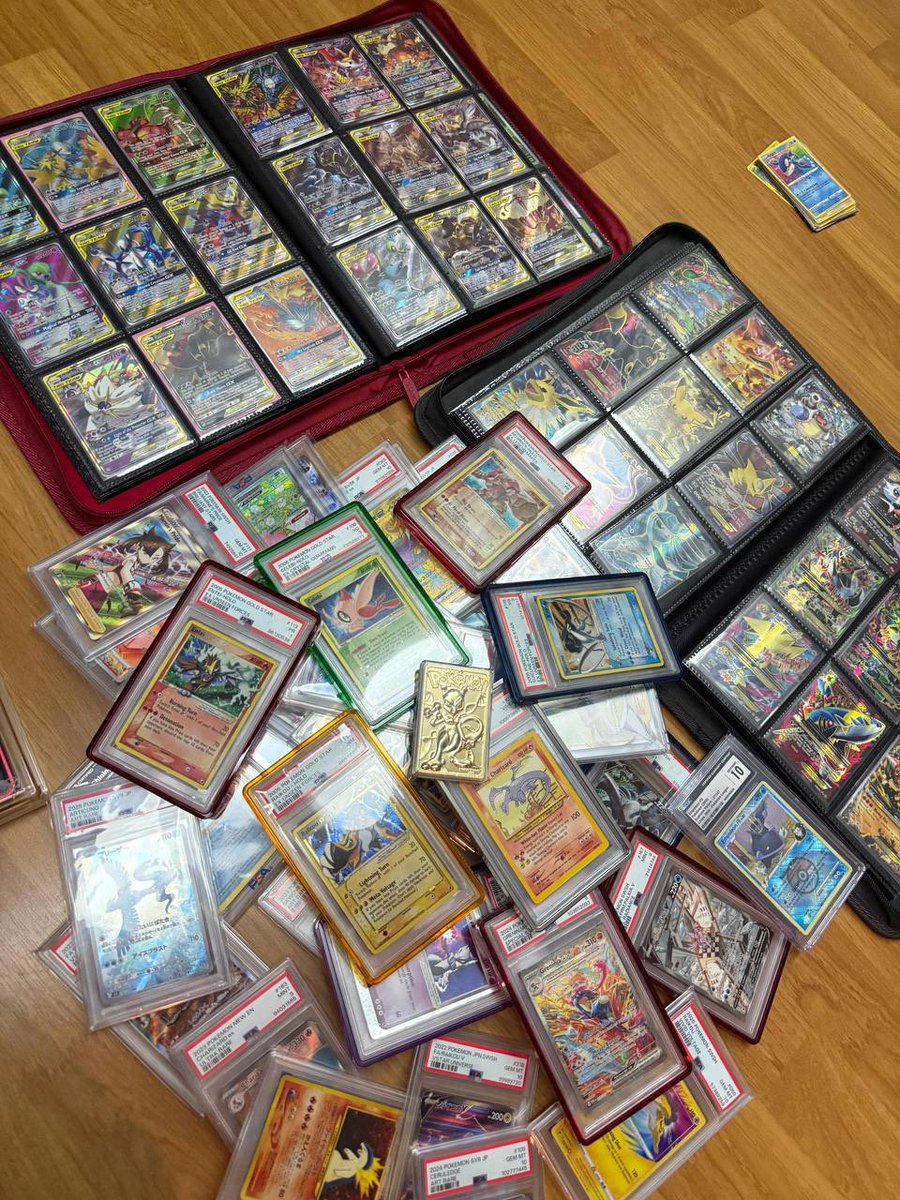
Recently been observing the Pokémon card trend, and as a longtime collector, here’s my take on the current market.
If Pokemon cards keep moving on-chain, prices won’t just rise because of nostalgia, they’ll rise because tokenization fixes the problem of holding the market back: liquidity.
As a collector right now, rare cards are painfully illiquid. You list it, you wait weeks, maybe months, hoping someone bites.
On-chain? That same card becomes a 24/7 instantly tradable asset, vaulted, graded, and provably authentic.
That flips the script: more buyers, faster sales, tighter spreads results in higher prices.
Pokemon cards are truly scarce. Supply is capped. Demand is global. Instant access only accelerates the squeeze.
Look at Collector Crypt ($CARDS). Their vault-backed Pokémon drops often sell out instantly, proving just how little supply there really is.
Now here’s the narrative nobody’s talking about: every new marketplace like Courtyard, Collector Crypt, even Web2 marketplace needs inventory. To launch, they have to buy Pokémon cards.
That creates a loop:
- More marketplaces = more card buying
- More demand = higher prices
- Higher prices = more marketplaces pile in
This is bigger than just trading, it’s a market flywheel powered by scarcity and global access. And when those collide, prices don’t just rise… they boom.
I’ve never been more excited as a collector, because what’s happening right now feels like the start of a whole new era for Pokémon cards.
The rotation into $AVAX feels inevitable once Ethereum reclaims and surpasses its all-time high. Historically, Avax has shown strong correlation with ETH breakouts. In 2021, Avalanche surged from $16 in August to $147 in November, synchronizing with Ethereum’s ATH run.
Beyond the technical setup, several fundamental drivers support a constructive outlook on $AVAX:
1. Real-World Assets (RWA) Traction, the Avalanche ecosystem already supports over $163 million in tokenized RWAs across 24 distinct assets, underscoring growing institutional adoption.
2. Backed Finance allows regulated tokenization of major equities like SPY and COIN under Swiss law, making them usable as collateral and liquidity within DeFi protocols.
3. According to DeFiLlama, Avalanche DeFi activity is expanding, with ~$2.0B in TVL, 1.77M daily transactions, and steady growth in active wallets, evidence of real adoption and consistent usage.
4. Institutional Capital Flowing in SkyBridge Capital is tokenizing $300 million of hedge fund assets on Avalanche, in partnership with Tokeny and Apex Group. This builds on earlier institutional RWA milestones, such as KKR and Republic Note tokenizations.
5. Avalanche’s subnet architecture enables custom, sovereign L1 blockchains to be built within its ecosystem. Projects like Dexalot (running a CLOB exchange) and Beam (Merit Circle’s gaming chain) highlight how Avalanche is attracting app-specific L1 adoption, bringing performance and flexibility that can scale alongside DeFi and RWA use cases.
RWA tokenization will definitely become the future of blockchain utility. Avalanche’s low-cost, high-throughput architecture makes it a natural settlement layer for yield-bearing tokenized assets.
I believe this will attract sustained institutional liquidity and strengthen AVAX’s role in the digital asset economy. Looking forward, I also expect prediction markets and RWA-based financial products to become a dominant use case, blending traditional asset exposure with decentralized infrastructure.
They live in a world of endless scroll,
where the mind is a screen, not a soul.
They repost instead of creating,
and consume moods, never truly feeling.
They are not alive, but ambient sound,
lost in the digital background.
People are waking up , doubting media, leaving the crowd, sensing the glitch. Good start.
But the system’s sneaky. It allows awakening if you stick to its script.
Fake truth tellers mislead.
Shiny truth traps.
You’re tracked, chanting free in their cage.
Real freedom? Smash their script.
There are no standard answers in this world.
The paths laid out by your parents, teachers and friends are a map of their past, not a blueprint for your future.
The truth is, the only right way to live is the one you create by trusting your own heart, your own logic, and your own intuition.
Perhaps you see this tweet not by chance, but as a reminder to start.