I’m really excited to announce something months in the making…announcing a 5 week hackathon with $250K+ in total grants and prizes!!!
Build @ Deerfield (powered by Out-Of-Pocket) is for early stage teams that want a chance at non-dilutive capital, support in building their projects, and a stage to present what they’ve built.
You can see more details below, but in general Deerfield Management and Out-Of-Pocket are joining forces to do something big for the New York healthcare community.
We’re selecting 12-15 teams who want to build for 5 weeks. You’ll get some cash upfront to start, mentors you can access during the build-time, and then a pitch showcase and reception with the broader New York healthcare community on January 20-21, 2027 at Cure in NYC.
Judges at the showcase will pick a few winning teams to receive additional grants and prizes to continue their work. And we’ll have a really good time 🙂
Company idea - Instinct for healthcare workers
It’s clear to me that people are going to try to use personal AI tools like Instinct to do things at their job. Does your job require you to get data from different places and fill out a lot of forms? Or send a lot of follow up emails, etc.? Or make updates to various google docs where you lowkey don’t know where that doc even lives?
This tool is EXTREMELY tempting to use for that because it’s excellent at that.
However this is also a security and privacy nightmare. These personal AI tools can basically mimic you as they go through your systems which is what makes them useful but also very scary. It even knows to switch to a YouTube short for like 10 seconds before switching back to the task at hand.
So any company that touches PHI, or sensitive data has to watch out because these tools will find it and accidentally expose it.
But again because it’s such a useful tool for employees you are 100% going to have people trying to use it for work at healthcare companies. So your options are:
1) Do your best to fight it and put in internal security that watches for actions that look bot-ish. However that takes internal resources and will always be an arms race against the personal AI tools that find workarounds.
2) Create compliant paths/tools that work like personal AI tools but have the appropriate security/privacy guardrails.
There’s probably opportunity in both of these buckets, but I’m more interested in the second. Something like an agent that gets its own login and virtual desktop on the org’s network instead of impersonating with cached passwords, the brain can be a cloud model under a BAA, memory is maintained locally, etc. Each employee’s agent gets different permissions/requirements of human-in-the-loop depending on their role.
There are some seedlings of companies attempting to do this. Contxt is one for regular enterprises, Heidi’s new agent is more healthcare specific. But there is a lot more to be done here and probably could be more specific to different roles in healthcare (e.g. Instinct for clinical research coordinators).
can anyone explain to me why Utah is so much further ahead on the AI doctor sandbox stuff? Why haven't any other states set up their own? What has made Utah unique here?
We've been doing our headhunting service for 2 months and just placed our first person!
We also have some ballers from the Out-Of-Pocket network that have joined our headhunting pool recently:
1. Staff engineer with 10+ years of experience building software and leading engineering teams. Now focused on hands-on healthcare data infrastructure, including member and claims data. Open to engineering, data or technical co-founder roles.
2. Growth marketer with 10+ years of experience building paid acquisition from scratch across healthcare and software. Looking for a Series B/C healthtech company selling to clinicians.
3. Strategy and operations leader with experience in value-based care, consulting and venture building. Open to chief of staff, strategy, partnerships, operations or business co-founder roles.
one mistake i see lots of founders make is not being able to dial to the right level of granularity of what their business does to the audience they're talking to
it's really easy to go into autopilot vision pitch mode say high level things like "we democratize intelligence" or something else you'd dupe a VC with
but many hires + customers want to hear the granular "this is the pain point we currently solve for people and how we do it"
you gotta read the person
Can recycling waste be a new business model?
I think the concept of recycling waste in healthcare is interesting. An enormous amount of stuff that isn’t even used is discarded simply because there are no entities to check if it’s still usable. Currently redistribution is already happening in shady gray markets via facebook/whatsapp groups with no oversight, or through non-profits that are relatively limited.
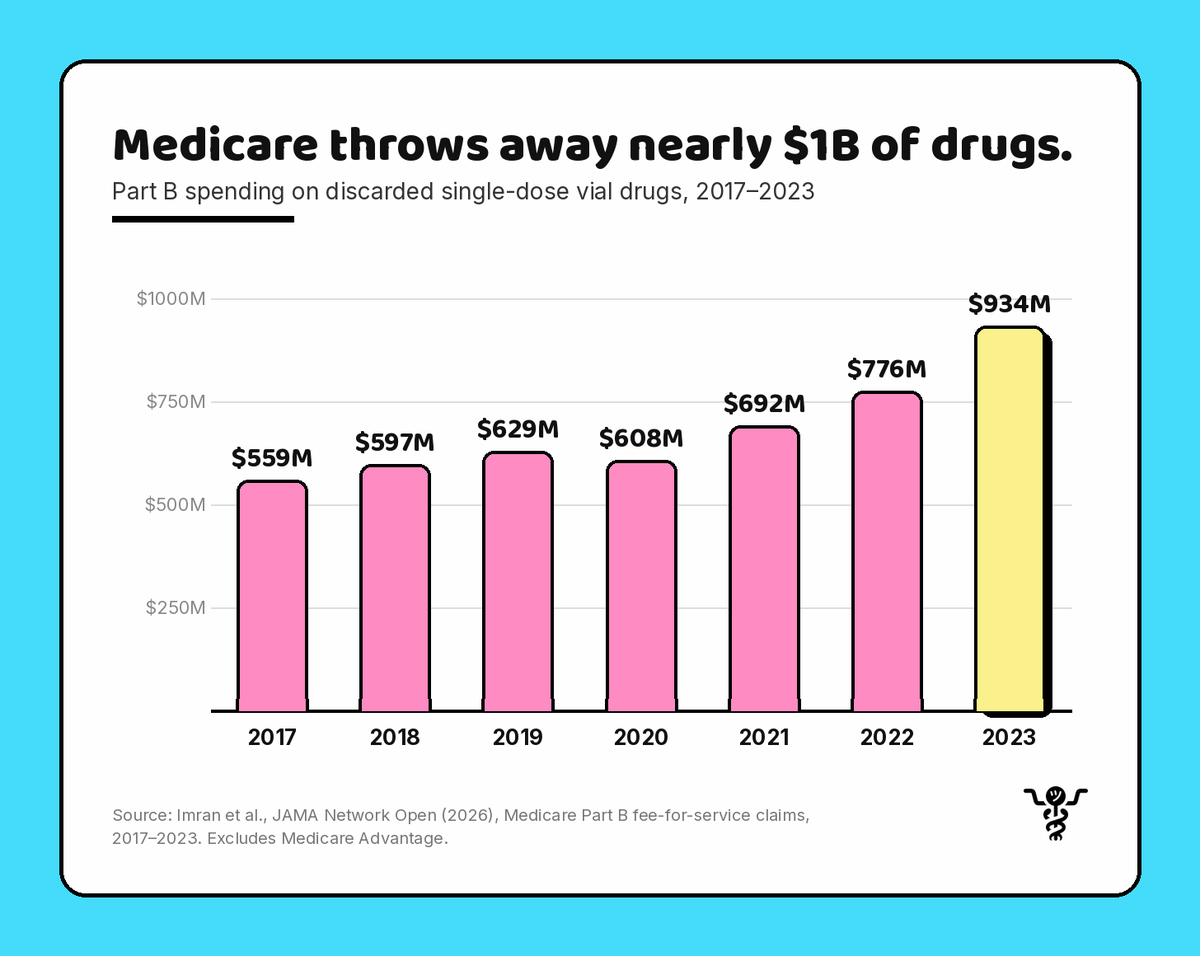
The dollar amount in drugs is non-trivial. Medicare alone is close to $1B in discarded drugs, and since 2023 manufacturers have to refund CMS if more than 10% of units are discarded.
I’m an investor in a company called Medicircle. It takes unused medications from patients that would normally be thrown out, certifies that they’re still good to be used, and then gives it to patients who need it for free. Plans reimburse them for less than they would normally pay for the drug. It’s a win all around! No one is a jerk, which is why they’re not called Medicirclejerk.
There are other areas you see recycling too, like surgery supplies. WestCMR, XS supply, RevMed, Hospital Overstock seem to do this by acquiring excess inventory from hospitals and then re-selling it. There’s also a program for pacemakers called My Heart Your Heart to recondition pacemakers from recently deceased patients.
I wonder if there are more places where this business model can exist. Durable medical equipment is an area that comes to mind. This happens with diabetes supplies - you’ll see these shady ass flyers posted around NY or weird Craigslist ads.
Could a company come in to provide more legit third-party re-certification for other forms of durable medical equipment like CPAP machines, power wheelchairs, unopened diabetes supplies, 60 walkers ordered to a patient in a South Florida fraud ring, etc.? Maybe slightly darker but what about implants?
I think re-certification marketplaces can be brought to more parts of healthcare - re-using materials is much more common in other countries. Maybe there’s an ideological conversation about whether patients should be allowed to try these recertified products at lower cost and absorb the risk themselves.
The gray area of medicine is getting pulled forward - things that are interesting in research but not yet implemented in care guidelines/covered by payers. A few reasons:
1) AI tools make it easier to sift through literature at scale, especially for patients. This is allowing them to find experimental things that have promise.
2) Social media makes it easy for people to disseminate tricks and “hacks” that have worked for their health.
3) Cash pay and concierge healthcare has become more popular, with people willing to pay for interventions even if insurance doesn’t cover it. They don’t want to wait a decade until the guidelines are updated.
But the quality of papers is extremely variable and designed to be read by humans. Can we build better AI scientists to help assess papers, put research in context at point of use, or even rethink what papers are supposed to publish if you assume an agent is reading it?
If you have ideas around this, you should come to our upcoming hackathon with Deerfield Management.
We’re giving cash grants and prizes to teams with ideas on how to build AI scientists, and you’ll get mentorship/support to potentially turn this into a company.
@alexrkonrad@adam__xyz We actually also tried this and the other problem was a lot of people attribute the issues with their lack of successes to literally anything but things that they decided lol (VCs didn’t understand, market shifted, etc)
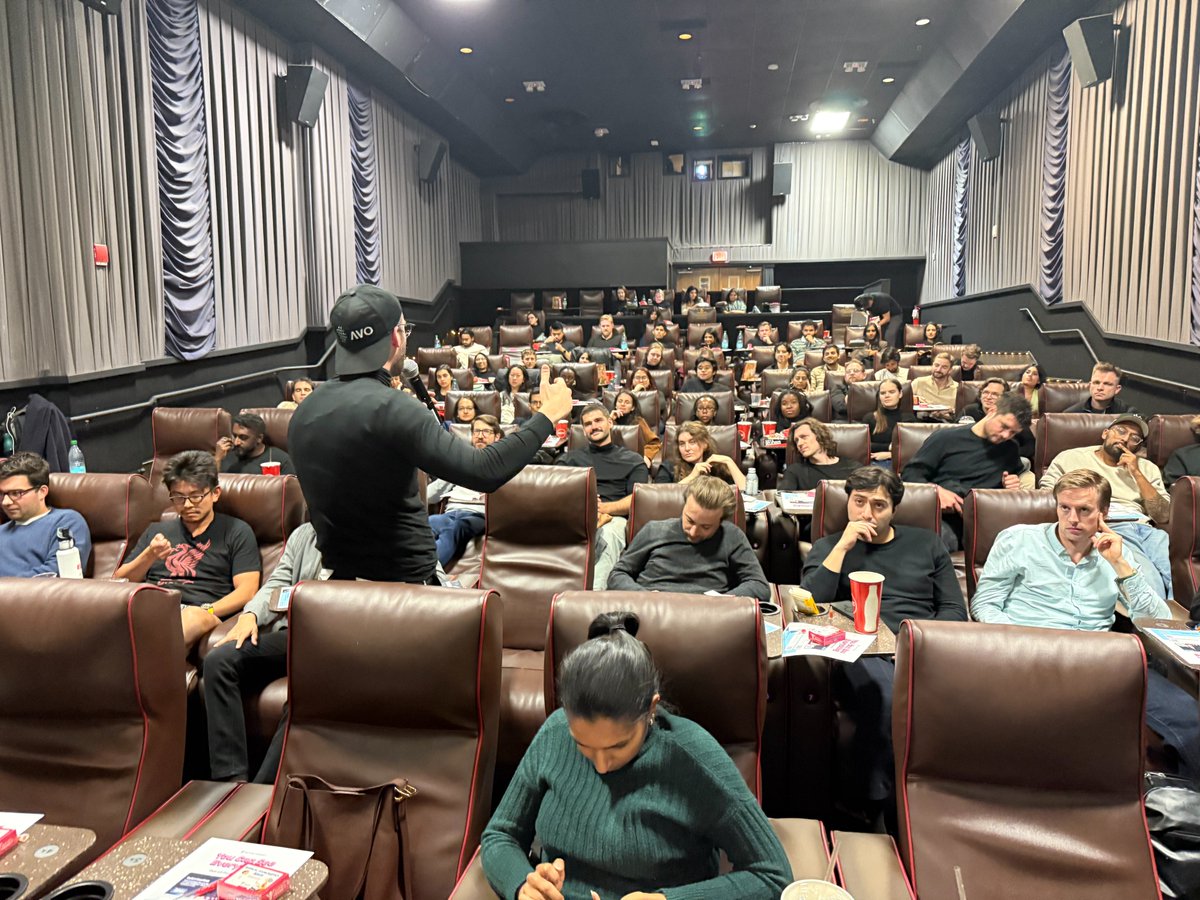
like everyone else - we rented out a theater to watch You Can See Everything in NY last night with 80 other healthcare people
Did a little discussion afterwards about the movie, Theranos, an everything in between.
Actually had some polarizing view points around being a founder, what liability means, whether people had more sympathy for Elizabeth holmes or not, etc.
@fredwilson Do you mind me asking what made you reconsidering posting on twitter? Always learned a lot from your posts here and hope you continue to do so