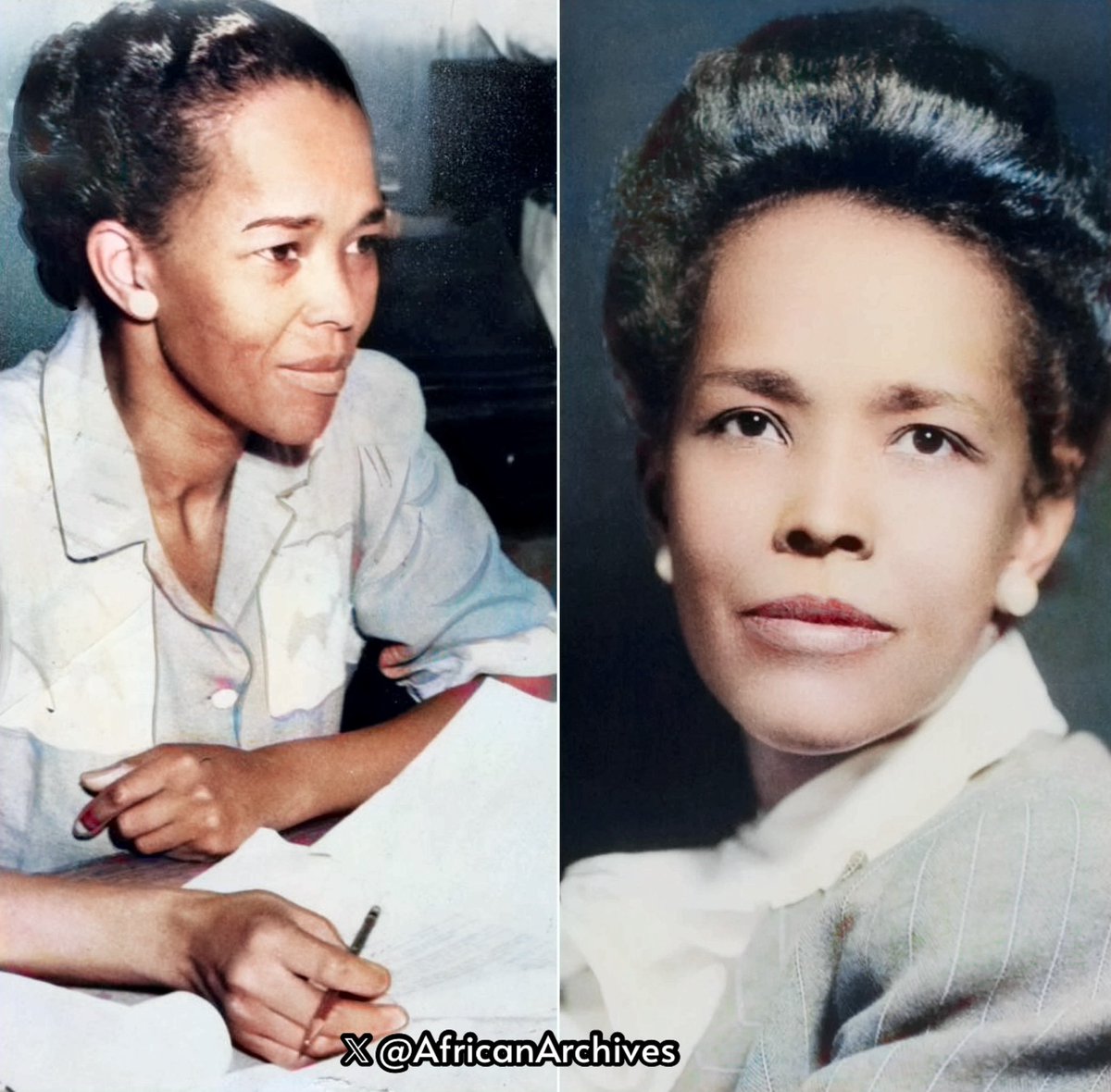
Ella Josephine Baker was born on this day (1903) and died on this day (1986)
Baker was a civil rights and human rights activist. She was a largely behind-the-scenes organizer whose career spanned more than 50 years.
In New York City and the South, she worked alongside some of the most noted civil rights leaders of the 20th century, including W. E. B. Du Bois, Thurgood Marshall, A. Philip Randolph, and Martin Luther King Jr.
Baker also mentored many emerging activists, such as Diane Nash, Stokely Carmichael, Rosa Parks, and Bob Moses, whom she first mentored as leaders in the Student Nonviolent Coordinating Committee (SNCC).
Ella Baker has been called "one of the most important American leaders of the 20th century and perhaps the most influential woman in the civil rights movement." She is known for her critiques not only of racism within American culture, but also of SEXISM WITHIN THE CIVIL RIGHTS MOVEMENT.
LEGACY:
✊🏿In 1967 Baker returned to New York City, where she continued her activism. She later collaborated with Arthur Kinoy and others to form the Mass Party Organizing Committee, a socialist organization.
✊🏿In 1972 she traveled the country in support of the "Free Angela" campaign, demanding the release of activist and writer Angela Davis, who had been arrested in California as a communist. Davis was acquitted after representing herself in court.
✊🏿Baker supported the Puerto Rican independence movement.
✊🏿Baker spoke out against apartheid in South Africa.
✊🏿Baker allied with a number of women's groups, including the Third World Women's Alliance and the Women's International League for Peace and Freedom.
HONORS:
🖤In 1984, Baker received a Candace Award from the National Coalition of 100 Black Women.
🖤Bakers papers are held by the New York Public Library.
🖤In 1994, Baker was inducted into the National Women's Hall of Fame.
🖤In 1996, the Ella Baker Center for Human Rights, a non-profit strategy and action center based in Oakland, California, was founded and named for her.
🖤In 2003, The Ella Jo Baker Intentional Community Cooperative, a 15-unit cohousing community, began living together in a renovated house in Washington, DC.
🖤Ella J. Baker House, a community center which supports at-risk youth in Dorchester, Boston, was created at some point before 2005.
🖤In 2009, Baker was honored on a U.S. postage stamp.
🖤In 2014, the University of California at Santa Barbara established a visiting professorship to honor Baker.
🖋️you can support (donate) or follow our ko-fi page on https://t.co/MkzBtV9AwG (follow the page too for weekly posts roundup)
"The whistle walk" was the walk leading from the kitchen to the House. Enslaved people were required to whistle as they walked as whistling and chewing are incompatible simultaneous actions. It would also ensure that they did not eat or spit in Massa's food on the way to serve.
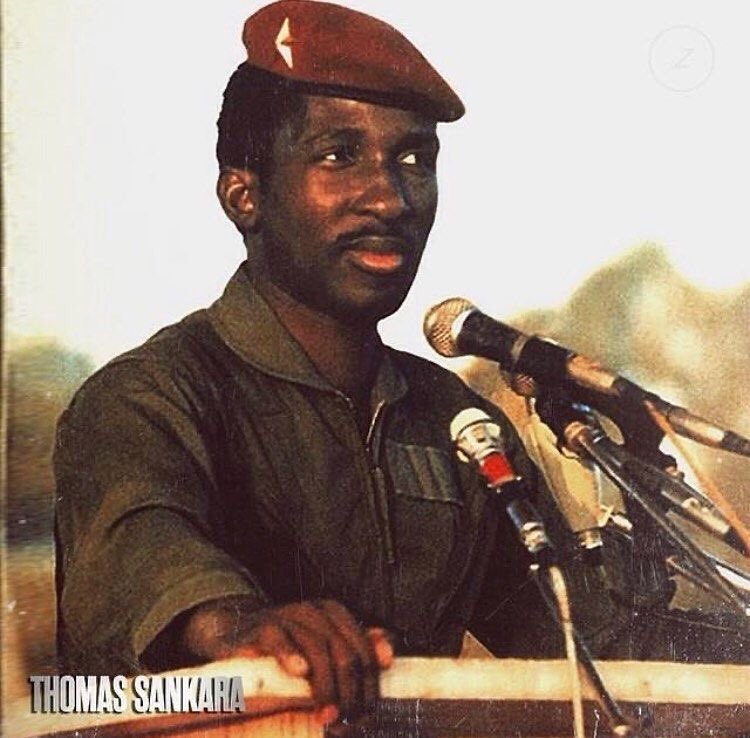
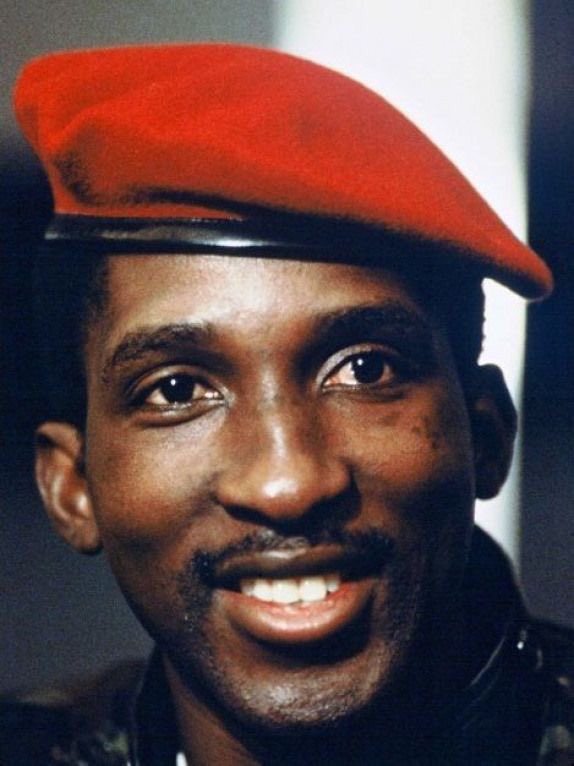
36 years ago today, Thomas Sankara, a revolutionary African leader, was assassinated by French imperialists.
Sankara drove out French imperialism from Burkina Faso and withdrew from IMF and made the country non-reliant on foreign aid.
He was assassinated in a coup led by his close ally, Blaise Compaoré supported by French imperialists
As far as African leadership goes, Thomas Sankara was cut from a different piece of cloth.
Here are some of his accomplishments, ONLY 4 YEARS in power (1983-87):
– He vaccinated 2.5 million children against meningitis, yellow fever and measles in a matter of weeks.
– He initiated a nation-wide literacy campaign, increasing the literacy rate from 13% in 1983 to 73% in 1987.
– He planted over 10 million trees to prevent desertification
– He built roads and a railway to tie the nation together, without foreign aid
– He appointed females to high governmental positions, encouraged them to work, recruited them into the military, and granted pregnancy leave during education.
– He outlawed female genital mutilation, forced marriages and polygamy in support of Women’s rights
– He sold off the government fleet of Mercedes cars and made the Renault 5 (the cheapest car sold in Burkina Faso at that time) the official service car of the ministers.
– He reduced the salaries of all public servants, including his own, and forbade the use of government chauffeurs and 1st class airline tickets.
– He redistributed land from the feudal landlords and gave it directly to the peasants. Wheat production rose in three years from 1700 kg per hectare to 3800 kg per hectare, making the country food self-sufficient.
– He opposed foreign aid, saying that “he who feeds you, controls you.”
– He spoke in forums like the Organization of African Unity against continued neo-colonialist penetration of Africa through Western trade and finance. • He called for a united front of African nations to repudiate their foreign debt. He argued that the poor and exploited did not have an obligation to repay money to the rich and exploiting
– In Ouagadougou, Sankara converted the army’s provisioning store into a state-owned supermarket open to everyone (the first supermarket in the country).
– He forced civil servants to pay one month’s salary to public projects.
– He refused to use the air conditioning in his office on the grounds that such luxury was not available to anyone but a handful of Burkinabes.
– As President, he lowered his salary to $450 a month and limited his possessions to a car, four bikes, three guitars, a fridge and a broken freezer.
– A motorcyclist himself, he formed an all-women motorcycle personal guard.
– He required public servants to wear a traditional tunic, woven from Burkinabe cotton and sewn by Burkinabe craftsmen. (The reason being to rely upon local industry and identity rather than foreign industry and identity)
– When asked why he didn’t want his portrait hung in public places, as was the norm for other African leaders, Sankara replied “There are seven million Thomas Sankaras.”
– An accomplished guitarist, he wrote the new national anthem himself
🖋️if you love our content, please consider supporting our page on https://t.co/MkzBtV9AwG (follow the ko-fi page too for weekly posts roundup)
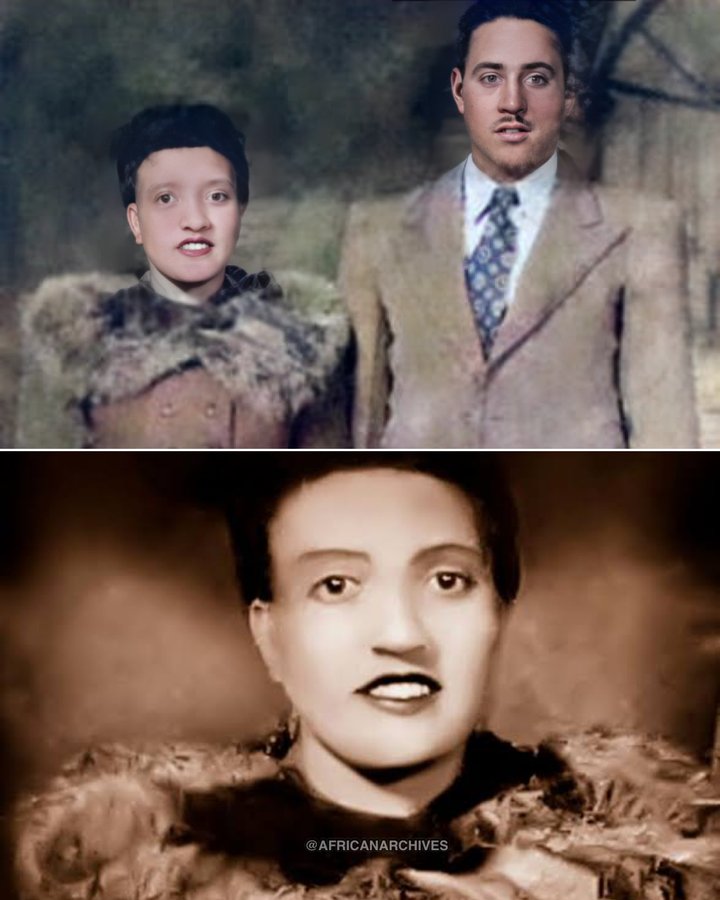
On this day in 1951, Henrietta Lacks died at Johns Hopkins Hospital.
Her cells were taken without her knowledge in 1951 (HeLa Cells) and became one of the most important tools in medicine, vital for developing the polio vaccine, gene mapping, vitro fertilization & more
THREAD
“We’re not Americans, we’re Africans who happen to be in America. We were kidnapped and brought here against our will from Africa. We didn’t land on Plymouth Rock – that rock landed on us.” -Malcolm X
Happy Birthday Malcolm X
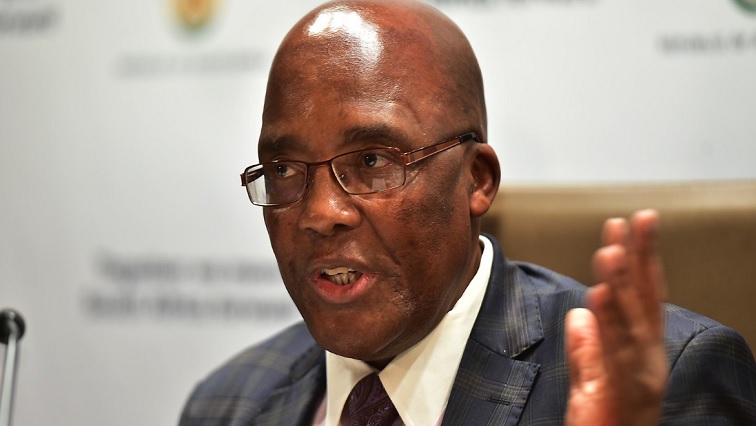
Home Affairs Minister Dr Aaron Motsoaledi believes a US Non-Governmental Organisation is trying to use the legal system to undermine and ambush South Africa’s sovereignty.
https://t.co/bgMYkB1NeU
When someone hurts you, does you wrong, if you keep thinking about it, then you’re letting them continue to hurt you. Don’t give them your power. You have to let it go and give it to God.