I introduced the "Fiscal Shackle" law. If politicians fail to do their job, they will pay the price, not the Argentine people.
LONG LIVE FREEDOM, DAMN IT...!!!
@Jason What they’re doing won’t matter.
AI & robots will actually deliver the free goods & services that those thieves pretend to offer, while actually stealing from others.
Mamdani is a thief and a liar, plain and simple.
To the young generation:
Getting to this point in history was so hard. There were so many sacrifices.
Before thinking you can erase everything and start again, do one thing.
Even as a spiritual quest. If you are so sure of yourself, it shouldn’t disturb you that much.
Just try to imagine all the effort that was put into this world, just to make it barely work.
If you do it seriously, you will be crushed.
If not, you must be one in a billion. But that is not very probable.
This world deserves your respect, and your effort. You should participate in this great adventure that we call civilization.
If legislators always vote with the President, we have a king.
If legislators always vote with the prevailing wind, we have mob rule.
If legislators always vote with the Constitution, we have a Republic.
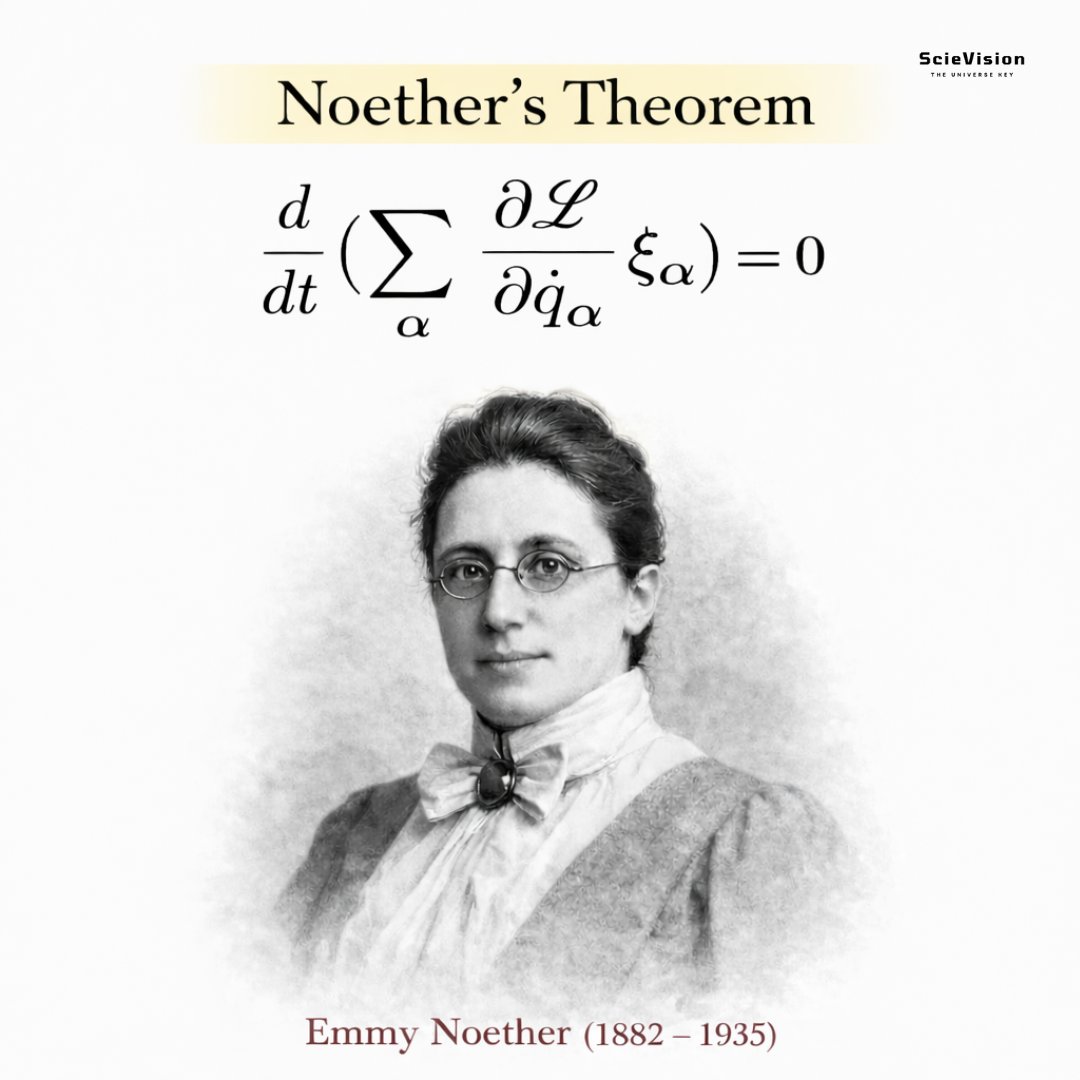
Noether’s Theorem ✍️
This equation reveals that every continuous symmetry in nature, a change you can make to a system without affecting its physical laws, brings about a conservation law. In simple terms, if the universe does not react to a certain change in perspective, it must keep a related physical quantity constant. For example, since the laws of physics remain unchanged no matter when you are (Time Symmetry), energy is conserved. Since the laws are the same regardless of where you are (Space Symmetry), momentum is conserved. Because they stay the same regardless of which way you face (Rotation Symmetry), angular momentum is conserved. This insight shifted our view of the universe. We no longer see conservation as just a series of lucky observations, but as a necessary outcome of the symmetry of space and time.
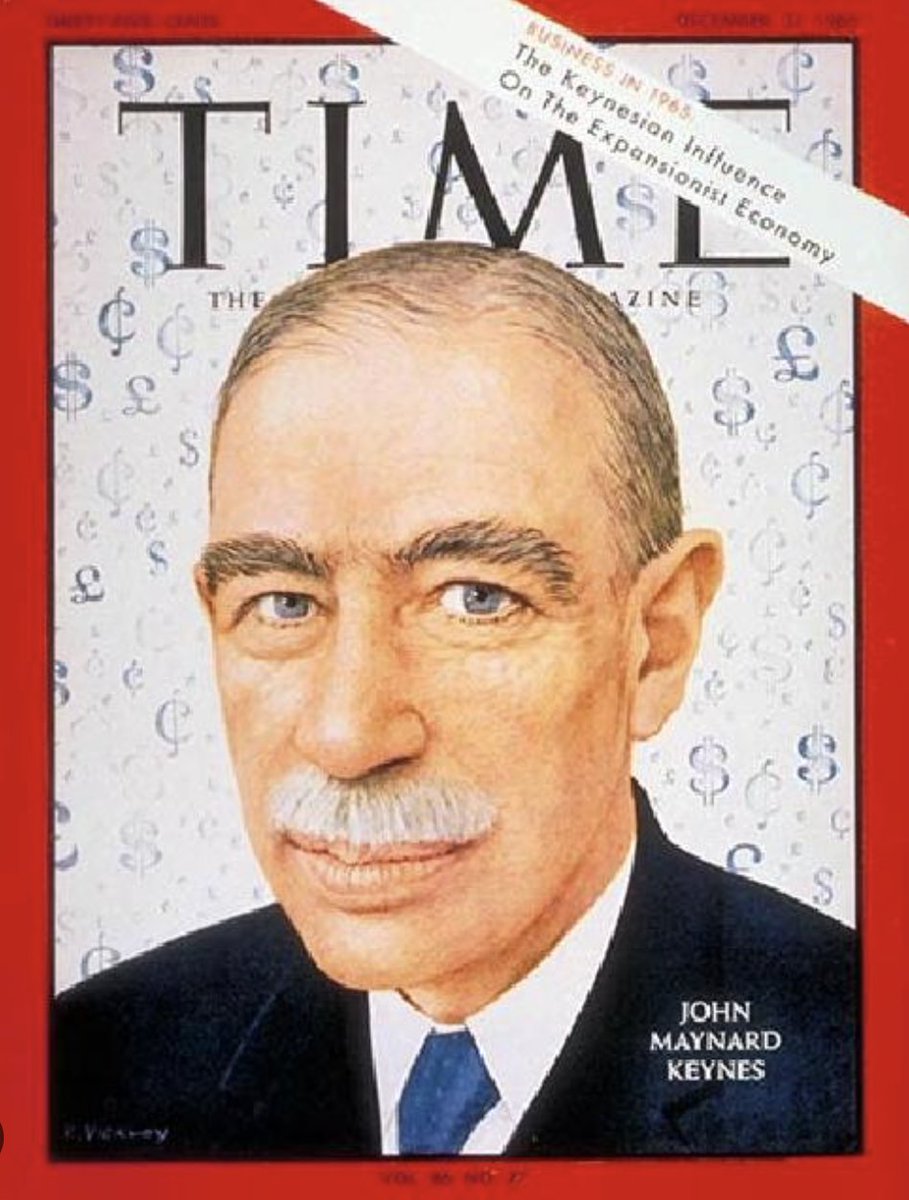
In 1936, Keynes famously wrote that paying people to dig holes and fill them back up would boost the economy. Meanwhile, French economist Bastiat was spinning in his grave, having warned a century earlier about the "broken window fallacy" - the illusion that destruction creates wealth.
When New Deal programs put thousands to work building bridges to nowhere, Keynesians cheered the employment statistics. But they ignored what Bastiat called "the unseen" - the private investments never made, the businesses never started, the innovations never pursued because capital was diverted to government make-work.
Today's politicians still invoke Keynesian magic, claiming every trillion in deficit spending creates prosperity. They see the government jobs, the infrastructure projects, the GDP bump.
They don't see the entrepreneur who couldn't get a loan, the startup that never launched, or the future growth sacrificed for today's political theater.
"Human beings are born with different capacities. If they are free, they are not equal. And if they are equal, they are not free."
– Aleksandr Solzhenitsyn
Agency > Intelligence
I had this intuitively wrong for decades, I think due to a pervasive cultural veneration of intelligence, various entertainment/media, obsession with IQ etc. Agency is significantly more powerful and significantly more scarce. Are you hiring for agency? Are we educating for agency? Are you acting as if you had 10X agency?
Grok explanation is ~close:
“Agency, as a personality trait, refers to an individual's capacity to take initiative, make decisions, and exert control over their actions and environment. It’s about being proactive rather than reactive—someone with high agency doesn’t just let life happen to them; they shape it. Think of it as a blend of self-efficacy, determination, and a sense of ownership over one’s path.
People with strong agency tend to set goals and pursue them with confidence, even in the face of obstacles. They’re the type to say, “I’ll figure it out,” and then actually do it. On the flip side, someone low in agency might feel more like a passenger in their own life, waiting for external forces—like luck, other people, or circumstances—to dictate what happens next.
It’s not quite the same as assertiveness or ambition, though it can overlap. Agency is quieter, more internal—it’s the belief that you *can* act, paired with the will to follow through. Psychologists often tie it to concepts like locus of control: high-agency folks lean toward an internal locus, feeling they steer their fate, while low-agency folks might lean external, seeing life as something that happens *to* them.”
The far right blames all of society’s problems on immigrants.
The far left blames all of them on billionaires.
Both push a zero-sum, silver-bullet story that reduces an incredibly complex society to a caricature.
It’s the worldview of a child.
It's emotionally satisfying, simple-minded, and completely incapable of solving real problems.
“I do not believe that the solution to our problem is simply to elect the right people.
The important thing is to establish a political climate of opinion that will make it politically profitable for the wrong people to do the right thing.
Unless it is politically profitable for the wrong people to do the right thing, the right people will not do the right thing either, or if they try, they will shortly be out of office.”
— Milton Friedman
Actually, obligatory:
Two economists are walking in a forest when they come across a pile of shit.
The first economist says to the other “I’ll pay you $100 to eat that pile of shit.”
The second economist takes the $100 and eats the pile of shit.
They continue walking until they come across a second pile of shit.
The second economist turns to the first and says “I’ll pay you $100 to eat that pile of shit.”
The first economist takes the $100 and eats a pile of shit.
Walking a little more, the first economist looks at the second and says, "You know, I gave you $100 to eat shit, then you gave me back the same $100 to eat shit. I can't help but feel like we both just ate shit for nothing."
"That's not true", responded the second economist. "We increased the GDP by $200!"