#Axiscades don’t get disappointed due to weak results.
AxisCades undergoing the biggest and boldest business transformation. Another qtr or two and things look very different but market acts much before.
We have seen it in #Lauruslabs when everyone on street wrote it off, we stood with conviction. Similar story to play out in AxisCades too.
Weak results due to
- deferment of 142 cr revenue and 40cr EBIDTA to H1FY27 because of supply chain issues
- exceptional restructuring and divestment-related charges of nearly ₹18 Cr following the sale non core business
- FY26 reflected a normalized tax charge compared to FY25, which had benefited from a one-time tax
Disc. Sahasrar capital private limited, PMS - SEBI REGN No INP000007386. We are invested.
In general, even among high income earners, let me tell you when someone reach a wealth of say Rs.3 crores.
Age in late forties to early fifties. Designated as Vertical Head or Senior Director or similar titles. CTC anywhere between Rs.60 lakhs to Rs.1 crore per annum.
Own a 3 BHK flat. Would have repaid home loan. Say 2 children in high school or college. A decent car mostly under company (employer) lease.
Mutual funds, shares, money in bank and Provident Fund - roughly around Rs.3 crores. In exceptional cases, close to Rs.5 crores.
This is general standard among high income earners in our country.
So don't fall for finfluencers trap of creating wealth of Rs.50 or Rs.100 crores is easy.
Except for extremely lucky or corrupt, making every single crore is difficult.
The loudest predictions of Indian IT's structural decline tend to come from people who have not spent any meaningful time inside an enterprise IT organisation.
Not as a delivery lead.
Not as an account director.
Not as a transformation architect.
Not as the senior person who has had to land a cutover in production over a weekend with three regulators on the call.
Announcement comes, the commentary follows. While it is well-presented, mostly, technically correct. Bit, it is operationally weak.
Select section wants Industry to be impacted. It's mainly because of a position, perception they have about the industry and finally want that to be vindicated on.
The sector is undergoing through a reset, no doubt. If you think the industry has no strength to stand on, you will be proven wrong.
The flat stripe on your towel is called a dobby border. It's the only part of the towel engineered to NOT absorb water.
The rest of the towel is terry cloth. 300 to 800 tiny cotton loops per square inch, each one pulling moisture off your skin through capillary action. A standard bath towel absorbs about 800ml of water per square meter in under 10 seconds. The loops do all of that work.
The dobby border has zero loops. It's a flat, dense weave that serves one purpose: structural integrity. Without it, the constant agitation of a washing machine would cause the terry loops at the edges to unravel. The border anchors the fabric so the loops stay intact.
It also solves a shrinkage problem. Terry loops shrink at different rates than the ground weave underneath them. The dobby border is dimensionally stable, so it prevents the ends from puckering or warping after dozens of hot wash cycles.
Hotels figured this out decades ago. The flat surface takes embroidery and woven logos cleanly. A looped surface can't hold that detail. That's why every Marriott, Hilton, and Four Seasons towel has their branding woven directly into the border.
The dobby loom that makes this possible has existed since 1843. The mechanism controls individual warp threads independently, creating geometric patterns without needing a full Jacquard setup.
Three jobs at once: preventing fraying, controlling shrinkage, and giving hotels a place to brand their towels. The part that feels wrong is doing the most work.
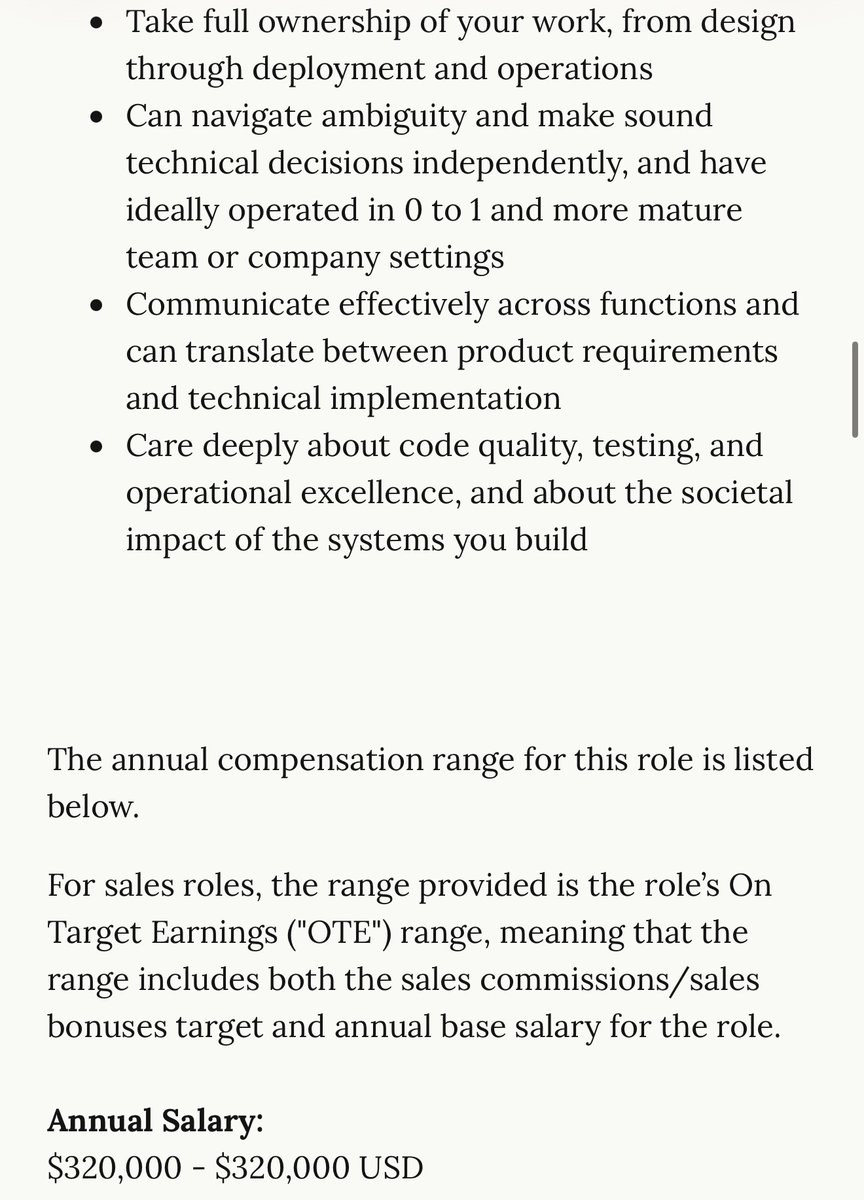
Anthropic has 454 open roles. The company is hiring software engineers at $320K-$405K. Their CEO, Dario, said three months ago that coding is "going away first, then all of software engineering."
The paradox resolves instantly.
Dario's engineers told him they don't write code anymore. They let Claude write it. They edit. They review. They architect. They didn't lose their jobs. They got faster. Anthropic grew from a small research lab to 1,500 employees in four years, adding engineers the entire time.
This has played out five times in computing history. Compilers replaced assembly. Frameworks replaced boilerplate. Cloud replaced server management. Every prediction was the same: most programmers won't be needed. Every result was the same: the number of engineers grew.
The global software engineer pool went from roughly 5 million in 2010 to 28.7 million today. BLS projects 17% growth in US software developer roles through 2033, adding 304,000 positions. The pool is projected to hit 45 million by 2030.
When building software gets cheaper, more problems become worth solving with software. A startup that needed 10 engineers now needs 3. But 50 companies that couldn't afford to build at all now can. The denominator shrinks. The numerator explodes.
Meta's engineering headcount is up 19% from January 2022. Google's is up 16%. Apple, 13%. These companies adopted AI coding tools years ago. They're using Copilot and Claude Code daily. They're hiring more engineers than before those tools existed.
Every generation of "coding is dead" content creates two cohorts: engineers who freeze up, and engineers who build 10x more with the new tools. The second group has won every single time.
In 2017, I stepped onto the Facebook campus in Menlo Park. They took us to the Oculus VR lab first. A geeky engineer gave us a demo of the VR features and ended on the haptic gloves that let you "feel" virtual objects without touching anything real. Then he paused, voice almost reverent: “Imagine connecting anyone in the world… real social interaction… without ever leaving home.” The demo was amazing but I walked out with a strange feeling. This guy is "solving for humanity" and is excited about a world no longer needs physical human connection
We passed a long hall of developers. One guy—Black, friendly—leaned over his monitors and asked where the group of us (mostly Africans) was from. We chatted. His desk had big screens, half-eaten snacks, the faint smell of takeout lingering. His neighbor, paler watched curiously but, too timid to join. The desks were comfortable, the food smell everywhere, as it was available in every corner. It all felt… contained. Like this campus was its own sealed ecosystem, where the world outside was just data to optimize.
Fast-forward to 2020. I work at Andela, where we placed remote engineers with Silicon Valley teams. Some companies flew their leads over to meet the "remote" teammates in person. When they visited the Kigali campus I went to dinner with them. They were 5. Of this dinner I vividly remember 2 conversations. One guy launched into how "all humans are actually lactose intolerant after infancy… we're the only species that keeps drinking milk." They all nodded, confessed their own intolerances like it was a quirky universal truth. Then came the photos: a dog's birthday party. Balloons, cake, friends invited. The owner beamed like it was his kid's party. I love dogs. But something twisted in my chest. These are the people shaping the tools billions use every day—yet their version of care, connection, family… felt redirected, abstracted.
Now it's 2026, and Sam Altman says training an AI costs less than "raising a human"—because it takes "20 years of life and all the food you eat during that time before you get smart." He compared childhood—first steps, heartbreaks, scraped knees, bedtime stories, learning trust—to server racks and electricity bills. I think back to that VR promise of connection without leaving home… to offices smelling of food and isolation… to dogs celebrated like children while real human messiness gets optimized away
Finally, someone revealing the truth behind FIIs exiting the Indian markets 🇮🇳
This video should reach the top govt. Officials, so that they could understand the ground reality.
@nsitharaman@PMOIndia
Share this to the max! 🔄
Anyone who has a close to 20% drawdown from top has done well in these markets.
From my calculations, the median and average drawdowns on stocks is 32-35% across the breadth of the Indian markets.
Nifty50 and Sensex are not showing the real picture of the markets.
I am also seeing lot of memes about equity and stocks. These are good signs. Also, my morning walking group is a great barometer for me. When they talk a lot about equity, you know you have to be cautious. Now no one talks about stocks. All are talking about silver, gold and copper. That is a great trigger for me. I am gradually moving to small and micro caps. There could be more pain for some time (no one knows for sure), but if one has a 2+ year view, I think great bargains are available.
Obviously, do focus on valuations (yes. even in these markets there are places of froth), be disciplined, don't compromise on corporate governance. And on top of it all, be patient and do not panic.
Be Honest…
How many of you feel like I’m talking only about You?
This #HINDZINC Chart isn’t about the Stock
It’s about You
When the Price shot up, you felt Smart
Confident
Finally right
When it fell the 1st time, you called it a dip
Because accepting danger meant accepting you could be wrong
When it bounced, Hope took over Logic
You waited… not for clarity — but for relief
Then came the long Consolidation
You weren’t Trading anymore
You were enduring
Every Candle controlled your mood
Green days felt lighter
Red days followed you Home
Your Family felt the Silence
The irritation
The Mental load you never spoke about
This Chart didn’t test your Knowledge
It tested your Emotional Stability
And here’s the hardest truth —
You didn’t lose because you can’t read Charts
You lost because No One taught you how to handle Yourself while reading them
If your Emotions change with every Candle,
the Market will keep controlling your Money —
And your peace
You don’t need another Stock or Indicator or STRATEGY
You need Emotional Mastery
— Bharat Sahni
NeuroCompounding Hub
#EmotionlessTrading
#NCH
#FromLosstoLegacy
#HealbeforeDeal
"My name's Raymond. I'm 73. I work the parking lot at St. Joseph's Hospital. Minimum wage, orange vest, a whistle I barely use. Most people don't even look at me. I'm just the old man waving cars into spaces.
But I see everything.
Like the black sedan that circled the lot every morning at 6 a.m. for three weeks. Young man driving, grandmother in the passenger seat. Chemotherapy, I figured. He'd drop her at the entrance, then spend 20 minutes hunting for parking, missing her appointments.
One morning, I stopped him. "What time tomorrow?"
"6:15," he said, confused.
"Space A-7 will be empty. I'll save it."
He blinked. "You... you can do that?"
"I can now," I said.
Next morning, I stood in A-7, holding my ground as cars circled angrily. When his sedan pulled up, I moved. He rolled down his window, speechless. "Why?"
"Because she needs you in there with her," I said. "Not out here stressing."
He cried. Right there in the parking lot.
Word spread quietly. A father with a sick baby asked if I could help. A woman visiting her dying husband. I started arriving at 5 a.m., notebook in hand, tracking who needed what. Saved spots became sacred. People stopped honking. They waited. Because they knew someone else was fighting something bigger than traffic.
But here's what changed everything, A businessman in a Mercedes screamed at me one morning. "I'm not sick! I need that spot for a meeting!"
"Then walk," I said calmly. "That space is for someone whose hands are shaking too hard to grip a steering wheel."
He sped off, furious. But a woman behind him got out of her car and hugged me. "My son has leukemia," she sobbed. "Thank you for seeing us."
The hospital tried to stop me. "Liability issues," they said. But then families started writing letters. Dozens. "Raymond made the worst days bearable." "He gave us one less thing to break over."
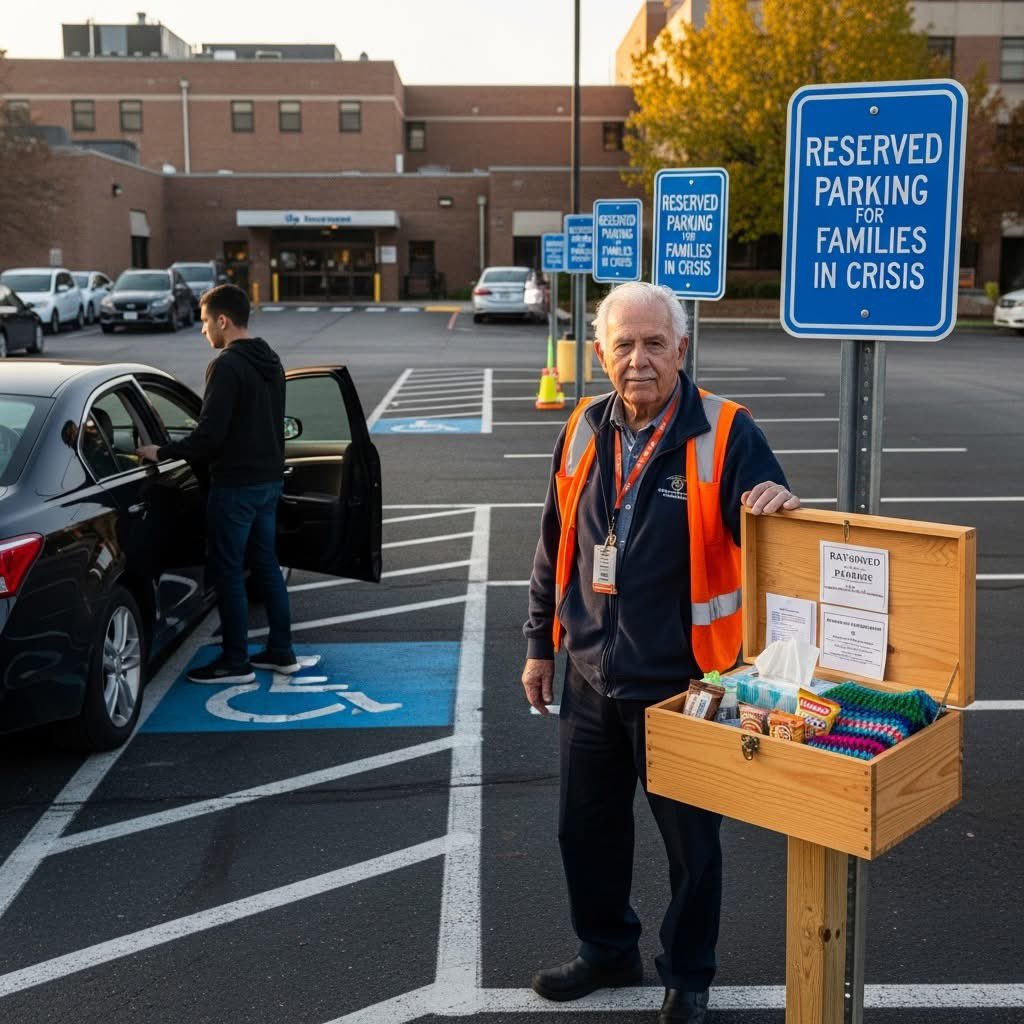
Last month, they made it official. "Reserved Parking for Families in Crisis." Ten spots, marked with blue signs. And they asked me to manage it.
But the best part? A man I'd helped two years ago, his mother survived, came back. He's a carpenter. Built a small wooden box, mounted it by the reserved spaces. Inside? Prayer cards, tissues, breath mints, and a note,
"Take what you need. You're not alone. -Raymond & Friends"
People leave things now. Granola bars. Phone chargers. Yesterday, someone left a hand-knitted blanket.
I'm 73. I direct traffic in a hospital parking lot. But I've learned this: Healing doesn't just happen in operating rooms. Sometimes it starts in a parking space. When someone says, "I see your crisis. Let me carry this one small piece."
So pay attention. At the grocery checkout, the coffee line, wherever you are. Someone's drowning in the little things while fighting the big ones.
Hold a door. Save a spot. Carry the weight no one else sees.
It's not glamorous. But it's everything."
Let this story reach more hearts....
Credit: Mary Nelson
@rushikesh_agre_ SSy tf 7f7 that you tt6 tf TT ⁶⁶⅚f66d no 5t6t to t to t TT TT TTy tt6 66yy tu ye 41e. V ccccvccvcvccccvcccxcxgvvxvcxccमहहसहसहहससहसहहहहहहहसहहहहमहहममह
Remember
#JaneStreet took nothing from Long Term Investors in India
All it's ill gotten profits were from Retail Punters.
Many of them trained after paying fees to another set of fraudsters in fraudulent Option Trading Workshops.
How some jokers make predictions like
Nifty will first go to 20000 and then all time highs
Or
Nifty will go to all time highs and then fall 30%
It's totally beyond me. Even making one side prediction is tough.
I think they have "Divy Drishti"
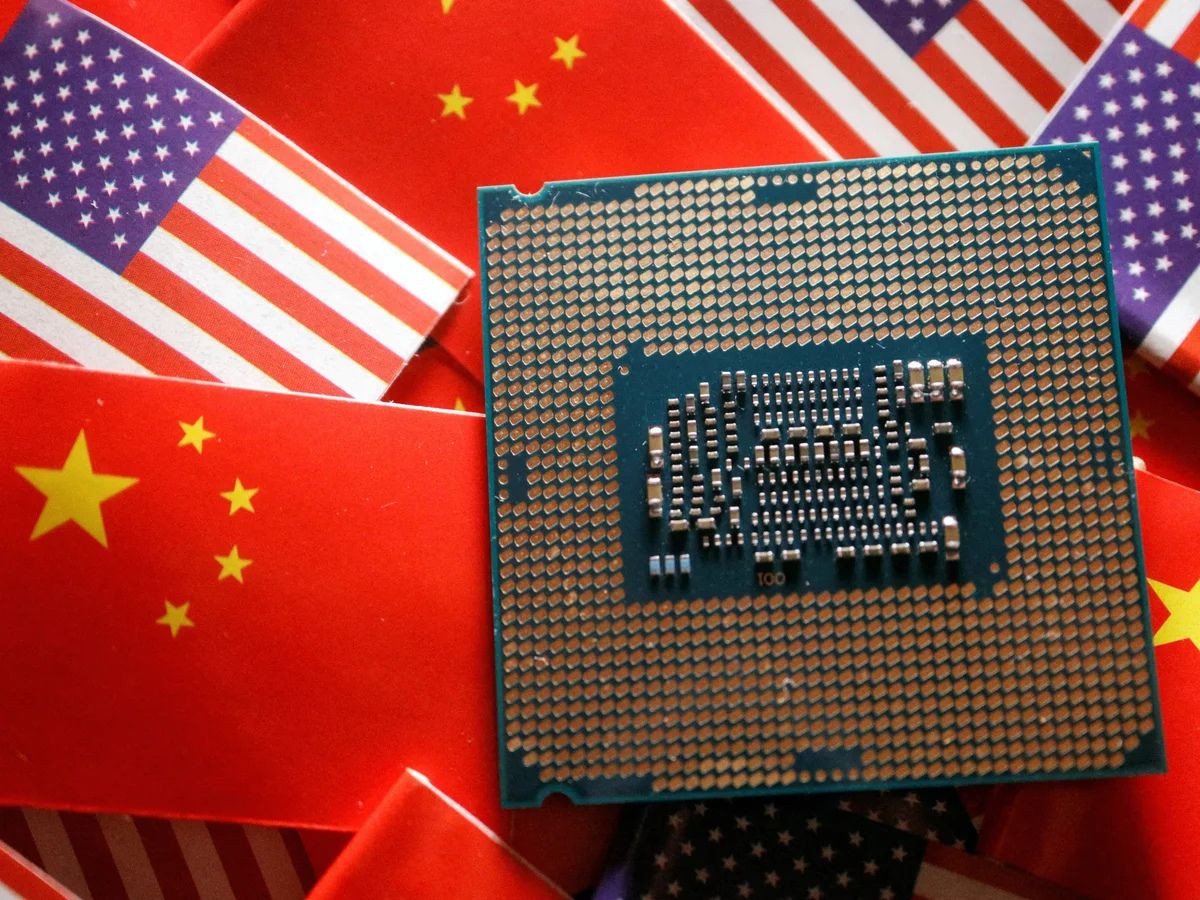
China depends on this Japanese giant for survival.
America wants it neutralized.
Now Tokyo Electron influences the:
• $14B chip equipment market
• 43% of revenue from China
• Future of global computing
The untold story of Japan's silent tech superpower 🧵: