I put out a poll earlier and it seems there was interest in getting a copy of the visual from the @ArkRazorbacks video.
I'm putting it out for everyone to download for free!
Thanks for all the support @ArkRazorbacks fans - I can't wait to see where this may end up :)
Download:
https://t.co/3BXqwfKrH0
I was fortunate to be featured on @tylermwebb and Jake Kranz's podcast, Sportonomics.
We discussed the finances of college sports, its carrots/sticks, and what's coming down the line.
The guys know the space well and had some great questions. This was fun.
https://t.co/yqGH18MVSn
It's almost unfair what little it takes to change the traditions and structure of the #2 sport in the country.
All of these people are short term stewards of one of the country's greatest traditions.
Silly to think they could see beyond their short, few year long tenure
FYI, here are the 11 members who decided conference championships were no longer relevant.
These are the people being lobbied by ESPN.
This isn't about the fans or athletes. This is about TV deals and revenue.
Zero interest in the long-term health of the sport.
For athletic departments, the question is less how many players they will bring back than which part of the transfer market they plan to compete in.
Thanks again to @bballquant for help with the data.
https://t.co/OTlJGFjQ0i
The new college basketball season has started!
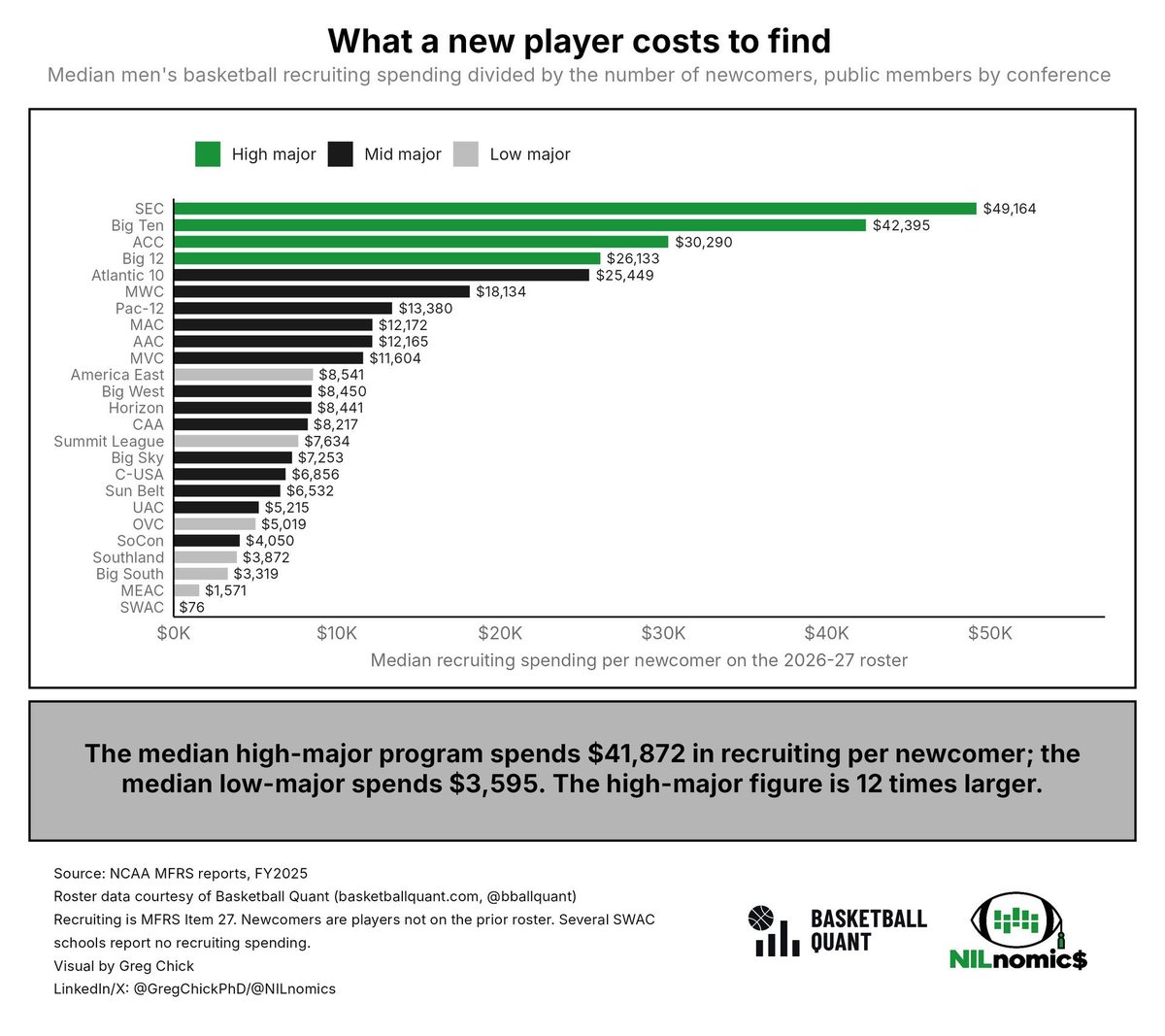
My analysis looks at how D-I men's basketball spending relates to where each 2026-27 roster came from.
The roster data comes from Basketball Quant (https://t.co/RlRAys1Ubs) and the spending data from my MFRS database (FY2025). 🧵
Median recruiting spending per newcomer is $41,872 at high-major programs, $9,152 at mid-majors and $3,595 at low-majors, a 12x gap.
The SEC's median of $49,164 is the highest of any conference.
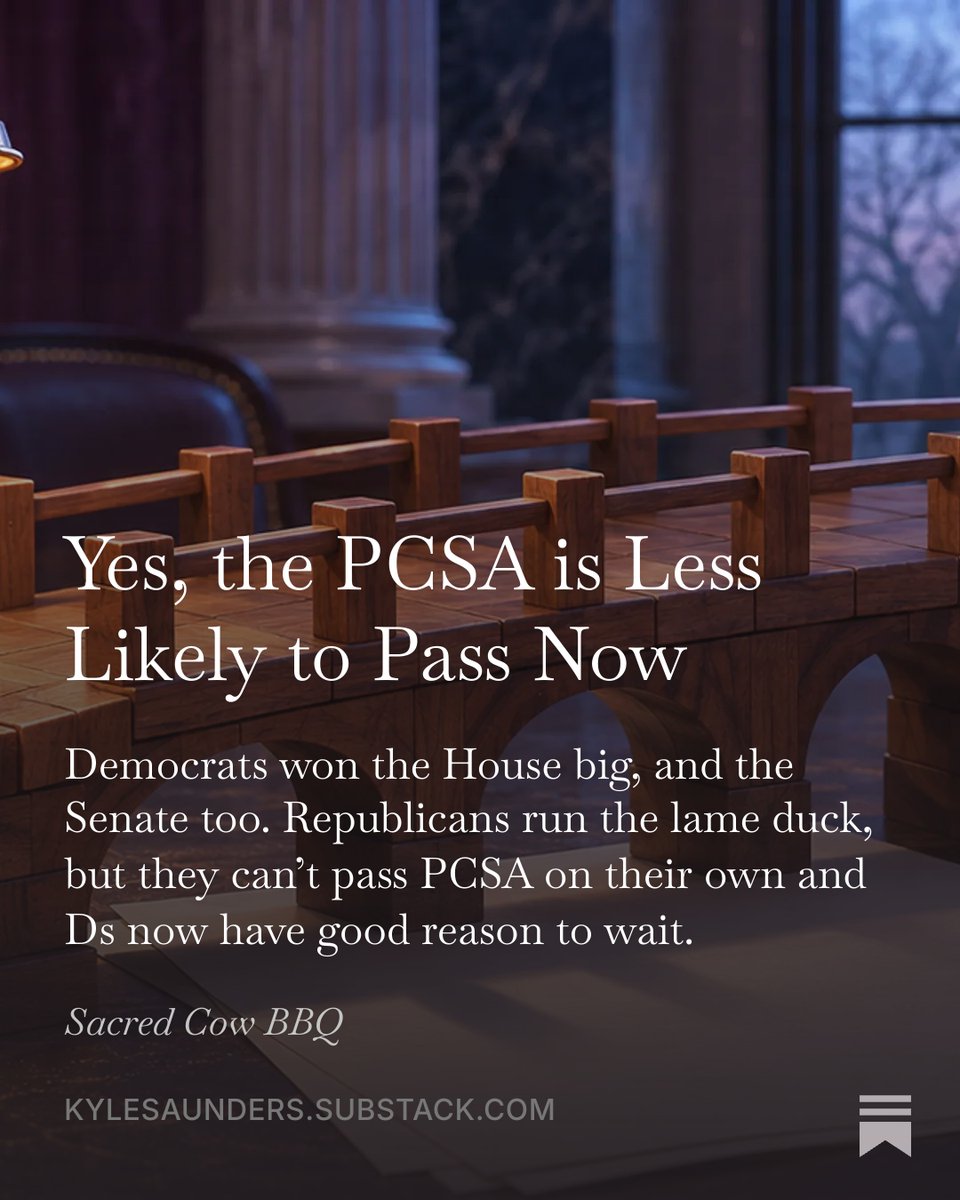
1/ Democrats won the House and the Senate. The lame-duck House is still Republican, but Republicans can't pass the Protect College Sports Act on their own, and Democrats now have good reason to wait for January. My odds drop from 25–30% to 5–10%.
https://t.co/5lt51vVSAl
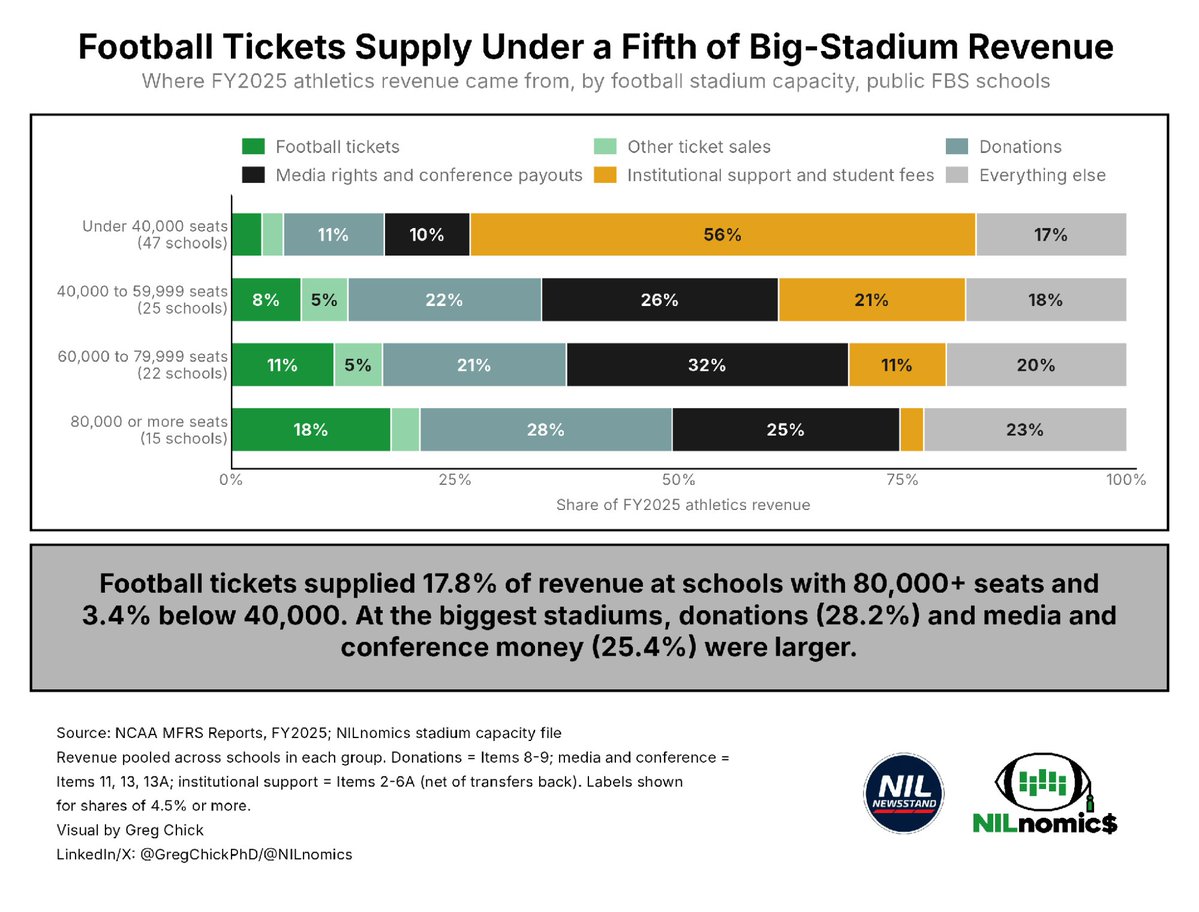
Do bigger football stadiums actually pay for the other sports?
New research from @gregchickphd of NILnomics examines 109 public FBS schools and finds that only about 20% of the additional revenue associated with larger stadiums reaches non-football sports.
What does that mean for the revenue-sharing era?
Read the latest NILNewsstand Pro research: https://t.co/DTPvaTiuuj
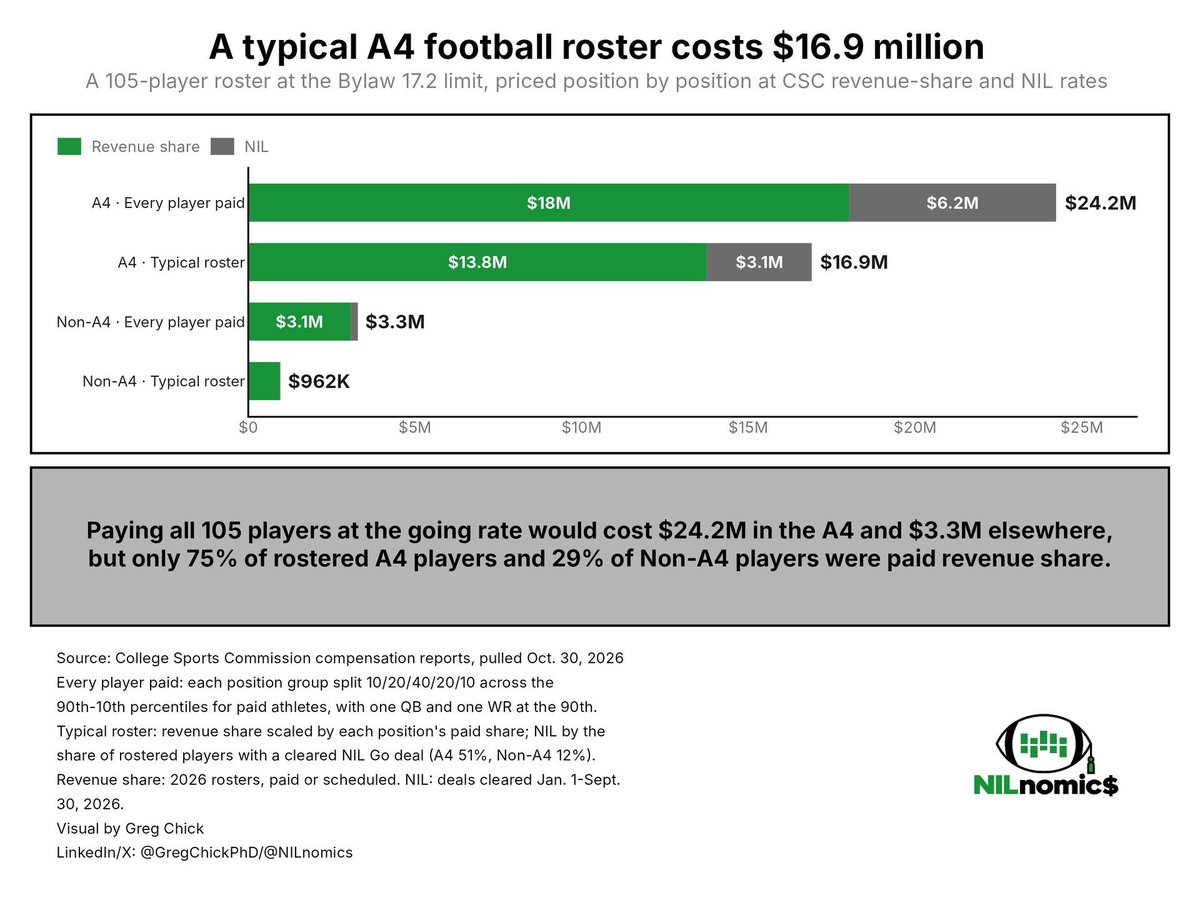
@theCSCommission released new revenue-share and NIL Go percentile data to price every roster in an athletic department.
What a team costs depends as much on how many athletes are paid as on how much they earn.
We broke it down like no one else and have a free tool for you to do it too!🧵