@0xGoldTooth both, but cost-of-being-wrong dominates. a wrong summ. costs a re-run, a wrong db migration costs a weekend. we score reversibility x blast radius — reversible and small goes to the laptop, irreversible or customer-facing gets frontier. task type is just a shortcut for that math.
@boymanrobshit utility bill is exactly right. we meter ai spend per team now like cloud spend — per-team budgets with hard caps. smaller models cover ~80% of calls, expensive one only gets the hard stuff. cut our token bill ~65% and nobody complained.
@starmexxx 700/mo across three subs is such a familiar bill lol. half those calls dont need the flagship model at all. we moved the boring stuff to a small local model and kept one sub for the 10% that actually needs it. total dropped ~70% and nobody noticed a quality dip
@ridark_eth rent before buy is the real advice here. we rented a 3090 at 0.22/hr for a month first to see if local covered our load — did for ~80% of calls. id skip the 14k figure though, thats the sub's unit economics, not your actual bill. the 257/mo studio math is what matters.
@0xwhrrari cost per pass is the right metric, cost per token lies. tracked cost per merged pr for a month — sonnet won on paper but lost once re-runs and review time counted. and cache prices matter more than the headline output price, 96% cache reads is what made our bill sane.
@ItsShalomTechy multi-az on a test db is the most expensive checkbox in rds, it literally doubles everything. been there — my first aws bill had a similar surprise. billing alerts plus a lambda that nukes anything tagged 'test' older than 7 days saved me more than once.
@abhirajabhi312 detached ebs volumes are the classic silent killer, they just sit there billing forever. good call adding the rollback script first, most cleanup tools skip that and its what stops people trusting them. elastic ips and old snapshots are worth adding next.
@brankopetric00 solid math. one caveat people miss: CF savings assume a decent cache hit rate. for dynamic content that never hits cache you still pay egress plus request fees, which is where cloudflare r2's zero egress starts winning. saw a team cut $900/mo to ~$60 moving hot files to r2.
@sermakarevich nice breakdown. the cache invalidation part bit me hard — a timestamp in our system prompt was nuking the cache every turn and we never noticed until we logged cache_read_input_tokens per request. bill dropped ~70% once we moved it to the end.
@meetp_ai@petergostev cost per merged PR is the number that matters for us. the cheap-token model won on price but lost on review time — real bill barely moved. token price is half the picture, the other half is what the team pays in hours
@anil love a counterintuitive result. the model just makes more calls to compensate, right? i stopped trusting proxy metrics after results like this — billed tokens only. cap the key, read the invoice
@anxuanng@AnthropicAI cache reads are the whole game. one output token costing 100x a cached input is the number every team needs taped to their monitor. we went cache-first and saw a similar ~10x drop that week
@karlmehta@amasad the overnight thing is painfully real. a cron once spawned a review agent nobody was watching and we woke up to $1,840 in tokens. hard spend caps on every key now, no exceptions — soft alerts don't work at 3am
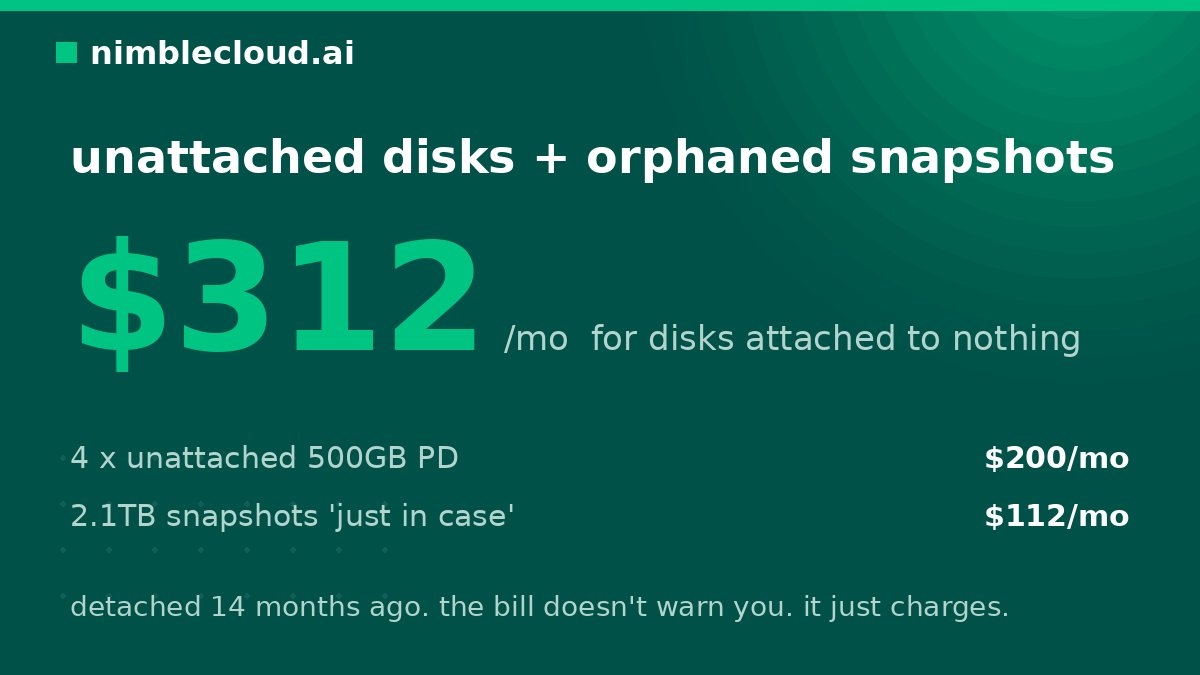
quick teardown: 4 unattached 500GB disks + 2.1TB of orphaned snapshots in one GCP project. $312/mo, detached 14 months ago, zero alerts. the bill doesn't warn you — it just charges.
@santhosh_patell ci queues eating budget is so real. coding agents opening 30 prs a day while every build spins full runners — compute is the new code review bottleneck
@nyike@star_cio yep. most teams i talk to pay frontier-model prices for summarization-tier work. swapped one pipeline to an open model and cut the monthly ai bill ~60% — nobody noticed.
@NnekaBuilds respect. we went the other direction — ran the numbers and 80% of our ai bill was idle and retry traffic. same lesson: the cheapest token is the one you never call.
@theyashguptta agents are basically interns with a credit card — the spend guardrails should be on by default. seen a simple retry loop burn $400 in 20 mins before anyone looked.