What does tokenizing real-world assets actually look like?
From our AMA with @nimofastglobal, we broke down how commodity finance can move onchain: starting with receivables, then inventory, facilities, and eventually the products themselves.
NimoFast is building with Rayls to bring real commodity flows into tokenized markets, beginning with biofuel and agriculture-linked assets in Brazil.
This is RWA adoption beyond the abstract: real businesses, real cash flows, and real assets moving into programmable financial infrastructure.
@RaylsLabs 🔴 Tuning in live.
Huge milestone for Brazil’s RWA ecosystem — @nimofastglobal + @Rayls bringing commodity tokenization to the fuel distribution sector. 🇧🇷⛽
The institutional rails are ready. Real assets, real volume, real impact. 🚀
#Nimofast#Rayls#RWA#Commodities#Brazil
Institutional onchain migration requires more than just a network; it requires a vetted, ready-to-use ecosystem.
We are introducing the Rayls Launch Partner Program, a curated, full-stack environment designed to move institutions from strategic decision to live production without the friction of traditional vendor due diligence.
By focusing on deep integration with a specialized set of partners, we are ensuring the security, compliance, and scale that global finance demands.
This is the foundation. While we maintain a deliberate onboarding pace, the partners announced will be integrated onto the public chain over the coming days and weeks as our institutional pipeline goes live.
OPEC⁺ plunged into crisis by UAE departure
Every cartel eventually ends in failure as members struggle to respond to the rise in new sources of supply outside the agreement and the changing circumstances and distribution of production among the members themselves.
The Organization of the Petroleum Exporting Countries (OPEC) and the broader group of non-OPEC producers adhering to the Declaration of Cooperation known as OPEC⁺ has proved no different.
The United Arab Emirates (UAE)’ s decision to leave both OPEC and OPEC⁺ is the biggest challenge to the cartel for decades and will profoundly alter attempts to manage the oil market.
The decision represents a rejection of the production-control system dominated in recent years by Saudi Arabia and signals the UAE will make its own decisions about output in future.
It will be even more damaging if other major producers decide to leave or are emboldened to ignore output agreements to pursue their own interests ...
We announced the partnership with AmFi in December25;
Then João Pirola, COO and CoFounder came on for an AMA with me, check it out if you have not seem it.
Now their CTO is on Rayls testnet preparing and checking their smart contracts and on-chain credit engine to the mainnet migration.
The goal: $1B in Brazilian private credit moving through every milestone on schedule.
This is what execution looks like. It takes time, resilience and focus to get there.
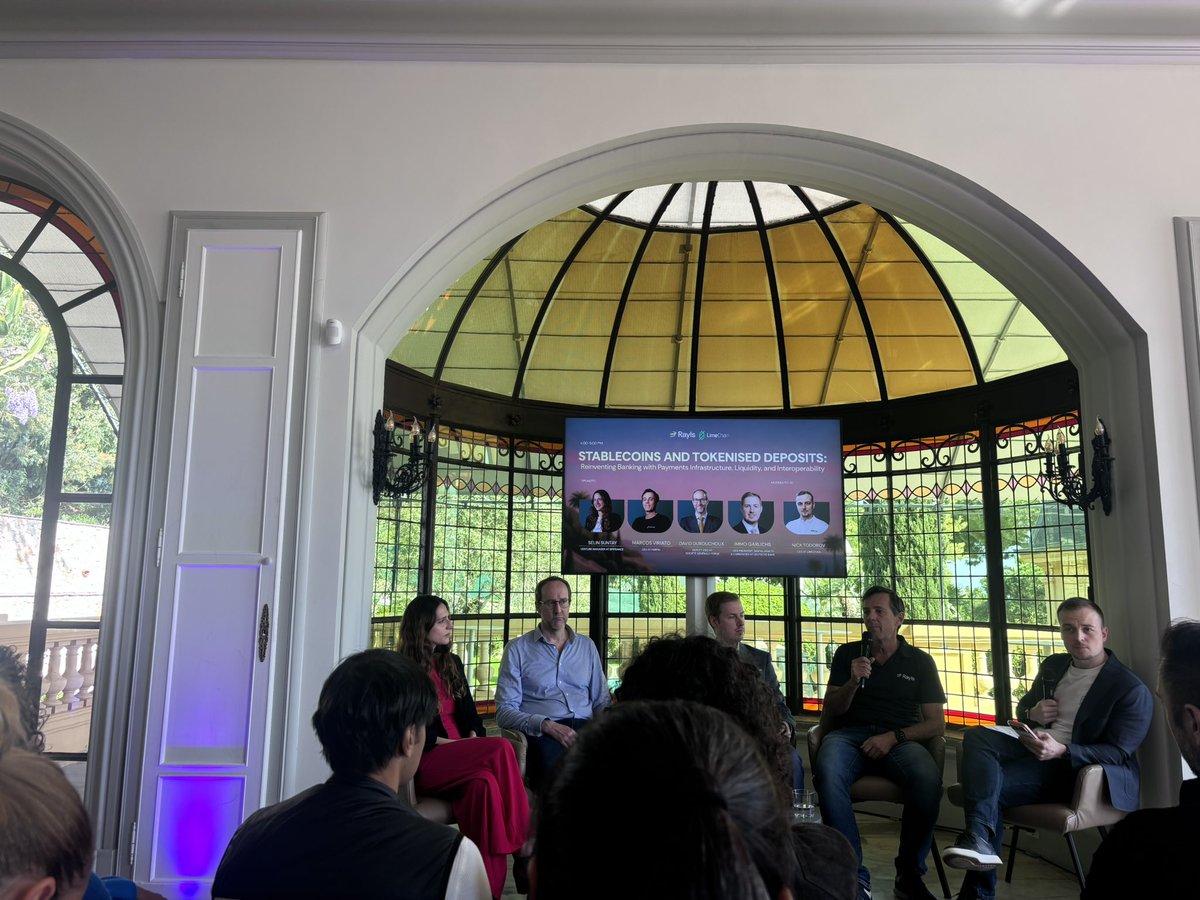
This week at ETH Cannes, at @RaylsLabs Institutional event, I hosted one of the most grounded conversations I've had on stage in a while.
Alongside David DUROUCHOUX - Co-CEO, Société Générale Forge, Immo Garlichs - Head of Digital Assets Products, Deutsche Bank, Nick Todorov - CEO, Limechain, and Selin Suntay - Venture Manager, BPI France, we unpacked the questions that actually matter for institutional digital finance right now.
A few things that stayed with me:
Stablecoins vs. tokenised deposits — it's the wrong battle. Both are emerging in parallel, serving different functions. Stablecoins as the transaction layer, tokenised deposits as the upgrade to existing banking rails. The more important question is what infrastructure sits underneath both — and whether it's built for convergence when it comes.
The hard part isn't issuing the asset. It's everything around it. Liquidity, distribution, interoperability across chains and borders — that's where the real work is. Every person on that stage agreed on this. The token is the easy part. The rails are hard.
Banks are no longer drawing a hard line between public and permissioned blockchains. The shift is real. What's changed internally is a combination of regulatory clarity, reputational comfort, and competitive pressure. The question now isn't public vs. private — it's where you draw the line, and whether your infrastructure gives you the flexibility to operate on both sides.
This is precisely the problem space Rayls was built for — privacy-preserving, interoperable blockchain infrastructure that lets regulated institutions operate across public and permissioned environments, without compromising compliance or performance.
Grateful to David, Immo, Nick, and Selin for a conversation that was sharp, honest, and deeply relevant. Cannes delivered. Special thanks for Rayls and our partners LimeChain - Blockchain & Web3 Solutions
📣 𝗡𝗲𝘄𝘀 𝗦𝘁𝗼𝗿𝘆: 𝗣𝗼𝘁𝗮𝘀𝗵 𝗱𝗲𝗺𝗮𝗻𝗱 𝘁𝗼 𝗿𝗲𝗺𝗮𝗶𝗻 𝗳𝗶𝗿𝗺 𝗶𝗻 𝟮𝟬𝟮𝟲: 𝗙𝗲𝗿𝘁𝗶𝘀𝘁𝗿𝗲𝗮𝗺
Global potash demand is set to remain firm this year, fertilizer trading firm Fertistream's head of global market intelligence, Milton Sato, told Argus in an interview ahead of the Argus Fertilizer Latino Americano conference in Miami next week. He also reiterated Fertistream's ambitions to grow its water-soluble fertilizer business in Latin America.
Read the full article by Thomas Hampson
https://t.co/MKa3CFb8PW
#ArgusMedia #illuminatingthemarkets
Tokenized private credit is becoming one of the fastest-growing segments in RWAs.
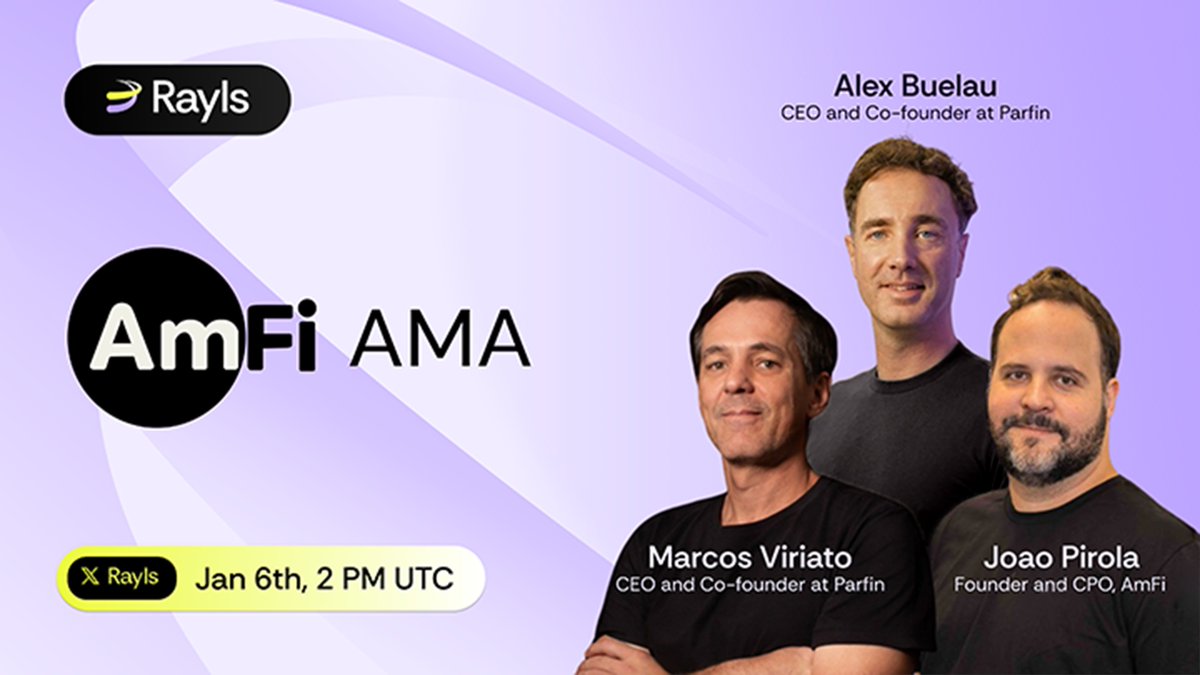
At 2 PM UTC tomorrow, Joao Pirola from @AmFifinance joins @mcvviriato and @x10xalex to unpack how we’re bringing $1B+ in real-world assets onchain by 2027.
Are you ready? 🔔
🛢️ Who really drives oil demand?
Just 2 countries burn 35% of the world’s crude.
This map is the demand side of the oil market.
In a world near 100M bpd of consumption, a handful of countries decide whether the market feels tight or oversupplied.
The scoreboard (million bpd, share of global):
🇺🇸 United States: 20.01M bpd (20%)
🇨🇳 China: 15.15M bpd (15%)
🇮🇳 India: 5.05M bpd (5%)
🇷🇺 Russia: 3.68M bpd (4%)
🇸🇦 Saudi Arabia: 3.65M bpd (4%)
🇯🇵 Japan: 3.38M bpd (3%)
🇧🇷 Brazil: 3.03M bpd (3%)
🇰🇷 S. Korea: 2.55M bpd (3%)
🇨🇦 Canada: 2.41M bpd (2%)
🇩🇪 Germany: 2.18M bpd (2%)
#oott
In this lifetime, someone will try to explain why banks are coming onchain.
It’s very important you let them, and that you jump on the Rayls train before it leaves the station 🚉
Brazil’s financial backbone is going onchain, and the story is bigger than most people realise.
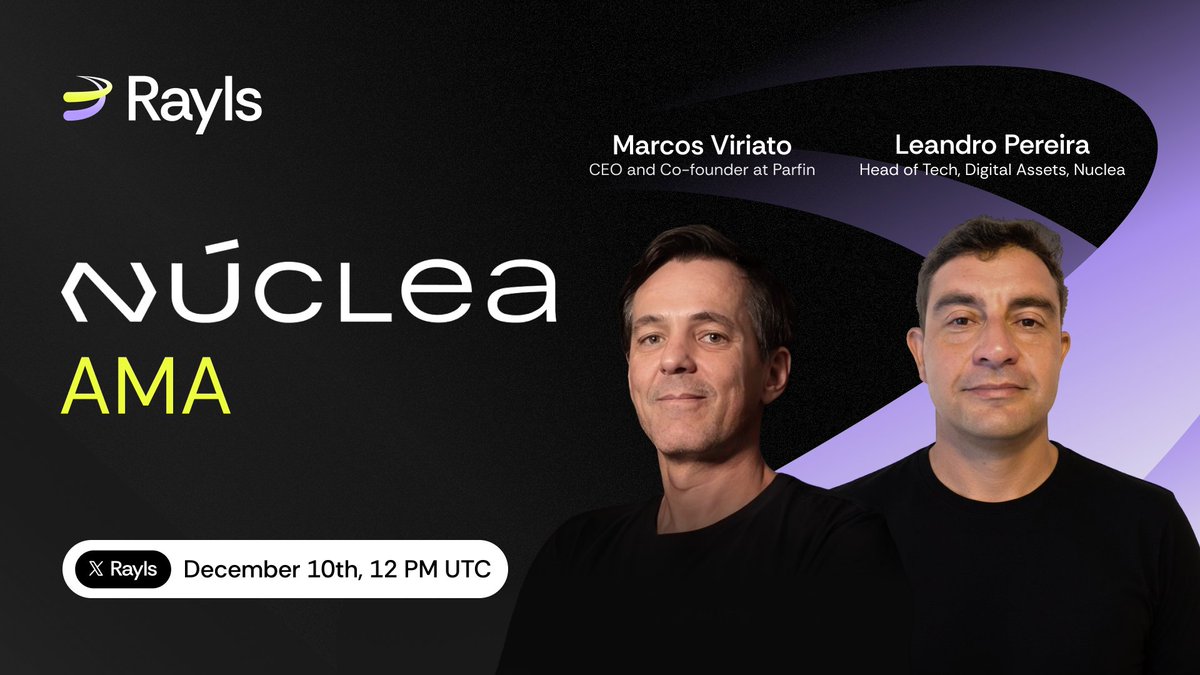
This Wednesday at 12 PM UTC, @mcvviriato sits down with Leandro from Núclea to unpack how a system moving trillions in value each year decided tokenization wasn’t optional anymore.
We’ll trace the moment our partnership began, what’s already live under the hood, and how soon Rayls users will interact with this new infrastructure directly.
If you want a real look at institutional adoption beyond the headlines, this is the one to tune into.
See you there 🔔
Nuclea is the largest FMI - Financial Market Infrastructure in Latin America, owned by the largest Banks, it process over $5 trillion a year in payments and settlement of the Central Depositary.
Why this matters: Nuclea’s blockchain infrastructure in production is @RaylsLabs private network!
In this AMA session, we will explore:
- the use cases implemented;
- discuss what is coming next on-chain and the opportunities ahead;
- hear directly from the Client why @RaylsLabs
Thanks @sciammarella to accept this invitation and share with our community the relevance of what has been implemented!
One of the things you notice, if you’ve been in crypto long enough, is that the important shifts don’t look like shifts at first.
They look like small changes in how people behave.
Lately I’ve been paying more attention to the conversations founders are having, the kinds of questions investors ask, the ideas people dismiss too quickly, or revisit after years of ignoring.
These small signals tend to say more about where we’re going than any macro indicator.
The funny thing is: macro does matter, just not in the way people think.
It’s not about perfectly timing liquidity cycles.
It’s about noticing when people quietly start taking real risks again.
You see it in the reluctance to deploy capital, followed by a sudden willingness to act when something genuinely interesting appears.
And you see it in the patience, a rare thing in crypto, that’s starting to return.
If I had to bet on anything, it wouldn’t be a narrative or a sector.
It would be this shift in mindset.
Markets tend to reward the moment when people stop trying to look clever and start trying to build things that matter.
Those inflection points are quiet.
They’re never accidental.