Save the date May 30-31, 2025 in Rome. The International Chair of Bioethics Jérôme Lejeune in a Conference exploring the relationship between Science and Truth at the intersection of medical and experimental sciences, philosophy, and theology. Registration:https://t.co/B8UZui43TT
Friends, in converting to Catholicism, Vice President Vance was deeply struck by the fact that Jesus Christ is the Lord of one’s entire life, not just parts of it—and this includes all of our political positions.
Take note, sir:
Suicidal empathy was literally the sin of Judas.
Think of what that money could have done for the poor, says the man who turns Christ over to the Roman authorities, and later hung himself in despair.
He makes the statement when Lazarus's sister Mary annoints the feet of Jesus with a costly perfume.
The wisdom in making a misapplied, deceitful and narcissistic empathic altruism the sin of the betrayer of Christ Himself is breathtaking.
It's another example (along with bottomless depths of the story of Cain and Abel and the brazen serpent who is also Jesus) of the truly incomprehensible literary genius of the Biblical canon.
I’ve just finished reading Gad Saad’s book Suicidal Empathy.
It ranks, along with Chris Rufo’s America’s Cultural Revolution: How the Radical Left Conquered Everything and Helen Pluckrose and James Lindsay’s Cynical Theories, as the best take-down of the lunacy at the heart of the wokeist philosophy.
For Saad, empathy—in itself a perfectly decent trait—has become so grossly exaggerated that it threatens truth, reality, and justice.
Cases in point abound: so they won’t feel bad about themselves, we’ll allow biological men to compete in women’s sports and crush the dreams of thousands of young women; so as not to undermine the self-esteem of minorities, we will permit unqualified candidates to have positions in universities and the corporate world; so that everyone might feel included, we will characterize the meritocracy as “white privilege,” etc.
As I was making my way through Saad’s book, I kept remarking the sharp distinction between empathy and love.
To empathize is to enter profoundly into the experience of another and to endeavor not to hurt that person’s feelings. But to love is, as Thomas Aquinas taught, “to will the good of the other.”
As I said, in itself and all things being equal, empathy is a good thing. But it is not the same as love, which, depending on circumstances, can very much involve hurting someone’s feelings.
When a professor gives a student a “C” as an honest reflection of his work, he might well be insulting him, but he’s also telling him the truth and perhaps even urging him to try harder.
When, in the Confessional, a priest tells a murderer to turn himself in to the police, he’s undoubtedly making that person’s life more uncomfortable, but he’s also willing the man’s good.
Any decent parent knows that showing real love for her children means engendering all kinds of bad feelings in them.
In light of this distinction, we can understand why Jesus didn’t say, “have empathy for one another,” but rather “love one another.” And why St. John the Evangelist didn’t say, “God is empathy,” but rather “God is love.”
It occurred to me as I was reading Saad’s book that one reason Wokeism has seized the consciousness of so many in the West is that Christianity has faded as a cultural force and Christians themselves have forgotten what stands at the heart of their faith.
We grew up watching hand drawn Disney and now it's gone. We don't talk about this enough.
Every frame of this video was painted by hand, by a human being. Every single one...
To put that into perspective: to make Snow White and the Seven Dwarfs, Disney employed around 750 artists for three years, and they produced nearly two million individual paintings. More than 700 of the backgrounds were painted in watercolour. Over 150 people worked in a single department whose only job was to ink and paint the transparent sheets, called cels, that the characters were drawn on.
It all ended within our lifetime.
According to the Smithsonian, The Little Mermaid, released in 1989, was the last Disney feature made with the hand-painted cel method. The very next film, one year later, went digital.
And something was lost in that transition. In every frame of the old films, a human hand physically touched the surface. A person sat at a desk, held a brush, and made a decision. Two million small decisions, made by hundreds of people, most of whose names we will never know.
But the deepest difference is that the old animators knew they were making a cartoon. They did not try to copy the world. They stretched it, exaggerated it, bent it out of shape, because they understood something we seem to have forgotten: a drawing that imitates life exactly feels dead.
Walt Disney even had a name for this: he called it the plausible impossible.
Today, everything chases realism. And somehow, the more real it looks, the less alive it feels...
I started my newsletter because the past is full of beauty, and fewer and fewer people take the time to show it to us anymore. Every week I try to. If that is something you'd like to be part of, you can join through the link in my bio, and if you'd like to support my work, a paid subscription is what makes it possible.
Thanks for reading.
In a recent interview, Archbishop Vincenzo Paglia, former grand chancellor of the John Paul II Institute on Marriage and Family Life, confirmed the worst suspicions that many of us had.
He admitted that the changes he made at the Institute during the Pope Francis years were designed to initiate a "very profound" reform of the idea of the natural law.
Instead of absolute moral norms grounded in a keen understanding of the basic goods, he and his colleagues were proposing a moral theory rooted in historical discernment of subjective and cultural experience--not an "armchair theology" but one operating "within history and within people's lives."
This, of course, is the language of trendy postmodernism, and it is dangerous indeed.
Allow me to illustrate the principle with one example. Is slavery wrong?
Intrinsically wrong? Wrong no matter what public opinion polls say about it, no matter what the current consensus on it might be? I imagine any decent person would say yes.
But that yes is predicated upon precisely what the tradition calls the natural law and the basic goods. There are some values so fundamental that acts repugnant to them are by their very nature wicked.
If you want a highly articulate presentation of this idea, go to St. John Paul II's Veritatis Splendor.
If we say that this is just "armchair theologizing" and that morality is a function of ever-shifting cultural and experiential data, then why couldn't slavery be justified?
One of the very smartest persons that ever lived, the philosopher Aristotle, thought it was; extremely bright and morally upright persons in our country, well into the 19th century, thought it was permissible.
Who is to say whether the consensus might shift back again? Who is to say that "lived experience" might come to justify it?
What any truly coherent moral program requires is the very thing that Archbishop Paglia and his colleagues were endeavoring to eliminate, namely, absolute moral norms.
Ridding ourselves of these in the name of freedom or pastoral sensitivity actually renders moral discourse dysfunctional, just as relativizing the basic principle of logic would render any rational conversation impossible.
The Archbishop's interview, frankly, reminded me of the discussions I had at the Synod on Synodality with some of my German colleagues. Under the rubric of the development of doctrine, they were eager to relativize or radically change the principles undergirding classical morality. If this was and is truly the game, we have ventured onto perilous seas.
Link to the article below.
Three cheers for Pope Leo's comments regarding the Christian foundations of Europe and the defense of the unborn. Echoing the sentiments of Pope Benedict XVI, Leo reminded his audience that the essential structures of European society and Europe's commitment to human rights are unthinkable apart from Christianity. And speaking before a hard-left Spanish Parliament, the Pope presented an admirably consistent ethic of life, defending migrants, to be sure, but also insisting that no society which "casts into the shadows" the unborn can be called truly just. With bracing clarity, he insisted, "Every human life must be recognized and safeguarded from conception to its natural end, in every circumstance of its existence." And he concluded that "the moral greatness of a nation" is manifested in this principle. That he has been received so warmly in Spain I take to be an encouraging sign that the people of that country, especially the youth, have finally had it with a soul-flattening secularist ideology.
Decidir bien también requiere reflexión ética.
Un nuevo espacio para acompañar decisiones complejas con rigor científico, prudencia ética y respeto a la dignidad humana.
🔸Consultoría en Bioética🔸
Más información y solicitudes en: https://t.co/d6Hp6IlN7l
Enhorabuena a la IV promoción del #Máster Universitario en #Bioética de la @ufvmadrid y @FundLejeuneES 👏
42 alumnos internacionales e interdisciplinares comprometidos con una bioética al servicio de la dignidad humana.
¡Mucho ánimo con las defensas de TFM! ✨
El Cáliz de la Reina, realizado por Ansorena, el cáliz que utilizará León XIV en la Santa Misa del próximo domingo en Madrid.
https://t.co/GSpiiLZwhf
#HistoriaAnsorena
"El problema no es el diagnóstico es la comunicación del diagnóstico.
Necesitamos médicos que aprendan a decir:
Enhorabuena, estamos contigo y vamos a ayudarte".
🎤 Pablo Siegrist, Director de la Fundación Jérôme Lejeune en España, en la Marcha por la Vida 2026
JUST IN: #PopeFrancis has named Fr Maurizio Chiodi—who has argued that we need to consider the possibility that homosexual acts can sometimes be morally good—as 1 of only 7 members of the #SynodonSynodality’s Study Group on “controversial doctrinal, pastoral & ethical issues”. 👇
It's not the working that we should be discouraging. Women have been mothering and producing simultaneously from the beginning of time.
It's the offsite. It is the separation. It is the extended outsourcing of childcare.
For women that can or must help provide for their families, most of the young women I know are doing it at home and around their children's needs. Like most women around the world.
« L’euthanasie de Noelia a été pratiquée en violation de la loi, car c’est le même médecin qui a pratiqué l’euthanasie, qui a certifié qu’elle voulait donner ses organes, et qui coordonne les prélèvements d’organes... »
Dans cet entretien, Me Polonia Castellanos, l'avocate du père de Noelia Castillo Ramos, précise les circonstances controversées de l’euthanasie de Noelia.
Elle annonce porter plainte contre les médecins et experts qui ont pratiqué et supervisé l’euthanasie.
Elle révèle en particulier que l’euthanasie aurait été pratiquée en violation de la loi, car c’est le même médecin qui a pratiqué l’euthanasie de Noelia, qui a certifié qu’elle voulait donner ses organes, et qui est le coordinateur des prélèvements d’organes.
Elle dénonce aussi le fait que la Commission en charge de décider de l’euthanasie sur la seule base du rapport établi par ce médecin, est composée pour un tiers de militants pro-euthanasie et de personnes impliquées dans les prélèvements d’organes, en situation de conflits d'intérêts, et en violation de la loi qui exige une séparation entre la procédure d'euthanasie et celle de prélèvement d'organes.
=> Voir l’entretien complet : https://t.co/qquBllwNmN
=> Lire un article de fond sur Euthanasie et prélèvement d’organes: Un nouveau vivier de donneurs : https://t.co/odSp41DIol
#Noelia #euthanasia #euthanasie #organdonation @PoloniaCas@ECLJ_Official@ECHR_CEDH@AbogadosCrist
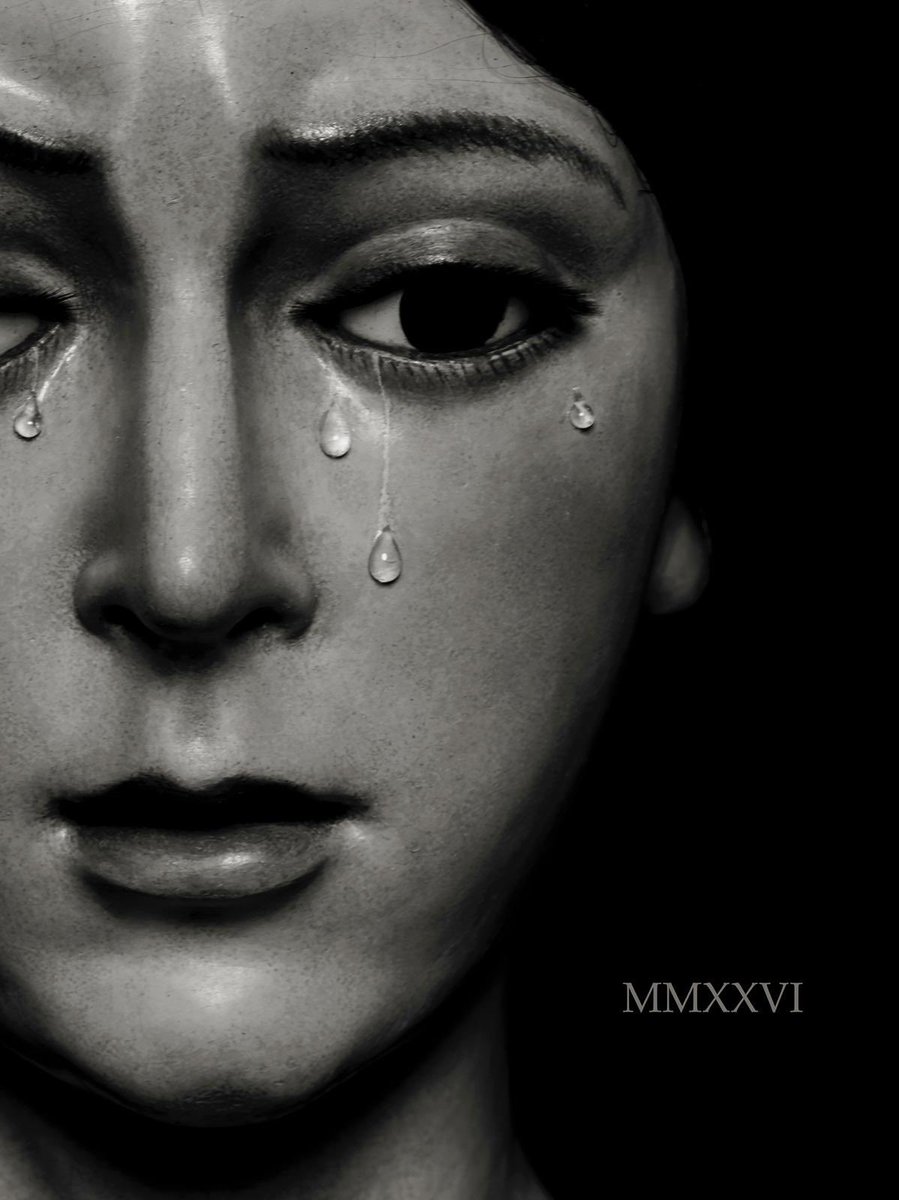
Os deseo a todos una buena Semana Santa. Sé que aquí hay creyentes y no creyentes de todas las latitudes, pero nos debemos respeto mutuo. La diferencia nos enriquece.
Este imagen me ha parecido especialmente significativa y bonita, por la semana que inicia y por motivos personales.

“Esperanza, luz en la oscuridad”: Cartel de la Semana Santa Macarena 2026, del fotógrafo José Antonio Zamora. @j_a_zamora_foto, preciosa.
@Hdad_Macarena, os recuerdo con tanto afecto. @macaana95