We have developed a cysteine-free, highly thermostable tagging system, UTag, that enables single-mRNA translation tracking in live cells. You may wonder how different tagging systems affect translation kinetics—we addressed this by performing a systematic comparison.
We have developed a cysteine-free, highly thermostable tagging system, UTag, that enables single-mRNA translation tracking in live cells. You may wonder how different tagging systems affect translation kinetics—we addressed this by performing a systematic comparison.
We benchmarked UTag against SunTag and ALFA-tag for single-mRNA translation tracking and observed comparable translation spot intensity and signal-to-noise ratios. Importantly, translation kinetics were also comparable across systems, as determined by both ACF and harringtonine.
To further enhance its robust folding in intracellular environments, we engineered a cysteine-free variant with improved thermostable (Tm ~80 °C) that maintains the high UTag binding affinity. Excitingly, both intrabodies enable single-mRNA translation tracking in live cells.
New preprint from our lab, led by Luis Aguilera! We have developed an open-source software, "MicroLive," to track single molecules in live cells. This one-step platform enables researchers without coding experience to perform single-molecule studies in a user-friendly interface!
IgGM: A Generative Model for Functional Antibody and Nanobody Design
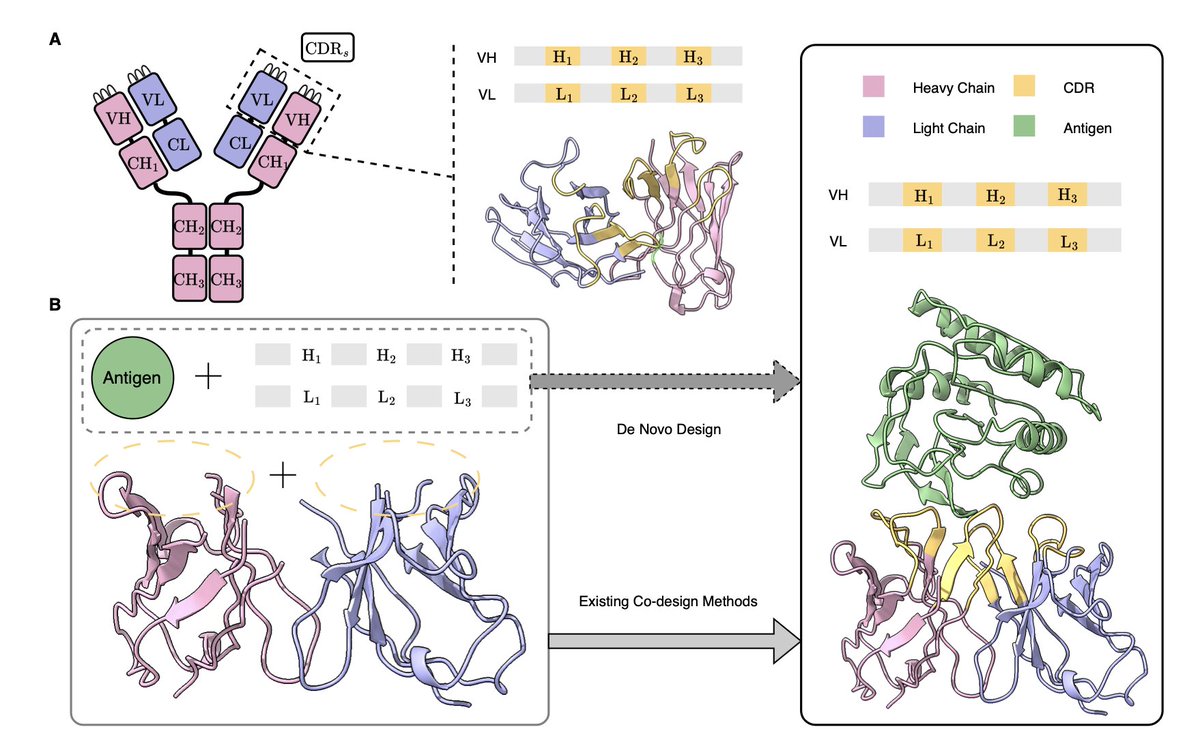
1/ IgGM is a novel generative model designed to facilitate the de novo design of antibodies and nanobodies with functional specificity, focusing on their ability to bind specific antigens. This model uniquely generates both the sequences and structures of antibodies in a single step.
2/ The model consists of three main components: a pre-trained language model that extracts sequence features, a feature learning module to identify relevant features, and a prediction module to generate antibody sequences and predict the antibody-antigen complex structure.
3/ IgGM addresses a major challenge in antibody design by generating novel antibody sequences and their structures without the need for existing experimental antibody-antigen complex structures, making it suitable for scenarios involving new antigens.
4/ The model is capable of designing antibody CDR regions, which are crucial for antigen binding, and can also predict and design entire antibody structures, a significant advancement over existing methods that often require pre-existing structures or templates.
5/ IgGM excels in both antibody and nanobody design tasks, achieving superior performance in multiple design scenarios, such as generating antibodies with high specificity and binding affinity to antigens, outperforming previous methods in terms of sequence and structure fidelity.
6/ Its ability to design antibodies and nanobodies for specific epitopes, including the design of multiple CDR regions simultaneously, provides a versatile solution for therapeutic and diagnostic applications.
7/ Experimental results demonstrate IgGM's impressive accuracy, including higher success rates in docking performance and lower RMSD values compared to existing methods, showcasing its potential in the rapidly growing field of AI-driven drug design.
💻Code: https://t.co/RwGhkzzdBV
📜Paper: https://t.co/tNJ64mQHn9
#AntibodyDesign #NanobodyDesign #GenerativeModels #MachineLearning #AIinHealthcare #DrugDiscovery #Bioinformatics #ComputationalBiology #DeepLearning #AIforMedicine #ProteinDesign
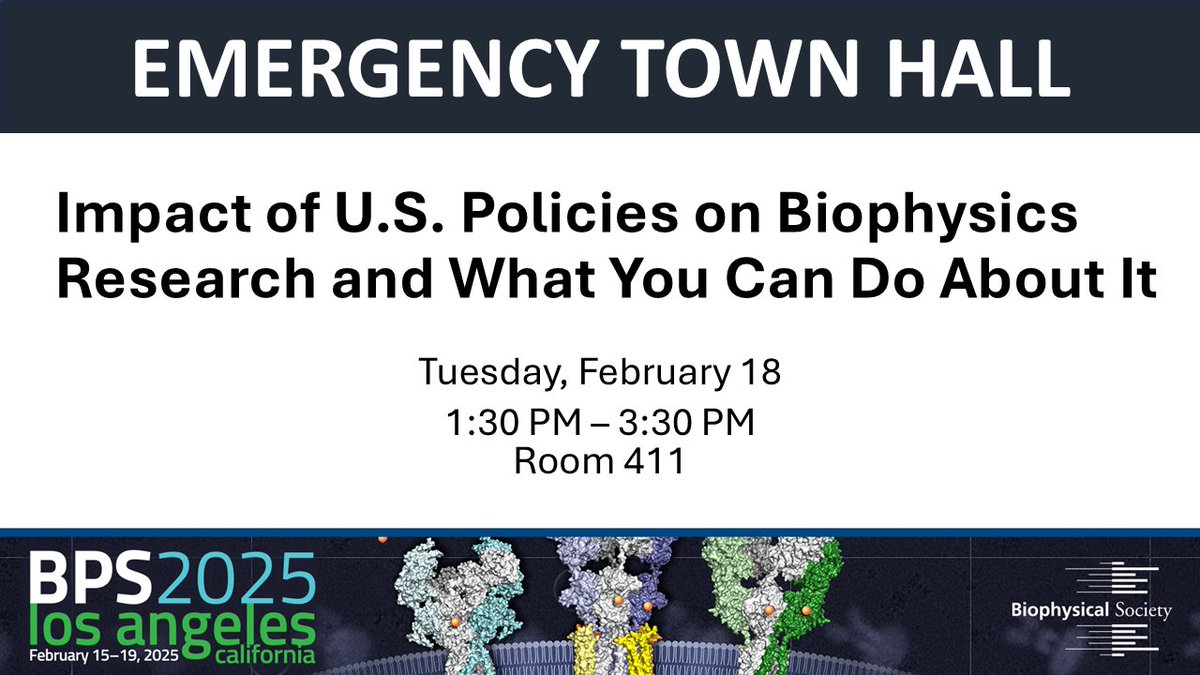
Emergency town hall at #BPS2025
Impact of U.S. policies on biophysics research and what you can do about it.
Tuesday, February 18
1:30 pm - 3:30 pm
Room 411
Making intrabodies from antibodies just got easier! Learn how we made 𝟭𝟵 intrabodies to bind and light up peptides and histone modifications in live cells. And thanks to Academia, all sequences are freely available. (video credit: Yuko Sato @YukoSatoT2) https://t.co/QCwflxYH1m