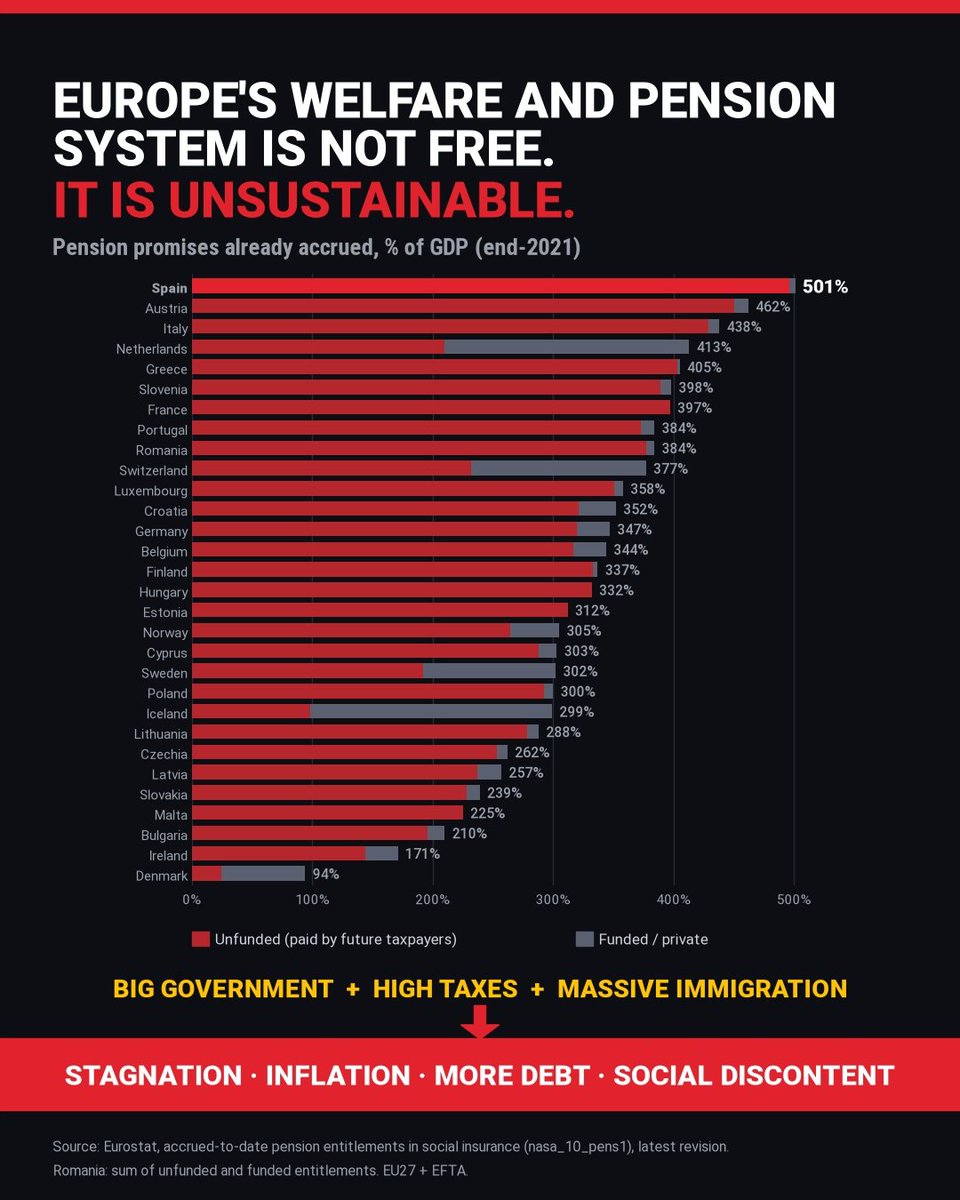
For decades, European politicians said that high taxes, big government, and immigration were essential to preserve the welfare state and the pension system.
Now, all they delivered was stagnation, more debt, social discontent, inflationism, and an unsustainable pension system.
A sovereign debt crisis during commodity-driven inflation is a completely different beast from Europe 2011.
2011 was largely a liquidity, funding and confidence crisis.
liquidity crises can be attacked with balance sheets.
ECB expands.
LTROs roll out.
Sovereign bonds get backstopped.
Fed supplies dollar liquidity through swap lines.
Funding stress falls.
Spreads compress.
The system had a monetary escape valve.
A supply shock removes that luxury.
If oil, gas, food and industrial inputs are driving inflation higher while growth is already weakening, the central bank is trapped.
If it tightens hard enough to defend the currency and crush inflation:
Growth weakens further.
Debt-service costs rise.
Sovereign spreads widen.
Banks holding that sovereign debt weaken.
Fiscal deficits worsen.
But if it steps in aggressively to suppress yields and save sovereigns:
Liquidity expands.
Real yields stay deeply negative.
The currency comes under pressure.
Imported commodities become even more expensive.
Inflation gets another leg higher.
That is the nightmare.
In 2011, central banks were fighting a shortage of liquidity.
In a commodity-driven supply crisis, they are fighting a shortage of real resources.
You can print euros.
You cannot print oil and productive capacity.
And this is where sovereign debt becomes dangerous.
Highly indebted governments need low nominal yields to survive.
But persistent commodity inflation demands high real yields to defend purchasing power and the currency.
Those two requirements are directly in conflict.
So eventually policymakers are forced to choose what gets sacrificed:
The bond market.
The currency.
Growth.
Or purchasing power.
This is why the next sovereign debt crisis, when it happens during a persistent commodity and supply shock, will be far harder to contain than Europe 2011.
The constraint is no longer the size of the central bank balance sheet.
The constraint is inflation credibility.
Once the market realizes the central bank cannot simultaneously defend the currency, suppress sovereign yields and fight supply-driven inflation, the entire macro regime changes.
A billionaire trader has spent 40 years trying to delete a one-hour documentary. It shows him making $100 million in a single afternoon. He predicted the crash that made it possible three months in advance. He has never explained why he wants the film gone. His name is Paul Tudor Jones. The film is on YouTube.
The documentary is called "Trader." PBS filmed it in 1987, three months before Black Monday. Jones was 32 years old, working from a small New York office, wearing shorts and a t-shirt, yelling at his phones, throwing paper across the room, and sleeping under his desk. The film captures him and his research partner Peter Borish overlaying a chart of the 1929 market on 1987, month by month. The two charts tracked within one percent. Borish said this is exactly what happened in 1929. Jones said if the analog holds, October is when it breaks.
On October 19, 1987, the Dow fell 22.6 percent in a single day. It remains the largest one-day percentage loss in stock market history. That afternoon, Tudor Jones covered his shorts and made roughly $100 million. He was 33 years old. He was one of the very few traders on the street who came out ahead.
He tried to bury the tape because it made him look reckless in a professional world that punished swagger. Twenty years of legal effort did not delete it. Someone kept a copy. It is on YouTube. It has fewer views than most makeup tutorials.
The film is not really about a crash. It is about a specific philosophy of trading. Jones is shown building conviction slowly, sizing carefully, then striking hard when the setup arrives. He is never once shown making a random bet. He is shown doing the same thing five times a day, every day, for three months.
His signature line, repeated across a 45-year career:
"The most important rule of trading is to play great defense, not great offense."
He does not try to be right. He tries not to lose. He sets stops tight, cuts positions fast, and never averages down on a loser. Every trade in the film follows this template.
Tudor Investment Corp, the fund he founded in 1980, has compounded at roughly 19 percent a year for 45 years. He is 71 years old and still trading. His method has not changed since the film.
The lesson: greatness in markets is a refusal, not a talent. Refusal to be reckless. Refusal to be certain. Refusal to average down. Refusal to trust yourself in a drawdown. Tudor Jones has refused those refusals for 45 years.
The tape is free. The philosophy is repeated in every trade. Most traders will never watch it.
Dimon notes Europe’s GDP has fallen from 90% of America to 70% and is still eroding.
Europe has become the warning label for the rest of the world: this is what happens when you treat growth, energy, and industry as problems to be punished instead of foundations to be strengthened.
Paul Tudor Jones predicted the 1987 crash, made $100 million, then spent years trying to destroy this footage
you will watch him lose $6 million in one afternoon, sit in his chair and say "total devastation" then make it all back with 100% interest
This documentary will change how you think about risk forever
Bookmark & watch it. Then read the post below - $90 billion from being right just 54% of the time↓
The people who won, lost first. they lost hard, they lost stupid, they lost everything, more than once. and one time they didn't lose, and that was it. nobody who made something real had support while making it. nobody. they stood there like idiots. family said no and left, friends laughed, everybody watching, waiting for the fail. and maybe the fail came maybe it took everything, but they didn't die. and they got back up and did it again stupid like before, until the universe got tired of fighting them and surrendered. you cant tell beforehand which is will kill or coronet you. you walk through, or turn back. and if you turn back, you join the other turners, who live forever with no light in their bones
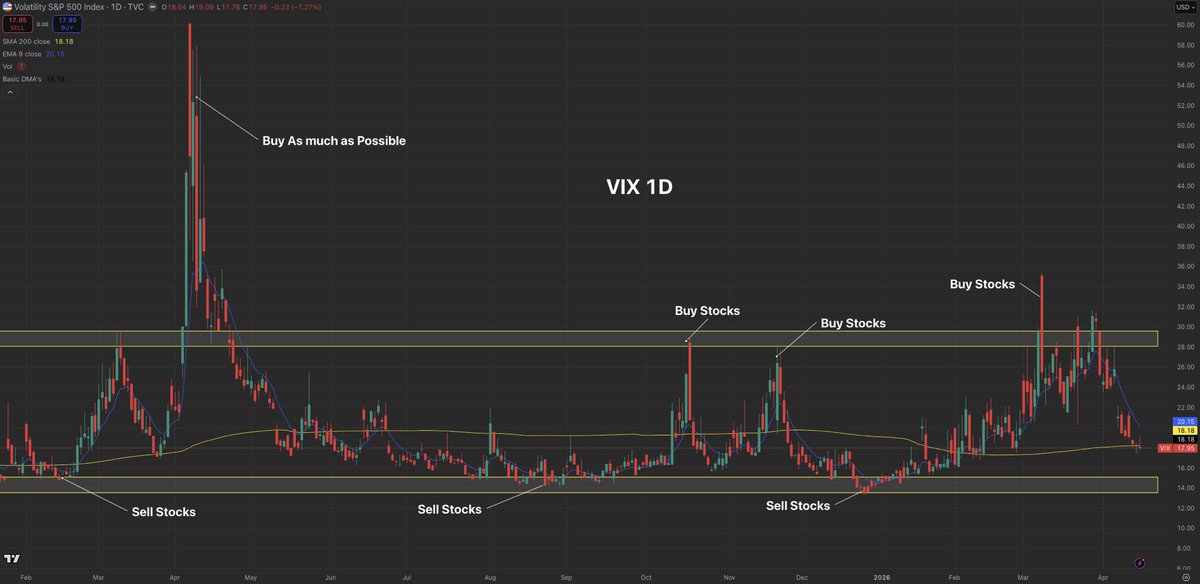
This simple rule has proven success, & guarantees your portfolio to outperform the S&P 500 year after year…
Buy stocks when $VIX is $30.
Buy ever more stocks when $VIX is above $45+
Sell stocks when $VIX hits $14.
& repeat endlessly!!
$SPY TRUMP PLAYED MARKET‼️
There is a box full of narratives to attach to every major move in market. I will not waste anyone’s time discussing military aspect; I only care about market. Bessent is right by Trumps side and will always guide admin through market conditions.
Smart money was positioned short distribution prior to Iran war. Iran triggered a consensus short trade. Markets don’t crash when positioning is prepared. Markets crash when complacent and unprepared for shocks. Market is extremely vulnerable going into Monday; put wall 660; call wall 685.
We now know Trump put is somewhere around SPY 630. The ceasefire was never serious. It was a narrative to squeeze market. Here we are back at top of range. (Q2 range 620-685) Market has bought Trump time to press harder militarily. Market will decide how long.
Trade thesis for down move starting Thursday was based on factors far beyond Iran (see prior posts). We will build out trend structure if market wants to attempt higher. Caution building out hypothetical trades unless they are hedges. Need to focus on high probability trades regardless what Trump does.
If you are bullish you wanted to see a retrace and hold no matter what. Watching for depth. I don’t recommend calls until 200MA shows it will hold. If not 655 (50fib)/ 549 (61.8fib) key levels. Thats for another day.
Bears—(One step at a time)
673-50MA and -gex flip
663-50 fib ceasefire squeeze
661-200MA
659-gap fill
655-50 fib 629 low to 682 high
Bulls warning: relief rally until proven
Bears warning: retracement until proven
I am tactical bear until 200MA. Too many variables to speculate beyond. I am also flexible to buyers strength if we hold major levels. Never married to a direction.
I've spent ~$26k on prop firm evals and made $285k+ back :))
I have a masters in computer science. I found trading on TikTok. I started 14 months ago.
Here's the full story (thread)
Rural Europe is going to become a lifestyle destination for millions, not just Europeans.
Thousands of historic towns sitting half-empty. Stone houses for €30-80K. Solid houses built for generations, realistically yours for under €200K. Often with incredible tax regimes.
The two things that were missing: internet and services. Starlink fixed the first. And these aren't the rural areas of the 90s, many towns close to larger cities are now perfectly served. People are moving back.
This is my "Starlink guide" to rural Europe: 10 places I'm considering for living or investment myself.
🧵
🚨 WOW —Tumors literally liquefied by sound waves. No scalpel. No chemo. No radiation. None of those horrible side effects.
This is histotripsy: focused ultrasound blasts destroy cancer cells mechanically in minutes, sparing healthy tissue completely.
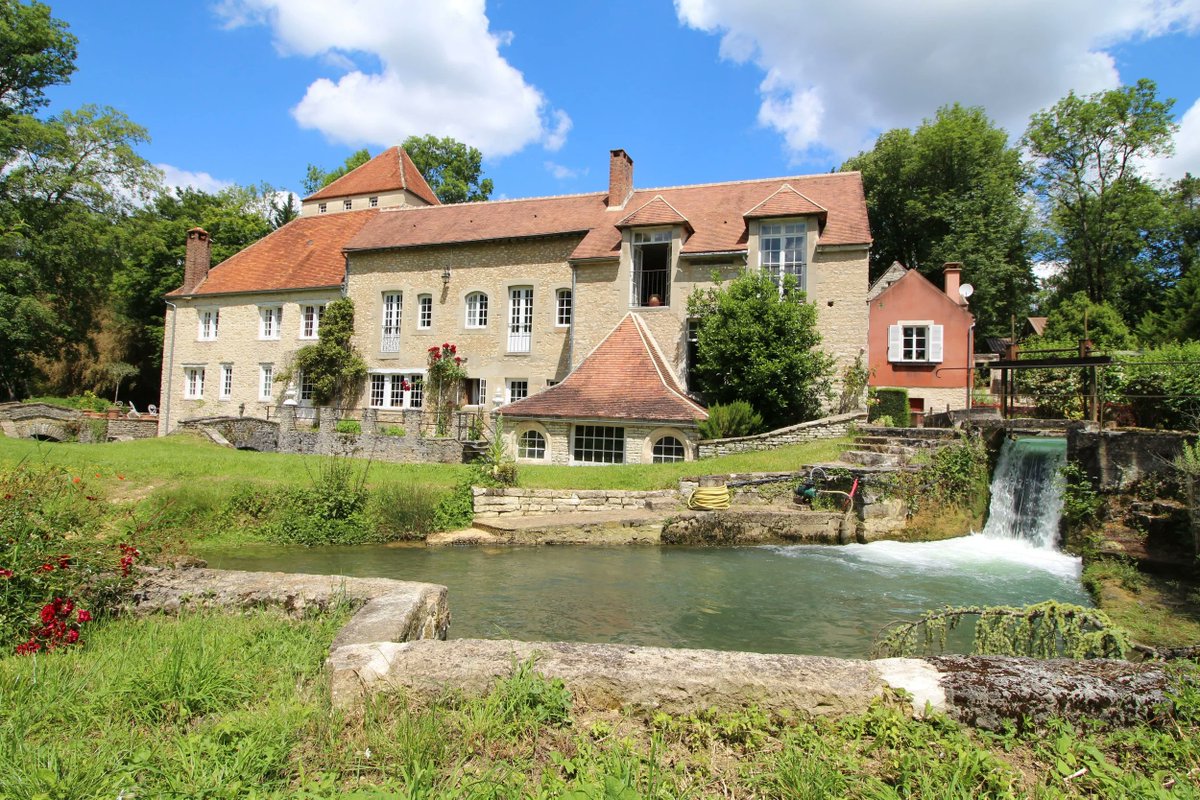
Someone is selling a manor estate in Burgundy with a private river, waterfalls and a natural swimming pond. 2 hours from Paris.
Two buildings arranged around a courtyard, 1,700m² (18,298 sq ft) in total, 12 bedrooms, an artist's studio, stables and 7 hectares (17 acres) of land.
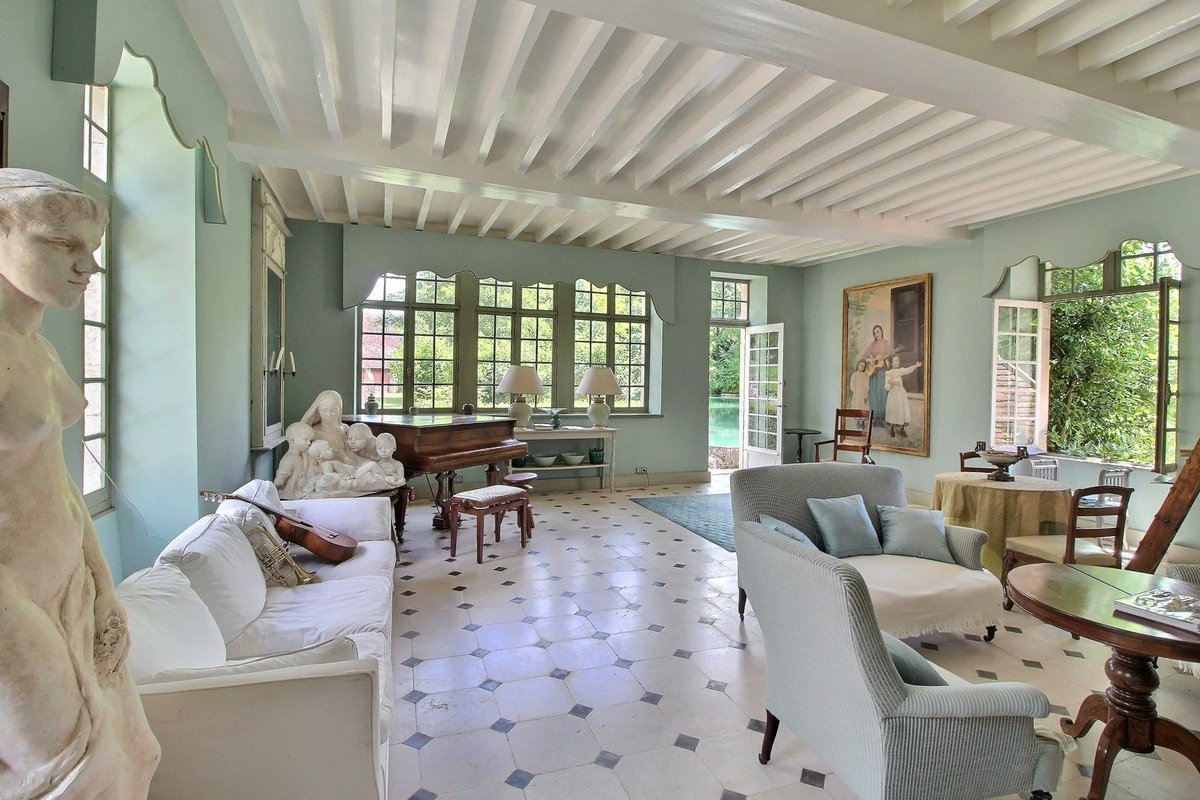
Inside there's a music room with a piano, a library in the tower, a writing room, and a dining room built around a fireplace large enough to roast a whole animal. Herons and wild ducks live on the property year round. The river has a depth of 3 metres and you can swim in it all summer.
Near Vézelay, a UNESCO World Heritage Site. Asking price: €1.39M ($1.6M).
The French sure do know about living well. A river on your grounds, your own land to walk, swimming in summer, dinner outside.
What's the French word for this kind of life?