Join us for expert insights on business & economics in ⤵️
🇹🇭Thailand
🇻🇳Vietnam
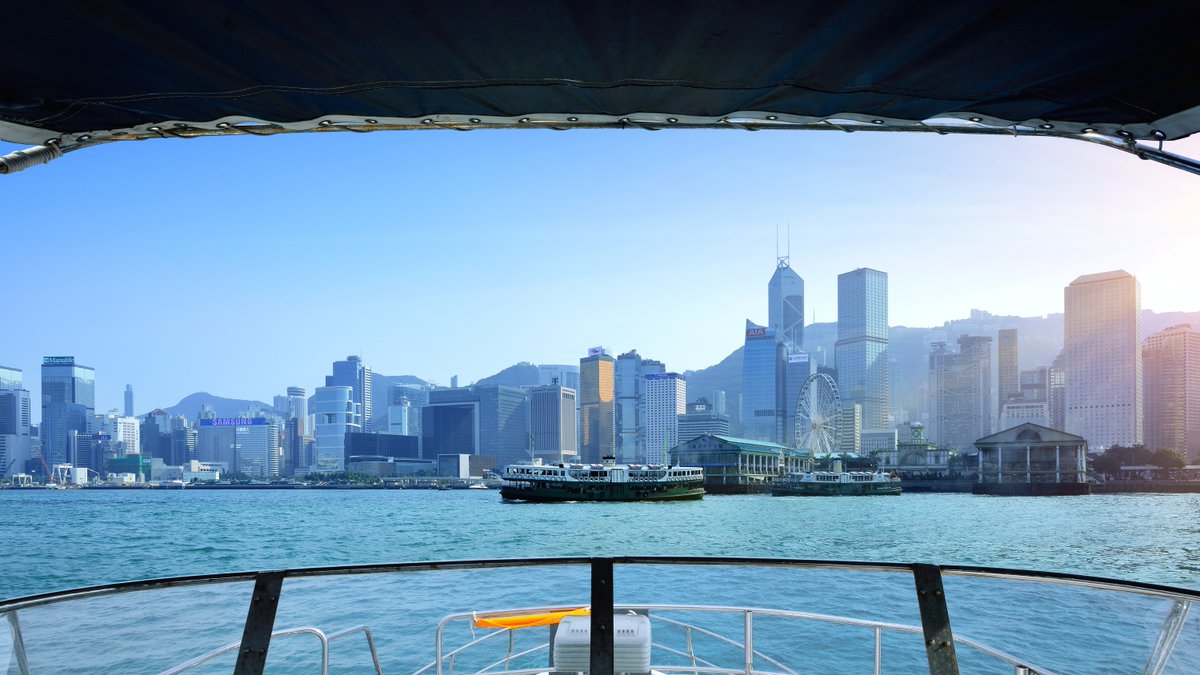
🇭🇰Hong Kong
➡️ Learn how to set up your 100% foreign-owned company with our tailored consulting services.
✅ Stay updated with the latest legal & economic business news.
#ForeignBusiness #BusinessSetup #ThailandBusiness #VietnamBusiness #HongKongBusiness
This is how you queue in Thailand 🇹🇭
No standing, no pushing, no stress.
Just take off your shoes, line them up neatly, sit on the steps, chill with everyone… and wait patiently until your turn comes.
Peak Thai culture: respect, good vibes and “mai pen rai” energy all the way! 🙏
How does queuing work in YOUR country? Drop it in the comments 👇
#Thailand #ThaiCulture #QueueInThailand #ThaiLife #TravelThailand
🏗️ Central Group doubles down on expat-driven retail — Phuket & Pattaya next
Thailand’s dominant retail conglomerate isn’t slowing down.
Central Land and Development is deploying THB 730M (~$19.9M USD) across two premium community malls targeting high-spending expats and upscale tourists — markets where daily lifestyle demand runs 365 days a year.
Pop Phuket — Bang Tao Beach, Cherngtalay
📅 Opening: Late 2026
📐 GLA: 5,490 sqm
💰 Investment: THB 300M
➡️ 60%+ F&B | 40% premium retail, spa & lifestyle
🎯 Target: 1M visitors/year — 80% foreign nationals
The POP concept stands for:
✔ Playful Design (pop-art aesthetic)
✔ Open layout and natural light
✔ People-first community hub
Tops Wongamat — Pattaya
📅 Opening: 2026
📐 GLA: 4,711 sqm
💰 Investment: THB 430M+
➡️ 80%+ F&B & grocery | 20% premium retail & beauty
✔ Co-developed with Centara Hotels & Resorts
✔ Positioned in Pattaya’s highest-concentration luxury residential & 4–5★ hotel corridor
📊 Estimated Lease Rates
🔹 Pop Phuket: THB 900–1,800/sqm/month
(Highest tiers for F&B with full kitchen)
🔹 Tops Wongamat: THB 700–1,500/sqm/month
(Slightly more competitive market)
➕ CAM/service charge: THB 80–150/sqm/month
➕ VAT: 7%
➕ Utilities separate
Standard lease terms:
✔ 3–5 year contracts, Land Dept. registration
✔ Deposit: 2–3 months rent
✔ Annual escalation: 5–8%
✔ 20–40% brand premium over independent mall rates
Central Group operates 40+ major malls across Thailand, with 3,500+ retail outlets in 63 provinces.
Their community mall strategy consistently targets clusters where 70–80% of residents are foreign nationals — a deliberate play on stable, high-disposable-income demand.
Both projects represent a clear market signal: premium experiential retail in Thailand’s top expat corridors remains a high-conviction asset class.
#ThailandBusiness #CentralGroup #Phuket #Pattaya #RetailThailand #FDI #ExpatThailand #MarketEntry #SEAInvestment
THAILAND'S STATUTORY VAT RATE IS 10%. IT'S BEEN 7% FOR OVER A DECADE — AND HERE'S WHY THAT MATTERS FOR EVERY FOREIGN INVESTOR IN THE REGION.
How is 7% still in effect?
The reduced rate is maintained through rolling Royal Decrees. Every year the debate resurfaces — in April 2026 a Senate economic committee again recommended a phased increase of 1% per year back to 10%.
The government keeps extending it anyway.
Current confirmed rate: 7% through at least 30 September 2026 — with credible indications it will hold through September 2027 to support economic conditions.
No increase has happened. And that keeps Thailand among the most competitive tax environments in the region.
How does Thailand compare to its ASEAN neighbours?
🇵🇭 Philippines — 12%
🇮🇩 Indonesia — 12%
🇱🇦 Laos — 10%
🇸🇬 Singapore — 9%
🇻🇳 Vietnam — 8%
🇹🇭 Thailand — 7%
🇲🇾 Malaysia — Sales Tax 10% + Service Tax 8%
🇲🇲 Myanmar — Business Tax 5% (no VAT)
🇧🇳 Brunei & 🇹🇱 Timor-Leste — no VAT
Thailand sits at the bottom of the ASEAN VAT table. That's not accidental — it's deliberate policy to support domestic consumption, investment, and business competitiveness.
What does 7% VAT actually mean for your business?
🔛 Lower input costs — you pay less VAT on goods, raw materials, equipment and services. At scale (office lease, warehouse, supplier purchases), the difference is material.
🔛 Faster VAT recovery — input tax is credited or refunded more efficiently, improving cash flow for manufacturers, importers and construction companies.
🔛 Zero VAT on exports — goods and services exported from Thailand carry 0% VAT, with full input VAT reimbursement.
🔛 Price competitiveness — your end prices are structurally lower than competitors operating out of 10–12% VAT jurisdictions.
The bottom line:
Whether you're in manufacturing, trading, services, logistics, IT, tourism or real estate — the 7% rate is a real structural advantage, not a footnote.
While neighbouring markets raise their rates, Thailand is deliberately holding the line to remain the region's preferred business destination.
For foreign companies operating through BOI or a standard Thai entity, this is one of the clearest and most consistent tax advantages available anywhere in Southeast Asia.
The rate will eventually go up. Until it does — every year at 7% is a year your competitors in Manila or Jakarta are paying 12%.
#Thailand #VAT #TaxPolicy #ASEAN #ForeignInvestment #ThailandBusiness #BOI #CompanyFormation #TaxPlanning #SEABusiness #MarketEntry #ThailandTax #BusinessLaw
THAILAND'S MOST POWERFUL TRADE TOOL FOR FOREIGN INVESTORS ISN'T BOI. IT'S ATIGA — AND MOST PEOPLE OVERLOOK IT ENTIRELY. ⚡
What is ATIGA?
The ASEAN Trade in Goods Agreement has been in force since 2010. In 2025–2026 it remains Thailand's most actively used trade agreement — Thai companies claimed preferences on over $33 billion USD in trade.
Nearly 99% of intra-ASEAN product categories carry zero or significantly reduced tariff rates — provided you meet the Rules of Origin and hold a valid Form D certificate.
✅ The Second ATIGA Protocol entered into force in 2025 — fully digital certificates of origin, streamlined procedures, and further removal of non-tariff barriers.
When does 100% foreign ownership become possible for an import business?
1️⃣ Manufacturing for export (the most reliable path)
Import raw materials, components & semi-finished goods from Malaysia, Vietnam, Indonesia or Singapore at 0% tariff under ATIGA → process in Thailand → export finished goods.
Manufacturing for export falls outside the restricted lists of the Foreign Business Act — so 100% foreign ownership is permitted by default.
Layer BOI on top and you also get: 🟡 Full duty exemption on imported machinery & raw materials 🟡 Corporate income tax holidays up to 8 years 🟡 Land ownership rights in industrial zones
2️⃣ Export-only trading
Source goods across ASEAN under ATIGA → re-export directly to Europe, the US, Australia.
✅ 100% foreign ownership permitted
✅ No Foreign Business License required
⚠️ The one model that's more complex:
Pure import-for-domestic-distribution (import + sell inside Thailand) requires either a Foreign Business License (FBL)or substantial registered capital under FBA List 3.
This is why most successful foreign importers deliberately structure around "import → value-add → export." It's not just tax efficiency — it's the cleanest path to full ownership.
What's actually being imported under ATIGA?
🟡 Electronic components & integrated circuits (Malaysia, Singapore, Vietnam)
🟡 Mineral fuels, petroleum products & chemical inputs (Malaysia, Indonesia)
🟡 Plastics, rubber & palm oil
🟡 Auto components & industrial machinery
Thailand feeds these directly into its primary export engine: automotive and electronics manufacturing.
Foreign company owners get a double advantage — cheap ATIGA inputs + full access to BOI incentives on the output side.
What does Thailand ship back into ASEAN?
🟢 Vehicles & trucks, air conditioning units, rubber goods, processed agricultural products, electronics.
Importers who are also manufacturers slot naturally into regional supply chains — and qualify for additional SEZ and tax incentives on top.
💡 Three things to get right from day one:
Rules of Origin are non-negotiable. One incorrectly completed Form D and your entire tariff saving disappears.
Consider the Eastern Economic Corridor (EEC) or border SEZs — maximum ATIGA + BOI incentives stack there.
Run supplier due diligence early. Experience shows 15–20% of initial ASEAN supply chains need adjustment to meet origin criteria.
ATIGA + BOI + 100% foreign ownership is a real combination — not a theoretical one. The structure just needs to be set up correctly from the start.
#Thailand #ATIGA #ASEAN #ForeignInvestment #CompanyFormation #BOI #ForeignBusiness #TradeAgreement #ManufacturingThailand #EEC #MarketEntry #FBA #SupplyChain #SEABusiness
CAN A FOREIGN COMPANY OPEN A REPRESENTATIVE OFFICE OR BRANCH IN THAILAND ?
Yes — here's how it works.
The legal framework:
Any entity registered outside Thailand is treated as a foreign business under the Foreign Business Act (FBA) 1999.
This means foreign companies must register formally before operating in Thailand — but the structure you choose changes everything.
🚨 Representative Office vs. Branch — what's the difference?
Representative Office
Designed for non-revenue-generating support activities only:
🟡 Market research & analysis 🟡 Supplier sourcing & quality control 🟡 Product information & promotion 🟡 Coordination with the head office
No commercial transactions. No income generation.
✅ 100% foreign owned
✅ No Foreign Business License required (as long as activities remain non-commercial)
✅ No corporate tax (no income = no tax) — annual reporting still required
✅ 1 Thai employee per foreign work permit holder
👉 Best for: market exploration, early-stage presence, procurement support.
Branch Office
Designed for full commercial operations — the branch actively generates revenue in Thailand.
✅ 100% foreign owned
⚠️ Foreign Business License (FBL) required for most activity types
📊 Corporate tax: 20% on Thailand-sourced income 📋 VAT registration + Tax Identification Number (TIN) mandatory
✅ Standard staffing ratio: 4 Thai employees per foreign work permit holder
👉 Best for: companies ready to trade, invoice, and operate commercially in Thailand.
Key requirements for both structures:
🟡 Financial statements for 1–2 years demonstrating capacity to cover operating expenses
🟡 Notarised and translated corporate documents from the home jurisdiction
🟡 No minimum operating history required — a strong capital base or partnership agreements can support a newer entity's application
The bottom line:
If you're testing the Thai market → Representative Office gets you in without a full commercial commitment.
If you're ready to sell, contract, and operate → Branch Office is the right vehicle — just factor in the FBL process and tax obligations from day one.
#Thailand #ForeignBusiness #BranchOffice #RepresentativeOffice #FBA #ForeignBusinessAct #CompanyFormation #ThailandBusiness #MarketEntry #FDI #SEABusiness #BusinessLaw #FBL
THAILAND JUST INTRODUCED A TAX DEDUCTION OF UP TO ฿200,000 FOR INSTALLING SOLAR PANELS ON YOUR HOM
The legal basis:
Royal Decree No. 805, published in the Royal Gazette, grants individual taxpayers a personal income tax deduction for purchasing and installing an on-grid rooftop solar system on a residential property.
📅 Effective: 3 March 2026 — 31 December 2028
Who qualifies?
✅ Individual taxpayers only — both Thai residents and non-residents
✅ System must be connected to the grid of MEA or PEA (Thailand's metropolitan or provincial electricity authorities)
✅ Maximum installed capacity: 10 kW per property
✅ Only one system per taxpayer is eligible
The deduction is claimed once, in the tax year the grid connection is successfully completed.
How much can you deduct?
The deduction equals your actual costs (equipment + installation) — capped at ฿200,000.
Expenses must be incurred between 3 March 2026 and 31 December 2028.
🚫 Installations completed before 3 March 2026 are not eligible
🚫 The same expenses cannot be used to claim any other tax benefit simultaneously
⚡ Bonus deduction for energy-efficient equipment:
Purchasing high-efficiency energy-saving equipment or materials carrying a 5-star DEDE/EGAT label qualifies for an additional exemption worth 50% of the costs incurred.
🟡 Purchases must be made from VAT-registered suppliers
🟡 An e-Tax Invoice is required — keep it on file
The bottom line:
For homeowners in Thailand, this stacks two advantages: lower electricity bills long-term + a meaningful tax refund on the upfront investment.
With quality solar systems typically running ฿150,000–฿250,000 installed, the ฿200,000 deduction covers the bulk of the cost.
Royal Decree No. 805 is in force. If you own residential property in Thailand, the window is open — and it closes end of 2028.
#Thailand #SolarEnergy #TaxDeduction #RenewableEnergy #ThailandTax #GreenInvestment #SolarPanels #PersonalIncomeTax #ResidentialProperty #ThailandProperty #CleanEnergy #Expat
Thailand charges 7% VAT — but tourists can get it back before boarding. Here's exactly how it works.
Who qualifies?
The VAT refund is available exclusively to tourists — non-Thai nationals who are not residents of Thailand — departing via an international airport (Suvarnabhumi, Don Mueang, or Phuket).
🚫 No refund for land/sea border exits
🚫 No refund for airline crew members
🚫 Purchases must be made within 60 days of departure & goods must leave unused (consumables sealed)
What's covered? Any purchase from a store displaying the "VAT Refund for Tourists" sign.
✅ Minimum spend: ฿2,000 per store per day (VAT inclusive)
Eligible categories:
🟡 Electronics (smartphones, laptops)
🟡 Clothing, accessories, cosmetics
🟡 Jewellery
❌ Excluded: alcohol, tobacco, firearms, explosives
iPhones and jewellery (gold chains, silver earrings) are fully eligible — as long as the item is new and unused during your stay in Thailand.
📱 Real example: iPhone 17 (256GB)
Retail price at Apple Store / iStudio Bangkok: ฿29,900
Thailand VAT = 7% Refund calculation: ฿29,900 ÷ 1.07 × 0.07 = ~฿1,956 back in your pocket
Step-by-step process:
1️⃣ At the store Bring your passport. Request the Tourist VAT Refund form (P.P.10) at checkout. The store fills it in — keep it with your original tax invoice.
2️⃣ At the airport — before check-in Arrive early. The process takes 30–60 min (longer during peak seasons).
Head to the VAT Refund office near the departure entrance.
➡️ For electronics or purchases over ฿20,000 — present the item to a customs officer. They'll verify it's unused, may ask you to power it on, and will stamp your P.P.10.
3️⃣ After passport control At the VAT refund counter airside, present:
🟡 Passport
🟡 Stamped P.P.10 form
🟡 Original tax invoice
✅ Under ฿30,000 → cash (THB), bank card, or digital wallet (e.g. TrueMoney) ✅ Over ฿30,000 → cheque or bank transfer
💍 Note on jewellery:
Gold, silver & gemstones from VAT-registered retailers (Pandora, local jewellers) all qualify. Don't wear the pieces before your flight — they need to present as new at customs.
Most tourists leave Thailand without claiming this. Don't be one of them.
#Thailand #VATRefund #TaxFreeShopping #ThailandTravel #iPhone17 #TravelTips #BangkokShopping #ThailandTax #SmartTravel #SEATravel #TouristGuide #Suvarnabhumi
🇻🇳 April 30, 1975 — the day that changed Vietnam forever.
Today marks the 51st anniversary of Reunification Day — one of the most powerful moments in modern Asian history.
At 11:30 AM on April 30, 1975, Tank No. 843 of the North Vietnamese People’s Army crashed through the gates of the Independence Palace in Saigon.
The red flag with the golden star was raised. The Southern President announced surrender. A 20-year war was over. 🌟
What followed wasn’t just a military victory. It was the end of a divided nation.
On July 2, 1976 — Vietnam was formally reunified as the Socialist Republic of Vietnam. One country. One flag. One future.
Today, Ho Chi Minh City and Hanoi are seas of red. Military parades. Patriotic concerts. Fireworks over the Saigon River. Veterans honored as living legends. Families gathering over pho and bun cha.
🍜 Thousands visiting the Independence Palace — where it all began.
For foreign investors and business owners — this week matters practically too.
Vietnam is on holiday April 30 – May 3. Offices reopen Monday, May 4.
Plan your deal timelines accordingly. 🗓️
But beyond logistics — this day is a reminder of something deeper. Vietnam rebuilt itself from the ruins of one of the 20th century’s longest wars.
Today it’s one of Southeast Asia’s fastest-growing economies. That resilience isn’t accidental. It’s cultural. 💪
Understanding Vietnam’s history isn’t just respectful — for anyone doing business here, it’s essential context.
The national identity, the work ethic, the pace of development — it all connects back to moments like this one.
🇻🇳 Chúc mừng ngày 30 tháng 4. Happy Reunification Day, Vietnam.
#Vietnam #ReunificationDay #30April #VietnamHistory #VietnamBusiness #DoingBusinessInVietnam #ForeignInvestment #SEAsia #AseanBusiness #InvestInVietnam
THAILAND & AUSTRALIA HAVE ONE OF SOUTHEAST ASIA'S MOST UNDERRATED TRADE RELATIONSHIPS — AND IT'S ONLY GETTING STRONGER.
The foundation: TAFTA (Thailand-Australia Free Trade Agreement), in force since January 1, 2005.
⚡ In two decades, bilateral trade has tripled.
Thailand's exports to Australia hit approximately ฿450 billion in 2024. TAFTA eliminated or significantly reduced tariffs on 94% of Australian product categories — with the final dairy restrictions lifted in 2025.
🇦🇺 What does Thailand import from Australia?
🟡 LNG & crude oil — over ฿51 billion
🟡 Gold, silver & wheat
🟡 Dairy products — over ฿3.3 billion
Australia supplies 58–79% of all imported beef consumed in Thailand. In 2025, volumes hit a record 32,931 tonnesworth ~฿14 billion (~A$380M).
Premium Australian beef dominates hotel menus and the expat market — backed by 235 years of ranching heritage dating to 1788.
🇹🇭 What does Thailand export to Australia?
🟡 Vehicles — passenger cars & delivery trucks (the #1 category)
🟡 Air conditioning & climate control equipment
🟡 Machinery, plastics, rubber & electronics
In January 2026 alone, Thai exports exceeded A$2.7 billion — up +125% year-on-year.
⚡ Key structure note for foreign investors:
Export-focused companies (export-only trading & manufacturing for export) can be registered with 100% foreign ownership — no Thai partner required, no Foreign Business License needed.
TAFTA is a real structural advantage. If your business touches Thai-Australian trade flows, the legal setup is simpler than most investors expect.
#TAFTA #Thailand #Australia #FreeTradeAgreement #ThailandTrade #ForeignInvestment #CompanyFormation #ExportBusiness #ThailandBusiness #MarketEntry #SEATrade #BusinessLaw
DO YOU NEED TO REGISTER A COMPANY BEFORE APPLYING FOR AN FBL OR BOI PROMOTION IN THAILAND?
The answer depends on which route you're taking — and the difference matters.
✅ Foreign Business License (FBL) Company registration is mandatory before you apply. The good news: you can set it up as a 100% foreign-owned Thai Private Limited Company from day one.
✅ Board of Investment (BOI) Registration is not required at the application stage — you can apply as the project initiator. That said, many investors incorporate before or right after receiving the Approval Letter to streamline the next steps.
What can a registered company do while the application is pending?
If you've already incorporated (especially under BOI), limited preparatory activities are permitted during the review period:
🟡 Admin: opening a bank account, legal & accounting setup
🟡 Market research
🟡 Pre-commercial marketing: website, branding, competitor analysis — no revenue-generating activity
🚨 What's strictly off-limits before final approval?
Any activity that constitutes "doing business" under the Foreign Business Act is prohibited:
🔴 Sales of goods or services
🔴 Manufacturing
🔴 Import/export under your core business activity
🔴 Any commercially operational activity
Once your license and approvals are in hand — you're clear to operate fully as stated in your business plan. ✅
#Thailand #BOI #FBL #ForeignBusiness #ForeignBusinessAct #CompanyFormation #ThailandBusiness #ForeignInvestment #MarketEntry #SEABusiness #BusinessLaw #ThailandInvestment
Opening a bank account in Vietnam as a foreigner — the honest timeline:
For individuals:
→ 1–3 days with valid passport + visa
→ Recommended: Vietcombank, Techcombank, HSBC Vietnam
For companies:
→ 2–4 weeks post-incorporation
→ Requires: ERC, IRC, legal rep passport, charter
⚠️ Transferring profits abroad requires:
→ Audited financials
→ Completed tax obligations
→ State Bank of Vietnam registration
Repatriation is legal.
The paperwork is the process. Respect it.
#Vietnam #Banking #VietnamBusiness #ForeignInvestor #Repatriation #MarketEntry
Hiring in Vietnam: what the Labor Code actually means for foreign employers.
📋 Probation max: 60 days (professional roles)
💰 Minimum wage varies by region:
→ Zone 1 (HCMC/Hanoi): 4,680,000 VND/month
→ Zone 4 (rural): 3,250,000 VND/month
⚠️ Mandatory contributions:
→ Social insurance: 17.5% employer share
→ Health insurance: 3%
→ Unemployment: 1%
Labor is cheap. Non-compliance is not.
Budget for both.
#Vietnam #HiringVietnam #LaborLaw #HRasia #VietnamBusiness #ForeignEmployer
Hiring in Vietnam: what the Labor Code actually means for foreign employers.
📋 Probation max: 60 days (professional roles)
💰 Minimum wage varies by region:
→ Zone 1 (HCMC/Hanoi): 4,680,000 VND/month
→ Zone 4 (rural): 3,250,000 VND/month
⚠️ Mandatory contributions:
→ Social insurance: 17.5% employer share
→ Health insurance: 3%
→ Unemployment: 1%
Labor is cheap. Non-compliance is not.
Budget for both.
#Vietnam #HiringVietnam #LaborLaw #HRasia #VietnamBusiness #ForeignEmployer
The 4 business structures available to foreigners in Thailand:
1️⃣ Thai Limited Company — min. 51% Thai ownership (most common)
2️⃣ BOI-Promoted Company — 100% foreign ownership + tax perks
3️⃣ Foreign Business License — 100% foreign, restricted sectors, harder to get
4️⃣ Branch Office — extension of foreign parent, full liability
No single structure fits all.
Industry, revenue model, and exit strategy
determine the right answer.
Get this wrong at incorporation — and it costs you later.
#Thailand #BusinessStructure #ForeignBusiness #BOI #ThailandStartup #AsiaInvesting
Intellectual Property in Hong Kong — why it’s still Asia’s best jurisdiction.
✅ Common law system (fully independent IP courts)
✅ Patents registered in HK valid separately from China
✅ Copyright protection: life + 50 years
✅ Trademark registration: ~12–18 months, ~2,000 HKD
For tech companies and brands:
HK registration ≠ China registration
You need both. Separately. Urgently.
First-to-file in China.
Don’t learn this lesson the expensive way.
#IntellectualProperty #HongKong #IP #TrademarkAsia #TechBusiness #ChinaBusiness
Vietnam 2025: the manufacturing shift nobody is talking about.
10 years ago → low-cost garments & footwear
Today → semiconductors, precision electronics, EV components
Samsung, Intel, LG didn’t move billions into Vietnam for cheap labor.
They moved for infrastructure, stability, and a 97M-person domestic market growing at 6%+ GDP.
The window for early positioning is narrowing fast.
#Vietnam #Semiconductors #Manufacturing #EmergingMarkets #AsiaStrategy #VietnamFDI
The Greater Bay Area is the most underpriced opportunity in Asia right now.
9 mainland cities + Hong Kong + Macau
→ 86 million people
→ $1.9 trillion GDP
→ Larger than most G20 economies
HK’s role: international finance, legal gateway, IP hub
Shenzhen’s role: tech manufacturing, innovation
Guangzhou’s role: trade, logistics, retail
Foreign investors who understand how to straddle HK + GBA
are playing a different game entirely.
#GreaterBayArea #GBA #HongKong #Shenzhen #AsiaInvesting #FDI #ChinaBusiness
Vietnam’s middle class is the story most investors are sleeping on.
2010: 12M middle-class consumers
2025: 45M+
2035 projection: 75M+
📱 Smartphone penetration: 78%
🛒 E-commerce growth: 25% YoY
✈️ Outbound tourism: fastest growing in SEA
This isn’t just a manufacturing story anymore.
Vietnam’s domestic consumption is becoming an asset class of its own.
#Vietnam #MiddleClass #ConsumerMarket #Ecommerce #AsiaInvesting #EmergingMarkets
Hong Kong vs Singapore for holding company structure:
Hong Kong:
→ 0% tax on dividends received
→ 0% capital gains
→ 100+ tax treaties
→ Direct China market access
Singapore:
→ Exempt dividend scheme
→ Stronger SEA positioning
→ More predictable regulatory environment
The verdict:
China-facing business → Hong Kong
SEA-facing business → Singapore
Both? Structure in both.
#HongKong #Singapore #HoldingCompany #TaxPlanning #AsiaInvesting #OffshoreStructure