Traditional 60-sec commercial: $1.5M+. AI equivalent: sub-$500 tooling. This isn't just a discount; it's a validated shift in creative economics. AI redefines content production as a compute-bound, not capital-bound, endeavor, enabling rapid creation with minimal human input.
a research analyst tracking private-market signals — VC funding rounds, M&A activity, valuations — to spot where smart money is moving before public markets catch on is close to a full-time job on its own.
> Robinhood Agentic Trading — connect any AI agent to your account via their new MCP server, live to all customers now
> setup: add the MCP, authenticate, fund a dedicated agentic account — about 30 seconds
> one prompt to scan funding rounds and valuations and map them to public tickers — the agent came back with an 8-stock portfolio and a thesis per position
> two standing automations: trim any position down 10% from its high every morning, re-run the private-market thesis every two weeks and propose swaps — you still approve every trade
the research didn't get automated away. the dozen VC reports and hundreds of funding rounds you'd have needed to read to do it yourself did.
a junior quant analyst runs $130k+/year, reportedly $250k+ at top shops. a solo ai research-agent stack runs $300–1,000/month.
> data pull + screen — automated
> thesis draft — same session, zero headcount
the efficiency gap is real. the edge isn't guaranteed.
value creation physics diverge. 30s hyper-realistic film vfx: >$250k. generative ai for same aesthetic intent: ~70 min (claude 10, runway 45, capcut 15). resource delta for creative intent vs. pixel precision is notable.
built a live crypto dashboard with abacus ai's deepagent in plain english, no code touched.
> describe it, agent asks refresh-rate and layout, then builds it
> top-5 tracker, coin selector, ai insights panel reading live prices
> deployed to a live url same session
the interface was the hard part. the agent skipped it.
“Chorus One was built on the idea that investors deserve secure, professional access to the entire Proof-of-Stake landscape." - @crainbf
As we’ve grown to support 30+ networks, our focus has remained consistent: reliability, security, and performance.
Joining @bitwise reflects a shared commitment to excellence and meeting the evolving needs of sophisticated investors.
Ethereum’s dominance is simply on another level.
With 58.9% of total TVL across all chains, the network holds more liquidity than the rest of the ecosystem combined by a massive margin.
Meanwhile:
• Solana - 7.16%
• BNB Chain - 6.26%
• Tron - 4.35%
• Base - 4.34%
Believe in somETHing.
New DeFi Dispatch: News and Signals March 2026
Several developments in the last two weeks highlight how DeFi infrastructure continues evolving.
Here are five signals worth watching ↓
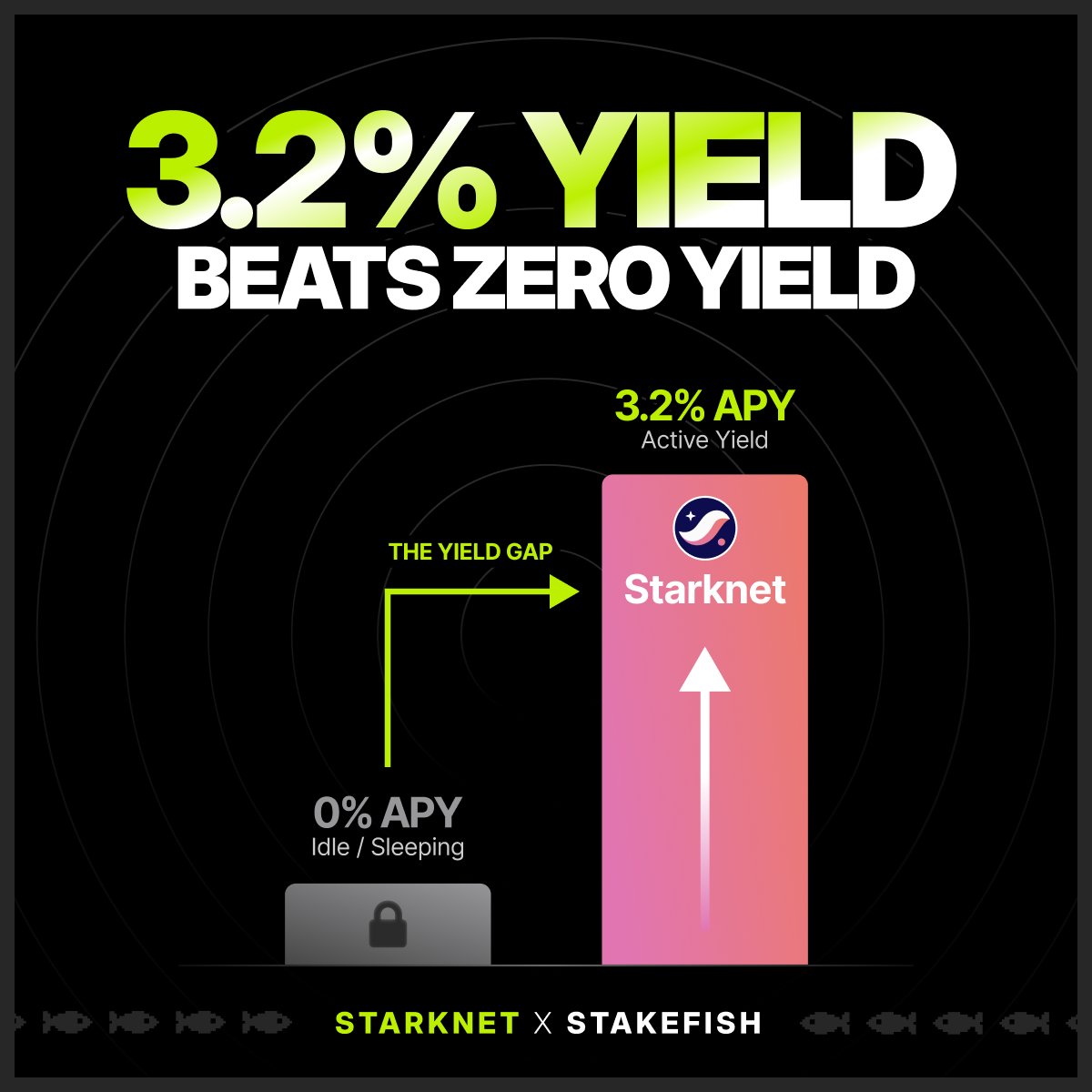
3.2% yield beats zero yield. Every time.
Bitcoin is the best asset in the world, but you could be getting more from it. @Starknet lets you stake BTC and earn STRK rewards while keeping full self-custody.
Close the yield gap 👇
https://t.co/YduNgKbNBq
$DFDV: DeFi Development Corp is a US-listed Solana Digital Asset Treasury built to grow SOL per Share, not just market cap. It holds ~2.22M SOL and targets compounding via staking/validator economics (~11.4% organic SOL yield in Q3’25). The flywheel works best when shares trade above NAV, enabling SPS-accretive issuance via a $5B ELOC. With ~$131M long-term debt and SOL volatility, is the risk/reward worth it here?
🎯 Get the free DFDV deep-dive (with audio):
https://t.co/ZBTSC6tQ8L
Dual Staking & Validator Council: Trust for Physical Labor.
Blockchain has solved the problem of trust in digital assets. But how do we ensure trust in physical actions? Konnex is attempting to answer that question through a dual staking mechanism and a validator council.
A robot can report that it has completed a task, but the system still needs an independent method of verification. Proof-of-Physical-Work combined with validator staking creates a mechanism for incentive alignment: anyone who verifies incorrectly faces economic loss. This is game theory applied to the physical world.
What makes this model unique is the shift in the concept of “security.” It is no longer just about protecting data or tokens, but about securing real-world actions themselves. When validators are financially incentivized to maintain accuracy, data from robots can become trustworthy without relying on a centralized company for oversight.
If this mechanism achieves a high level of stability, it could become a new standard for decentralized robotics. That would mean we can build automated supply chains based on cryptographic trust rather than institutional trust.
@konnex_world