The more I look at ecom right now, the more I understand the obsession with MRR.
If I was starting a brand today, I’d seriously ask:
Can this product give someone a real reason to buy again every month?
Because once it can, the economics change.
A one-time brand can have an amazing month and wake up next month having to earn most of that revenue again.
With MRR, customers you acquired months ago are still buying while you acquire the next ones.
You can forecast better, survive bad ad months better and actually build on top of what you did last month.
Obviously the product needs to deserve the repeat purchase.
A bad product with a subscription is just delayed churn.
But if the product naturally fits recurring consumption, I’d much rather build a base than start from zero every month.
This is probably where ecom creative is heading.
When anyone can generate 50 videos without hiring 50 creators, production stops being the advantage.
Knowing your customer does.
The angle.
The offer.
The pain point.
The words that actually make someone care.
AI can make the ad.
It still needs someone to know what the ad should say.
And I think that gap is only going to get bigger.
Met a guy in Dubai last month. Quiet. Humble. The kind of guy you’d walk past and never think twice about.
Running a supplement brand. Doing $100k days.
Not a single real UGC creator in his entire ad account. Not one.
Every face on screen is AI generated. Every video is AI generated. His whole creative pipeline runs on AI and really good copy.
No crazy costs per video. No waiting on creators to deliver.
He just builds the persona, writes the copy, and scales.
His MRR would make most people in this space rethink everything.
True killer.
Had one of those conversations with a few close friends recently that started with one topic and somehow ended up somewhere completely different.
We were talking about it until around 5am and at some point we came back to this idea:
Your perception creates your reality.
Which sounds almost painfully obvious because everyone has heard some version of it before.
But I think I understood it differently that night.
A lot of the things we think are “just how life is” aren’t really objective at all.
They’re shaped by how we grew up, who we were around, the culture we were raised in, what we saw people around us do, what we were told was realistic, risky, stupid, possible.
And after a while you stop seeing those things as beliefs.
They just become reality to you.
That’s the part that got me.
You can be working hard, trying to grow, trying to become a better version of yourself, while still making decisions based on beliefs you never consciously chose in the first place.
And unless you actually stop and ask where some of those thoughts came from, you don’t even realize they’re limiting you.
That conversation made me look at a few things in my own life very differently.
Still thinking about it.
One of the easiest ways to create churn is to show your best customers a better deal than the one they’re already paying for.
I still see brands sending every promo to active subscribers.
20% off subscriptions.
Free gift for new subscribers.
Better welcome offers.
Meanwhile someone who has been paying full price for 4 months is sitting there thinking:
“Why am I paying more for being loyal?”
Sometimes that promo is also the reminder they needed to go check their subscription and cancel it.
Active subscribers should be treated differently.
Exclude them from acquisition-focused promos and give them messaging built around staying:
Product education, usage tips, upcoming renewals, add-ons, loyalty rewards, subscriber-only perks.
Don’t fully stop emailing your subscribers.
Stop emailing them like they haven’t subscribed yet.
A campaign can look great in Klaviyo and still be quietly hurting LTV.
Was a sick event and truly appreciate @mrbrandowner for putting this whole thing together!
Met alot of good people and picked up a lot of knowledge that im excited to share with you guys on X
Stay tuned for BFCM sauce
our first ever ecom mastermind absolutely crushed it
120 attendees from all over the world
It was insane to see how many high-level people showed up, how well everyone connected and how much they all enjoyed the event
I've been to many masterminds, and the way we did it set a new standard for the guys that came through
The feedback has been crazy and this is just the beginning...
movie will be out soon on youtube, more pics in the comments
We stopped using “email revenue” as the main way we judge retention.
For subscription brands, I care a lot more about:
How many customers we saved from cancelling.
How much failed revenue we recovered.
Why people are churning.
Who is about to renew.
Who can be reactivated.
Whether LTV is actually moving.
You can make Klaviyo look great while the subscription business underneath it is getting worse.
The job isn’t to make email revenue go up.
It’s to build a system that keeps more customers and makes each one worth more over time.
onuha genuinely lost it
used to have a vendetta against the guy for having a shit info product, now I genuinely just feel bad
most don’t know he is banned from ever entering Dubai again too because of what happened
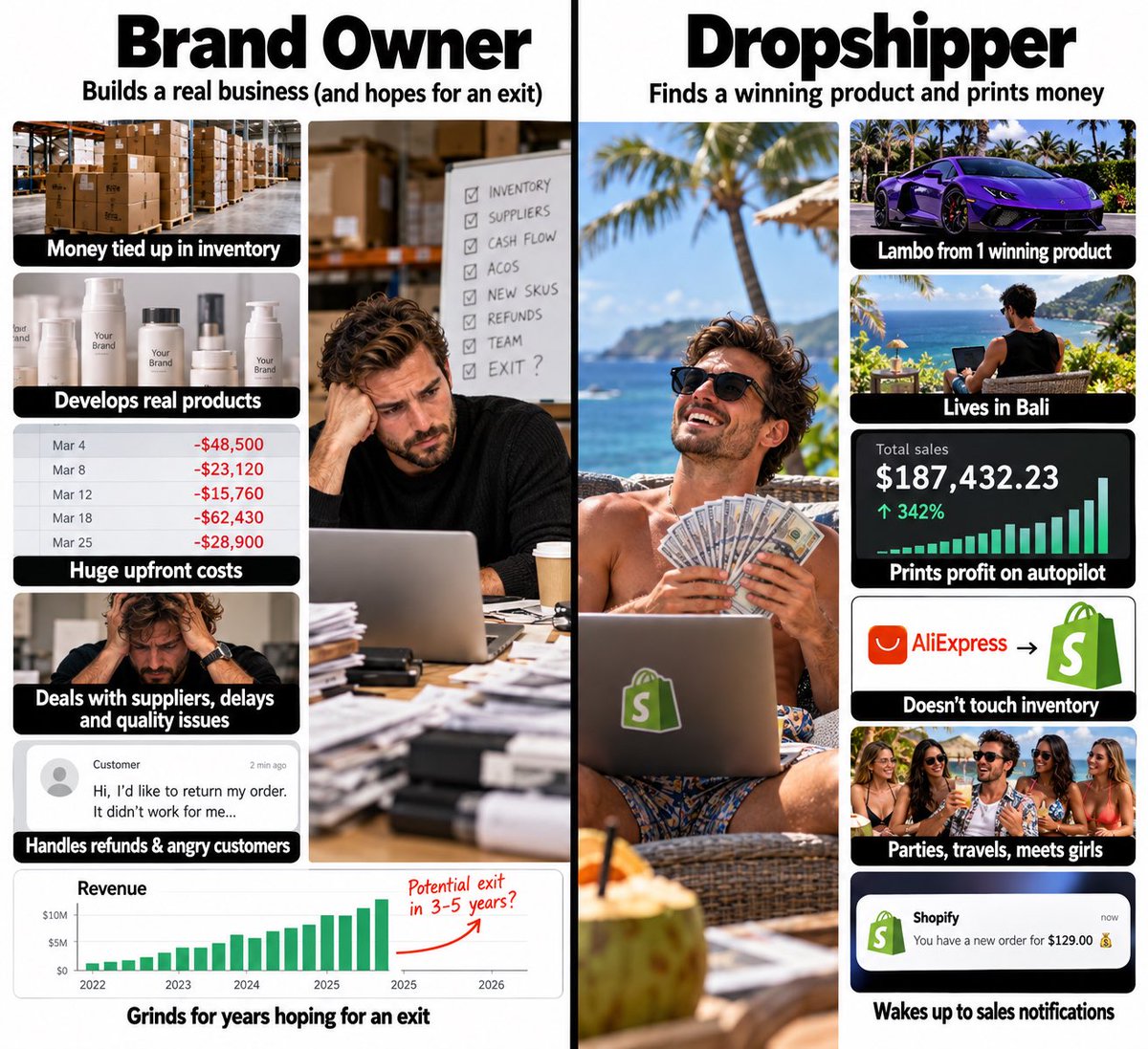
Accurate until the “winning product” stops winning 😂
Then one guy has a customer base, repeat purchases, brand equity and something he can actually sell.
The other has to go find the next winner.
This is the difference between a billing reminder and a retention email.
If all you do is remind them about the charge, you’re basically forcing them to reconsider the subscription. But if you remind them of the outcome, give them flexibility then you give them a reason to stay.
Curious if you’ve seen skip/pause options outperform straight discounts here?
Most subscription cancellations don’t start because the customer hates the product.
A lot of the time, they just don’t need the next order yet.
Maybe they still have some left. Maybe they missed a few days. Maybe the next charge just feels too soon.
But when the reminder email only makes them think about the payment, the easiest reaction is to cancel.
That’s where brands create churn without realizing it.
The customer wasn’t always trying to leave.
They just needed more time, a better reason to keep going, or something that made the next order feel worth receiving.
Before the second charge, the job is not just to remind them they’re about to be billed.
It’s to make them feel like the next order still makes sense.
The next big moat in ecom won’t be better ads.
It’ll be making sure your customer never has to “discover” you again.
AI is getting ridiculously good at finding products.
Soon a customer won’t scroll through 20 brands themselves.
They’ll ask an AI:
“Find me the best one for this.”
That makes the first purchase easier to steal.
The second purchase is different.
That comes down to whether they remember you.
Your product.
Your experience.
Your emails.
Your texts.
Your post-purchase.
Your relationship with them.
AI might win you the first order.
Retention is what stops AI from choosing a different brand for their next one.
I think that’s where the real ecom moat is heading.
Every few months someone says email marketing is dead.
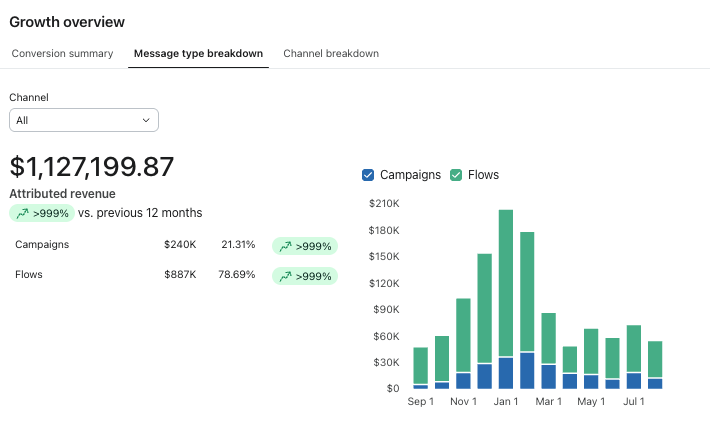
Meanwhile, this account did $1.1M+ from emails.
The channel isn’t dead.
Most brands just don’t have the backend built properly.
Your prospects should leave a sales call with something they would’ve happily paid for.
I think too many agencies hold back their best ideas because:
“They’re not a client yet.”
I look at it completely differently.
If I notice a problem, I’ll tell them.
If I see an easy win, I’ll show them.
If there’s something they can fix themselves, I’ll explain how.
Don’t save all your best thinking for after the invoice gets paid.
Treat every prospect like they’re already a client.
Even if they never work with you, they should leave the conversation better than when they came in.
Funny enough, that’s usually what makes people want to work with you in the first place.
Better ads can’t always save a product people don’t care about.
If your product looks the same as everything else in the market, your positioning has to work twice as hard.
And at some point, that gets difficult.
The best products make people stop for a second and think, “wait, what is that?”
That curiosity makes marketing way easier.
You don’t always need a complicated ad.
Sometimes you just need a product, offer, or experience that needs to be interesting enough for people to care.
@nkecom Building it fully in public from day one is the part that makes this interesting. No hiding behind “stealth mode” or only showing the wins. If you actually document the ugly parts too, this could become one of the best ecom case studies on X.
@jordanpaid That speed of feedback is probably what makes ecom so addictive. You can be completely wrong on Monday, change the offer/creative by Wednesday and have the market prove you right by Friday.
Low NcCPA can look good until you check where the traffic is actually coming from.
A brand might think ads are bringing in new customers cheaply, but a lot of those visitors may already know the brand.
They saw the ad before, clicked once, checked the product page, thought about buying, then left.
So when they come back later and purchase, the ad account can make acquisition look cheaper than it really is.
That’s why NVP (new visitor percentage) gives better context.
If the new visitor percentage is low, the brand might not be creating as much fresh demand as they think. They might just be converting people who were already familiar with the product.
This is also where email and SMS can change the whole game.
Let’s say a skincare brand is running ads for an acne product. Someone clicks, likes the product, but doesn’t buy yet because they still need reviews, before/after results, or a little more trust.
If there’s no popup, no welcome flow, and no basic follow-up, that visitor leaves and the brand has to keep paying to bring them back.
But if the backend is set up properly, that same visitor can enter the email or SMS journey, get more proof, understand the product better, and come back later ready to buy.
So lower NcCPA is not always just because the ad got better.
Sometimes it’s because the customer journey after the first click is doing its job.
Email doesn’t magically fix a weak brand.
It usually just makes the leaks easier to see.
A lot of brands look at email as a channel to send campaigns and make revenue.
But if you pay attention, it tells you where the customer is getting stuck.
Maybe people are joining your list but not trusting the brand enough to buy.
Maybe carts are being abandoned because the buying path has friction.
Maybe customers are buying once and not coming back because the post-purchase experience is weak.
Or subscribers are cancelling because the product never became part of their routine.
That’s why I look at email differently.
It’s not just a revenue channel.
It’s a way to understand what is actually happening inside the customer journey.
When it's done properly, it doesn’t just make money.
It shows you where the business needs to get better.
The easiest way to write better emails is to stop writing for a while.
Most brands keep trying to fix performance with:
New designs.
New subject lines.
More flows.
More discounts.
But the best email ideas usually come from boring research.
Read the reviews.
Read support tickets.
Look at post-purchase surveys.
Read the comments under your ads.
Pay attention to the exact words customers use when they describe the problem, the product, and why they bought.
That’s where your angles come from.
That’s where objections come from.
That’s where good copy comes from.
When you understand the customer properly, your emails stop sounding like marketing.
They start sounding like something the customer was already thinking.
Better research → better messaging → better conversions.
Usually the boring stuff wins.